Friday, 9:40 p.m. Someone is scrolling Facebook on the couch, sees an ad for AC installation, and fills out the form: 1,200 square feet, two bedrooms, needs it before summer.
Dan, who owns Swift Comfort Heating & Air, downloads the leads from Meta on Monday. He calls on Tuesday. By then the lead has asked two other companies for a quote and doesn’t remember which ad they answered.
Swift Comfort is a made-up company. The situation isn’t. The ad worked, the money was spent, and the lead went cold anyway. This guide shows how to get every submission into the right place the same evening, and what should happen in the first hour.
Why do Facebook leads go cold so fast?
Because the lead wasn’t looking for you. They decided to fill out a form in the middle of scrolling, in two taps. For that one minute, you have their attention. By the next day they’ve seen ten other ads.
Someone who finds you on Google started the search themselves and is waiting for an answer. A Facebook lead is only yours for a moment. So the thing that wins here isn’t the polished quote. It’s whether your first reply lands the same day.
The form: fewer, better questions
Meta’s instant form fills in the name, email and phone number automatically. That’s convenient, but it also means anyone who tapped by accident ends up on your list. Two things help.
- One or two qualifying questions. Questions only a real buyer can answer. For Swift Comfort: how big is the home, how many rooms need cooling, and by when.
- The higher intent form type. Meta shows people their details one more time before they submit. You get fewer submissions, but more real ones.
Don’t ask ten questions. If you won’t use an answer in your first message or on the estimate visit, leave it out.
The first-hour playbook
This is how Dan runs it now. He set it up once, and it runs the same way for every lead, even when he’s up in an attic.
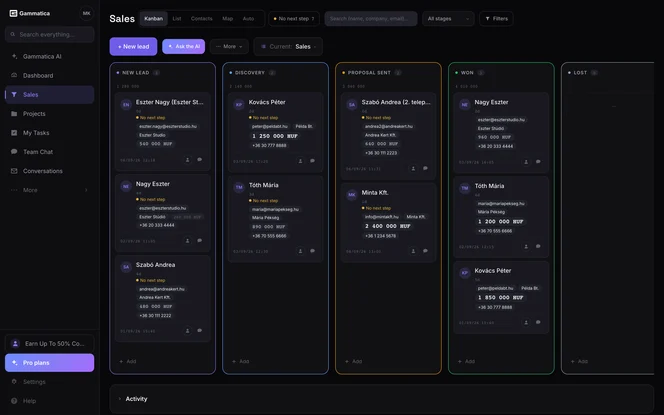
- 9:40 p.m., the moment they submit. The lead shows up as a contact and a deal in the first stage of your pipeline, answers included.
- 9:41 p.m., the first email. Not a template. AI writes it from their answers: what usually works for two bedrooms, how the in-home estimate goes, and a link to book a time. If Dan wants, the email waits for his approval first.
- Saturday, 9:00 a.m., a task. Dan gets a task: call this lead. The form answers are right there on it, so he doesn’t have to look anything up.
- Two days later, if it’s quiet. If the deal is still sitting in the first stage, a short follow-up goes out: “Not trying to bug you. Just a heads-up that we still have estimate slots open next week.”
The order is the point. The instant reply holds their attention, and the call reaches someone who already knows who you are.
What you need to make it work
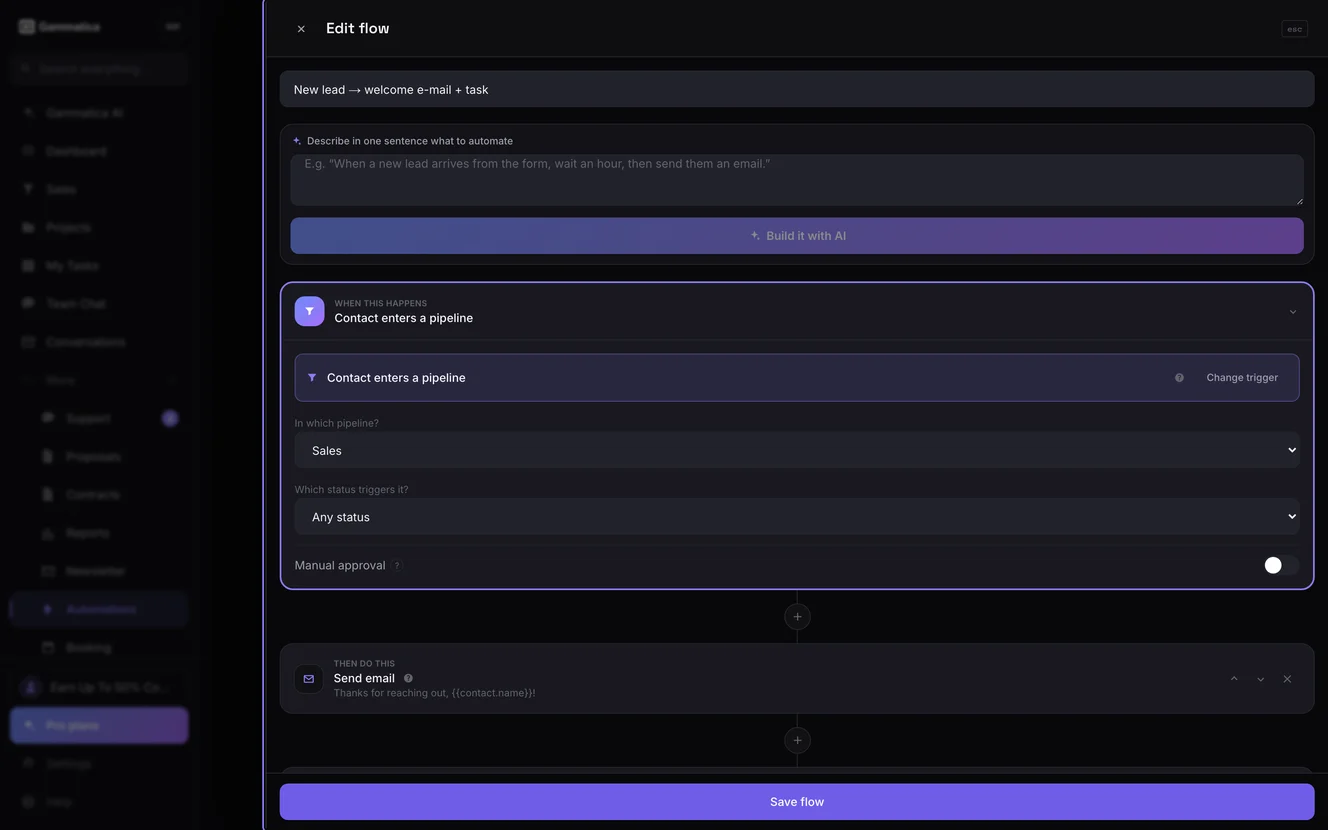
Three things. A place where submissions land on their own, with no downloads. An automation that starts when a new lead comes in. And something that writes the first email when you’re busy.
In Gammatica, that’s all one system. The Facebook Lead Ads integration puts instant form submissions from Facebook and Instagram ads into the pipeline stage you pick, maps the questions to fields, and can fetch leads from the 90 days before you connected, if Meta releases them. You can build the automation from one sentence: “When a new lead comes in from Facebook, email them based on their form answers and give me a task for the next morning.” The AI step’s answer goes into the email, and with manual approval turned on, nothing goes out without you.
If the lead is already in your CRM with an open deal, no second deal opens. The existing deal is flagged as a returning lead, so you can see they came back.
Five mistakes that lose most leads
- A spreadsheet you download once a week.
- A first email that doesn’t respond to anything the lead told you.
- A cold call from an unknown number, with no message first.
- A ten-question form when you use none of the answers.
- One attempt, then silence.
Frequently asked questions
Do Instagram ad leads come in the same way?
Yes. Instagram instant forms also belong to your Facebook Page, so they arrive through the same connection.
What if my ad sends people to my website instead of an instant form?
Then the lead comes in through your website form. If your page was built in Gammatica, the submission becomes a contact and a deal the same way, and the same automation can start.
Won’t an AI-written first email feel impersonal?
It feels impersonal when it ignores what the lead said. When it works from their answers and sounds like you, most people are simply glad they didn’t have to wait days. To be safe, turn on approval and read every one for the first few weeks.
How much does it cost?
The Facebook Lead Ads integration, the pipeline and automations are part of the Gammatica Pro plan, $15 per user per month. The AI step runs on AI credits, and Pro includes 80 a day. You can try it free for 14 days, no credit card needed.