
TL;DR:
- AI landing generators quickly create optimized, responsive pages from simple prompts, reducing production time by around 75%. They embed SEO and CRO principles from the start, making the pages effective beyond speed. Connecting the pages directly to AI sales reps improves ROI by enabling instant lead engagement and follow-up.
An AI landing generator is a software tool that automatically creates optimized, responsive landing pages by generating layout, copy, and design elements from simple prompts or briefs. The industry term for this category is “AI-powered landing page software,” and the two phrases describe the same core function. These tools have fundamentally changed how fast marketing teams can move. What once took a designer and copywriter two to three days now takes under 15 minutes, with batch page creation cutting production time by roughly 75%. For marketing professionals and business owners, that speed is the difference between launching a campaign this week or next month.
The best AI landing page tools do more than generate text. They embed SEO structure, conversion rate optimization (CRO) principles, and responsive design into every page from the start. That combination makes them genuinely useful, not just fast.
What does an AI landing generator actually need from you?
The quality of your output depends entirely on the quality of your input. AI landing page creators are not magic buttons. They are pattern-matching engines that produce better pages when you give them richer material.
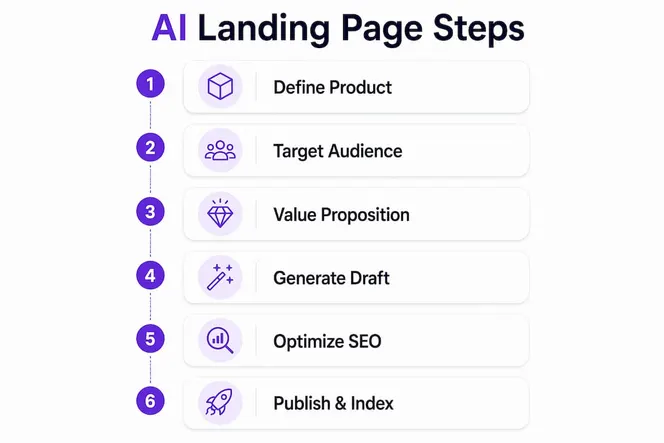
Before you open any automated landing page builder, prepare these four inputs:
- Product or service details: What you sell, who it is for, and what problem it solves. One clear paragraph is enough.
- Target audience profile: Job title, pain points, and the outcome they want. The more specific, the better.
- Unique value proposition: The one reason your offer beats the alternative. If you cannot state it in one sentence, the AI will not find it either.
- Brand assets: Logo, color codes, fonts, and tone-of-voice guidelines. Some platforms accept a brand knowledge base upload, which generates credible copy rather than generic filler.
| Input | Why it matters | Common mistake |
|---|---|---|
| Product details | Shapes headline and body copy | Too vague (“we help businesses grow”) |
| Audience profile | Drives CTA language and tone | Skipping this entirely |
| Value proposition | Anchors the page’s core message | Using features instead of outcomes |
| Brand assets | Keeps visual and voice consistency | Uploading nothing and editing later |
Professional AI landing page services go even further. Structured discovery phases include offer mapping and competitor analysis to capture brand voice before a single word is generated. That approach costs more, with some services starting around $500 with a 7-day delivery timeline, but it produces pages that sound like your brand, not a template.
Pro Tip: Write your value proposition as a single sentence before you open the tool. Paste it into the prompt verbatim. This one step prevents the AI from inventing a generic headline that fits any company in your industry.
How to create landing pages with AI generators, step by step
The workflow for most AI landing page creators follows a consistent pattern. Understanding each step helps you get a publish-ready page faster and with fewer revisions.
-
Write a specific prompt or brief. Describe your offer, your audience, and the single action you want visitors to take. Include your value proposition and any key proof points, such as a customer stat or a named result. Vague prompts produce vague pages.
-
Let the AI generate structure and content. The tool builds a layout with sections: hero, benefits, social proof, CTA, and FAQ. Modern platforms with 100+ templates use your prompt to select the most relevant structure automatically. Review the section order before you touch the copy.
-
Edit visuals and copy with drag-and-drop tools. Swap images, adjust headline hierarchy, and refine body copy to match your brand voice. This step is where human judgment matters most. The AI gives you 80% of the work. You supply the final 20% that makes it sound like you.
-
Embed SEO and CRO elements. The best platforms embed SEO and CRO into the generation process rather than treating them as afterthoughts. Check that your primary keyword appears in the H1, meta description, and first paragraph. Confirm your CTA button uses action language and appears above the fold.
-
Sync your ad messaging to the page. If you are running paid traffic, your ad headline and your page headline must match. Syncing campaign assets automatically closes the conversion gap between click and action. Mismatched messaging is the single most common reason a good ad drives a poor conversion rate.
-
Publish to a live domain. Most platforms offer instant domain publishing. Test the page on mobile before you send traffic. Check load speed, CTA visibility, and form functionality.
Pro Tip: After publishing, paste your page URL into Google Search Console and request indexing immediately. AI-generated pages are often technically clean, but they still need to be crawled to rank.
Common mistakes when using AI landing page tools
Even the best automated landing page builder produces poor results when marketers skip critical steps. These are the mistakes that show up most often, and how to fix them.
-
Generic copy with no brand voice. AI defaults to safe, neutral language. If you do not inject your brand’s tone, case studies, and specific proof points, the page reads like every other page in your category. Upload a brand knowledge base or paste in three to five customer quotes before generating.
-
Mismatched ad-to-page messaging. Your ad promises one thing. Your page says something slightly different. The visitor notices immediately and leaves. Always write your ad headline and page headline at the same time, from the same brief.
-
Weak or buried CTAs. AI tools place CTAs based on template logic, not your specific funnel. Review every CTA placement manually. The primary CTA should appear in the hero section, mid-page, and at the bottom.
-
Over-reliance on AI without a human review. AI does not know your sales objections, your refund policy, or the one thing your best customers always say. A 10-minute human review catches the gaps that cost you conversions.
“Landing page failures stem not from ads but from poor trust-building on the page itself. AI that incorporates brand information generates credible, specific copy. AI that does not generates noise.”
For technical teams, advanced implementation goes beyond drag-and-drop. AI can be scripted to read brand design tokens and output production-ready code that fits existing frameworks. That approach gives engineering teams full control without sacrificing the speed advantage.
How integrating AI lead handling with landing pages improves ROI
Most AI landing page creators stop at the page. A visitor fills out a form, and the lead lands in a CRM field waiting for a human to act. That gap, between form submission and first contact, is where most conversions die.

The real opportunity is connecting the landing page directly to an autonomous AI system that qualifies and engages leads the moment they submit. Gammatica’s approach merges the landing page with an AI sales rep that starts working the lead immediately, without a human touching a CRM field. The page and the follow-up are the same system.
The benefits of this integrated model are concrete:
- Instant lead response. The AI engages within seconds of form submission, while the prospect’s intent is highest.
- Automatic qualification. The AI asks the right questions, scores the lead, and routes hot leads to your sales team without manual triage.
- Personalized follow-up. The AI remembers every interaction and tailors follow-up messages based on what the lead said, not a generic drip sequence.
- Zero manual CRM entry. Contact records, conversation history, and lead status update automatically.
This matters for landing page optimization with AI because the page’s conversion rate is only one metric. Cost per qualified lead and speed to first meaningful contact determine actual ROI. A page that converts at 12% but takes 48 hours to follow up loses to a page that converts at 8% and responds in 30 seconds.
For marketers running paid campaigns, this end-to-end model also reduces wasted ad spend. Every lead gets worked, not just the ones a sales rep happened to see first. That consistency compounds over time into a measurable reduction in cost per acquisition.
What I have learned from deploying AI landing generators in real campaigns
The hype around AI landing page creators focuses on speed. Speed is real. But speed is not the insight that changes your results.
The insight is this: the page is not the product. The response is the product. I have seen beautifully generated pages with strong copy and clean design produce mediocre results because the follow-up was slow and generic. I have also seen simple, text-heavy pages outperform polished ones because the AI behind the form responded instantly and personally.
The marketers who get the most from AI landing generation treat the page as the front door, not the destination. They ask: what happens in the first 60 seconds after a lead submits? If the answer is “a human checks their email eventually,” the page’s conversion rate is almost irrelevant.
Balancing automation with human creativity is also worth taking seriously. AI handles structure, SEO, and first-draft copy well. It does not handle nuance, humor, or the specific language your best customers use. The best workflow I have found is AI for the first draft and a real person for the final 20%. That combination produces pages that are both fast and genuinely persuasive.
For teams using productivity and workflow tools to manage campaigns, integrating landing page creation into a broader project management system keeps campaigns on schedule and ensures nothing falls through the cracks between page launch and lead follow-up.
— Viktor
How Gammatica connects your landing page to an AI sales rep
Building a landing page is only half the work. What happens after the lead submits determines whether your campaign pays off.
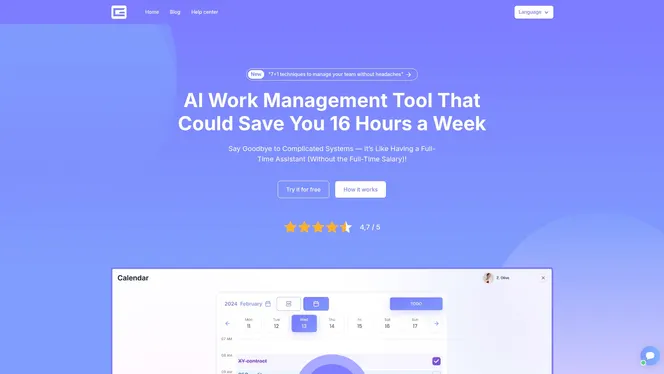
Gammatica combines AI landing page capability with an autonomous AI sales rep in one platform. When a lead submits your form, Gammatica’s AI starts qualifying, engaging, and following up immediately, without a human touching a CRM field. There is no gap between capture and contact. For marketing professionals running paid campaigns or inbound funnels, that speed and consistency directly reduces cost per acquisition. Schedule a demo to see how the landing page and the AI rep work as one connected system.
FAQ
What is an AI landing generator?
An AI landing generator is a software tool that creates optimized landing pages automatically from a text prompt or brief, generating layout, copy, SEO structure, and CTA placement without manual design work.
How fast can AI create a landing page?
AI landing page tools create individual pages in under 15 minutes. Batch creation of 75 pages takes approximately 3 hours, compared to roughly 12 hours with traditional methods.
What inputs do I need to use an AI landing page creator?
You need a clear product description, a defined target audience, a single-sentence value proposition, and brand assets such as logo, colors, and tone guidelines. The more specific your input, the better the output.
How do I optimize AI-generated landing pages for search?
Entity completeness and factual specificity are the key factors for AI search visibility in 2026. Confirm your primary keyword appears in the H1 and meta description, and verify that heading hierarchy is correct before publishing.
What makes Gammatica different from a standard AI landing page builder?
Gammatica connects the landing page directly to an autonomous AI sales rep that qualifies and follows up with leads instantly. Standard AI page builders generate the page and stop. Gammatica continues working the lead automatically after form submission.