Managing project teams in fast-paced technology firms can feel unpredictable without a structured guide. The challenge of turning ambitious project goals into actionable steps often comes down to having a clear plan everyone can follow. A Project Implementation Plan (PIP) creates this foundation, offering a proven way to assign roles, set timelines, and track performance across your team. With smart use of PIP templates in AI-powered platforms, you can foster alignment and minimize confusion, helping your projects run smoother from start to finish.
Table of Contents
- Defining Pip Template In Project Management
- Types Of Pip Templates And Variations
- Key Components And Structure Explained
- Implementing Pip Templates In Ai Platforms
- Pitfalls, Misconceptions, And Best Practices
Defining Pip Template in Project Management
A Project Implementation Plan (PIP) serves as a strategic roadmap that guides project teams through complex operational landscapes. Comprehensive project management strategies reveal that PIPs are essential documents designed to transform abstract project goals into concrete, actionable steps.
At its core, a PIP provides a structured framework for project execution by addressing critical components such as:
- Defining precise project scope and objectives
- Identifying potential risks and mitigation strategies
- Allocating human and financial resources
- Establishing clear timelines and deliverables
- Determining team roles and responsibilities
- Creating performance monitoring metrics
PIPs are not one-size-fits-all documents but dynamic tools that adapt to specific project requirements. Performance improvement processes demonstrate that these templates facilitate transparent communication, enabling teams to align expectations and track progress systematically.
Successful project managers understand that a well-crafted PIP acts as more than a documentation exercise. It becomes a living blueprint that guides team collaboration, anticipates potential challenges, and provides a structured approach to achieving project milestones. By clearly outlining responsibilities, resources, and expectations, PIPs minimize ambiguity and create a shared understanding among team members.
Pro tip: Create your PIP template with flexibility built-in, allowing for periodic reviews and adjustments to accommodate evolving project dynamics.
Types of Pip Templates and Variations
Performance Improvement Plan (PIP) templates are not uniform but dynamically designed to address specific organizational and individual performance challenges. Performance improvement strategies reveal multiple variations tailored to different workplace contexts.
Organizations typically utilize several distinct PIP template types:
-
Individual Performance Improvement Template
- Focuses on specific employee skill gaps
- Targets personal performance enhancement
- Includes measurable behavioral objectives
-
Departmental Performance Template
- Addresses team-wide performance issues
- Establishes collective performance benchmarks
- Integrates cross-functional improvement strategies
-
Role-Specific Performance Template
- Customized for particular job responsibilities
- Aligns improvement goals with position requirements
- Provides targeted development pathways
-
Behavioral Correction Template
- Addresses workplace conduct and interpersonal skills
- Defines acceptable professional behavior standards
- Outlines consequences and improvement expectations
These templates share common structural elements but differ in approach, complexity, and specific focus. Effective PIPs transcend simple documentation, serving as dynamic tools for communication, skill development, and organizational growth. They require nuanced design that balances accountability with supportive guidance.
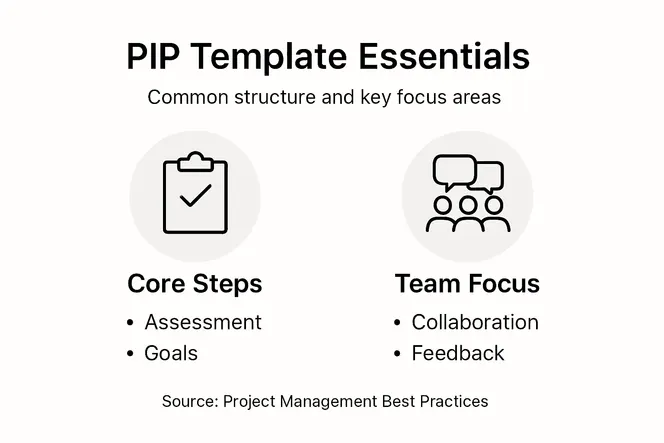
Here’s a quick overview of how different PIP template types address workplace needs:
| Template Type | Main Focus | Ideal Use Case | Typical Outcome |
|---|---|---|---|
| Individual Performance Plan | Employee skill enhancement | Supporting personal development | Improved individual effectiveness |
| Departmental Performance Plan | Team process improvement | Enhancing group productivity | Greater collaborative output |
| Role-Specific Performance Plan | Job-specific skill alignment | Refining role-based performance | Better job fit and contribution |
| Behavioral Correction Plan | Workplace conduct standards | Addressing interpersonal issues | More positive work relationships |
Successful PIP implementation demands collaborative design, involving management, human resources, and the employee. By creating flexible, personalized templates, organizations can transform performance challenges into opportunities for professional development and meaningful engagement.
Pro tip: Design your PIP templates with built-in flexibility, allowing for personalized adjustments that reflect individual employee potential and organizational objectives.
Key Components and Structure Explained
A Project Implementation Plan (PIP) requires a robust architectural framework to ensure comprehensive performance management. Project implementation strategies demonstrate that effective templates must include critical structural elements that provide clarity and direction.
The fundamental components of a comprehensive PIP typically encompass:
-
Performance Assessment Section
- Current performance baseline
- Specific areas requiring improvement
- Quantifiable performance gaps
-
Objective Definition
- Clear, measurable performance targets
- Specific behavioral or skill enhancement goals
- Realistic and achievable outcomes
-
Action Plan Development
- Detailed improvement strategies
- Required training or resources
- Step-by-step improvement roadmap
-
Support and Resources
- Mentorship opportunities
- Training program details
- Additional learning resources
A well-structured PIP transforms performance challenges into strategic development opportunities, creating a transparent pathway for professional growth.
Performance improvement documentation reveals that successful templates must include precise mechanisms for tracking progress, establishing accountability, and providing constructive feedback. The structure should balance clear expectations with supportive guidance, ensuring employees understand both the requirements and the support available to them.

Effective PIPs are not punitive documents but collaborative tools designed to align individual performance with organizational objectives. They require nuanced design that considers individual strengths, potential barriers to improvement, and realistic development trajectories.
Pro tip: Design your PIP template with built-in flexibility, incorporating regular check-ins and adaptive goal-setting to maintain motivation and track meaningful progress.
Implementing Pip Templates in AI Platforms
The integration of Project Implementation Plans (PIPs) with artificial intelligence represents a transformative approach to performance management. Project implementation profiles demonstrate how AI platforms can revolutionize traditional performance tracking methods by introducing unprecedented levels of precision and adaptability.
Key strategies for implementing PIP templates in AI-driven environments include:
-
Automated Performance Tracking
- Real-time progress monitoring
- Intelligent performance trend analysis
- Automatic deviation alert systems
-
Predictive Analytics Integration
- Machine learning-powered performance forecasting
- Risk prediction and mitigation suggestions
- Data-driven improvement recommendations
-
Personalized Development Pathways
- AI-generated skill development suggestions
- Customized learning resource recommendations
- Adaptive goal-setting algorithms
-
Comprehensive Data Visualization
- Interactive performance dashboards
- Graphical representation of improvement metrics
- Comparative performance analysis tools
AI-enhanced PIP templates transform performance management from a reactive process to a proactive, intelligent strategy for organizational growth.
Modern AI platforms enable unprecedented levels of granularity in performance tracking. These intelligent systems can analyze complex performance data, identify subtle patterns, and generate nuanced recommendations that traditional manual approaches could never achieve. By leveraging machine learning algorithms, organizations can create dynamic, responsive performance improvement frameworks that adapt in real-time to changing workplace dynamics.
The true power of AI-integrated PIP templates lies in their ability to provide context-rich, personalized insights. Instead of one-size-fits-all approaches, these platforms can generate highly targeted improvement strategies that consider individual strengths, potential barriers, and organizational objectives.
Compare manual and AI-driven PIP implementation approaches:
| Method | Monitoring Accuracy | Customization Level | Feedback Speed |
|---|---|---|---|
| Manual PIP Tracking | Depends on human oversight | Limited by template design | Typically slower |
| AI-Integrated PIP | Real-time, high precision | Highly adaptable via algorithms | Almost instant |
Pro tip: Select AI platforms with robust customization options that allow seamless integration of your existing performance management frameworks and organizational culture.
Pitfalls, Misconceptions, and Best Practices
Navigating the complexities of Project Implementation Plans (PIPs) requires understanding common challenges and strategic approaches. Performance improvement strategies reveal critical insights into maintaining the effectiveness and integrity of these management tools.
Common pitfalls organizations frequently encounter include:
-
Negative Perception Traps
- Viewing PIPs as punitive measures
- Treating plans as precursors to termination
- Undermining employee morale and motivation
-
Structural Weaknesses
- Lack of clear, achievable goals
- Vague performance criteria
- Insufficient ongoing support mechanisms
-
Communication Failures
- Poor documentation practices
- Inconsistent feedback approaches
- Absence of transparent dialogue
-
Implementation Mistakes
- One-size-fits-all template designs
- Neglecting individual employee contexts
- Overlooking systemic performance barriers
Effective PIPs transform potential conflicts into collaborative opportunities for professional growth and organizational development.
Performance improvement best practices emphasize the critical importance of tailored, supportive approaches. Successful implementation demands a holistic perspective that balances organizational objectives with individual employee potential. This means creating flexible frameworks that adapt to unique workplace dynamics while maintaining clear, measurable performance standards.
The most successful PIPs transcend traditional performance management by positioning themselves as developmental tools rather than disciplinary instruments. They require a delicate balance of accountability, support, and personalized guidance that empowers employees to recognize and overcome performance challenges.
Pro tip: Design your PIP with a collaborative mindset, involving employees in goal-setting and maintaining an open, non-judgmental dialogue throughout the improvement process.
Transform Your Project Team Performance with Smart Management Solutions
Many project managers struggle with turning detailed PIP templates into effective, actionable plans that improve team productivity and accountability. This article highlights the need for clear timelines, resource allocation, and adaptable frameworks—the very challenges that teams face when trying to balance communication with measurable progress. If you want to avoid common pitfalls like poor documentation, unclear goals, and slow feedback cycles, embracing a streamlined approach is essential.
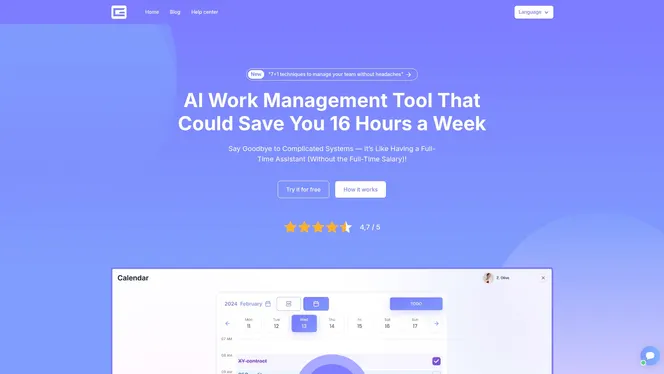
At Gammatica.com, we understand these pain points. Our AI-driven project and team management platform is designed to eliminate administrative overload and empower your team to hit their objectives faster. With features like automated task management, checklists, and AI-suggested workflows, you can effortlessly track performance improvement plans and align your team around clear, measurable goals. Explore how easy collaboration and precise calendar coordination can turn your Project Implementation Plans into living blueprints for success.
Explore Gammatica’s AI-driven platform for optimized project and team management
Learn more about streamlining your workflows with automation
Ready to boost your team’s performance? Don’t wait. Unlock up to 16 more hours each week by managing projects with precision and confidence. Visit Gammatica.com today to start transforming your performance improvement strategies with AI-powered tools.
Frequently Asked Questions
What is a Project Implementation Plan (PIP)?
A Project Implementation Plan (PIP) is a strategic roadmap that guides project teams through their objectives by providing a structured framework for execution, including defining project scope, objectives, risk management, and team roles.
How can a PIP enhance team performance?
A PIP enhances team performance by outlining clear responsibilities, allocating resources effectively, and establishing measurable objectives, which fosters collaboration and reduces ambiguity among team members.
What types of PIP templates are available?
There are several types of PIP templates, including Individual Performance Improvement Templates, Departmental Performance Templates, Role-Specific Performance Templates, and Behavioral Correction Templates, each tailored to address specific performance challenges.
What key components should a PIP include?
A comprehensive PIP should include sections on performance assessment, objective definition, action plan development, and available support and resources, ensuring clarity and direction for achieving performance goals.