Most project managers in European tech firms spend up to 40 percent of their time on routine admin work that could be handled by smart systems. In a global market shaped by both American and European innovation, staying ahead means rethinking how teams manage complexity. This article breaks down the core principles of project management styles, showing how AI-driven tools can cut through repetitive tasks and empower managers to focus on value and results.
Table of Contents
- Project Management Styles Explained: Core Principles
- Key Methodologies: Agile, Waterfall, Hybrid, And More
- Ai-Driven Features Redefining Project Workflows
- Real-World Applications In Tech Firms
- Factors Affecting Style Selection And Integration
- Risks, Skill Gaps, And Common Mistakes To Avoid
Project management styles explained: Core principles
Project management represents a strategic approach to transforming complex organizational objectives into systematic, achievable outcomes. At its core, project management involves coordinating people, resources, and processes to successfully complete specific goals within predefined constraints. Foundational principles from PMI demonstrate that effective management transcends mere task completion and encompasses broader strategic thinking.
Several core principles define robust project management practices. These include:
- Stewardship: Responsible management of team resources and organizational assets
- Stakeholder Engagement: Proactively communicating and involving all relevant parties
- Value Delivery: Focusing on measurable outcomes that drive organizational success
- Adaptive Leadership: Flexibility in approach based on project complexity and team dynamics
Successful project management requires understanding different styles and selecting the most appropriate approach for specific organizational needs. Effective management breaks complex initiatives into manageable tasks, optimizing resource allocation and timing. This approach ensures teams can navigate intricate challenges while maintaining strategic alignment and productivity.
Pro tip: Always conduct a comprehensive team and project assessment before selecting a specific management style to ensure maximum compatibility and potential for success.
Key methodologies: Agile, Waterfall, Hybrid, and more
Project management methodologies serve as strategic frameworks that guide teams toward successful project completion. Project management techniques vary widely depending on organizational needs, project complexity, and desired outcomes. Understanding these methodologies helps managers select the most appropriate approach for their specific challenges.
Three primary project management methodologies dominate contemporary practice:
- Agile Methodology
- Emphasizes iterative development
- Promotes flexible planning
- Encourages continuous collaboration
- Enables rapid response to changes
- Waterfall Methodology
- Linear sequential approach
- Structured and predictable
- Clear milestone progression
- Best for projects with well-defined requirements
- Hybrid Methodology
- Combines elements from multiple approaches
- Offers customized project management strategy
- Adapts to unique organizational constraints
- Provides flexibility while maintaining structure
Each methodology presents unique strengths and potential limitations. Successful project managers recognize that no single approach fits all scenarios. The key is understanding your team’s capabilities, project requirements, and organizational culture to select the most effective methodology.

Here’s a comparison of major project management methodologies and their typical business impact:
| Methodology | Ideal For | Main Advantage | Common Risk |
|---|---|---|---|
| Agile | Fast-paced tech projects | Rapid adaptation to change | Scope creep risk |
| Waterfall | Predictable, structured tasks | Clear milestones and deliverables | Low flexibility |
| Hybrid | Complex or evolving projects | Customization for team needs | Integration challenges |
Pro tip: Always conduct a comprehensive project assessment and team capability analysis before selecting a specific project management methodology to maximize potential success.
AI-driven features redefining project workflows
Artificial intelligence is transforming project management by introducing unprecedented levels of efficiency, predictability, and strategic insight. Modern project management platforms leverage AI to automate routine tasks, predict potential bottlenecks, and provide real-time insights that empower teams to make data-driven decisions quickly and accurately.
Key AI-powered features revolutionizing project workflows include:
-
Predictive Analytics
- Forecasting project timelines
- Identifying potential risks
- Recommending resource allocation
- Analyzing historical performance patterns
-
Intelligent Task Management
- Automatic task prioritization
- Smart workload balancing
- Contextual task recommendations
- Dynamic scheduling adjustments
-
Automated Reporting
- Real-time performance dashboards
- Intelligent progress tracking
- Automated status updates
- Customizable metric generation
These AI technologies go beyond traditional project management tools by providing adaptive, intelligent support that learns from each project’s unique characteristics. The integration of machine learning algorithms enables continuous improvement, allowing project management systems to become more accurate and helpful with each implementation.
Pro tip: Implement AI-driven project management tools incrementally, starting with one or two key features to allow your team to adapt and maximize their potential effectively.
Real-world applications in tech firms
Innovative project management strategies have become critical for technology companies navigating complex product development landscapes. Tech firms increasingly recognize that traditional management approaches fail to meet the dynamic demands of rapid innovation, leading to widespread adoption of adaptive methodologies that prioritize flexibility, collaboration, and continuous improvement.
Real-world applications of advanced project management in tech environments typically manifest through several key approaches:
- Startup Environments
- Rapid prototype development
- Minimal viable product testing
- Quick iteration cycles
- Cross-functional team collaboration
- Enterprise Technology Teams
- Structured Agile frameworks
- Complex software development management
- Multi-team coordination
- Long-term strategic planning
- Product Development Scenarios
- Continuous integration practices
- User-centered design processes
- Iterative feature development
- Performance metric tracking
Successful tech firms understand that project management is not about rigid control, but about creating adaptable frameworks that empower teams to innovate, respond quickly to market changes, and deliver exceptional results. The most effective approaches blend methodology principles with team-specific customization, recognizing that no single strategy fits all scenarios.
Pro tip: Implement a quarterly methodology review process to continuously assess and adjust your project management approach based on team performance and evolving organizational needs.
Factors affecting style selection and integration
Project management style selection involves a complex evaluation of multiple interconnected organizational dynamics. Successful integration requires a nuanced understanding of team capabilities, project requirements, and strategic objectives that extend beyond simple methodology adoption.
Key factors influencing project management style selection include:
- Organizational Characteristics
- Company culture and values
- Existing technological infrastructure
- Team skill levels and experience
- Historical project performance
- Risk tolerance and decision-making processes
- Project Specific Considerations
- Complexity of project deliverables
- Timeline and deadline constraints
- Budget limitations
- Technical requirements
- Stakeholder expectations
- Potential for scope changes
- Team Dynamics
- Team size and distribution
- Communication patterns
- Cross-functional collaboration capabilities
- Individual team member expertise
- Psychological safety and trust levels
Successful project management style integration is not about rigidly adhering to a single approach, but creating a flexible framework that can dynamically adapt to changing organizational needs. Managers must remain open to continuous assessment and refinement, recognizing that the most effective methodology is one that evolves alongside the team and project requirements.
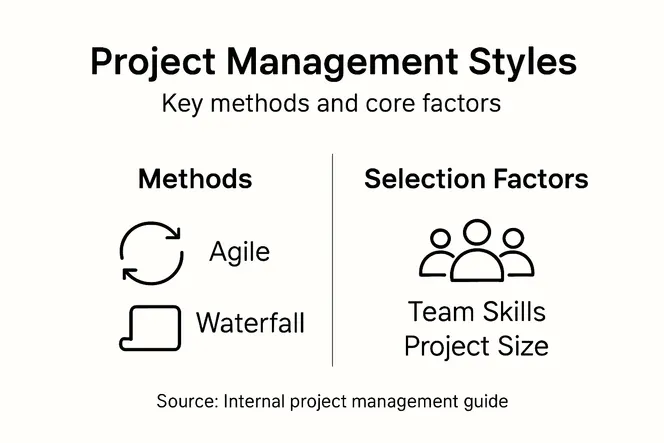
This table summarizes factors influencing the choice of project management style:
| Factor Category | Key Influence | Example Impact |
|---|---|---|
| Organizational Traits | Supports/limits flexibility | Dictates technology adoption |
| Project Needs | Determines structure level | Affects timeline feasibility |
| Team Dynamics | Shapes collaboration | Impacts project morale |
Pro tip: Conduct periodic methodology performance assessments, gathering quantitative and qualitative data to validate and adjust your project management approach.
Risks, skill gaps, and common mistakes to avoid
Project management risks represent complex challenges that can undermine even the most well-planned initiatives. Understanding these potential pitfalls is crucial for proactively developing strategies that mitigate potential failures and support team performance.
Common risks and critical mistakes in project management include:
- Strategic Misalignments
- Selecting inappropriate management methodology
- Ignoring organizational culture
- Misunderstanding project complexity
- Failing to assess team capabilities
- Neglecting stakeholder expectations
- Skill and Competency Gaps
- Insufficient training programs
- Limited technology understanding
- Poor communication skills
- Inadequate risk management knowledge
- Resistance to learning new approaches
- Execution Level Mistakes
- Over-planning and micromanagement
- Insufficient change management
- Poor resource allocation
- Weak performance tracking
- Ineffective communication channels
Successful project management requires continuous learning, adaptability, and a proactive approach to identifying and addressing potential risks before they escalate. Managers must develop a holistic perspective that goes beyond technical skills, emphasizing emotional intelligence, strategic thinking, and collaborative problem solving.
Pro tip: Create a comprehensive risk assessment matrix that categorizes potential challenges by likelihood and impact, enabling targeted mitigation strategies.
Maximize Your Team Efficiency with Smart Project Management Solutions
Choosing the right project management style is crucial to overcome challenges like ineffective workflows, communication gaps, and fluctuating team dynamics. This article highlights how adaptive leadership and tailored methodologies drive success but also underscores the complexity of coordinating tasks, resources, and stakeholder expectations. If you want to reduce administrative burdens and empower your team with AI-driven task prioritization, seamless collaboration, and automated scheduling, Gammatica.com offers exactly what you need.
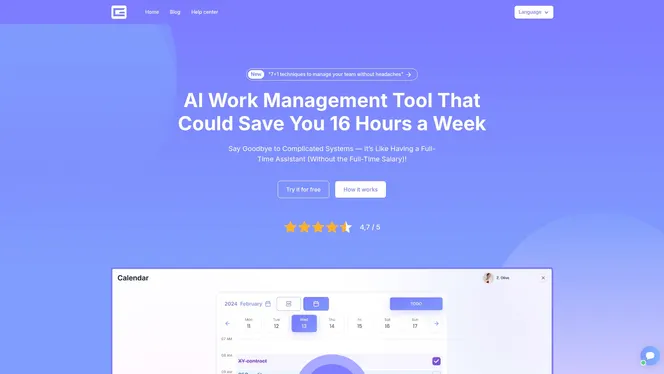
Transform your project management approach today by leveraging Gammatica’s intuitive platform that supports flexible styles including Agile and Hybrid methods. Experience how AI-powered automation can help you save up to 16 hours every week, enhance team communication with built-in calendar coordination and online meetings, and maintain total control with permission settings. Don’t let complex project demands slow you down. Visit Gammatica.com to start streamlining your workflows now and boost your team’s productivity effortlessly.
Frequently Asked Questions
What are the key principles of effective project management?
Key principles include stewardship, stakeholder engagement, value delivery, and adaptive leadership. These principles help ensure that project management goes beyond mere task completion and encompasses strategic thinking.
What are the primary project management methodologies?
The three primary methodologies are Agile, Waterfall, and Hybrid. Agile is characterized by iterative development and flexibility, Waterfall is a linear and structured approach, and Hybrid combines elements of both to adapt to unique organizational needs.
How can AI improve project management efficiency?
AI enhances project management by automating routine tasks, predicting potential bottlenecks, and providing real-time insights, enabling teams to make informed decisions quickly and accurately.
What factors should be considered when selecting a project management style?
Consider organizational characteristics, project-specific considerations, and team dynamics. This includes understanding company culture, project complexity, and team collaboration capabilities to select the most effective style.