Juggling deadlines, team communication, and daily admin work can leave even experienced project managers feeling stretched. For European tech companies, the pace of change is rapid, and the pressure to deliver high-performing teams is rising. Adapting to today’s workplace means embracing hybrid work models, digital tool integration, and agile leadership while ensuring everyone feels valued and productive. This article shares practical insights on modern team management strategies and efficient team management solutions that help you automate tasks and foster stronger collaboration.
Table of Contents
- Defining Modern Team Management Trends
- AI-Driven Tools Transforming Team Processes
- Remote Collaboration and Global Workforce Integration
- Measuring Performance and Productivity in Hybrid Teams
- Overcoming Challenges and Avoiding Common Pitfalls
Defining Modern Team Management Trends
The landscape of team management is experiencing unprecedented transformation, driven by technological advancements and changing workplace dynamics. Contemporary organizational research reveals a fundamental shift in how businesses approach workforce coordination and productivity.
Key trends emerging in modern team management include:
- Hybrid Work Models: Balancing remote and in-person collaboration
- Digital Tool Integration: Leveraging technology for seamless communication
- Agile Leadership: Developing adaptive management strategies
- Employee Well-being: Prioritizing mental health and professional growth
- Continuous Learning: Creating environments that support skill development
These trends reflect a broader understanding that traditional hierarchical structures are giving way to more fluid, responsive team configurations. Research on high-performing teams emphasizes psychological safety, purpose-driven work, and collaborative practices as critical components of successful modern team management.
Here’s a summary comparing traditional and modern team management approaches:
| Aspect | Traditional Management | Modern Team Management |
|---|---|---|
| Structure | Rigid hierarchy | Flexible, dynamic teams |
| Leadership Style | Directive, top-down | Adaptive, empowering |
| Technology Use | Minimal reliance | Integrated digital tools |
| Performance Focus | Hours tracked | Outcomes and collaboration |
| Team Autonomy | Limited decision-making | High autonomy encouraged |
Technology plays a pivotal role in enabling these new management approaches. Advanced digital platforms now provide real-time collaboration tools, performance tracking, and communication channels that transcend physical workspace limitations. Artificial intelligence and machine learning are increasingly being integrated to help managers make data-driven decisions about team dynamics, workload distribution, and individual performance optimization.
Modern team management is less about control and more about creating an ecosystem where talent can thrive autonomously while remaining aligned with organizational goals.
Pro Tip: Invest in tools and training that develop both technological proficiency and human-centered leadership skills to successfully navigate emerging team management trends.
AI-Driven Tools Transforming Team Processes
Emerging AI technologies are fundamentally revolutionizing how teams collaborate and operate, enabling unprecedented levels of efficiency and strategic decision-making. The integration of artificial intelligence into team management processes represents a critical technological leap that goes far beyond simple automation.
Key AI-powered capabilities transforming team processes include:
- Intelligent Task Allocation: Dynamically distributing workloads based on team member skills
- Predictive Performance Analytics: Identifying potential bottlenecks and productivity patterns
- Real-time Communication Enhancement: Facilitating seamless collaborative interactions
- Automated Workflow Optimization: Streamlining repetitive administrative tasks
- Advanced Decision Support: Providing data-driven insights for strategic planning
Systematic research on workplace AI applications reveals that successful implementation requires more than technological investment. Organizations must develop comprehensive strategies that balance technological capabilities with human expertise, ensuring that AI augments rather than replaces human creativity and intuition.
Modern AI tools are now capable of complex cognitive tasks that were previously exclusive to human team members. Machine learning algorithms can analyze communication patterns, predict project risks, recommend optimal team configurations, and even provide personalized productivity recommendations. These technologies transform traditional management approaches by offering granular insights into team dynamics, individual performance, and potential collaboration opportunities.

The following table highlights key benefits of using AI-driven tools for team management:
| AI Functionality | Primary Benefit | Business Outcome |
|---|---|---|
| Predictive Analytics | Early issue detection | Fewer project delays |
| Workflow Automation | Reduces manual tasks | Greater team efficiency |
| Decision Support | Data-informed choices | Improved planning accuracy |
| Communication Analysis | Identifies bottlenecks | Stronger collaboration |
| Skill Matching | Optimizes team roles | Better performance results |
AI is not about replacing human intelligence, but about creating intelligent systems that amplify human potential and decision-making capabilities.
Pro Tip: Invest in continuous training programs that help team members understand and effectively leverage AI tools, focusing on developing complementary skills that enhance technological integration.
Remote Collaboration and Global Workforce Integration
Global virtual work trends are fundamentally reshaping organizational structures, creating unprecedented opportunities for businesses to transcend traditional geographic and cultural boundaries. The emergence of advanced digital technologies has transformed how teams collaborate, communicate, and deliver value across international markets.
Key strategies for effective global workforce integration include:
- Cultural Intelligence Development: Training teams to navigate cross-cultural communication
- Flexible Communication Platforms: Implementing robust digital collaboration tools
- Asynchronous Workflow Design: Creating processes that accommodate different time zones
- Transparent Performance Metrics: Establishing clear, location-independent evaluation standards
- Inclusive Team-Building Practices: Designing virtual engagement initiatives
Research on remote work management strategies reveals that successful global integration requires more than technological solutions. Companies must invest in building robust communication infrastructures, developing cultural competence, and creating inclusive team dynamics that transcend physical distance.
Modern technological platforms now enable real-time collaboration through advanced video conferencing, project management software, and cloud-based communication tools. These technologies facilitate instantaneous information sharing, collaborative document editing, and seamless interactions that make geographic separation almost invisible. Machine learning and artificial intelligence further enhance these capabilities by providing intelligent translation services, context-aware communication recommendations, and adaptive collaboration frameworks.
Successful global workforce integration is not about eliminating distance, but about creating meaningful connections that transform distance into an opportunity for diverse perspectives.
Pro Tip: Develop a comprehensive onboarding program that explicitly addresses remote work communication protocols and cross-cultural collaboration skills to ensure smooth virtual team integration.
Measuring Performance and Productivity in Hybrid Teams
Workplace productivity analytics are transforming performance measurement in hybrid work environments, moving beyond traditional metrics to capture the nuanced dynamics of distributed teams. Modern organizations recognize that evaluating performance requires sophisticated, context-aware approaches that go well beyond simple time tracking or output counting.
Critical dimensions for measuring hybrid team productivity include:
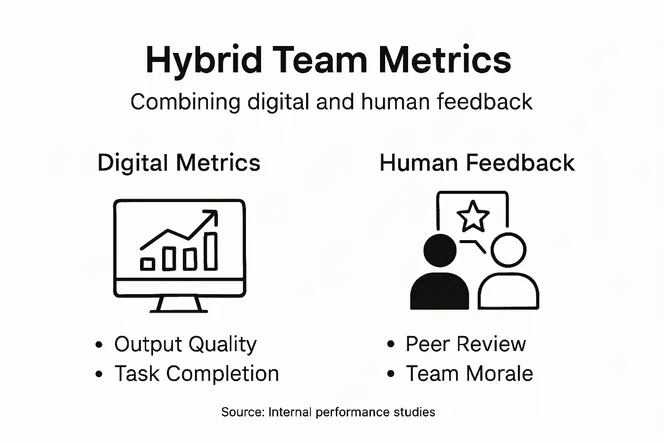
- Output Quality: Assessing deliverables against predefined standards
- Communication Effectiveness: Tracking responsiveness and collaboration frequency
- Goal Achievement: Monitoring progress toward strategic objectives
- Digital Engagement: Analyzing platform interaction and knowledge sharing
- Individual and Collective Performance: Balancing team and personal productivity metrics
Performance management research from South African organizations highlights the importance of continuous feedback, trust-building, and clear communication in hybrid work contexts. Traditional performance evaluation models often fail to capture the complex interactions and unique challenges of distributed teams, necessitating more dynamic and holistic assessment strategies.
Advanced analytics now enable managers to leverage digital collaboration data, including email patterns, meeting frequencies, response times, and cross-team interactions. Machine learning algorithms can provide nuanced insights into team dynamics, identifying potential communication bottlenecks, recognizing high-performing individuals, and suggesting targeted interventions to enhance overall team productivity. These technologies transform performance measurement from a retrospective exercise into a real-time, predictive management tool.
Performance in hybrid teams is not about monitoring hours worked, but about understanding and optimizing collaborative potential.
Pro Tip: Implement a balanced scorecard approach that combines quantitative digital metrics with qualitative feedback to create a comprehensive performance assessment framework.
Overcoming Challenges and Avoiding Common Pitfalls
Teamwork challenges consistently undermine organizational performance, presenting complex obstacles that require strategic and nuanced approaches to resolution. Understanding these challenges is crucial for creating high-performing, resilient team environments that can effectively navigate modern workplace complexities.
Common teamwork challenges include:
- Communication Breakdowns: Misaligned messaging and unclear expectations
- Trust Deficits: Lack of psychological safety and interpersonal confidence
- Role Ambiguity: Unclear responsibilities and overlapping accountability
- Leadership Inconsistency: Ineffective guidance and support mechanisms
- Performance Mismanagement: Inappropriate evaluation and reward systems
Research on fundamental teamwork challenges reveals that most issues stem from inadequate communication, poor leadership practices, and insufficient team alignment strategies. Successful teams proactively address these challenges by establishing clear communication protocols, developing robust trust-building mechanisms, and creating transparent performance expectations.
Modern organizations are increasingly adopting sophisticated approaches to mitigate teamwork challenges. This includes implementing advanced collaboration technologies, providing comprehensive leadership training, developing clear role definitions, and creating flexible performance management frameworks that account for diverse work environments. Machine learning and AI-driven tools are now being used to analyze team dynamics, predict potential conflicts, and suggest targeted interventions before problems escalate.
Effective team management is not about eliminating challenges, but about creating adaptive systems that can transform potential obstacles into opportunities for growth and innovation.
Pro Tip: Conduct regular team health assessments that combine quantitative metrics with qualitative feedback to identify and address potential collaboration challenges proactively.
Unlock the Future of Team Management with Smart Automation
The article “Future of Team Management Automating Success in Tech” highlights key challenges leaders face today such as managing hybrid teams navigating AI-driven workflows and maintaining seamless global collaboration. If you are looking for a powerful way to tackle communication breakdowns boost productivity and automate routine tasks Gammatica.com provides a comprehensive AI-powered solution made for modern business demands. With features like intelligent task management CRM integration calendar coordination and real-time collaboration tools your team gains autonomy while staying aligned with strategic goals.
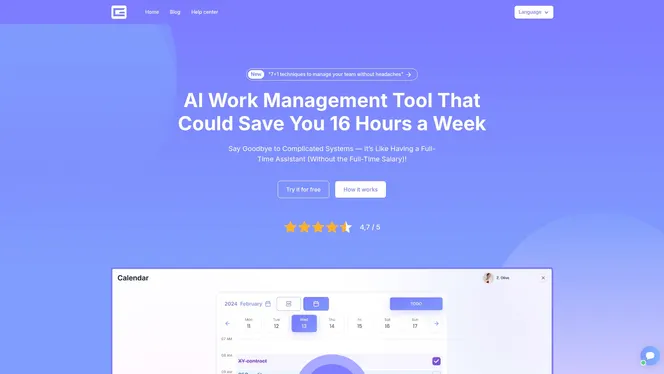
Experience how Gammatica’s automation can free up to 16 hours weekly by reducing administrative burdens and streamlining project workflows. Take control of hybrid team performance and empower your workforce with AI suggestions pre-made templates and smooth integrations such as Make.com. Don’t let traditional management pitfalls limit your potential discover the future of work today at Gammatica.com and see how you can transform your team management approach with intelligent automation.
Frequently Asked Questions
What are the key trends shaping the future of team management?
Key trends include hybrid work models, digital tool integration, agile leadership, employee well-being, and continuous learning. These trends emphasize flexibility and responsiveness in team structures.
How can AI-driven tools enhance team management processes?
AI-driven tools improve team management by providing intelligent task allocation, predictive performance analytics, real-time communication enhancement, automated workflow optimization, and advanced decision support, leading to increased efficiency and informed decision-making.
What strategies are effective for managing remote and global teams?
Effective strategies include developing cultural intelligence, using flexible communication platforms, designing asynchronous workflows, maintaining transparent performance metrics, and implementing inclusive team-building practices to enhance collaboration across distances.
How should performance be measured in hybrid teams?
Performance in hybrid teams should be measured by evaluating output quality, communication effectiveness, goal achievement, digital engagement, and both individual and collective performance metrics, using advanced analytics for real-time insights.