
TL;DR:
- Effective time management in 2025 involves deliberately matching energy to high-priority tasks and safeguarding those periods from interruptions. Using planning, goal-setting, and task organization, professionals can enhance productivity and well-being by focusing on their best hours for important work.
Effective time management in 2025 is defined as the deliberate practice of matching your best energy to your highest-priority tasks while protecting those windows from interruption. Research shows only 18% of professionals consistently use formal planning systems, yet the cost of not doing so shows up in burnout, missed deadlines, and chronic overwork. The good news: a meta-analysis of 107 studies confirms that planning, goal-setting, prioritization, and task organization are the four highest-impact strategies for both productivity and well-being. These time management tips 2025 professionals need most are not about squeezing more into your day. They are about spending your best hours on your best work.
1. Start with a time audit
You cannot fix what you cannot see. A time audit tracks every activity you do in 30-minute increments across a full work week, giving you a clear picture of where your hours actually go.

Most professionals are surprised by what they find. Common leaks include reactive email checking, unplanned admin tasks, unnecessary meetings, and the hidden cost of multitasking. Each context switch costs you focus time that adds up fast.
To run a simple audit, keep a notepad or use a basic time-tracking app and log each task as you complete it. After five days, group your entries into categories: deep work, communication, admin, and interruptions. The pattern will tell you exactly where to focus your improvement efforts.
Pro Tip: Start with just two days of tracking instead of a full week. A shorter commitment builds the habit without feeling like a chore, and two days often reveal the most obvious leaks.
2. What are the top time management techniques for 2025?
No single method suits every professional. The most effective approach is to keep a personal menu of techniques and rotate based on your task type, energy level, and deadline pressure.
Here are the four most proven frameworks, each with a distinct use case:
| Technique | Best for | Core mechanic |
|---|---|---|
| Pomodoro Technique | Deep focus tasks | 25-minute work sessions with short breaks |
| Eisenhower Matrix | Prioritization decisions | Sort tasks by urgency and importance |
| Eat That Frog | Procrastination | Tackle your hardest task first each morning |
| Ivy Lee Method | Daily planning | Write 6 tasks the night before, work in order |
The Pomodoro Technique works because its time constraint creates urgency and its built-in breaks prevent cognitive fatigue. The Eisenhower Matrix works because it forces you to separate what feels urgent from what actually matters. Eat That Frog works because completing a difficult task early generates momentum for the rest of the day.
Match the technique to your personality. If you are detail-oriented and need structure, the Ivy Lee Method gives you a clear daily script. If you struggle with focus, Pomodoro sessions give you a finish line to sprint toward. You can also find practical time management hacks that combine several of these frameworks into a single daily routine.
3. Protect your peak productivity windows
Your brain does not perform at the same level all day. Research identifies peak energy windows for most professionals as 9–11 a.m. and 1–3 p.m. These are the hours when focus, decision-making, and creative output are highest.
The problem is that 50% of meetings are scheduled directly inside these windows. That means half of all meetings actively displace your most productive hours. The result is that your best cognitive capacity goes to status updates instead of real work.
Reclaiming these windows requires a deliberate calendar strategy:
- Block 9–11 a.m. as “deep work” time in your calendar every day
- Set your status to “Do Not Disturb” during these blocks
- Move recurring meetings to late morning or mid-afternoon outside peak hours
- Decline or delegate meetings that lack a clear agenda or decision to be made
- Communicate your availability windows to your team so expectations are set
Pro Tip: Treat your peak hours exactly like a client meeting. Put them in your calendar with a title, block them as busy, and do not negotiate them away.
Treating peak hours as protected zones is one of the clearest differentiators between professionals who feel in control of their time and those who feel constantly behind.
4. Plan your day with intention
Planning your day for just 10 minutes can recapture up to 2 hours of productive time. That is a significant return for a small investment, and it is one of the most underused habits in professional life.
The key is to plan the night before or first thing in the morning before you open email. Decide your top three priorities for the day and assign each a time block. Everything else is secondary until those three are done.
Use the Eisenhower Matrix to sort your task list into four quadrants: urgent and important, important but not urgent, urgent but not important, and neither. Tasks in the “important but not urgent” quadrant are where your biggest long-term gains live. Most professionals neglect them because they never feel pressing enough.
Structured weekly planning also pays off. Weekly schedule tools help teams and individuals map their workload across the full week, reducing the reactive scramble that kills daily focus.
5. Build a system for prioritization and focus protection
Prioritization is not a one-time decision. It is a daily practice that requires both a method and a boundary-setting habit.
The most effective professionals combine three behaviors:
- Choose your top task first. Before checking messages, identify the single most important output for the day. Write it down physically. This anchors your attention before the noise starts.
- Use time blocking for output protection. Assign specific time slots to specific tasks, not just to meetings. A block labeled “write proposal” is harder to sacrifice than an empty slot.
- Batch similar tasks together. Group all email replies into one 30-minute window. Group all calls into another. Batching reduces the mental cost of switching between different types of work.
Work-life balance is a dilemma to manage, not a fixed state to achieve. Your priorities shift with life stages, project cycles, and personal demands. The goal is not perfect balance every day. The goal is intentional allocation that reflects what matters most right now.
Pro Tip: At the end of each workday, write tomorrow’s top three tasks before you close your laptop. You will start the next morning with direction instead of drift.
6. Use the right tools without overloading yourself
Time management tools in 2025 fall into three practical categories: time trackers, task managers, and automated schedulers. Each solves a different problem, and using all three at once often creates more friction than it removes.
- Time trackers (such as simple log-based apps or built-in phone timers) show you where your hours go. Start here if you have never done a time audit.
- Task managers give you a single place to capture, prioritize, and track work. Look for tools with Kanban boards or checklist features that match how your team works.
- Automated schedulers handle recurring tasks, meeting coordination, and reminders without manual input. These save the most time for professionals managing multiple projects or clients.
The rule for tool selection is simple: pick one tool per category, use it for 30 days, and only add a second tool if a clear gap remains. Tool overload is one of the most common reasons professionals abandon productivity systems entirely.
For remote workers and async teams, a task manager with built-in communication features reduces the need for status-update meetings. For structured office environments, a shared calendar with visible time blocks communicates availability and reduces interruptions without a single conversation.
What I’ve learned about sustainable productivity
Most productivity advice focuses on doing more. The shift that actually changes things is doing less, but doing it on purpose.
I have watched professionals adopt every framework on this list and still feel behind. The common thread is not the technique. It is calendar control. High-achievers fail not because they lack discipline but because they surrender their best hours to other people’s priorities without realizing it.
Time management is also a brain-based skill, not a character trait. Neurodivergent professionals and those going through high-stress periods need different strategies than they did six months ago. Switching methods is not failure. It is adaptation.
The habit I recommend above all others is the closing ritual. Physically marking the end of your workday by shutting down tabs, writing tomorrow’s task list, or changing out of work clothes signals your brain that work is over. Without that signal, work thoughts bleed into personal time and recovery never fully happens. Sustainable productivity is not about grinding harder. It is about protecting your recovery as fiercely as you protect your output.
— Viktor
How Gammatica helps you put these strategies into practice
Knowing the right strategies is one thing. Having a system that supports them daily is another.
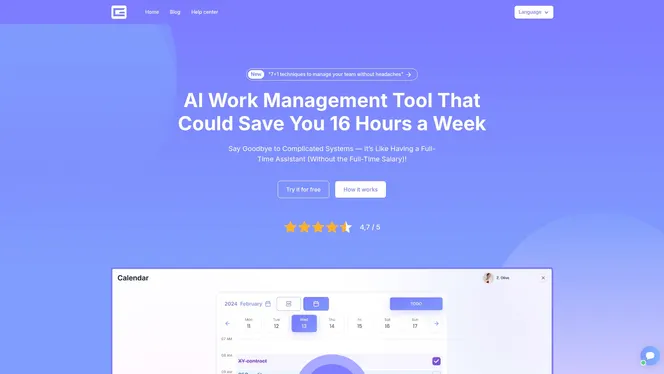
Gammatica is an AI-driven project and team management platform built for professionals who want to spend less time on admin and more time on real work. Its AI-powered task prioritization, calendar coordination, and automation features help you protect your peak hours and execute your daily plan without the manual overhead. Gammatica claims users free up to 16 hours weekly through its automation and pre-built templates. If you want to see how that works for your specific workflow, book a demo call and explore what a tailored setup looks like for your team.
FAQ
What are the most effective time management tips for 2025?
A meta-analysis of 107 studies identifies planning, goal-setting, prioritization, and task organization as the four highest-impact strategies. Protecting your peak productivity windows from meetings is the most overlooked of these.
How do I find my peak productivity hours?
Most professionals experience peak focus between 9–11 a.m. and 1–3 p.m. Track your energy and output quality across one week to confirm your personal pattern.
How long should I plan my day each morning?
Ten minutes of daily planning can recapture up to 2 hours of productive time. Plan the night before or before opening email for the best results.
What is the best time management technique for busy professionals?
The Eisenhower Matrix works best for prioritization decisions, while the Pomodoro Technique works best for maintaining deep focus. Use both depending on whether you need to decide what to do or stay focused while doing it.
How does improving work-life balance connect to time management?
Work-life balance fluctuates with life stages and priorities rather than staying fixed. Managing it well requires the same intentional scheduling and boundary-setting that drives workplace productivity.