Direct communication tools shape how European project managers drive results, yet over 60 percent of teams still struggle to align on shared objectives. In a fast-paced tech environment, adopting proven strategies including the disciplined work quote format borrowed from American project management standards can turn any project from chaotic to clear. This overview reveals powerful ways to harness structured quoting for better collaboration, project clarity, and smarter decision making.
Table of Contents
- Defining Work Quote In Project Management
- Types Of Work Quotes And When To Use Them
- Key Elements Of An Effective Work Quote
- Legal Considerations And Binding Terms
- Pricing Strategies, Risks, And Common Mistakes
Defining Work Quote in Project Management
A work quote is a foundational document in project management that serves as a comprehensive blueprint for project expectations and commitments. As outlined in project management research, this formal proposal articulates the critical parameters of a project, including its scope, projected timeline, and anticipated financial investment.
The primary purpose of a work quote extends far beyond a simple price estimate. It functions as a strategic communication tool that aligns all stakeholders around shared objectives, detailed deliverables, and specific responsibilities. By meticulously documenting project parameters, work quotes help prevent misunderstandings, establish clear performance benchmarks, and create a transparent framework for project execution.
Key components of an effective work quote typically include:
- Detailed project scope and objectives
- Comprehensive cost breakdown
- Projected timeline and key milestones
- Resource allocation strategy
- Performance metrics and success indicators
- Potential contingency plans
Pro tip: Always include a clear mechanism for handling potential scope changes or unexpected project complexities within your work quote to maintain flexibility and manage stakeholder expectations.
Types of Work Quotes and When to Use Them
Project management involves several distinct types of work quotes, each designed to serve specific communication and documentation purposes. Professional writing standards recognize multiple quote varieties that help teams effectively communicate project expectations and requirements.
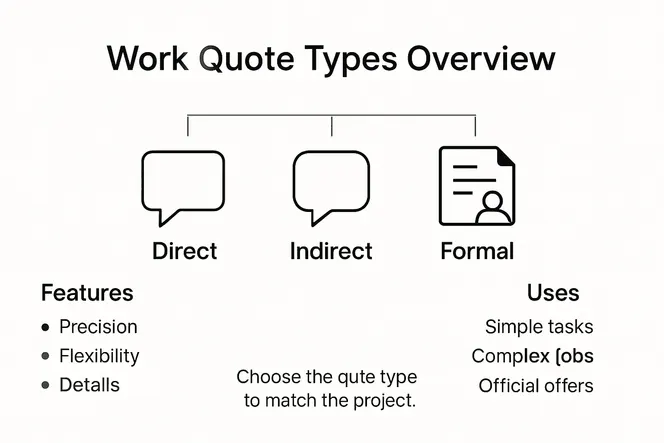
The three primary types of work quotes include direct quotes, indirect quotes, and formal quotes. Direct quotes capture exact language and are most useful when precision is critical, such as reproducing specific technical specifications or contractual language. Indirect quotes, by contrast, paraphrase core ideas and provide more flexibility when the general concept matters more than verbatim wording. Formal quotes represent the most comprehensive documentation, typically including detailed pricing structures, comprehensive scope definitions, and binding contractual terms.
Different scenarios call for specific quote types:
Here’s a side-by-side comparison of the three main types of work quotes and their best-use scenarios:
| Quote Type | Ideal Use Case | Advantages |
|---|---|---|
| Direct Quote | Legal contracts, technical documents | Ensures accuracy, avoids misinterpretation |
| Indirect Quote | Project summaries, informal reports | Adds flexibility, saves time |
| Formal Quote | Client proposals, negotiations | Legal protection, comprehensive details |
- Direct Quotes: Ideal for legal documents, technical specifications, and precise contractual agreements
- Indirect Quotes: Best for summarizing complex concepts, general project overviews, and preliminary discussions
- Formal Quotes: Essential for final project proposals, client presentations, and official contract negotiations
The selection of an appropriate quote type depends on multiple factors including project complexity, stakeholder requirements, and the specific communication objectives of the moment.
Pro tip: Always match your quote type to the communication context, ensuring you balance precision with clarity to avoid potential misunderstandings.
Key Elements of an Effective Work Quote
Constructing an effective work quote requires meticulous attention to several critical components that ensure clarity, credibility, and comprehensive project communication. Academic writing standards highlight the importance of structured quote elements that transform a simple document into a powerful project management tool.
The core elements of a robust work quote include precise financial detailing, comprehensive scope definition, explicit performance expectations, and transparent risk assessment. These components work together to create a holistic blueprint that communicates project parameters with unambiguous precision. Financial sections must break down costs granularly, showing direct expenses, potential contingencies, and clear payment structures. Scope definitions should articulate specific deliverables, milestones, and project boundaries with surgical exactness.

Key structural components of an effective work quote typically encompass:
This summary outlines how key elements in work quotes impact project outcomes:
| Element | Purpose | Impact on Project |
|---|---|---|
| Financial Detailing | Specifies costs, payment terms | Improves budget control |
| Scope Definition | Clarifies tasks, timeline | Reduces scope creep |
| Risk Assessment | Guides contingency planning | Lowers chance of delays |
| Legal Framework | Sets binding terms, protocols | Avoids disputes, ensures compliance |
- Detailed Cost Breakdown
- Line-item expenses
- Hourly or fixed-rate pricing
- Potential additional costs
- Project Scope Definition
- Specific deliverables
- Project timeline
- Performance metrics
- Risk Assessment and Mitigation
- Potential project challenges
- Contingency planning
- Mitigation strategies
- Legal and Compliance Framework
- Payment terms
- Contractual obligations
- Dispute resolution mechanisms
Pro tip: Always include a clear revision clause in your work quote to provide flexibility for unexpected project developments while protecting both parties’ interests.
Legal Considerations and Binding Terms
Understanding the legal landscape of work quotes is crucial for protecting both parties’ interests and establishing clear contractual boundaries. Legal experts emphasize that quotes can become binding agreements under specific conditions that transform them from simple estimates to enforceable contracts.
The transition of a work quote from a proposal to a legally binding document hinges on several critical elements. These include a clear offer, explicit acceptance, demonstrable consideration (financial or service exchange), mutual intent to create legal relations, and unambiguous terms of engagement. Each component must be meticulously crafted to ensure legal validity. Financial terms must be precise, scope definitions comprehensive, and acceptance mechanisms clearly outlined to minimize potential disputes and legal complications.
Key legal considerations in work quotes include:
- Offer Specificity
- Detailed service descriptions
- Exact pricing structures
- Specific delivery timelines
- Acceptance Mechanisms
- Written confirmation requirements
- Signature protocols
- Digital acceptance procedures
- Modification Clauses
- Conditions for quote alterations
- Change request procedures
- Renegotiation terms
- Dispute Resolution
- Arbitration guidelines
- Jurisdictional specifications
- Mediation processes
Pro tip: Consult a legal professional to review your work quote template, ensuring comprehensive protection and clear contractual language that minimizes potential misunderstandings.
Pricing Strategies, Risks, and Common Mistakes
Developing an effective pricing strategy requires more than simple number calculations. Advanced businesses leverage data-driven approaches to mitigate pricing risks and maximize profitability through sophisticated analytical techniques and strategic planning.
Pricing in project management involves navigating complex terrain where market dynamics, cost structures, and perceived value intersect. Successful strategies demand a nuanced approach that balances competitive positioning with sustainable revenue generation. Critical considerations include understanding true project costs, factoring in overhead expenses, analyzing market rates, and creating flexible pricing models that accommodate project variability. Managers must avoid common pitfalls such as underpricing services, failing to account for hidden costs, or setting rates without comprehensive market research.
Key pricing strategy components include:
- Cost Analysis
- Direct labor expenses
- Material and resource costs
- Overhead and administrative expenses
- Market Positioning
- Competitor rate comparisons
- Value-based pricing approaches
- Segmentation strategies
- Risk Mitigation
- Contingency buffer calculations
- Flexible pricing mechanisms
- Performance-based pricing options
- Pricing Model Variations
- Fixed-price contracts
- Time and materials pricing
- Milestone-based billing
- Hybrid pricing structures
Pro tip: Develop a dynamic pricing template that allows quick adjustments based on project complexity, ensuring you can rapidly respond to changing market conditions and project requirements.
Streamline Your Work Quote Strategies with AI-Driven Project Management
Creating precise and adaptable work quotes is crucial for aligning stakeholders and avoiding costly misunderstandings. This article highlights common challenges such as managing scope definitions, pricing strategies, and legal considerations that often slow down project progress and increase administrative burdens. If you are looking to enhance clarity, speed up approvals, and maintain flexibility in work quotes, leveraging technology designed for these exact pain points can transform your workflows.
Gammatica.com offers an AI-powered platform that simplifies the complexities of work quotes through automation, customizable templates, and collaborative task management. By integrating features like checklist creation and calendar coordination, your team can define project scopes clearly, track milestones accurately, and adjust pricing models efficiently without getting bogged down in paperwork.
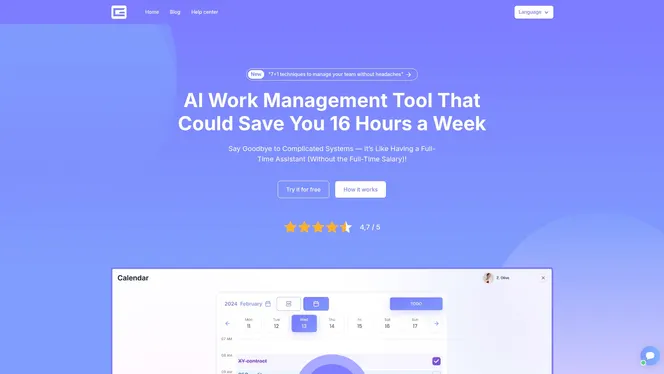
Take the next step to reduce administrative headaches and improve your project outcomes now. Discover how Gammatica helps business leaders like you save time, avoid scope creep, and create legally sound, dynamic work quotes that drive results. Start optimizing your project management flow today.
Frequently Asked Questions
What is a work quote in project management?
A work quote is a formal document that outlines the scope, timeline, and expected costs of a project. It aligns stakeholders on project objectives and responsibilities.
Why is a work quote important for project success?
A work quote is crucial as it prevents misunderstandings, defines performance benchmarks, and establishes a transparent framework for project execution, ensuring all parties are on the same page.
What are the key components of an effective work quote?
Key components include a detailed project scope, comprehensive cost breakdown, projected timeline, resource allocation strategy, performance metrics, and contingency plans.
What types of work quotes should be used in project management?
The three primary types are direct quotes for precision, indirect quotes for flexibility, and formal quotes for comprehensive proposals and negotiations. Each type serves specific purposes depending on the project’s needs.