Managing projects efficiently while juggling administrative tasks feels overwhelming. Organizations using agile report a 60% improvement in project visibility and faster delivery times. For project managers and team leaders in Hungary struggling with workflow inefficiency and excessive overhead, agile methodology offers a proven solution. This guide explains what agile is, how it works, and practical steps to implement it successfully in your team.
Table of Contents
- Introduction To Agile Methodology
- Core Principles And Mechanisms Behind Agile’s Effectiveness
- Popular Agile Frameworks: Scrum, Kanban, And Lean
- Common Misconceptions And Challenges In Agile Adoption
- Quantified Benefits Of Agile Adoption
- Practical Steps For Implementing Agile In Your Team
- How Tools Like Gammatica.com Support Agile Practices
- Streamline Your Agile Projects With Gammatica
- Frequently Asked Questions About Agile Methodology
Key takeaways
| Point | Details |
|---|---|
| Agile boosts visibility | Iterative, collaborative processes improve project visibility by 60% through enhanced alignment. |
| Multiple frameworks available | Scrum, Kanban, and Lean offer different approaches suited to various team needs and workflows. |
| Reduces administrative burden | Agile cuts documentation overhead by approximately 30% while improving efficiency and responsiveness. |
| Common myths debunked | Agile requires documentation and structure, works beyond software, and needs leadership support. |
| Tools enhance adoption | Platforms like Gammatica.com automate tasks and support agile practices through Kanban boards and collaboration features. |
Introduction to agile methodology
Agile methodology prioritizes iterative development, customer collaboration, and responsiveness to change over rigid planning. The Agile Manifesto established four core values in 2001: individuals and interactions over processes and tools, working software over comprehensive documentation, customer collaboration over contract negotiation, and responding to change over following a plan.
These values translate into 12 guiding principles that shape how teams work:
- Satisfy customers through early and continuous delivery of valuable work
- Welcome changing requirements, even late in development
- Deliver working solutions frequently in short timeframes
- Business people and developers collaborate daily throughout projects
- Build projects around motivated individuals with necessary support
- Face to face conversation works best for information sharing
- Working solutions serve as the primary measure of progress
- Sustainable development maintains a constant pace indefinitely
- Continuous attention to technical excellence and design enhances agility
- Simplicity through maximizing work not done proves essential
- Self organizing teams produce the best architectures and designs
- Regular reflection on effectiveness enables team improvement
Traditional waterfall project management follows sequential phases where each stage completes before the next begins. Agile flips this approach. Teams work in short cycles, delivering incremental value and adjusting based on feedback. This fundamental difference makes agile more adaptable to changing business needs and customer priorities.
Core principles and mechanisms behind agile’s effectiveness
Agile methodology drives efficiency through several key mechanisms that address workflow bottlenecks and administrative waste.
Iterative development cycles with continuous feedback form the foundation. Teams build solutions in small increments, test them quickly, and gather input from stakeholders. This rapid feedback loop catches issues early when they cost less to fix. Quality improves because teams learn and adapt throughout the project rather than discovering problems at the end.
Transparent workflows empower self organization. When everyone sees the current state of work through visual boards and daily updates, teams identify bottlenecks faster. Members coordinate naturally without layers of management approval. This transparency eliminates status meetings and progress reports that consume time without adding value.
Adaptive planning replaces rigid schedules with flexible roadmaps. Teams plan just enough detail for upcoming work while keeping future plans loose. When priorities shift or new information emerges, you adjust quickly without rewriting extensive documentation. This approach cuts wasted effort on plans that become obsolete.
Regular retrospectives create continuous improvement cycles. After each iteration, teams discuss what worked well and what needs adjustment. These short sessions, typically 60 to 90 minutes, identify process improvements that compound over time.
Pro Tip: Schedule retrospectives immediately after iteration completion while experiences stay fresh. Focus on actionable changes you can implement in the next cycle rather than vague goals.
Popular agile frameworks: Scrum, Kanban, and Lean
Three main frameworks dominate agile adoption, each suited to different team contexts and challenges.
Scrum structures work into time boxed sprints, typically two to four weeks long. Teams commit to completing specific work during each sprint. Daily standup meetings keep everyone aligned on progress and obstacles. Three defined roles organize responsibilities: Product Owner prioritizes work, Scrum Master facilitates the process, and Development Team builds solutions. Sprint reviews and retrospectives bookend each cycle. 58% of agile teams globally use Scrum because it provides clear structure and cadence.
Kanban visualizes workflow on boards with columns representing process stages. Work items move from left to right as they progress. Work in progress limits prevent overload by capping how many items occupy each stage simultaneously. Unlike Scrum, Kanban operates continuously without fixed iterations. Teams pull new work as capacity allows. This framework suits operational teams handling unpredictable incoming requests or environments where priorities change frequently.
Lean methodology focuses on eliminating waste and optimizing flow. Originally from manufacturing, Lean principles apply to knowledge work by identifying activities that add value versus those that consume resources without benefit. Teams streamline handoffs, reduce waiting time, and minimize rework. Lean complements both Scrum and Kanban by providing principles for process improvement.
| Framework | Sprint Length | Key Roles | Visualization | Best For |
|---|---|---|---|---|
| Scrum | 2 to 4 weeks | Product Owner, Scrum Master, Team | Sprint backlog, burndown charts | Teams needing structured cadence and clear milestones |
| Kanban | Continuous flow | Flexible, often no fixed roles | Kanban board with WIP limits | Operations, support, or frequently changing priorities |
| Lean | Varies | Depends on context | Value stream maps | Process optimization across frameworks |
Choosing the right framework depends on your team size, project predictability, and organizational culture. Many successful teams blend elements from multiple approaches.
Common misconceptions and challenges in agile adoption
Several myths about agile create resistance and adoption failures. Understanding reality helps you avoid these pitfalls.
Myth: Agile means no documentation. Reality: Agile values working solutions over excessive documentation, but teams still document decisions, architecture, and user guidance. You skip documentation that provides little value, not all documentation.
Myth: Agile only works for software teams. Reality: Marketing, HR, finance, and operations teams successfully apply agile principles. Any work involving uncertainty and collaboration benefits from iterative approaches.
Myth: Agile lacks structure or planning. Reality: Agile provides clear frameworks with defined ceremonies, roles, and planning processes. The structure adapts rather than remaining rigid.
Resistance to change blocks many agile transformations. Team members comfortable with existing processes fear new approaches. Managers worry about losing control. Overcoming this resistance requires clear communication about benefits, comprehensive training, and leadership support. Start by explaining how agile addresses specific pain points your team experiences.
Leadership involvement determines scaling success. When executives understand and support agile values, adoption spreads naturally. Without leadership buy in, middle management often sabotages agile practices to protect traditional power structures.
Pro Tip: Identify respected team members as agile champions who can influence peers through example rather than mandate. Their success stories convince skeptics more effectively than top down directives.
Quantified benefits of agile adoption
Data from organizations worldwide demonstrates agile’s measurable impact on project outcomes and team efficiency.
Organizations using agile report a 60% improvement in project visibility and alignment, leading to faster delivery.
Project visibility improvements of 60% stem from transparent workflows and frequent stakeholder engagement. Teams know exactly what colleagues are working on, what’s blocked, and what’s coming next. This clarity eliminates confusion and redundant work.

Administrative overhead drops approximately 30% through effective iteration. Instead of creating detailed upfront specifications that change constantly, teams document decisions as they make them. Status reports become unnecessary when visual boards show real time progress. Meeting time decreases because daily standups replace longer status gatherings.
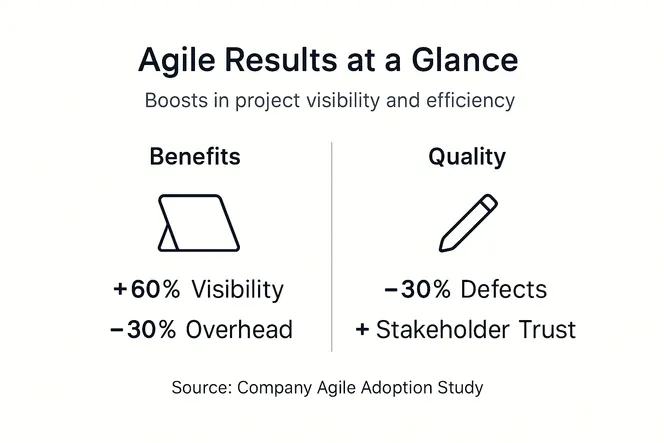
Defect rates fall around 30% from continuous testing and feedback loops. Catching bugs immediately after introduction costs far less than finding them months later. Quality improves throughout development rather than relying on final testing phases.
| Metric | Before Agile | After Agile | Improvement |
|---|---|---|---|
| Project visibility | 45% stakeholder alignment | 72% stakeholder alignment | 60% increase |
| Administrative time | 20 hours per week | 14 hours per week | 30% reduction |
| Defect rate | 8 defects per release | 5.6 defects per release | 30% decrease |
| Time to market | 12 months average | 8 months average | 33% faster |
These improvements compound over time as teams refine their agile practices through retrospectives and experience.
Practical steps for implementing agile in your team
Successful agile adoption follows a structured approach that builds capability while delivering quick wins.
-
Train your team on agile fundamentals and chosen framework. Invest in workshops or courses that cover principles, practices, and common pitfalls. Everyone needs shared understanding of concepts like iterative development, user stories, and retrospectives. Budget two to three days for initial training plus ongoing learning.
-
Launch pilot projects to validate methods and learn safely. Choose a moderately important project with supportive stakeholders. Avoid betting critical initiatives on untested processes. Run two to three iterations, gather lessons, and adjust your approach based on what you discover.
-
Use regular iteration cycles with retrospectives to improve continuously. Establish consistent sprint lengths or review cadences. Hold retrospectives after each cycle to identify improvements. Implement one or two changes each time rather than overwhelming the team with adjustments.
-
Adopt AI enabled tools and Kanban boards to automate workflow and reduce overhead. Digital boards provide visibility across distributed teams. Automation handles repetitive tasks like status updates and reminders. Integration with communication tools keeps everyone informed without manual coordination.
-
Foster continuous feedback culture and scale gradually. Encourage stakeholders to review work frequently and share input openly. Celebrate teams that adapt based on feedback. Expand agile practices to additional teams only after initial groups demonstrate success and can mentor others.
Pro Tip: Start with one team, measure success through specific metrics like cycle time or stakeholder satisfaction, and adapt your approach before scaling. Rushing full rollout risks spreading ineffective practices throughout your organization.
How tools like Gammatica.com support agile practices
Modern project management platforms enhance agile adoption by automating administrative tasks and enabling collaboration.
Automation of status updates and task prioritization saves significant time. AI powered suggestions identify which tasks need attention based on deadlines, dependencies, and team capacity. Automated notifications keep stakeholders informed without manual reporting. This automation aligns perfectly with agile’s goal of maximizing value adding work.
Kanban boards and checklist creation tools support visual workflow management. Digital boards accessible to entire teams provide the transparency agile requires. Drag and drop interfaces make updating progress effortless. Checklists ensure teams complete all necessary steps without lengthy documentation.
Built in communication and collaboration integrations enhance team transparency. Direct connections to Zoom, Google Meet, and messaging platforms centralize project conversations. Team members access all project information in one location rather than searching emails and multiple systems. This integration reduces coordination overhead that traditionally consumes manager time.
Using platforms designed for agile workflows helps teams maintain iterative progress and continuous feedback loops. Features like sprint planning boards, burndown charts, and retrospective templates guide teams through agile ceremonies. Analytics show velocity trends and bottlenecks, enabling data driven improvements.
Streamline your agile projects with Gammatica
Transitioning to agile methodology requires more than understanding principles. You need tools that reduce friction and amplify your team’s effectiveness.
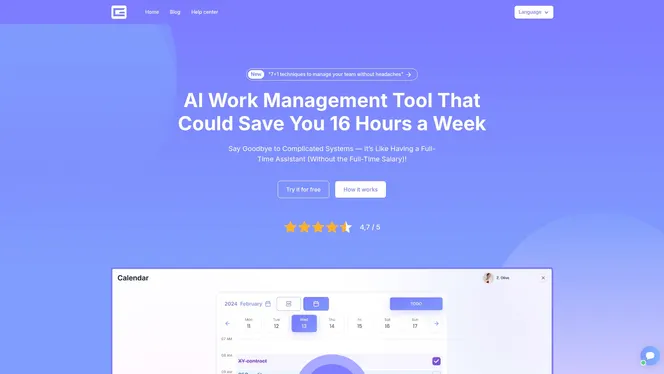
Gammatica automates repetitive administrative work so your team focuses on delivering value. AI powered task prioritization identifies what matters most each day. Kanban boards provide the visual workflow management agile teams need. Integration with communication platforms keeps everyone aligned without endless meetings. These features directly address the administrative overhead and workflow inefficiency challenges you face. Explore how task management drives productivity and optimize project workflow to accelerate your agile transformation. Start enhancing your team’s collaboration and efficiency at Gammatica.com.
Frequently asked questions about agile methodology
What is the biggest benefit of using agile methodology?
The most significant advantage is improved adaptability to changing requirements and market conditions. Agile teams deliver value incrementally, allowing organizations to adjust priorities based on customer feedback and business needs without derailing entire projects.
Can agile work outside of software development?
Absolutely. Marketing teams use agile for campaign management, HR departments apply it to recruiting processes, and finance teams adopt it for budgeting cycles. Any work involving collaboration, uncertainty, and customer focus benefits from iterative approaches.
How does agile reduce administrative overhead?
Agile minimizes unnecessary documentation by focusing on essential information that guides current work. Visual boards replace status reports, daily standups eliminate longer meetings, and iterative planning reduces time spent on detailed upfront specifications that often change.
What is the difference between Scrum and Kanban?
Scrum organizes work into fixed length sprints with defined roles and ceremonies, providing structure for teams needing predictable cadence. Kanban manages continuous flow with work in progress limits, suiting teams handling unpredictable incoming work or frequently changing priorities.
How do I handle resistance to agile in my team?
Start by communicating specific problems agile solves for your team’s current challenges. Provide comprehensive training so members feel confident with new practices. Identify early adopters who can demonstrate success and influence skeptical colleagues through results rather than mandates.