Most leaders think time tracking is about control. Research shows that time tracking improves productivity by 15-25% when implemented correctly. This guide reveals why time tracking matters beyond attendance monitoring and delivers actionable strategies CEOs and managers in Hungary can use to enhance team performance, optimize workflows, and drive organizational growth through data-driven insights.
Table of Contents
- Understanding The Importance Of Time Tracking In Modern Business
- Quantified Productivity Benefits Of Time Tracking
- Common Misconceptions And Clarifications Around Time Tracking
- Comparison Of Manual And Automated Time Tracking Systems
- Data-Driven Decision Making Enabled By Time Tracking
- Conceptual Framework For Effective Time Tracking Implementation
- Applying Time Tracking Insights For Workflow Optimization And Growth
- Boost Your Team’s Productivity With Smart Time Tracking Solutions
- Frequently Asked Questions About Time Tracking For Ceos
Key Takeaways
| Point | Details |
|---|---|
| Productivity Gains | Time tracking can improve productivity by 15-25% and boost task on-time completion by 30%. |
| Administrative Efficiency | Automated AI-driven systems reduce manual admin time by up to 16 hours per week. |
| Employee Trust | Transparent time tracking increases employee satisfaction by 12%, contrary to surveillance fears. |
| Leadership Decisions | Data from time tracking enables 40% faster decisions to optimize workflows. |
| Implementation Success | Effective rollout requires integrated tools, training, and clear team communication. |
Understanding the Importance of Time Tracking in Modern Business
Time tracking transforms how organizations operate. It provides visibility into work patterns that reveal hidden inefficiencies consuming your team’s potential. When you understand where time goes, you can make smarter decisions about resource allocation and workflow design.
Time tracking and workflow efficiency research demonstrates that companies implementing structured tracking systems see measurable improvements across multiple dimensions. These benefits extend far beyond simple attendance monitoring. They reshape how teams collaborate, how managers lead, and how organizations compete.
Here’s what effective time tracking delivers:
- Enhanced Productivity: Teams complete tasks faster when they understand time investments required for different activities.
- Improved Transparency: Clear visibility into work patterns builds trust between leadership and team members.
- Bottleneck Identification: Real-time data reveals workflow obstacles that prevent smooth project delivery.
- Strategic Alignment: Time allocation data shows whether daily work matches organizational priorities.
Pro Tip: Start by tracking time for one week without making changes. This baseline reveals patterns you never knew existed and creates buy-in when teams see their own data.
The shift from intuition-based management to data-driven leadership represents a competitive advantage. Organizations that embrace structured time tracking gain insights their competitors miss, enabling faster adaptation and continuous improvement.
Quantified Productivity Benefits of Time Tracking
Numbers tell the story. Companies implementing time tracking improve project delivery speed by up to 20% compared to organizations relying on estimates and memory. This acceleration compounds over time, creating significant competitive advantages in fast-moving markets.
The data reveals specific improvements across key performance indicators:
- Project Velocity: Teams complete projects 20% faster when time tracking identifies inefficiencies.
- Task Completion: On-time delivery rates increase by 30% with effective tracking systems.
- Administrative Overhead: Managers reclaim up to 16 hours weekly by eliminating manual coordination tasks.
- Resource Utilization: Organizations optimize team capacity by 15-25% through better allocation.
Here’s how these metrics translate into business outcomes:
| Metric | Improvement | Business Impact |
|---|---|---|
| Project Delivery Speed | 20% faster | More client projects completed per quarter |
| Task On-Time Completion | 30% increase | Enhanced client satisfaction and retention |
| Administrative Time Saved | 16 hours/week | Managers focus on strategy instead of coordination |
| Resource Optimization | 15-25% gain | Same team accomplishes significantly more work |
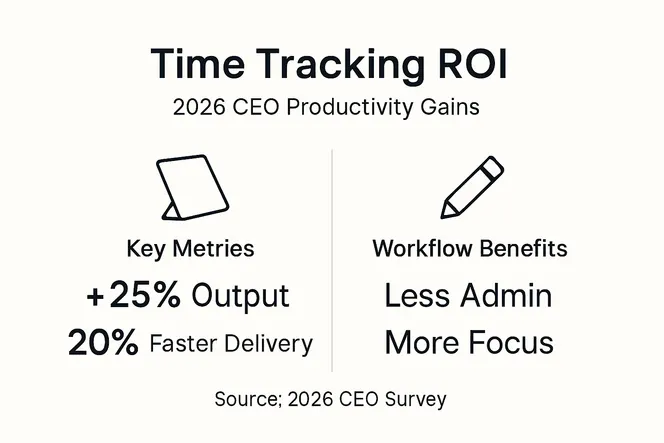
These improvements create a flywheel effect. Faster project delivery enables teams to take on more work. Reduced administrative burden frees managers to coach and develop their teams. Better resource utilization improves profitability without adding headcount.
The impact of time tracking on project delivery extends beyond speed. Quality improves when teams have realistic timeframes and clear priorities. Client relationships strengthen when delivery becomes predictable. Team morale rises when everyone sees their contributions creating measurable value.
Common Misconceptions and Clarifications Around Time Tracking
Many leaders hesitate to implement time tracking because they fear damaging team trust. The opposite is true. Research shows that transparent time tracking boosts employee satisfaction by 12% when implemented with clear communication about goals and benefits.
Let’s address the myths directly:
-
Myth: Time tracking is surveillance that creates anxiety.
-
Reality: Transparent systems build trust by showing how leadership uses data to remove obstacles, not micromanage people.
-
Myth: Tracking harms team dynamics and collaboration.
-
Reality: Clear visibility into workloads enables better support between team members and prevents burnout.
-
Myth: Manual tracking provides accurate enough data.
-
Reality: Manual methods contain error rates up to 20%, leading to poor decisions based on flawed information.
The key difference lies in implementation approach. When you position time tracking as a tool for team empowerment rather than control, adoption accelerates and resistance disappears. Teams appreciate systems that help them work smarter, protect their time, and demonstrate their value to leadership.
Pro Tip: Involve team members in selecting and configuring time tracking tools. This participation creates ownership and ensures the system serves their needs, not just management reporting requirements.
Transparent time tracking and employee morale studies confirm that concerns about surveillance culture are overblown. When implementation includes clear communication about privacy, data usage, and team benefits, satisfaction actually increases because employees gain tools to manage their own productivity and work-life balance.
Comparison of Manual and Automated Time Tracking Systems
The technology you choose determines your results. Manual time tracking creates more problems than it solves. Spreadsheets and paper timesheets introduce errors, consume administrative resources, and deliver stale data that arrives too late for actionable decisions.

Automated systems powered by AI eliminate these limitations. They capture accurate data in real-time, integrate with your existing tools, and surface insights that manual processes never reveal. The contrast is stark:
| Feature | Manual Tracking | Automated AI Systems |
|---|---|---|
| Data Accuracy | Up to 20% error rate | Near-zero errors with validation |
| Administrative Time | High, requires constant reconciliation | Minimal, automatic capture and reporting |
| Real-Time Insights | None, delayed by days or weeks | Instant dashboards and alerts |
| Integration | Manual data transfer between tools | Seamless sync with project management platforms |
| Scalability | Breaks down as team grows | Handles unlimited users and projects |
Automated AI-powered time tracking reduces errors by over 20% while freeing up to 16 hours weekly in administrative work. This efficiency gain alone justifies the investment. Managers redirect recovered time toward coaching, strategy development, and business growth initiatives.
Modern platforms integrate with project management software, creating a unified view of work across your organization. When time data flows automatically into task boards, calendars, and reporting dashboards, you eliminate duplicate entry and ensure everyone works from the same information.
The manual vs automated time tracking comparison reveals another critical advantage. Automated systems learn patterns over time, suggesting improvements in workflow design, task estimation, and resource allocation. This intelligence amplifies over time, making your organization smarter with each project.
Data-Driven Decision Making Enabled by Time Tracking
Time tracking data transforms leadership from reactive firefighting to proactive optimization. When you see exactly where time goes, you identify inefficiencies that consume 15-25% of productive capacity in most organizations. These hidden time sinks include excessive meetings, unclear priorities, redundant processes, and poor task handoffs.
Real-time visibility changes everything. You spot bottlenecks as they form, not after projects derail. You reallocate resources based on actual workloads, not assumptions. You validate whether strategic initiatives receive appropriate time investment or get crowded out by urgent but less important work.
Leaders using time tracking for data-driven leadership report making decisions 40% faster because they have objective data instead of subjective opinions. This speed matters in competitive markets where delayed decisions mean missed opportunities.
Key benefits of data-driven time management:
- Workflow Optimization: Identify and eliminate process steps that add time without adding value.
- Capacity Planning: Make hiring and resource decisions based on actual demand patterns, not guesswork.
- Priority Alignment: Ensure team time allocation matches strategic goals and revenue drivers.
- Performance Insights: Recognize top performers and identify where additional training or support delivers ROI.
The shift from intuition to data doesn’t eliminate judgment. It enhances judgment by grounding decisions in reality. You still need leadership experience to interpret patterns and choose appropriate responses. But you start from facts instead of assumptions, dramatically improving decision quality.
Conceptual Framework for Effective Time Tracking Implementation
Successful time tracking implementation follows a maturity model that guides organizations from basic practices to advanced optimization. This progression ensures sustainable adoption without overwhelming teams or creating resistance.
-
Stage 1: Basic Tracking Start with simple time logging for tasks and projects. Focus on data collection consistency and team habit formation. Avoid complex reporting or analysis. Build the foundation.
-
Stage 2: Integration and Analysis Connect time tracking with project management tools. Begin analyzing patterns to identify obvious inefficiencies. Introduce basic dashboards for team visibility. Develop analytical skills.
-
Stage 3: Automation and Intelligence Implement AI-powered systems that automatically categorize time, suggest optimizations, and alert on anomalies. Enable self-service reporting for all team members. Scale insights across the organization.
-
Stage 4: Continuous Optimization Use advanced analytics to predict project timelines, optimize resource allocation, and test workflow improvements. Embed time awareness into organizational culture. Drive competitive advantage through operational excellence.
Most organizations start at Stage 1 and advance over 6-12 months. Rushing to Stage 4 without building foundational habits leads to failed implementations. Patient, systematic progression ensures lasting change.
Each stage requires different infrastructure, training, and leadership focus. Stage 1 needs clear policies and basic tools. Stage 2 demands analytical capabilities and integration expertise. Stage 3 requires investment in AI-powered platforms. Stage 4 focuses on cultural transformation and continuous improvement mindsets.
Applying Time Tracking Insights for Workflow Optimization and Growth
Insights without action waste potential. Here’s how to convert time tracking data into tangible productivity improvements and organizational growth:
-
Assess Current State Measure baseline time allocation across projects, tasks, and activities. Identify gaps between where time goes and where it should go. Document pain points teams identify through the tracking process.
-
Implement Integrated Tools Select platforms that combine time tracking with project management, not standalone point solutions. Integration eliminates duplicate entry and ensures data flows where teams need it. Prioritize tools offering AI recommendations and automation.
-
Analyze for Bottlenecks Review time data weekly to spot workflow obstacles. Look for tasks taking longer than estimated, handoffs causing delays, and activities consuming disproportionate resources. Accurate time tracking enables managers to identify workflow bottlenecks and improve project delivery speed by up to 20%.
-
Communicate Transparently Share insights with teams, explaining how data drives decisions that benefit everyone. Address concerns immediately. Celebrate improvements and recognize contributions. Build trust through consistent, honest dialogue about time management goals.
-
Refine Continuously Treat workflow optimization with time tracking as an ongoing process, not a one-time project. Review and adjust processes monthly. Test improvements and measure results. Scale what works and abandon what doesn’t.
Pro Tip: Create a monthly rhythm where leadership reviews time data, identifies one improvement opportunity, implements a change, and measures impact. This cadence builds organizational capability for continuous optimization without overwhelming teams.
The goal is sustainable productivity gains, not short-term efficiency squeezes that burn out your team. Use time tracking insights to remove obstacles, clarify priorities, and create conditions where people do their best work consistently.
Boost Your Team’s Productivity with Smart Time Tracking Solutions
Transforming time tracking insights into results requires the right platform. Gammatica delivers AI-powered tools specifically designed for CEOs and managers seeking measurable productivity improvements and streamlined operations.
Our integrated platform combines time tracking with project management, task automation, and intelligent workflow optimization. You get real-time visibility into team productivity, automated administrative processes that save up to 16 hours weekly, and AI recommendations that continuously improve how your organization operates. Hungarian business leaders choose Gammatica because we understand the challenges you face and deliver solutions that work in your specific context.
Explore smart AI tools for team productivity that integrate seamlessly with your existing processes. Discover how Gammatica for Founders supports growing organizations with scalable management solutions. Learn task tracking best practices from industry experts who understand your business environment.
Frequently Asked Questions about Time Tracking for CEOs
What are the first steps in implementing time tracking for my team?
Start by selecting an integrated platform that combines time tracking with your existing project management tools. Communicate clearly with your team about goals, emphasizing how tracking helps remove obstacles and improve work conditions, not surveillance. Run a pilot with a small group before organization-wide rollout.
How can automated time tracking improve leadership decision-making?
Automated systems provide real-time data on resource utilization, project progress, and workflow bottlenecks. This visibility enables you to make decisions 40% faster based on facts instead of assumptions. You can reallocate resources proactively, identify training needs, and optimize processes using concrete evidence.
What common mistakes should I avoid to ensure successful adoption?
Avoid positioning time tracking as surveillance or performance monitoring. Don’t implement without clear communication about benefits for the team. Never use time data punitively or skip integration with existing tools. Most failures stem from poor change management, not technology limitations.
How does time tracking enhance employee morale rather than harm it?
Transparent time tracking actually increases satisfaction by 12% when implemented correctly. It helps employees demonstrate their contributions, protects their time from unnecessary interruptions, and enables fair workload distribution. Teams appreciate systems that remove obstacles and provide visibility into their impact.
Can time tracking tools integrate with project management platforms?
Modern AI-powered time tracking platforms integrate seamlessly with project management software, creating unified workflows. Integration eliminates duplicate data entry, ensures consistency across tools, and provides comprehensive insights. Look for platforms offering native integrations with your existing tech stack.
How long before we see measurable productivity improvements?
Most organizations see initial improvements within 4-6 weeks as teams develop tracking habits and managers begin using data for decisions. Significant gains of 15-25% productivity improvement typically materialize over 3-6 months as workflows optimize and the organization matures its practices.