Most IT startup leaders still treat business plans as static documents created once and filed away. This outdated approach limits responsiveness to market changes and wastes opportunities for AI-driven agility. AI transforms traditional business plans into dynamic, continuously updated roadmaps that integrate directly into daily workflows, enhancing team collaboration and operational efficiency for Hungarian IT startups facing intense competitive pressures.
Key takeaways
| Point | Details |
|---|---|
| Business plans evolve into dynamic AI-powered tools | AI enables real-time updates and predictive modeling for continuous strategic refinement |
| AI significantly enhances collaboration and efficiency | Task completion speeds increase by up to 80% while saving 16 hours weekly |
| Platform selection drives AI adoption success | Integrated platforms offering automation and workflow tools outperform basic generators |
| Regular updates and training maximize benefits | Companies updating plans frequently gain competitive advantages over static approaches |
| Misconceptions limit AI planning potential | Understanding AI’s strategic role, not just task automation, unlocks growth opportunities |
The evolution of business plans: from static documents to dynamic AI-driven playbooks
Traditional business plans sit on shelves gathering dust. They capture a moment in time but fail to adapt as markets shift, competitors emerge, or customer needs change. This static nature limits strategic responsiveness precisely when agility matters most.
AI enables real-time data analytics and predictive modeling to continuously refine strategies and resource allocation. Dynamic plans respond to emerging trends, adjust forecasts based on current performance, and suggest optimizations without manual intervention. Leaders can monitor progress dashboards, identify deviations from targets, and adjust plans on the fly.
Integration with daily workflows embeds strategic thinking into operations. Rather than referring to separate planning documents, teams access living roadmaps within their project management platforms. Tasks link directly to strategic objectives, making execution transparent and measurable.
This transformation improves resource allocation by highlighting underutilized assets and overcommitted teams. Strategic agility increases as organizations respond faster to opportunities and threats. Startups gain competitive advantages by pivoting based on real data rather than quarterly review cycles.
Pro Tip: Start with one business plan section, like quarterly goals, and integrate AI-powered tracking before expanding to full strategic planning.
Benefits of dynamic AI-driven plans:
- Continuous updates based on current market data
- Predictive analytics for proactive decision making
- Automated progress tracking against strategic objectives
- Real-time resource optimization recommendations
- Embedded execution within daily workflows
Enhancing team collaboration through AI in business plans
AI automates routine communication and administrative tasks that consume valuable time. Meeting summaries generate automatically, action items populate task lists without manual entry, and status updates flow to stakeholders based on actual progress rather than manual reports. This saves up to 16 hours weekly on administrative overhead.
Collaboration platforms provide real-time task tracking and project transparency. Team members see exactly what colleagues are working on, identify dependencies before they cause delays, and coordinate handoffs seamlessly. AI suggests optimal task assignments based on workload, skills, and availability.
Enhanced alignment leads to faster and more successful project delivery. When everyone accesses the same updated plan and understands how their work contributes to strategic goals, coordination improves dramatically. Task completion speeds increase by up to 80% while alignment improves by 40%.
AI identifies bottlenecks by analyzing workflow patterns and suggesting workload balancing. If one team member consistently becomes a bottleneck, the system recommends redistributing tasks or hiring additional capacity. Data-driven insights improve meeting efficiency by highlighting which meetings add value and which waste time.
AI-powered collaboration improvements:
- Automated status updates and reporting
- Intelligent task assignment based on capacity and skills
- Real-time visibility into project dependencies
- Bottleneck detection and resolution suggestions
- Data-driven meeting optimization
Pro Tip: Enable AI-powered notifications that alert only when critical blockers emerge, reducing notification fatigue while maintaining awareness.
Impact: Companies integrating AI collaboration tools see 80% faster task completion and save 16 hours weekly per team member on administrative work.
Operational efficiency gains through AI integration
AI streamlines repetitive operational tasks that previously required manual effort. Invoice processing, expense approvals, data entry, and routine customer communications happen automatically. These efficiency gains reduce delays and free teams to focus on strategic work requiring human judgment.

Real-time analytics enable rapid informed decision making. Rather than waiting for monthly reports, leaders access current performance data instantly. Dashboards highlight trends, anomalies, and opportunities requiring attention. Operational efficiency improves approximately 25% within the first year for companies integrating AI into workflows.
Startups gain agility to respond to market shifts promptly. When customer behavior changes or competitors launch new features, AI-powered systems detect these signals early. Leaders can adjust strategies, reallocate resources, and pivot offerings based on current intelligence rather than outdated assumptions.
Integration challenges include data quality issues and team skill gaps. Poor data creates unreliable AI outputs, while inadequately trained teams struggle to leverage AI capabilities effectively. Strategic management of AI adoption mitigates these risks through phased rollouts, training programs, and continuous improvement cycles.
Operational efficiency improvements:
- Automated routine task completion
- Real-time performance dashboards
- Early detection of market changes
- Faster resource reallocation
- Reduced manual data processing
Impact: Organizations adopting AI-driven workflows achieve 25% operational efficiency gains in year one and make data-driven decisions 3 times faster.
Common misconceptions about AI in startup business planning
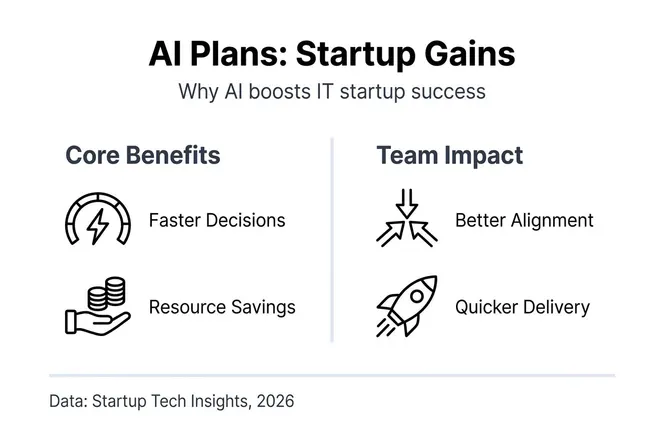
Many leaders believe business plans should remain static once created. This misconception prevents AI integration that could transform plans into living strategic tools. 70% of startups fail to regularly update plans to leverage AI benefits, limiting strategic agility and operational gains.
Another misunderstanding treats AI as purely automating tasks rather than enhancing strategy. While automation provides value, AI’s strategic contribution comes from pattern recognition, predictive modeling, and optimization suggestions that humans might miss. Focusing only on task automation leaves strategic benefits unrealized.
Leaders often underestimate data quality and skills required to succeed with AI. Poor quality data produces unreliable insights, while teams lacking AI literacy struggle to interpret outputs or adjust strategies effectively. These foundational elements require investment before AI delivers promised benefits.
Ignoring the need for ongoing plan updates and team training limits AI adoption success. Initial implementation represents just the starting point. Continuous refinement based on feedback, regular training on new features, and cultural adaptation determine long-term outcomes.
Debunking AI planning myths:
- Static plans provide stability (Reality: dynamic plans enable agility)
- AI only automates tasks (Reality: AI enhances strategic thinking)
- Any data works for AI (Reality: quality data is essential)
- One-time setup suffices (Reality: continuous updates maximize value)
- AI replaces human judgment (Reality: AI augments decision making)
These misconceptions limit startup competitive advantage and growth potential. Addressing them through education and realistic expectations improves AI adoption outcomes significantly.
Comparison of AI business plan tools and platforms
Choosing the right AI platform determines implementation success. Different solutions offer varying capabilities, and matching features to startup needs prevents costly misalignments.
| Platform Type | AI Capabilities | Collaboration Features | Workflow Integration | Best For |
|---|---|---|---|---|
| Static Templates | None | Limited commenting | Manual export required | Very early concept stage |
| AI Generators | Initial draft creation | Minimal | Separate from operations | Quick planning documents |
| Basic Project Tools | Task automation | Team chat and boards | Partial integration | Small teams starting digitization |
| Integrated AI Platforms | Real-time updates, predictive analytics, automation | Full collaboration suite | Deep workflow embedding | Growing startups scaling operations |
| Enterprise Solutions | Advanced AI, custom models | Enterprise-grade collaboration | Complete integration | Large organizations |
Static document templates lack collaboration and AI capabilities entirely. They produce PDFs suitable for investor pitches but provide no operational value. Basic AI generators create initial drafts but lack integration with workflows, forcing manual transcription into execution systems.
Integrated AI platforms offer real-time updates, automation, and team tools within unified environments. These solutions embed business plans directly into daily operations, ensuring strategies inform execution continuously.
Evaluation criteria for platform selection:
- Execution features beyond document creation
- Workflow integration depth and ease
- User interface simplicity and adoption speed
- Scalability as team and complexity grow
- AI sophistication and customization options
Choice depends on startup stage and AI readiness. Early stage startups may start with AI generators for initial plans, then migrate to integrated platforms as teams grow. Established startups benefit immediately from integrated solutions offering both planning and execution capabilities.
Implementing AI-driven business plans: practical steps for IT startups
Successful implementation requires systematic approaches addressing both technical and cultural dimensions.
-
Define clear objectives linking AI capabilities to business goals. Identify specific outcomes like reducing planning cycles, improving forecast accuracy, or increasing team alignment. Measurable objectives enable progress tracking and ROI calculation.
-
Assess and improve data quality and infrastructure first. Data issues and skill gaps reduce AI success rates by up to 40%, so addressing these upfront is essential. Audit existing data sources, clean inconsistencies, and establish governance processes.
-
Select platforms with embedded collaboration and automation. Prioritize integrated solutions over point tools requiring manual data transfer. Evaluate user interfaces for intuitiveness to minimize training requirements.
-
Train teams and foster a supportive culture for AI tools. Conduct hands-on workshops demonstrating practical applications. Address concerns about AI replacing jobs by emphasizing augmentation rather than replacement.
-
Establish continuous monitoring and frequent plan updates. Schedule monthly or quarterly review cycles to incorporate new data and adjust strategies. Automate monitoring dashboards to surface issues proactively.
-
Measure impact on operational efficiency and team collaboration regularly. Track metrics like planning cycle time, forecast accuracy, task completion rates, and team satisfaction. Use insights to refine AI usage continuously.
Pro Tip: Start with a pilot project in one department or initiative before rolling out AI-driven planning organization-wide, allowing you to learn and adjust approaches based on real feedback.
Discover Gammatica’s AI-driven project management solutions
Transforming your business plan from a static document into an executed strategy requires platforms designed for integration and automation. Gammatica offers AI-enhanced project and team management that embeds strategic planning directly into daily workflows. Real-time collaboration features, automated task management, and intelligent analytics help IT startups enhance team alignment and boost operational efficiency.
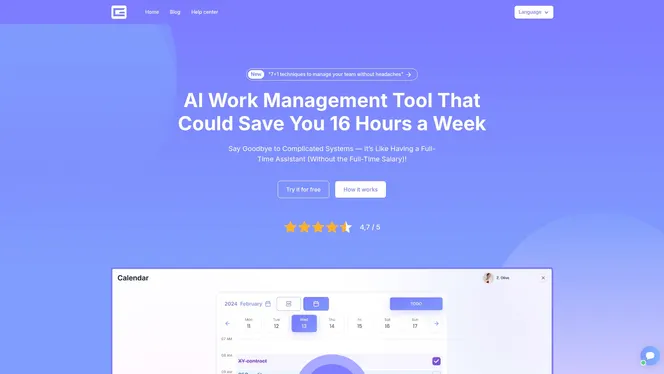
Our user-friendly interface minimizes training time while AI-powered automation saves up to 16 hours weekly per team member. Whether you’re comparing marketing project management software options, exploring tools specifically designed for founders, or seeking smart AI tools to improve team productivity, Gammatica provides the integrated platform to turn your strategic vision into measurable results.
Frequently asked questions
What is an AI-driven business plan, and why is it important for IT startups?
An AI-driven business plan uses real-time data analytics and machine learning to continuously update strategies, forecasts, and resource allocations. For IT startups in competitive markets, this dynamic approach enables rapid responses to changing conditions and maintains strategic agility that static plans cannot provide.
How can AI improve team collaboration within my IT startup?
AI automates routine communications like status updates and meeting summaries while providing real-time visibility into project progress and dependencies. These capabilities reduce administrative overhead by up to 16 hours weekly per person and improve team alignment by 40%, enabling faster and more coordinated project delivery.
What are common challenges when implementing AI-driven business plans, and how can I overcome them?
Poor data quality, team skill gaps, and resistance to change represent the most frequent obstacles. Overcome these by investing in data governance before AI deployment, providing comprehensive training programs, and securing visible leadership support. Addressing data and skill issues upfront prevents up to 40% of implementation failures.
Which AI business plan tools are best suited for early-stage versus growing IT startups?
Early-stage startups benefit from AI generators that quickly draft initial plans for fundraising or concept validation. Growing startups should adopt integrated platforms offering collaboration, automation, and workflow embedding to support execution at scale. The transition point typically occurs when teams exceed 10 people or operational complexity increases significantly.
How often should I update my AI-driven business plan to maximize its effectiveness?
Update your AI-driven business plan at least monthly, or quarterly at minimum, to incorporate evolving market data and performance insights. More frequent updates, even weekly for rapidly changing situations, ensure strategies remain relevant and responsive. Automated data integration enables continuous refinement without manual effort for each update cycle.