Most American companies believe task management software is just another layer of digital complexity, yet studies show over 60 percent of teams experience measurable productivity gains after implementation. With so many myths clouding the true value of these tools, it becomes easy to overlook their real-world impact. This article breaks down what task management software actually does, why American businesses continue to rely on it, and which common misconceptions may be holding your team back.
Table of Contents
- Defining Task Management Software And Myths
- Key Features That Drive Workplace Productivity
- Business Scenarios: Real-Life Software Applications
- Automation, Integration, And AI-Driven Benefits
- Common Mistakes And How To Avoid Them
Defining Task Management Software and Myths
Task management software represents a critical technological solution designed to help professionals organize, track, and optimize their work processes. At its core, the software transforms complex workflows into streamlined, manageable systems that enhance individual and team productivity. Understanding its nuanced capabilities requires dispelling common misconceptions and exploring how these digital tools genuinely improve operational efficiency.
Unlike traditional project tracking methods, modern task management platforms leverage advanced technologies to organize work around specific tasks rather than generic file systems. This paradigm shift means professionals can concentrate on actionable items instead of getting lost in administrative overhead. The fundamental goal is reducing information complexity and providing clear visual representations of work progress, priorities, and potential bottlenecks.
Interestingly, many professionals harbor myths about task management software that can prevent them from realizing significant productivity gains. One persistent misconception stems from Fred Brooks’s seminal work on software project management, which highlights how simply adding more people or tools doesn’t automatically accelerate project completion. Effective task management requires strategic implementation, not just technological acquisition.
Key myths about task management software include:
- Believing more features equal better productivity
- Assuming the software will automatically solve all workflow challenges
- Thinking implementation requires minimal learning or adaptation
- Expecting immediate, dramatic results without organizational commitment
Successful task management software implementation demands a holistic approach that considers team dynamics, individual work styles, and specific organizational objectives. By understanding these nuanced requirements, professionals can transform these digital tools from mere tracking mechanisms into powerful productivity accelerators.
Key Features That Drive Workplace Productivity
Workplace productivity depends on powerful task management software features that transform how teams collaborate, track progress, and achieve organizational goals. Modern digital tools go far beyond simple checklists, offering sophisticated capabilities that fundamentally reshape work processes and team dynamics.
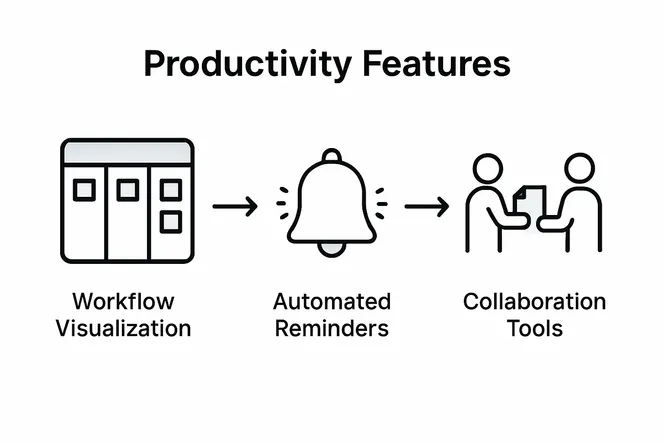
The most impactful task management features include robust workflow visualization tools like Kanban boards, which enable teams to track project stages visually and identify potential bottlenecks instantly. These visual interfaces allow team members to understand project progression at a glance, reducing communication overhead and providing real-time insights into team performance. Integrated time tracking and automated reporting further enhance accountability by generating precise metrics about individual and team productivity.

Advanced task management platforms differentiate themselves through intelligent automation and seamless integration capabilities. Smart prioritization features leverage artificial intelligence to help users focus on high-impact tasks, automatically ranking assignments based on urgency, complexity, and strategic importance. Integration with communication platforms, calendar systems, and enterprise tools ensures that task management becomes a centralized hub for organizational productivity rather than an isolated system.
Key productivity-driving features include:
- Real-time collaborative workspaces
- Automated task assignment and delegation
- Customizable workflow templates
- Advanced reporting and analytics
- Permission-based access controls
- Cross-platform synchronization
- Mobile and desktop compatibility
Successful implementation requires selecting features that align closely with specific organizational needs. By carefully evaluating and configuring task management tools, businesses can create dynamic, responsive work environments that maximize human potential and technological efficiency.
Business Scenarios: Real-Life Software Applications
Task management software transforms business operations across diverse industries, providing tailored solutions that address unique organizational challenges. From small startups to large enterprises, these digital tools adapt to specific workflow requirements, enabling teams to optimize productivity and streamline complex operational processes.
Project management technologies like TaskJuggler demonstrate how businesses can leverage sophisticated software to plan, track, and execute complex initiatives. Marketing teams use these platforms to coordinate campaign timelines, track deliverable progress, and allocate resources efficiently. Software development teams rely on task management tools to break down intricate coding projects into manageable sprints, ensuring clear communication and accountability across distributed teams.
Activity-based working strategies highlight how modern task management software supports flexible work environments, allowing organizations to reimagine traditional workplace structures. Remote teams benefit from centralized platforms that provide real-time collaboration, transparent task tracking, and seamless communication across different time zones and geographical locations.
Industry-specific application scenarios include:
- Healthcare: Coordinating patient care workflows and medical team schedules
- Education: Managing curriculum development and academic project timelines
- Construction: Tracking complex building projects and resource allocation
- Financial Services: Managing client onboarding and compliance tracking processes
- Technology: Coordinating software development sprints and product roadmaps
Successful implementation requires understanding that task management software is not a one-size-fits-all solution. Organizations must carefully evaluate their specific workflow complexities, team dynamics, and strategic objectives to select and configure tools that genuinely enhance operational efficiency and team collaboration.
Automation, Integration, and AI-Driven Benefits
Artificial intelligence is revolutionizing task management by transforming how businesses approach workflow optimization and productivity. Modern software platforms are moving beyond simple task tracking, integrating intelligent systems that can predict, prioritize, and streamline complex work processes with unprecedented precision and efficiency.
Recent research demonstrates how AI agents can significantly enhance workplace productivity by utilizing advanced machine learning techniques for autonomous task management. These intelligent systems analyze historical work patterns, predict potential bottlenecks, and automatically suggest optimal task prioritization strategies. By understanding individual team member’s working styles and productivity rhythms, AI-driven tools can generate personalized recommendations that maximize individual and collective performance.
Understanding the potential technological stress associated with rapid integration is crucial for effectively implementing these advanced systems. Successful adoption requires a balanced approach that considers human factors alongside technological capabilities. Organizations must create supportive environments that help employees adapt to and leverage these intelligent tools, ensuring that automation enhances rather than replaces human creativity and decision-making.
Key AI-driven automation benefits include:
- Intelligent task prioritization
- Predictive workload management
- Automated scheduling and resource allocation
- Real-time performance analytics
- Personalized productivity insights
- Proactive risk and bottleneck identification
- Adaptive workflow optimization
The future of task management lies in creating symbiotic relationships between human intuition and artificial intelligence. By carefully selecting and implementing AI-powered tools, businesses can unlock unprecedented levels of efficiency, allowing team members to focus on high-value strategic work while intelligent systems handle routine operational complexities.
Common Mistakes and How to Avoid Them
Task management software implementation is fraught with potential pitfalls that can undermine organizational productivity and team effectiveness. Understanding these common mistakes is crucial for businesses seeking to maximize the transformative potential of digital workflow tools and avoid costly operational disruptions.
Technological integration presents significant challenges, with research highlighting the potential for technostress that can negatively impact job performance. Many organizations rush into implementation without considering the human elements of technological adoption, leading to resistance, decreased morale, and ultimately reduced productivity. The key is to approach task management software as a collaborative tool that empowers employees rather than a surveillance mechanism that creates additional workplace pressure.
Drawing from classic project management insights, businesses often fall into the trap of believing that simply adding more tools or team members will automatically resolve workflow challenges. This misconception can lead to counterproductive strategies that complicate rather than simplify work processes. Successful implementation requires a nuanced approach that balances technological capabilities with human-centered design principles.
Common mistakes to avoid include:
- Overcomplicating the task management system
- Implementing without proper team training
- Neglecting to customize workflows
- Ignoring user feedback and resistance
- Treating software as a replacement for human judgment
- Failing to regularly review and adjust processes
- Overlooking integration with existing tools
Ultimately, effective task management software implementation is an ongoing process of adaptation and learning. Organizations must remain flexible, continuously seek feedback, and view technological tools as collaborative partners that enhance human potential rather than rigid systems that dictate workflow. The most successful implementations view task management software as a dynamic ecosystem that evolves with the team’s changing needs and capabilities.
Unlock True Productivity with AI-Driven Task Management
If you are struggling with organizational complexity and workflow bottlenecks highlighted in the article, Gammatica.com offers a powerful solution that directly addresses these challenges. By moving beyond simple task tracking to intelligent automation, AI-powered prioritization, and seamless integration, you can eliminate the myths of productivity and reduce the overwhelming administrative burden that slows your team down.
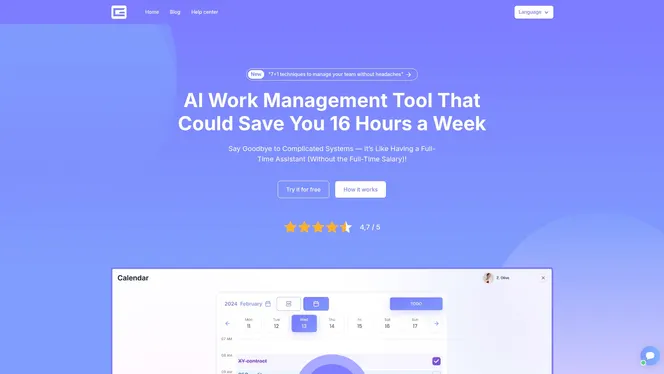
Ready to transform your work processes with a platform designed for strategic task management, real-time collaboration, and automation? Discover how Gammatica’s Kanban boards, customizable checklists, and AI suggestions can save you up to 16 hours a week by turning fragmented workflows into a streamlined, transparent system. Embrace smarter productivity today at Gammatica’s homepage and start your journey to better task management. See how a comprehensive team management platform can redefine collaboration for your business. Learn more and take action now by exploring Gammatica.com.
Frequently Asked Questions
What is task management software?
Task management software is a digital tool that helps professionals organize, track, and optimize their work processes, turning complex workflows into manageable systems that enhance productivity.
How can task management software improve workplace productivity?
Task management software improves productivity by offering features such as workflow visualization, real-time collaboration, automated task assignment, and advanced reporting, allowing teams to work more efficiently and effectively.
What are common misconceptions about task management software?
Common misconceptions include the beliefs that more features lead to better productivity, that the software will automatically solve all workflow challenges, and that minimal learning or adaptation is required for effective implementation.
How can artificial intelligence enhance the use of task management software?
Artificial intelligence can enhance task management software by providing intelligent task prioritization, predictive workload management, and personalized productivity insights, which help teams make better decisions and optimize their workflows.