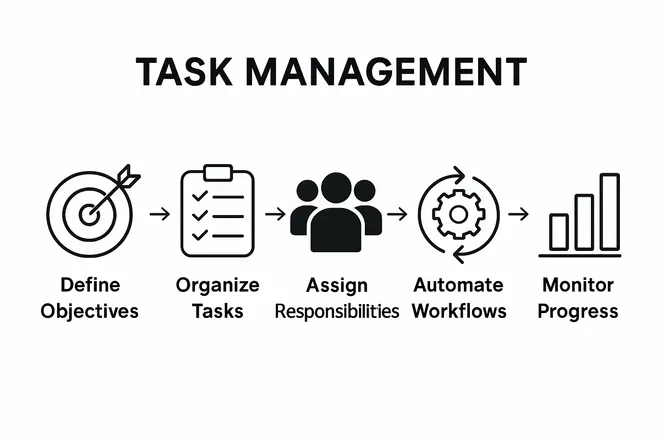
Over 90% of American teams report missed deadlines due to unclear project planning. When project goals are vague, even the most talented teams struggle to deliver on time. Defining objectives and streamlining workflows is essential for turning chaos into clarity. This guide breaks down each step so American project managers can build a practical, winning framework from the ground up.
Table of Contents
- Step 1: Define Project Objectives And Requirements
- Step 2: Organize Tasks Using Boards And Checklists
- Step 3: Assign Responsibilities And Set Priorities
- Step 4: Automate Workflows And Integrate Tools
- Step 5: Monitor Progress And Verify Outcomes
Step 1: Define project objectives and requirements
Successful project management starts with crystal clear objectives that guide your entire team’s efforts. In this crucial first step, you’ll transform vague ideas into a precise roadmap that sets the foundation for project success.
Begin by creating a comprehensive project charter that outlines your project’s core purpose and scope. Think of this document as your project’s north star - it will define exactly what you want to achieve, who will be involved, and what success looks like. Start by asking yourself key questions: What specific problem are we solving? What are our measurable goals? Who are the primary stakeholders?
Break down your objectives into specific, actionable components. Instead of saying “improve sales,” specify “increase quarterly sales revenue by 15% through targeted digital marketing campaigns.” Your objectives should be SMART: Specific, Measurable, Achievable, Relevant, and Time-bound. This approach helps prevent scope creep and ensures everyone understands the project’s exact parameters.
Pro Tip: Involve key stakeholders early in the objective-setting process. Their insights can reveal hidden requirements and potential challenges before they become roadblocks.
Once you’ve documented your objectives, validate them with your team. A collaborative review ensures alignment and catches potential blind spots. Your next step will be translating these high-level objectives into detailed project requirements and a tactical implementation plan.
Step 2: Organize tasks using boards and checklists
Task organization is the backbone of productive project management. In this step, you will transform complex project work into visual, manageable workflows that keep your entire team aligned and focused.
Start by implementing a Kanban board system, a powerful method for visualizing work progression. Think of these boards as dynamic roadmaps that track tasks from conception to completion. Create columns representing different work stages like “Pending,” “In Progress,” and “Completed.” This approach allows you and your team to see task status at a glance, identify potential bottlenecks, and maintain smooth workflow momentum.
For each project, develop comprehensive checklists that break down larger objectives into specific, actionable tasks. Assign clear ownership to each task, set realistic deadlines, and prioritize items based on their strategic importance. Use color coding or tags to highlight task urgency and complexity. This granular approach ensures nothing falls through the cracks and helps team members understand their specific responsibilities.
Pro Tip: Review and update your task boards weekly. Regular maintenance prevents task buildup and keeps your project trajectory clear and adaptable.
Once your boards and checklists are established, you’ll be ready to initiate task execution and track progress with unprecedented clarity. Your next step involves assigning specific team responsibilities and setting initial milestones.
Step 3: Assign responsibilities and set priorities
Effective team coordination begins with clear role definition and strategic priority management. In this critical step, you will transform your project blueprint into a structured roadmap where every team member understands their specific contributions and expected outcomes.

Start by creating project management terms of reference that explicitly outline each team member’s roles and expectations. These documents serve as your project’s organizational blueprint, detailing individual responsibilities, skill requirements, and performance metrics. Consider each team member’s strengths and expertise when assigning tasks. This approach ensures that complex project components are matched with team members who have the most relevant skills and experience.
Prioritize tasks using a strategic framework that balances urgency, complexity, and overall project impact. Implement a scoring system that helps you objectively rank tasks based on their strategic importance. For instance, assign numerical values to factors like project dependency, revenue potential, and resource requirements. This method transforms subjective decision making into a transparent, data driven process that keeps your entire team aligned and focused.
Pro Tip: Schedule brief weekly check ins to reassess task priorities. Project dynamics change quickly and your priority framework should remain flexible and responsive.
With responsibilities clearly defined and priorities strategically mapped, you are now prepared to initiate project execution and monitor team performance. Your next step involves establishing communication protocols and tracking progress systematically.
Step 4: Automate workflows and integrate tools
Workflow automation transforms good project management into exceptional operational efficiency. In this pivotal step, you will leverage technology to streamline processes, reduce manual work, and create a seamless collaborative environment that propels your project forward.
Begin by exploring service-oriented architecture frameworks that enable intelligent workflow integration. These sophisticated systems allow you to connect different tools and platforms, creating automated communication channels that eliminate redundant tasks and minimize human error. Look for tools that offer robust integration capabilities such as automatic task routing, real-time notifications, and centralized data synchronization across your project management ecosystem.
Implement strategic tool integrations that map directly to your project’s unique workflow requirements. Consider solutions that can automatically transfer information between your task management boards, communication platforms, and reporting systems. Prioritize tools with API connectivity and webhook support that enable custom automation sequences. By creating these intelligent connections, you transform disparate software platforms into a unified, responsive project management machine.
Pro Tip: Start with a few key integrations and gradually expand. Attempting to automate everything simultaneously can lead to complexity and potential system conflicts.
With your workflows now intelligently automated, you are positioned to dramatically improve team productivity and project tracking. Your next step involves establishing clear communication protocols and monitoring your newly streamlined operational infrastructure.
Step 5: Monitor progress and verify outcomes
Successful project management goes beyond initial planning the true magic happens through continuous tracking and strategic evaluation. In this critical phase, you will transform raw project data into meaningful insights that drive informed decision making and ensure your project stays on its intended trajectory.
Adopt comprehensive quality management guidelines that provide a structured approach to monitoring project progress. Establish key performance indicators (KPIs) that offer quantifiable metrics for tracking team performance and project health. These indicators should capture both quantitative measurements like task completion rates and qualitative assessments such as stakeholder satisfaction. Create a dashboard that visualizes these metrics in real time, allowing you to quickly identify potential bottlenecks or areas requiring immediate attention.
Implement a systematic approach to outcome verification that goes beyond surface level tracking. Develop a robust evaluation framework that compares actual project results against your original objectives. Use data driven analysis to assess not just what was completed but how effectively it was accomplished. This means examining not only task completion but also the quality of work, resource utilization, and alignment with strategic goals. Regular comprehensive reviews will help you make nimble adjustments and maintain project momentum.
Pro Tip: Schedule monthly retrospective meetings where the entire team can candidly discuss what worked well and what needs improvement. Transparency breeds continuous improvement.
With a solid monitoring and verification process in place, you are now equipped to make strategic adjustments and drive your project toward successful completion. Your next step involves preparing comprehensive documentation and preparing for final project review.
Unlock Effortless Task Management with AI-Powered Automation
The “Task Management Process Guide for Streamlined Projects” highlights the challenges of defining clear objectives, organizing complex workflows, assigning roles, and continuously monitoring progress. Many teams struggle with fragmented tools and manual processes that cause delays, miscommunication, and lost productivity. If you recognize these pain points and seek a unified solution that transforms your project management into a clear, automated system, then you are ready to experience a breakthrough.
At Gammatica.com, our AI-driven platform is designed specifically to address the issues of task overload and coordination complexity. With powerful features like intuitive Kanban boards, automated checklist creation, and seamless integrations for workflow automation, you can eliminate the guesswork and keep every team member aligned. Imagine freeing up to 16 hours each week by reducing administrative burdens and letting AI suggest your next best steps. Our solution empowers you to build transparent task hierarchies, prioritize with data-driven insights, and monitor real-time progress through customizable dashboards.
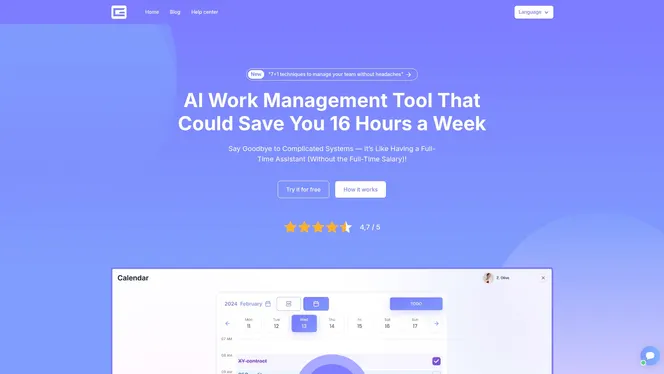
Elevate your project execution today by visiting Gammatica.com. Experience how our comprehensive tools for task management, collaboration, and automation come together to streamline your operations and amplify team productivity. Do not wait until bottlenecks slow your next project. Take control now and turn your strategic plans into flawless results.
Frequently Asked Questions
What are the key objectives of the task management process?
The key objectives of the task management process include defining clear project goals, organizing work, assigning responsibilities, and monitoring progress. Start by creating a project charter that clearly outlines these objectives to ensure every team member is aligned with the project’s purpose.
How do I break down project tasks effectively?
To break down project tasks effectively, create checklists that detail specific, actionable tasks for each objective. Prioritize these tasks based on importance and set realistic deadlines to streamline project execution.
What tools can help with automating workflows in project management?
Consider using project management tools that offer automation capabilities to streamline repetitive tasks and enhance team collaboration. Integrate these tools to minimize manual work and improve efficiency across your project workflows.
How can I monitor project progress effectively?
Monitor project progress by establishing key performance indicators (KPIs) that provide measurable insights into team performance and project health. Regularly review these metrics and adjust project plans as needed to keep the project on track.
What should be included in a project management terms of reference?
A project management terms of reference should include roles, responsibilities, expectations, and performance metrics for each team member. Outline these details to clarify individual contributions and ensure accountability throughout the project.
How often should I review task priorities during a project?
Review task priorities weekly to adapt to changing project dynamics and ensure the team remains focused on the most critical tasks. Regular check-ins will help you maintain clarity and keep the project progressing smoothly.