Juggling deadlines across continents can leave even the most experienced project managers searching for better ways to keep teams coordinated and productive. As more multinational companies shift to collaborative models, the challenge is finding an approach that delivers both flexibility and accountability. When teams embrace self-management, decision-making power gets distributed, engagement rises, and results improve—especially in complex global settings where traditional supervision often falls short.
Table of Contents
- Defining Self Management In Modern Teams
- Types And Key Skills Of Self Management
- How Self Management Boosts Team Productivity
- Common Pitfalls And How To Avoid Them
- Real-World Applications In Global Projects
Defining Self Management in Modern Teams
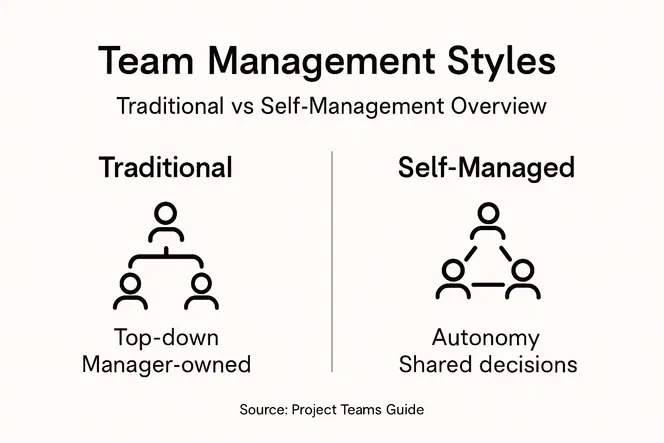
Self-management means your team makes decisions collaboratively rather than waiting for a manager to tell them what to do. Instead of a hierarchical structure where one person controls everything, team members share responsibility for planning, organizing, and executing work. This shift from top-down authority to shared ownership changes how teams operate fundamentally.
In modern teams, self-management involves three core elements. First, your team gains autonomy to decide how work gets accomplished. Second, decision-making becomes distributed, meaning multiple team members contribute to choices rather than one person dictating them. Third, everyone takes ownership of outcomes. When teams experience autonomy and shared decision-making, engagement and performance typically improve significantly.
What makes this different from traditional structures? Historically, managers owned all responsibility. They assigned tasks, monitored progress, and handled problems. Self-managing teams flip this model. You establish what needs doing, define success criteria, then trust your team to execute. People still have leaders, but those leaders coach rather than command.
For your project management context, this matters because self-management directly impacts how your multinational teams coordinate across time zones and cultures. When team members can make decisions without escalating every choice upward, work moves faster. Autonomous decision-making about collaboration directly influences team composition, dynamics, and ultimately performance.
One critical shift you’ll notice: accountability becomes collective. Your team doesn’t blame “management” for failures. They own results together. This creates stronger commitment because people believe their work matters and their voice gets heard in how things operate.
Here’s a comparison of traditional management versus self-management in teams:
| Aspect | Traditional Management | Self-Management |
|---|---|---|
| Decision Authority | Centralized with manager | Shared among team members |
| Accountability | Individual manager | Collective team ownership |
| Workflow Speed | Slower due to escalation | Faster with distributed choice |
| Leadership Role | Command and control | Coach and facilitator |
Pro tip: Start by empowering your team to make smaller decisions independently, then gradually expand their autonomy as they prove their capability and build trust in the process.
Types and Key Skills of Self Management
Self-management skills aren’t one-size-fits-all. Different team situations demand different capabilities. As a project manager, you need to recognize which skills matter most for your specific context and help your team develop them strategically.
The foundation starts with goal setting and personal accountability. Your team members must define what success looks like, then own their progress toward those goals. This isn’t about vague intentions. It means specific, measurable targets that each person commits to achieving. Without this anchor, self-management falls apart because people lack direction.

Self-discipline and stress management form the second pillar. Your team works across multiple time zones. Deadlines pile up. Email overflows. People get overwhelmed. Self-discipline and stress management skills directly impact how well individuals handle pressure without burning out or missing commitments. This includes knowing when to push hard and when to rest.
Another critical skill involves accepting failure as a learning opportunity. When someone misses a target or a process breaks down, do they hide it or address it? Self-managed teams treat setbacks as data, not disasters. This requires psychological safety and maturity. People need resilience and the ability to learn from mistakes, which strengthens problem-solving across the entire group.
Thoughtful communication and self-monitoring complete the skill set. Self-managed teams communicate their progress, blockers, and needs without waiting for status meetings. They adapt their approach based on feedback and results. This continuous feedback loop keeps work aligned without constant manager intervention.
For multinational teams specifically, these skills matter even more. Time zone differences mean less real-time oversight. Cultural differences require stronger communication discipline. Your best investment is building these capacities systematically.
For quick reference, here are the key self-management skills and their impact on multinational teams:
| Skill | Impact on Global Teams | Example Benefit |
|---|---|---|
| Goal Setting & Accountability | Aligns teams across cultures & time zones | Clear objectives, better results |
| Self-Discipline & Stress Management | Sustains productivity despite workload | Reduced burnout, timely delivery |
| Learning from Failure | Builds resilience in diverse environments | Faster skill development |
| Thoughtful Communication | Prevents misunderstandings remotely | Fewer delays, stronger teamwork |
Pro tip: Map your current team against these five skills and identify where gaps exist, then create targeted development plans that address the weakest areas first.
How Self Management Boosts Team Productivity
When your team manages itself effectively, productivity doesn’t just improve. It transforms. People stop waiting for permission and start moving on important work immediately. They make faster decisions. They reduce bottlenecks. The entire operation accelerates without adding headcount or resources.
The mechanics are straightforward. Self-managed team members own their workload and outcomes. This ownership creates accountability that no manager can enforce through monitoring. When someone knows they own a result, they work differently. They plan better. They communicate blockers earlier. They solve problems independently rather than escalating everything upward.
Self-management practices significantly enhance both quality and quantity of what your team produces. Research shows that improving self-management skills matters more than workplace design factors when it comes to boosting what knowledge workers deliver. You can have the fanciest office or the best remote setup, but if people lack self-management capability, output suffers.
For multinational teams specifically, self-management becomes your competitive advantage. Your teams work across continents. Real-time supervision becomes impossible. When people can manage themselves, manage their time, and prioritize their work without constant oversight, your distributed teams operate like cohesive units. Effective time management and goal-setting strategies directly reduce stress while simultaneously boosting performance and motivation across groups.
Here’s what actually changes in your day-to-day operations. Status update meetings shrink. People communicate progress without being asked. Decision cycles accelerate because authority distributes throughout the team rather than funneling through you. Work flows faster because people remove obstacles instead of documenting them in tickets waiting for manager approval.
The quality improvement matters too. Self-managed team members think about their work differently. They ask better questions. They anticipate problems before they happen. They improve processes because they feel ownership of results, not just task completion.
Pro tip: Track your team’s productivity metrics before and after implementing self-management practices, focusing on both output quantity and work quality to demonstrate the real impact on your bottom line.
Common Pitfalls and How to Avoid Them
Self-management sounds great in theory. Teams get autonomy. People feel ownership. Productivity soars. But in practice, things go sideways fast if you don’t anticipate the common traps. Understanding these pitfalls separates successful implementations from expensive failures.
The biggest trap is inconsistent implementation. You announce self-management, then slip back into old habits when deadlines loom. People get mixed messages. One week they decide autonomously. The next week you override their decisions because you’re stressed about timelines. Inconsistent implementation and difficulties sustaining self-regulation directly undermine the entire effort. Teams need consistent reinforcement and structured design to actually adopt the practice.
Second, many teams lack clear success criteria and monitoring systems. Self-management doesn’t mean no oversight. It means different oversight. Without visible metrics on progress, team members drift. They optimize for the wrong things. They don’t know if they’re succeeding. This creates stress and confusion rather than empowerment.
Third, inadequate support and coping strategies derail progress. When your team faces obstacles, do they know how to handle them? Or do they freeze? Poor self-monitoring and inadequate coping strategies increase stress and impair performance. People need explicit training in problem-solving, stress management, and how to communicate when things break down.
Another critical pitfall involves unclear boundaries and decision authority. Team members need to know what decisions they can make independently versus what requires consultation. Ambiguity paralyzes people. They either make decisions they shouldn’t or don’t make decisions they should. Set clear decision frameworks first.
Finally, avoid abandoning your leadership role. Self-management doesn’t mean hands-off. You still coach, remove obstacles, and hold people accountable. The difference is how you do it, not whether you do it.
Pro tip: Establish explicit decision-making guidelines at the start showing which decisions require team consensus, individual authority, or manager approval, then update these quarterly based on team feedback.
Real-World Applications in Global Projects
Global projects demand self-management. Your teams span time zones, cultures, and organizational boundaries. Synchronous collaboration becomes impossible. Email chains stretch across 24 hours. In this environment, self-managing teams don’t just perform better. They survive.
Consider a software development project with engineers in Singapore, developers in Berlin, and product managers in Toronto. Traditional hierarchical management breaks down immediately. By the time your morning standup happens, half your team has already gone home. Self-management becomes the only practical approach. Team members make decisions autonomously, communicate asynchronously, and coordinate through shared documentation and clear ownership.
Self-organization in projects enables effective autonomous work across diverse geographical and organizational contexts. Leadership, culture, and processes must adapt to support self-organizing project teams. This means defining clear objectives upfront, then trusting teams to determine execution methods. Your role shifts from micromanagement to obstacle removal and outcome accountability.
Real-world global projects benefit from self-management in concrete ways. A manufacturing company coordinating production across Brazil, Germany, and China uses self-managed teams to handle regional variations without constant escalation. Each site manages quality standards, schedules, and supplier relationships within defined parameters. Communication happens through structured weekly reports rather than daily meetings. This reduces overhead while maintaining alignment.
Another example comes from project-based learning in global engineering contexts, where teams solve real-world problems using user-centered design and digital collaboration tools. These projects prepare professionals to manage complexity in distributed environments by developing self-management competencies alongside technical skills.
The key difference in global applications is intentional structure. You can’t rely on proximity and informal communication. Everything must be explicit. Decision rights, communication protocols, escalation paths, and success metrics all need clear documentation. Self-management without structure in global projects becomes chaos.
Pro tip: Use your project management platform to establish shared documentation standards, decision frameworks, and communication templates that work across time zones, then enforce consistent usage across all teams.
Empower Your Team with AI-Driven Self-Management Tools
The article highlights key challenges in achieving effective self-management such as inconsistent decision-making authority, lack of clear accountability, and the need for better communication across global teams. If you are struggling to build autonomy within your team, improve distributed decision-making, or enhance accountability without constant managerial oversight, these pain points resonate deeply. Concepts like shared ownership, autonomous workflows, and thoughtful communication demand practical solutions that streamline collaboration while boosting productivity.
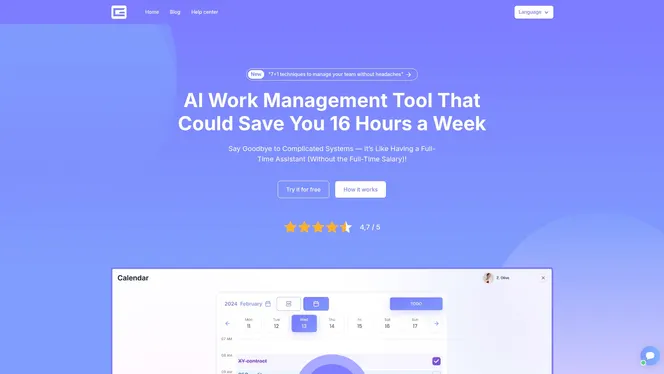
Gammatica.com offers a powerful project and team management platform designed specifically to address these challenges. With AI-driven automation, customizable checklists, Kanban boards, and integrated calendar coordination, your team can take ownership of tasks, manage priorities with clarity, and communicate effectively across time zones. Gammatica’s intuitive interface reduces administrative burdens so your team can focus on results instead of getting stuck in process. Explore how features like automatic task suggestions and permission controls foster the self-discipline and accountability the article emphasizes. Don’t wait for change—visit Gammatica.com now to transform your team’s self-management capabilities and reclaim up to 16 hours of productivity each week.
Start your journey toward a truly autonomous team today with Gammatica.com and see how AI can help your global workforce thrive.
Frequently Asked Questions
What is self-management in teams?
Self-management in teams refers to a collaborative approach in which team members make decisions collectively and take shared responsibility for planning, organizing, and executing work, rather than relying on a manager’s directives.
Why do teams need self-management?
Teams need self-management to foster autonomy, distribute decision-making, and encourage collective ownership of outcomes, which enhances engagement and overall performance. It allows for faster decision-making and reduces the need for constant managerial oversight.
What are the core skills necessary for effective self-management?
The core skills necessary for effective self-management include goal setting and personal accountability, self-discipline and stress management, learning from failures, and thoughtful communication. These skills help individuals handle pressure and maintain productivity in diverse and dynamic environments.
How does self-management impact productivity?
Self-management significantly boosts productivity as team members take ownership of their work, make faster decisions, communicate progress proactively, and solve problems independently. This results in improved workflow speed and overall quality of output.