TL;DR:
- Effective collaboration transforms organizational results by creating a self-reinforcing cycle of faster projects, better decisions, and higher retention. Building a collaborative culture, modeled by leaders and supported by processes and tools, leads to exponential improvements in innovation, productivity, and well-being over time. Success depends on leadership commitment, cultural change, and consistent effort rather than just implementing new technologies.
Most leaders think collaboration means scheduling more meetings. It doesn’t. The real team collaboration benefits are compounding. When collaboration is built into how your organization works, every win reinforces the next. You get faster projects, better decisions, higher retention, and stronger profits. Not as separate results, but as a self-reinforcing cycle. Organizations with consistent collaboration report benefits that grow and multiply over time, creating returns most leaders never anticipated when they started. This article breaks down the evidence and gives you the practical playbook to capture it.
The core team collaboration benefits for innovation
Here’s what most leaders miss about innovation: it doesn’t come from genius. It comes from friction. When people from different disciplines challenge each other’s assumptions, something better emerges than any single person could have produced alone.
Cross-team ideation accelerates innovation and market responsiveness in measurable ways. A product team working alongside customer support will catch usability problems in the design phase rather than after launch. A finance professional in a strategy meeting will flag a cost assumption that the sales team had never questioned. These moments of productive disagreement are where competitive advantages are born.
The advantages of team collaboration in problem-solving go beyond just getting more ideas. They improve the quality of your decisions. Inclusive decision-making processes strengthen implementation success because the people who will carry out a decision had a voice in shaping it. Objections surface earlier. Reversals happen less often.
One underrated benefit is what researchers call the “fresh eyes” effect. Collaborative review processes improve quality significantly over solo work because a fresh reviewer catches errors that even the original expert misses. This applies to code, strategy documents, financial models, and product designs equally. The person who wrote something is the worst person to proofread it.
- Diverse expertise combines different knowledge bases to generate ideas no single function would reach
- Assumption challenging exposes blind spots that become costly if unchallenged
- Earlier error detection through the “fresh eyes” effect reduces expensive fixes later
- Decision buy-in rises when team members are part of the process, making execution faster
- Cross-functional learning builds internal capability across the whole organization over time
Pro Tip: Run a structured “pre-mortem” exercise before major project launches. Ask your team to imagine the project has failed and work backward. This deliberate collaborative challenge surfaces risks that forward-looking planning typically misses.
How collaboration drives productivity and project speed
If innovation is where collaboration creates ideas, productivity is where it creates results. The mechanics are straightforward. When people can see each other’s work, they stop duplicating it. When communication is clear, they stop correcting misunderstandings. When accountability is shared, nothing falls between the cracks.
Here’s a four-step breakdown of how collaboration improves delivery speed in practice:
- Assign work by strengths. When managers can see who is skilled at what, tasks go to the right people the first time. This alone reduces revision cycles and rework by a significant margin.
- Create shared visibility. Transparent task boards and shared plans prevent bottlenecks and support faster outcomes because every team member can see the current status without asking.
- Reduce meeting overhead. Most status meetings exist because people don’t know what’s happening. Shared visibility removes that need. You meet to decide, not to update.
- Build in accountability loops. When progress is visible to everyone, individuals stay on track not because they are monitored, but because they understand how their work connects to the team’s goals.
The numbers back this up. Research links collaboration to a 25% productivity increase and a 21% profitability boost, with PwC data connecting collaboration directly to market expansion and revenue growth. That is a pretty significant return on what is fundamentally a cultural and operational choice.
| Factor | Siloed teams | Collaborative teams |
|---|---|---|
| Task duplication | Common | Rare |
| Project delivery time | Slower, more rework | Faster, cleaner handoffs |
| Communication overhead | High (constant check-ins) | Low (shared visibility) |
| Accountability | Individually owned, opaque | Shared, transparent |
| Risk detection | Late, costly | Early, manageable |
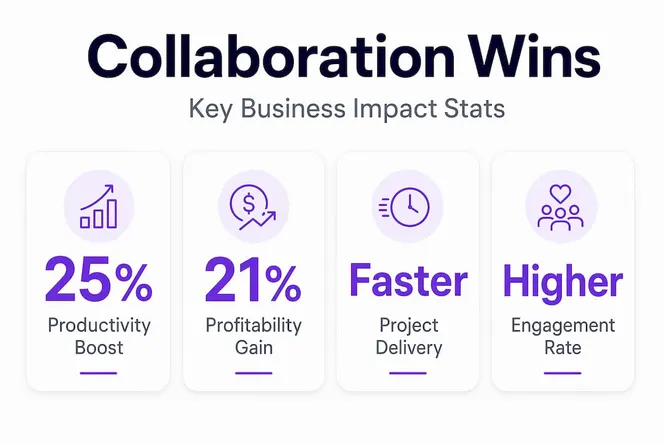
Teamwork and productivity are directly linked because collaboration removes the friction that slows work down. It’s not just about motivation. It’s about removing structural waste from your workflows.
Building trust, culture, and well-being through teamwork
Productivity gains get leaders excited. But the benefits of collaboration in the workplace that create lasting organizational health are the cultural ones. These are slower to build and harder to measure, yet they are what determine whether your team stays together long enough to compound those productivity gains.
Regular teamwork elevates morale, employee engagement, and connectedness. When people work closely with others toward a shared goal, they form bonds that make the organization feel less transactional. This matters enormously for retention.
Collaborative cultures foster belonging and reduce staff turnover. For context, the cost of replacing a mid-level employee typically runs between 50% and 200% of their annual salary. The importance of team unity shows up clearly here. When people feel connected to their colleagues and to the work, they don’t leave for minor reasons.
The well-being dimension deserves specific attention for hybrid and remote teams. Isolation is one of the top complaints from remote workers. Structured collaboration, such as regular cross-functional projects, shared ownership of outcomes, and even informal virtual team time, directly counteracts that isolation. It creates the social infrastructure that office environments used to provide automatically.
- Psychological safety grows when people work together regularly and trust each other’s intentions
- Isolation reduction for hybrid and remote workers comes directly from consistent collaborative touchpoints
- Recognition and belonging improve when individuals see how their contributions affect the team
- Retention increases as collaboration-driven satisfaction outweighs the appeal of other opportunities
- Manager-employee trust deepens when visibility is mutual and expectations are shared
Pro Tip: Don’t wait for a team offsite to build relationships. Assign small cross-functional projects quarterly. Informal collaboration on low-stakes work builds the social capital that pays off when high-stakes decisions need quick alignment.
Practical strategies for leaders to build real collaboration
Knowing the benefits is one thing. Getting them consistently is another. The organizations that actually realize the advantages of team collaboration at scale are the ones where leaders treat it as a system, not a sentiment.
- Model it yourself. Leaders must actively model collaboration and address communication styles to prevent silos. If you hold information close, your team will too. If you invite pushback and credit contributions publicly, that behavior spreads.
- Build explicit processes. Collaboration does not happen naturally in most organizations. Define how cross-functional projects are scoped, how decisions are made, and how information is shared. Ambiguity defaults to silos.
- Choose tools that serve culture, not replace it. Collaboration tools matter. Shared task management platforms, communication channels, and documentation systems all reduce friction. But no tool fixes a culture where people don’t trust each other or where leadership doesn’t reinforce openness.
- Protect deep work time. One of the biggest team collaboration challenges is over-collaboration. Too many meetings and too many async pings can actually reduce individual output and create fatigue. Set clear norms for when to meet and when to use asynchronous updates.
- Measure what matters. Track project delivery timelines, employee engagement scores, and cross-team project frequency. These give you a signal on whether your collaboration investments are paying off. Adjust based on data, not anecdotes.
The collaboration tools impact is real but conditional. Tools amplify whatever culture already exists. A platform that makes work visible will improve accountability in a trust-based team. In a blame-focused environment, it just creates surveillance anxiety.
The compounding organizational impact of collaboration
Think of collaboration as a flywheel. Each benefit reinforces the others, and over time the momentum becomes self-sustaining. This is why organizations that commit to collaboration early see exponential returns while those that treat it as optional stay stuck in linear improvement.

| Benefit area | Isolated impact | Compounding effect |
|---|---|---|
| Innovation | Better ideas per project | Continuous improvement culture |
| Productivity | Faster delivery per sprint | Higher capacity across all teams |
| Retention | Lower turnover this quarter | Institutional knowledge compounds |
| Decision-making | Better choices per initiative | Faster strategic execution over time |
| Revenue and profit | One profitable quarter | Sustained market expansion |
Gallup research links effective collaboration directly to business success and employee satisfaction as compounding outcomes. The organizations that feel the most benefit are not the ones that collaborated intensely for a single quarter. They are the ones that built collaboration into their operating model and maintained it consistently.
The flywheel logic also explains why the benefits of collaboration in the workplace appear gradual at first. In the first months, you see fewer duplicate tasks and faster meetings. After a year, you see higher engagement scores. After two or three years, you see retention advantages, a stronger employer brand, and a team with deeply shared context that makes every new project faster than the last.
My honest take on why collaboration fails in most organizations
I’ve worked with a lot of leadership teams on this, and I’ll say something that most articles won’t: most organizations don’t actually have a collaboration problem. They have a leadership commitment problem dressed up as a collaboration problem.
What I’ve seen repeatedly is that leaders invest in the tooling, run a company all-hands about “working better together,” and then return to their individual scorecards and department-level incentives. The signal from the top is collaboration. The reward system says compete internally. Guess which one wins.
What I’ve learned is that the teams who genuinely unlock team collaboration benefits are the ones where leadership makes the cost of silos visible. They put shared outcomes in performance reviews. They call out information hoarding in real time. They reward people who make their colleagues better, not just the individuals who hit personal targets.
I’ve also seen the tools trap. Leadership buys a new platform and expects collaboration to follow. The platform is just infrastructure. Culture is the product. I’ve watched teams with minimal technology outperform digitally equipped teams because the trust and norms were right. And I’ve watched well-funded teams with every tool available underperform because nobody modeled the behavior they claimed to want.
My advice: before you add another tool or run another workshop, look at your own behavior as a leader. Are you sharing information proactively? Are you crediting the people who helped you? Are you making it safe to say “I don’t know” in a meeting? Those things cost nothing and matter more than any platform decision you’ll make.
— Viktor
See your team’s collaboration in action with Gammatica
Understanding the benefits of team collaboration is the starting point. Seeing it happen in real time across your organization is where the real gains come from.
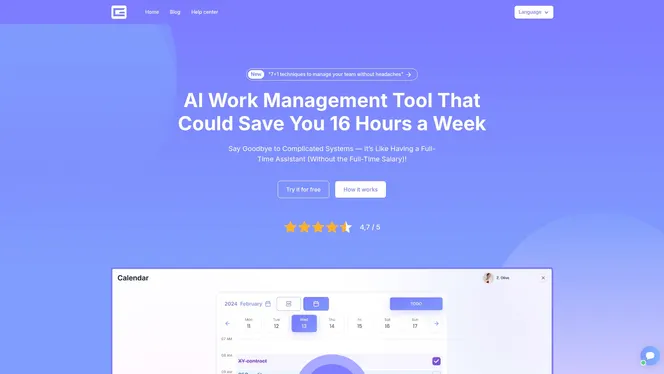
Gammatica for founders gives leaders full visibility into how their teams are working. You can track tasks, monitor project progress, and spot collaboration gaps before they become delivery problems. Features like Kanban boards, shared checklists, and built-in calendar coordination mean your team works from a single source of truth. AI-driven suggestions cut administrative overhead so managers spend time leading, not reporting. If you want to turn the team collaboration benefits you’ve read about into measurable results, Gammatica is built exactly for that.
FAQ
What are the main team collaboration benefits?
The main benefits of team collaboration include faster project delivery, improved decision quality, higher employee engagement, and stronger retention. Research links effective collaboration to a 25% productivity increase and a 21% profitability boost.
How does collaboration improve employee well-being?
Regular teamwork builds psychological safety, reduces isolation (especially in hybrid teams), and creates a sense of belonging. These factors directly raise engagement and lower turnover by making work feel more connected and meaningful.
What are the biggest team collaboration challenges leaders face?
The most common challenges are over-reliance on tools without changing culture, internal incentive structures that reward individual performance over shared outcomes, and leaders who model competition rather than openness. Culture change requires consistent leadership behavior, not just new software.
How do collaboration tools impact team performance?
Collaboration tools reduce communication overhead, create shared task visibility, and support accountability. Their impact depends entirely on the culture they operate in. Tools amplify existing behaviors, so a trust-based team benefits most, while a low-trust environment can underuse even the best platforms.
How long does it take to see real benefits from collaboration?
Initial gains like fewer duplicate tasks and faster meetings appear within weeks. Deeper benefits like improved retention, stronger institutional knowledge, and measurable profitability gains typically compound over one to three years of consistent collaborative practice.