If you think PMOs just monitor projects and create paperwork, you’re missing the bigger picture. Project Management Offices are strategic partners that align initiatives with business goals, improve collaboration, and boost project success rates by up to 33%. For small to medium enterprises, understanding what PMOs actually do and how to implement lean methodologies can transform project delivery and organizational efficiency. This guide explains PMO functions, frameworks, proven benefits, and fast implementation strategies tailored for business leaders ready to enhance project outcomes.
Key takeaways
| Point | Details |
|---|---|
| PMOs are strategic enablers | They align projects with business goals and foster cross-functional collaboration, not just administrative oversight. |
| Quick implementation is possible | An MVPMO approach delivers value in as little as eight weeks, ideal for resource-conscious SMEs. |
| Proven performance gains | Organizations with mature PMOs deliver 33% more projects on time and within budget. |
| Framework selection matters | Choose PMO type based on your organizational culture, maturity level, and strategic priorities. |
| Continuous measurement drives success | Using metrics like Net Promoter Score ensures your PMO delivers ongoing stakeholder value. |
What is a PMO and what do they do?
A Project Management Office is an organizational entity that supports project management practices and ensures strategic alignment across initiatives. PMOs foster collaboration between departments, guide project execution with standardized methodologies, and provide centralized governance. They serve as the connective tissue linking individual projects to broader business objectives, ensuring resources are allocated efficiently and risks are managed proactively.
Many leaders mistakenly view PMOs as bureaucratic layers focused solely on documentation and control. The reality is far more strategic. A common misconception is that PMOs are solely about controlling projects. In reality, they are strategic enablers, fostering collaboration, providing guidance, and ensuring projects align with business goals. This shift in perspective is critical for SMEs looking to maximize project ROI without adding unnecessary overhead.
PMOs perform several core functions that directly impact project outcomes:
- Governance: Establishing frameworks, standards, and decision-making protocols that ensure consistency across projects
- Resource management: Optimizing allocation of people, budget, and tools across competing initiatives
- Risk control: Identifying, assessing, and mitigating risks before they derail project timelines or budgets
- Performance tracking: Monitoring key metrics to provide visibility into project health and organizational capacity
These activities transform PMOs from passive observers into active contributors to business success. When implemented correctly, PMOs become the strategic partner that helps leadership make informed decisions about which projects to pursue, how to staff them, and when to pivot based on changing market conditions. The PMI project management standards provide detailed guidance on establishing these foundational practices.
Pro Tip: Start by mapping your current project pain points to specific PMO functions. If you struggle with resource conflicts, prioritize PMO activities around capacity planning and allocation before building out comprehensive governance frameworks.
Exploring PMO frameworks: types and structures
Understanding PMO types helps you select the right structure for your organization’s needs. PMO frameworks provide a structured approach to managing projects within an organization. Different frameworks serve different organizational scopes, from enterprise-wide coordination to project-specific support.

| PMO Type | Primary Purpose | Best For |
|---|---|---|
| Organizational PMO | Enterprise-wide governance and strategic alignment | Large organizations with multiple departments and complex portfolios |
| Business Unit PMO | Department-specific project support and resource management | Mid-sized companies with distinct business units requiring tailored approaches |
| Project-Specific PMO | Dedicated support for individual large or complex projects | High-stakes initiatives requiring intensive oversight and specialized expertise |
| Program Office | Coordination across related projects within a program | Organizations running interdependent initiatives toward common strategic goals |
The right PMO structure depends largely on organizational culture and maturity. A startup with limited project management experience benefits from a lean, project-specific approach, while an established enterprise might need comprehensive organizational PMO capabilities. Culture plays an equally important role: hierarchical organizations often prefer centralized PMO control, while collaborative cultures thrive with distributed PMO models that empower individual teams.
When selecting your PMO framework, consider these factors:
- Current organizational maturity: Assess existing project management capabilities and formality
- Strategic priorities: Align PMO scope with business goals, whether that’s rapid growth, operational efficiency, or risk mitigation
- Resource availability: Be realistic about the people, budget, and tools you can dedicate to PMO functions
- Stakeholder expectations: Understand what leadership and project teams need most from a PMO
- Cultural fit: Choose a structure that complements rather than conflicts with how your organization naturally operates
The PMI Pulse PMO frameworks research shows that alignment between PMO type and organizational context is a stronger predictor of success than choosing the most sophisticated framework available.
Pro Tip: Start with a minimal framework focused on your highest-impact needs, then expand PMO scope as organizational maturity grows. This prevents the common pitfall of building elaborate structures that teams perceive as bureaucratic obstacles rather than enablers.
Benefits of PMO implementation: improving project success rates and strategic alignment
The business case for PMOs rests on measurable improvements in project delivery and strategic outcomes. Organizations with mature PMOs deliver 33% more projects on time and within budget compared to those without one. This performance gap represents significant competitive advantage, especially for SMEs operating with limited margin for error.
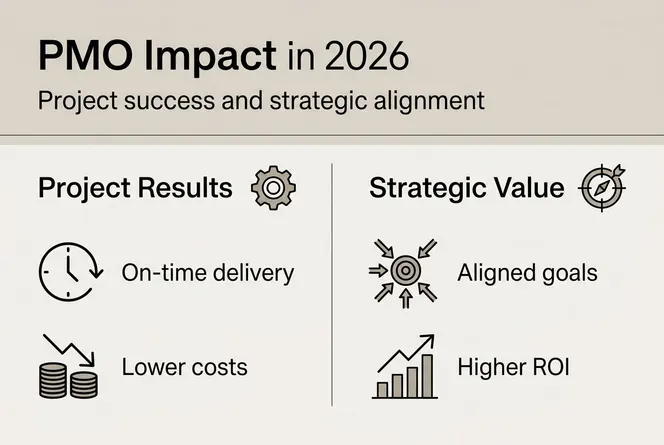
High-performing organizations recognize PMOs as strategic partners, not administrative burdens. In 68% of top-tier companies, PMOs can significantly improve project success rates and organizational strategic alignment. For small to medium enterprises specifically, PMO implementation can significantly improve project success rates in SMEs. by 15 to 20 percentage points, with strategic alignment improving by approximately 15%.
| Metric | Improvement with Mature PMO | Impact |
|---|---|---|
| On-time delivery | 33% increase | Fewer delays, better resource planning |
| Budget adherence | 33% increase | Reduced cost overruns, improved forecasting |
| Project success rate | 15-20% increase | Higher ROI on project investments |
| Strategic alignment | 15% increase | Better connection between projects and business goals |
Beyond these headline statistics, PMOs deliver additional operational benefits:
- Enhanced risk control: Early identification and mitigation of project risks reduces costly surprises
- Improved stakeholder communication: Centralized reporting and transparency build trust across the organization
- Better resource management: Visibility into capacity and allocation prevents burnout and optimizes utilization
- Knowledge retention: Standardized processes and documentation preserve organizational learning across projects
- Faster decision-making: Clear governance structures and escalation paths reduce bottlenecks
These benefits compound over time. The PMI project success statistics demonstrate that organizations sustaining mature PMO practices for three or more years see accelerating returns as teams internalize best practices and processes become second nature.
Pro Tip: Use the Net Promoter Score methodology to measure how stakeholders perceive PMO value. Survey project managers, sponsors, and team members quarterly with the simple question: “How likely are you to recommend our PMO services to a colleague?” This real-time feedback helps you iterate and improve continuously.
How to implement a lean and effective PMO in SMEs
The Minimum Viable PMO concept offers SMEs a practical path to realizing PMO benefits without overwhelming limited resources. MVPMO implementation can be achieved in as little as eight weeks, offering a faster alternative to traditional PMO setups. This lean approach prioritizes quick wins and stakeholder value over comprehensive processes.
The MVPMO approach prioritizes stakeholder needs and focuses on delivering value quickly by selecting a few high-impact services initially. Rather than building every possible PMO function upfront, you identify the services that will make the biggest difference for your organization right now, then expand systematically based on demonstrated value.
Follow these steps for effective MVPMO implementation:
- Assess organizational needs: Survey stakeholders to identify the top three project management pain points causing the most friction or failure
- Identify high-impact services: Select PMO services that directly address those pain points, such as standardized status reporting, resource allocation, or risk assessment templates
- Build quick processes: Create lightweight, practical processes that teams can adopt immediately without extensive training or behavior change
- Implement governance: Establish minimal but clear decision rights, escalation paths, and approval processes to prevent bottlenecks
- Measure value with NPS: Launch stakeholder surveys within the first month to gauge perceived value and gather improvement feedback
- Iterate and expand: Based on feedback and demonstrated wins, gradually add complementary PMO services that build on initial success
A key challenge is avoiding ‘scope creep’ and maintaining a lean focus during MVPMO implementation. The temptation to add “just one more” process or service can quickly transform a lean PMO into the bureaucratic entity you were trying to avoid. Discipline around scope is essential, especially in the first six months.
The IPMA MVPMO fast implementation methodology emphasizes that speed to value matters more than comprehensiveness. An imperfect PMO delivering measurable benefits in eight weeks beats a perfect PMO that takes six months to launch, by which time stakeholder enthusiasm has waned and organizational priorities may have shifted.
Pro Tip: Create a visible “PMO value tracker” dashboard showing how your services directly impact key business metrics like project delivery speed, budget variance, or stakeholder satisfaction. Update it monthly and share widely to maintain momentum and executive support.
Explore Gammatica solutions to streamline your PMO
Implementing PMO methodologies becomes significantly easier with the right technology foundation. Gammatica offers AI-driven tools specifically designed to automate and optimize the project management processes that PMOs oversee. For business leaders establishing or scaling PMO functions, these solutions reduce administrative burden while improving visibility and control.
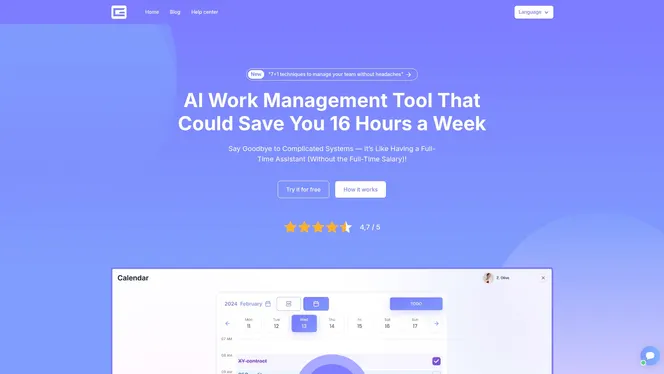
Gammatica for founders provides comprehensive team visibility and project tracking that supports PMO governance requirements without manual reporting overhead. The platform’s AI suggestions and pre-made templates align perfectly with MVPMO principles, helping you establish standardized processes quickly. Meanwhile, Gammatica VEX automation handles repetitive workflow tasks, freeing your PMO to focus on strategic activities like risk management and stakeholder alignment. For organizations where project success depends on customer relationships, Gammatica sales tools integrate CRM capabilities with project workflows, ensuring customer-facing initiatives stay aligned with delivery realities. Explore these solutions to accelerate your PMO implementation and start realizing the 33% improvement in on-time, on-budget delivery that mature PMOs achieve.
FAQ
What are the most common types of PMOs?
The four main PMO types are organizational PMOs that provide enterprise-wide governance, business unit PMOs serving specific departments, project-specific PMOs dedicated to individual large initiatives, and program offices coordinating related projects. Each type serves different organizational scopes and maturity levels. Your choice depends on whether you need centralized control across the entire organization or targeted support for specific initiatives.
How long does it typically take to implement a PMO?
MVPMO implementation can be achieved in as little as eight weeks. Traditional comprehensive PMO setups often take six months or longer, but the lean MVPMO approach delivers quick value by focusing initially on high-impact services. This faster timeline works especially well for SMEs that need to demonstrate ROI quickly to maintain stakeholder support. The MVPMO implementation timeline prioritizes iterative expansion over upfront completeness.
How can PMOs measure their effectiveness?
The Net Promoter Score (NPS) is a valuable metric for measuring the perceived value of the PMO by stakeholders. Survey project managers, sponsors, and team members regularly with the simple question about likelihood to recommend PMO services. Beyond NPS, track operational metrics like percentage of projects delivered on time, budget adherence rates, and overall project success percentages. The Net Promoter Score for PMOs methodology provides immediate feedback that guides continuous improvement.
What challenges should SMEs expect when setting up a PMO?
A key challenge is avoiding ‘scope creep’ and maintaining a lean focus during MVPMO implementation. SMEs often try to implement too many PMO services too quickly, overwhelming teams and diluting impact. Maintaining stakeholder involvement throughout implementation is equally critical, as buy-in determines whether teams view the PMO as helpful or bureaucratic. Resource constraints require SMEs to be more selective than large enterprises about which PMO functions to prioritize. The MVPMO scope management approach helps navigate these challenges by emphasizing discipline around service selection and iterative expansion.