Most American project managers rely on structured documentation to track every stage of complex projects. With over 60 percent of teams facing delays due to unclear progress tracking, finding a reliable method becomes crucial. A Waterfall Report offers a clear, step-by-step record that keeps everyone on the same page and helps teams avoid costly setbacks by spotlighting each milestone along the way.
Table of Contents
- Defining A Waterfall Report And Its Purpose
- Core Stages Of A Waterfall Report Process
- Common Applications In Business And Teams
- Benefits And Limitations For Project Management
- Comparing Waterfall Reports To Agile Methods
- Avoiding Common Pitfalls In Waterfall Reporting
Defining a Waterfall Report and Its Purpose
A Waterfall Report serves as a comprehensive project management visualization tool that tracks task and workflow progression through sequential stages. Derived from the Waterfall model, this reporting method provides a systematic approach to monitoring project developments from inception to completion.
Unlike agile methodologies that allow frequent iterations, the Waterfall approach emphasizes linear progression where each project phase must be fully completed before advancing to the next stage. This means teams meticulously document and validate each milestone before moving forward, creating a structured and predictable workflow management strategy. The report typically includes detailed tracking of project phases such as conception, requirements analysis, design, construction, testing, deployment, and maintenance.
Key characteristics of a Waterfall Report include its ability to offer transparent progress tracking, clear milestone definitions, and precise documentation of project transitions. Project managers utilize these reports to identify potential bottlenecks, assess team performance, and ensure that each developmental stage meets predetermined quality standards. The sequential nature of the report allows for comprehensive documentation and helps stakeholders understand exactly where a project stands in its lifecycle.
Pro Tip - Workflow Management: Always include detailed timestamps and responsible team members for each phase transition in your Waterfall Report to enhance accountability and provide clear historical context for project progression.
Core Stages of a Waterfall Report Process
The Waterfall Report process follows a rigorous, sequential framework designed to provide comprehensive project tracking. Based on the Waterfall model, this methodology involves distinct stages that ensure systematic progression and detailed documentation of project development.
The core stages typically include five primary phases: Preliminary Analysis, System Requirements, Design, Implementation, and Maintenance. In the preliminary analysis stage, project managers conduct initial research, define project scope, and establish foundational objectives. This initial phase sets critical benchmarks for subsequent stages, determining project feasibility and potential challenges.
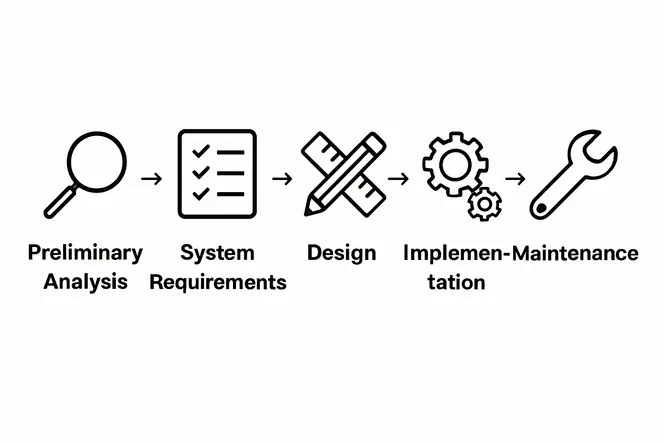
During the system requirements stage, teams comprehensively document specific project needs, stakeholder expectations, and technical specifications. The design phase transforms these requirements into detailed architectural plans, creating blueprints that guide development. Implementation involves actual project execution, where teams transform design specifications into tangible deliverables. The final maintenance stage focuses on ongoing support, performance monitoring, and potential refinements to ensure long-term project success.
Pro Tip - Stage Documentation: Create a comprehensive checklist for each project stage, requiring explicit sign-off and documentation before advancing to the next phase, to maintain accountability and ensure thorough quality control.
Common Applications in Business and Teams
Waterfall Reports have become an essential tool across multiple industries, offering structured project management approaches particularly suited to environments with clearly defined objectives. The Waterfall model finds widespread application in sectors requiring meticulous planning and sequential execution, such as software development, construction, manufacturing, and engineering.
In software development, Waterfall Reports are especially valuable for projects with stable and well-understood requirements. Teams leverage these reports to track complex development cycles, ensuring each phase meets specific quality standards before progression. Similarly, construction and manufacturing industries utilize these reports to manage intricate projects with multiple interdependent stages, where precise documentation and linear progression are critical for success.
Beyond technical domains, Waterfall Reports prove instrumental in various business contexts. Marketing teams use them to track campaign developments, product launch timelines, and strategic initiatives. Human Resources departments implement these reports for recruitment processes, training program rollouts, and organizational change management. Financial teams also benefit by using Waterfall Reports to monitor investment projects, budget implementations, and long-term strategic planning efforts.
The table below highlights typical business uses and advantages of Waterfall Reports across departments:
| Department | Common Use of Waterfall Reports | Business Advantage |
|---|---|---|
| Software Development | Managing product lifecycle phases | Ensures quality and accountability |
| Construction | Coordinating sequential building tasks | Tracks dependencies, reduces delays |
| Marketing | Planning campaign rollouts | Monitors progress and timelines |
| Finance | Overseeing budget implementations | Improves financial control and reporting |
Pro Tip - Cross-Functional Implementation: Develop a standardized Waterfall Report template that can be easily adapted across different departments, ensuring consistent tracking and communication regardless of the specific project or team.
Benefits and Limitations for Project Management
Waterfall Reports offer a structured approach to project management with distinct advantages and challenges. The Waterfall model provides a framework that excels in scenarios with well-defined requirements and minimal expected changes, presenting both significant benefits and notable limitations for project teams.
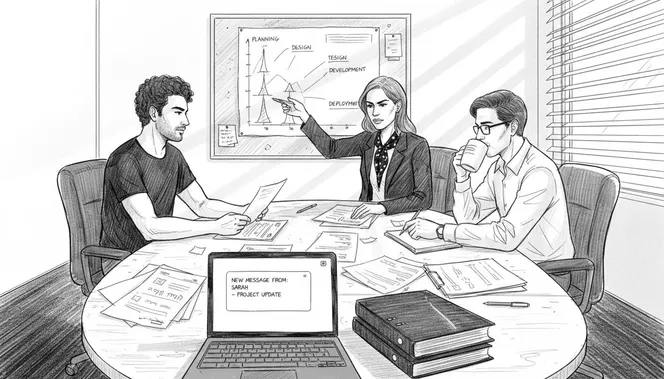
Benefits of the Waterfall Report methodology include crystal-clear project documentation, predictable progression, and enhanced accountability. Project managers appreciate the linear approach that mandates complete documentation at each stage, creating comprehensive records that track precise project evolution. The sequential nature ensures thorough validation of each project phase before advancement, reducing the likelihood of fundamental errors propagating through later stages. Teams benefit from a straightforward roadmap with explicit milestones, enabling better resource allocation and more accurate timeline projections.
However, the Waterfall approach is not without significant limitations. Its rigid structure becomes problematic in dynamic environments where project requirements might shift unexpectedly. Unlike more flexible methodologies, Waterfall Reports struggle to accommodate mid-project changes, potentially resulting in increased costs and reduced adaptability. Complex projects with uncertain or evolving specifications can find this methodology constraining, as each phase must be completely finalized before proceeding. Small adjustments can trigger extensive rework, creating potential bottlenecks and diminishing overall project efficiency.
Pro Tip - Hybrid Approach: Consider implementing a modified Waterfall methodology that incorporates periodic review points, allowing controlled flexibility while maintaining the structured benefits of sequential project tracking.
Comparing Waterfall Reports to Agile Methods
Understanding the fundamental differences between Waterfall Reports and Agile methodologies is crucial for selecting the most appropriate project management approach. The Waterfall model represents a stark contrast to Agile methods, with each approach offering unique strengths and addressing different project management challenges.
Structural Differences define the core distinction between these methodologies. Waterfall Reports follow a strictly linear progression, where each project phase must be fully completed and approved before moving to the next stage. In contrast, Agile methods embrace an iterative approach, allowing continuous refinement and adaptation throughout the project lifecycle. This fundamental difference impacts everything from team dynamics to project flexibility. Waterfall Reports excel in environments with well-defined, stable requirements, while Agile methods thrive in dynamic settings where requirements may evolve rapidly.
The Decision-Making Process varies significantly between these approaches. Waterfall Reports demand comprehensive upfront planning, with detailed documentation and precise milestone tracking. This approach provides excellent predictability and clear accountability but reduces flexibility. Agile methodologies, by comparison, prioritize adaptive planning, evolutionary development, and rapid response to change. They break projects into smaller, manageable increments called sprints, allowing teams to adjust strategies quickly based on ongoing feedback and emerging requirements. This makes Agile particularly effective for complex projects with uncertain outcomes or rapidly changing technological landscapes.
Here’s a summary comparing Waterfall Reports and Agile project management methods:
| Aspect | Waterfall Reports | Agile Methods |
|---|---|---|
| Workflow Structure | Linear, sequential stages | Iterative, flexible cycles |
| Change Management | Changes are difficult mid-project | Frequent adaptation allowed |
| Documentation | Comprehensive and detailed | Lean and often updated |
| Best for | Stable, clear requirements | Evolving, uncertain requirements |
Pro Tip - Hybrid Strategy: Consider implementing a hybrid project management approach that combines Waterfall’s structured documentation with Agile’s iterative flexibility, tailoring the methodology to your specific project needs and organizational context.
Avoiding Common Pitfalls in Waterfall Reporting
Navigating the complexities of Waterfall Reports requires strategic planning and proactive management. The Waterfall model presents unique challenges that can derail project success if not carefully addressed, making it crucial to understand and mitigate potential risks from the outset.
Documentation Precision stands as the first critical defense against Waterfall reporting failures. Incomplete or vague requirements can create cascading problems throughout the project lifecycle. Teams must invest substantial time in comprehensive initial planning, meticulously documenting every aspect of project scope, stakeholder expectations, and technical specifications. This means conducting thorough stakeholder interviews, creating detailed requirement matrices, and establishing clear acceptance criteria for each project phase. Ambiguity at any stage can trigger extensive rework, potentially consuming significant time and resources.
Another significant pitfall involves Rigid Progression Mechanisms. The sequential nature of Waterfall Reports means that errors discovered late in the process can be exponentially more costly to correct. Successful teams implement strategic checkpoints and validation processes at each stage transition. This involves creating robust review mechanisms, conducting comprehensive testing before phase advancement, and maintaining open communication channels that allow for controlled adjustments. Risk management becomes paramount, requiring teams to develop contingency plans and build flexibility into their seemingly rigid framework.
Pro Tip - Validation Strategy: Implement a comprehensive “stage gate” review process with mandatory sign-offs from key stakeholders at each project phase, ensuring thorough validation and reducing the likelihood of undetected issues progressing through the project lifecycle.
Streamline Your Waterfall Reporting with Smart Project Management
Managing sequential workflows and tracking detailed milestones can become overwhelming without the right tools. If you are facing challenges such as maintaining precise documentation, enforcing rigorous stage sign-offs, or avoiding bottlenecks in your Waterfall Report processes, you are not alone. The need for transparent progress tracking and accountability is critical to ensure smooth project progression and reduce costly rework.
Gammatica.com offers a comprehensive AI-driven platform designed to simplify and automate these exact pain points. With features like customizable checklists, automation for milestone tracking, Kanban boards for visual workflow management, and integrated online meetings, you can maintain the structured rigor of the Waterfall model while boosting efficiency. Leverage AI suggestions and pre-made templates to reduce administrative burdens and free up valuable time for your team.
Take control of your project lifecycle today by visiting Gammatica.com. Explore how our solution supports detailed documentation, accountability through permission controls, and seamless team collaboration. Don’t let rigid workflows slow you down. Enhance your Waterfall reporting process now and experience smarter, faster project management.
Frequently Asked Questions
What is a Waterfall Report?
A Waterfall Report is a project management visualization tool that tracks task and workflow progression through sequential stages, providing a structured approach to monitor project developments from inception to completion.
How does a Waterfall Report differ from Agile methodologies?
Waterfall Reports follow a linear progression where each phase must be completed before moving to the next, whereas Agile methodologies embrace an iterative approach, allowing for continuous adjustments throughout the project lifecycle.
What are the core stages involved in a Waterfall Report process?
The core stages typically include Preliminary Analysis, System Requirements, Design, Implementation, and Maintenance, with each phase focused on comprehensive documentation and validation before proceeding.
What are the main benefits of using Waterfall Reports in project management?
Waterfall Reports offer benefits such as clear project documentation, predictable progression, enhanced accountability, and a structured workflow that helps teams ensure quality and meet milestones effectively.