TL;DR:
- Effective virtual team building relies on purposeful activities aligned with team goals.
- Top games include icebreakers, Bingo, escape rooms, scavenger hunts, and trivia for high engagement.
- Strong team culture and clear management are essential for virtual activities to succeed.
Remote teams face a real challenge: finding virtual activities that actually bring people together, rather than just filling calendar slots. High engagement teams are 17% more productive and earn 21% higher profitability, yet most team leaders struggle to find games that move the needle. The skepticism is fair. Too many virtual activities feel like mandatory fun that nobody asked for. This guide cuts through the noise. You’ll get a clear framework for choosing the right games, a breakdown of five proven options, a side-by-side comparison table, and situational tips to make every session count. No gimmicks. Just what works.
Key Takeaways
| Point | Details |
|---|---|
| Fit to team goals | Choose games based on your team’s size, objectives, and inclusivity needs for maximum engagement. |
| Prioritize quality over quantity | A few well-chosen, purposeful games outperform frequent, generic activities every time. |
| Measure outcomes | Check engagement rates and collect feedback to improve your virtual team building approach. |
| Customize for hybrid teams | Adjust activities to ensure full inclusion no matter where your team members are located. |
How to choose the right virtual team building games
Before diving into specific games, it’s vital to know how to judge which options actually meet your team’s needs. Not every activity belongs on every team’s calendar, and picking the wrong one wastes time and goodwill.
Start with these core evaluation criteria:
- Team size and structure: Does the game work for 8 people or 80? Some activities collapse at scale, while others thrive with larger groups.
- Session duration: Games range from 10-minute icebreakers to 90-minute immersive experiences. Match the length to your team’s available bandwidth.
- Inclusivity: Consider time zones, language diversity, accessibility needs, and tech comfort levels. A game that excludes even one person defeats the purpose.
- Clear objective: Are you building trust among new hires, sparking creativity, or just offering a morale boost? Your goal shapes your game choice.
- Technology requirements: Zoom, Slack, a browser, or a dedicated app? The simpler the setup, the higher the participation rate.
One often-overlooked factor is the debrief. A 10-minute conversation after the activity, where people share what they noticed or felt, multiplies the value of any game. Without it, you’re just playing. With it, you’re building something.
Blending asynchronous and live games also helps. Async options like collaborative playlists or photo challenges keep energy going between meetings without adding to Zoom fatigue.
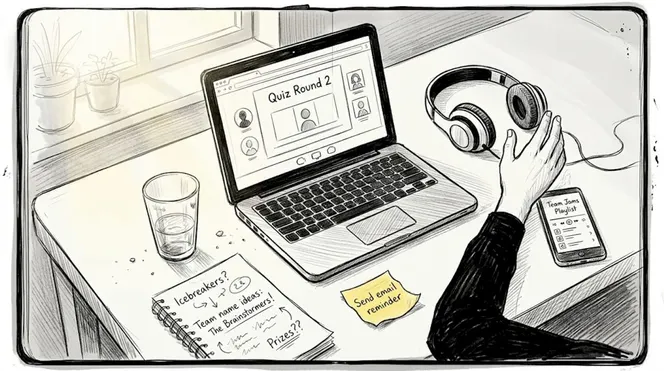
On ROI: purposeful, tailored activities are essential for sustained cohesion, and the real return shows up in retention rates, engagement scores, and team pulse surveys, not just the cost of the activity itself.
Pro Tip: Before booking any game, ask your team directly what they’d enjoy. A quick two-question poll takes five minutes and dramatically increases buy-in.
Finally, watch for red flags. If your team dreads every scheduled activity, or if the same people disengage every time, a fun game won’t fix that. Those patterns usually point to deeper issues in communication, trust, or management style.
Top 5 virtual team building games that work
With selection criteria in mind, here are five team-tested games that consistently score high for remote group engagement.
-
Two Truths and a Lie: A classic icebreaker that needs zero tools beyond your video call. Each person shares two true statements and one false one; the group guesses the lie. It’s fast, personal, and surprisingly revealing. Best for new teams or onboarding sessions. Time: 15 to 20 minutes.
-
Virtual Bingo: Customize a bingo card with team-specific phrases, habits, or fun facts. Players mark off squares in real time during a meeting or async over a week. Scales beautifully for groups of 10 to 500. Great for all-hands meetings or company-wide events.
-
Online Escape Room: Teams solve puzzles collaboratively under a time limit using a shared browser-based platform. This one builds problem-solving skills and surfaces natural leadership dynamics. Best for established teams that want a challenge. Time: 45 to 60 minutes.
-
Virtual Scavenger Hunt: Participants race to find household items or complete photo challenges on their phones. It gets people off their screens briefly, which actually refreshes energy. Works well for hybrid teams since remote and in-office players compete on equal footing.
-
Team Trivia: Host a live trivia session with categories tailored to your industry, company history, or pop culture. Platforms like Kahoot or Mentimeter make scoring automatic. Trivia drives friendly competition and is one of the easiest formats to facilitate.
“Virtual team building games like icebreakers, Virtual Bingo, scavenger hunts, escape rooms, trivia, and storytelling relays consistently rank highest for remote group engagement.”
Pro Tip: For any game lasting longer than 20 minutes, assign a co-facilitator to monitor the chat and call out quieter participants by name. It keeps energy up and ensures nobody disappears into the background.
Comparison: Which game fits your team’s needs?
Summarizing the strengths and differences, this table makes it easy to match a game to your team’s priorities.
| Game | Duration | Team size | Cost | Tech needed | Best for | Inclusivity |
|---|---|---|---|---|---|---|
| Two Truths and a Lie | 15-20 min | 4-20 | Free | Video call only | New hires, onboarding | Very high |
| Virtual Bingo | 20-30 min | 10-500+ | Free or low | Video call, shared doc | All-hands, morale | High |
| Online Escape Room | 45-60 min | 4-50 | $10-30/person | Browser-based platform | Established teams | Moderate |
| Virtual Scavenger Hunt | 30-45 min | 8-200 | Free or low | Phone or laptop | Hybrid teams | High |
| Team Trivia | 20-40 min | 6-1,000+ | Free or low | Kahoot, Mentimeter | Any team, any size | Very high |
Icebreakers like Two Truths and a Lie shine for new hires because they lower social barriers quickly without requiring any preparation. Problem-solving formats like escape rooms deliver more depth but demand more from participants, so save those for teams that already have a baseline of trust.
Games can be categorized by duration ranging from 5 to 90 minutes, team size from 4 to 1,000 or more, and mechanics, with immersion, cost, and engagement rates being the most important factors for team leaders to weigh.
Customization matters more than most people realize. A generic trivia game feels flat. A trivia game where half the questions reference your company’s founding story or inside jokes? That one people talk about the next day.
Scalability is also worth planning ahead. If your team is growing fast, prioritize games that work for both 15 and 150 participants without requiring a total redesign.
Situational tips: How to implement games for maximum impact
Now that you’ve spotted the best games and compared them, the final step is to tailor your approach for maximum impact.
Match the activity to your specific goal:
- Onboarding new hires: Use short icebreakers like Two Truths and a Lie in the first week. The goal is psychological safety, not deep bonding.
- Boosting morale after a tough quarter: Trivia or Bingo works well here. Low stakes, high energy, easy wins.
- Sparking creativity before a big project: Try a collaborative storytelling relay or a scavenger hunt with creative prompts. These loosen thinking patterns.
- Strengthening long-term team bonds: Escape rooms or multi-round trivia leagues build sustained connection over time.
For hybrid teams, equity is everything. If in-office employees can see each other’s reactions while remote employees are isolated on a small screen, the experience is already unequal. Use breakout rooms to mix in-office and remote players intentionally.
Camera fatigue is real. Don’t schedule a 60-minute game right after a 90-minute strategy meeting. Protect the energy by placing games at the start of a session or on a lighter day.
Pro Tip: After every game, send a one-question pulse survey. “Did this activity help you connect with a teammate you don’t usually talk to?” That single question tells you more than a five-minute debrief.
Forced or awkward team building often signals root causes in management or communication, and hybrid teams require special attention to ensure equity and genuine inclusion. If participation keeps dropping, the problem is rarely the game itself.
Track your results over time. Engagement pulse scores before and after a game series, combined with retention data, give you a real picture of whether your investment is paying off.
Why most virtual team games fail—and how to make yours work
Here’s a perspective most team building guides won’t give you: the game itself is almost never the reason a session succeeds or fails. Culture is.
When a team has strong communication norms, psychological safety, and genuine respect between members, even a mediocre game produces laughter and connection. When those foundations are shaky, the best-designed escape room in the world feels like a chore.
This is the uncomfortable truth. Virtual games are not a substitute for good management. They’re an amplifier. Run them in a healthy environment and they accelerate trust. Run them in a dysfunctional one and they highlight exactly what’s broken.
Our advice: run fewer games, but run them with real purpose. Define the outcome you want before you book anything. Collect feedback every single time. Treat each activity as an experiment, not a magic bullet. Over three to four sessions, you’ll have real data on what your team actually responds to. That’s worth far more than a long list of “fun” activities with no feedback loop.
Take your remote team building further with Gammatica
Building a cohesive remote team takes more than a great game. It takes consistent communication, clear workflows, and tools that keep everyone aligned between sessions.
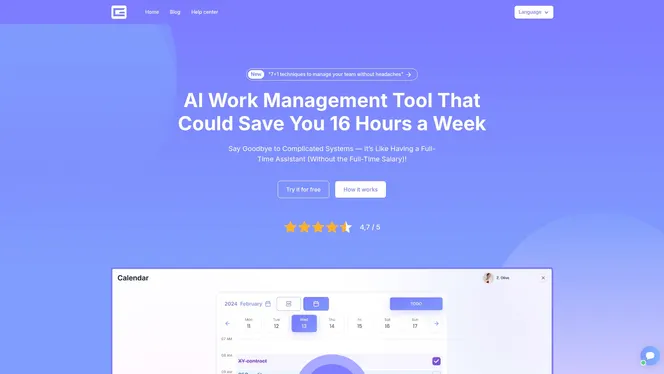
Gammatica is an AI-driven team and project management platform that helps remote and hybrid teams stay connected, organized, and productive every day, not just during scheduled activities. From shared task boards and automated workflows to calendar coordination and team wikis, Gammatica gives your team the structure that makes every collaboration feel effortless. If you’re ready to build a team culture that goes beyond one-off games, explore how Gammatica’s sales tools and platform features can support your long-term engagement strategy.
Frequently asked questions
What are the best games for large virtual teams?
Virtual Bingo and Trivia scale easily for teams from 20 to 1,000 participants, making them the most practical choices for large groups. Scavenger hunts also work well at scale with minimal facilitation overhead.
How do you measure the effectiveness of a virtual team building game?
Track post-event engagement pulses and retention metrics alongside camera-on rates and voluntary participation levels. These indicators give you a clearer picture than simple attendance numbers.
What if my team finds virtual games awkward or unhelpful?
If activities consistently feel forced, address communication or management problems first, since no game can substitute for a psychologically safe team environment.
Are virtual games more economical than in-person team building?
Yes. Virtual events cost up to 75% less than in-person alternatives and can deliver up to $4 in ROI for every $1 spent, making them a smart investment for budget-conscious HR teams.