Teamwork stands at the heart of every thriving american organization, yet over 60 percent of teams struggle to reach their collective goals. Strong collaboration is not just a buzzword—it shapes how businesses solve complex problems, innovate, and stay competitive. Understanding what makes teamwork succeed and recognizing the core principles behind it can help any group turn individual strengths into exceptional results.
Table of Contents
- Defining Teamwork And Its Key Principles
- Types Of Team Structures And Roles
- Effective Communication In Team Environments
- Maximizing Productivity With Collaboration Tools
- Common Teamwork Challenges And Mistakes To Avoid
Defining Teamwork and Its Key Principles
Teamwork represents a fundamental organizational capability where individuals collaborate strategically to achieve shared objectives. According to OpenStax, a team can be defined as “people organized to function cooperatively as a group” - emphasizing the intentional nature of collective effort.
Successful teamwork hinges on several critical principles that transform individual contributions into synchronized performance. Guides.HimmelFarb highlights that effective teams develop strong relationships built on mutual commitment, cooperation, and trust. These foundational elements enable groups to transcend individual capabilities and generate collective outcomes greater than the sum of individual efforts.
The core principles of exceptional teamwork include:
- Common Purpose: Establishing clear, shared goals that align individual motivations
- Complementary Skills: Leveraging diverse talents that collectively address complex challenges
- Mutual Accountability: Creating an environment where team members take collective responsibility
- Performance Orientation: Focusing on measurable outcomes and continuous improvement
- Collaborative Learning: Promoting an environment of ongoing skill development and knowledge exchange
Ultimately, teamwork is not simply about working together, but working intelligently together. It requires deliberate strategies, emotional intelligence, and a commitment to collective success that goes beyond individual achievements.
Types of Team Structures and Roles
Team structures represent dynamic organizational frameworks that enable collaborative work across different contexts and objectives. arXiv provides a comprehensive categorization of team structures, identifying four primary models: Project Teams, Collectives, Agile Teams, and Scrum Teams. Each structure offers unique approaches to collaboration, communication, and goal achievement.
One particularly versatile team structure is the cross-functional team. According to Wikipedia, these teams combine members with diverse functional expertise from departments like finance, marketing, operations, and human resources. This interdisciplinary approach allows organizations to leverage varied perspectives and specialized skills to solve complex challenges more effectively.

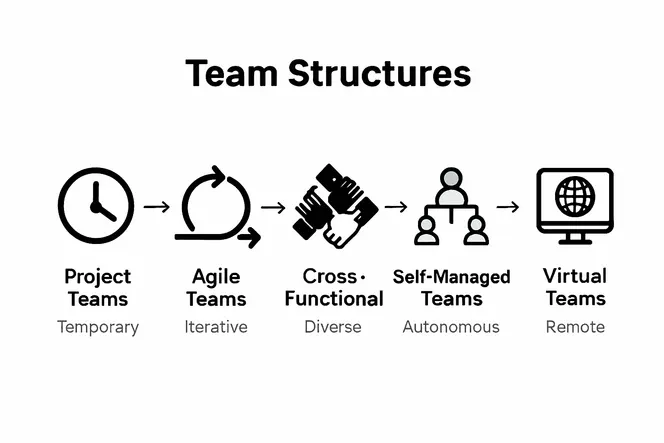
The key team structures and their defining characteristics include:
- Project Teams: Time-bound groups assembled to complete specific initiatives
- Agile Teams: Flexible, iterative groups focused on adaptive planning and continuous improvement
- Cross-Functional Teams: Multidisciplinary groups drawing talent from different organizational departments
- Self-Managed Teams: Autonomous groups with collective decision-making responsibilities
- Virtual Teams: Geographically distributed teams collaborating through digital technologies
Within these structures, team roles typically encompass critical functions such as leadership, strategic planning, execution, communication, and quality assurance. Successful teams balance these roles dynamically, ensuring each member contributes their unique strengths while maintaining collective alignment toward shared objectives.
Effective Communication in Team Environments
Effective communication serves as the foundational pillar of successful team collaboration, transforming individual interactions into cohesive collective performance. Cambridge emphasizes that communication in team environments goes beyond simple information exchange, representing a complex interplay of leadership, interpersonal dynamics, and strategic dialogue.
The judge-advisor system, as explored by Wikipedia, provides insight into sophisticated communication models where structured feedback and collaborative decision-making can dramatically enhance team outcomes. This framework highlights the critical importance of creating communication channels that allow for open, respectful, and constructive dialogue across different roles and perspectives.
Key principles for establishing robust team communication include:
- Active Listening: Engaging fully with teammates’ perspectives without interrupting
- Transparency: Sharing information openly and consistently
- Constructive Feedback: Providing specific, actionable insights that support growth
- Psychological Safety: Creating an environment where team members feel comfortable expressing ideas
- Multi-Channel Communication: Utilizing diverse communication tools and platforms
Successful teams recognize that communication is not just about speaking, but about creating a shared understanding. This requires intentional strategies, emotional intelligence, and a commitment to continuous improvement in how team members connect, collaborate, and resolve challenges together.
Maximizing Productivity With Collaboration Tools
Collaboration tools have revolutionized how teams work, breaking down traditional communication barriers and enabling unprecedented levels of coordination and productivity. arXiv highlights four fundamental principles of open collaboration that modern tools facilitate: creating economic value, enabling work exchange and reuse, supporting loose coordination, and allowing universal participation.
The evolution of organizational structures has been deeply influenced by collaboration technologies. Wikipedia explores how innovative frameworks like Holacracy leverage digital tools to replace traditional hierarchical management, empowering self-organizing teams to define roles, establish clear purposes, and streamline governance processes more dynamically and efficiently.
Key strategies for maximizing productivity through collaboration tools include:
- Real-Time Communication: Instant messaging and video conferencing platforms
- Project Management: Shared dashboards and task tracking systems
- Document Collaboration: Cloud-based editing and version control
- Workflow Automation: Tools that reduce repetitive administrative tasks
- Knowledge Management: Centralized information repositories and wikis
Ultimately, successful implementation of collaboration tools requires more than just technology. It demands a cultural shift toward transparency, mutual trust, and a commitment to continuous learning and adaptation. Teams that embrace these tools not as mere software, but as strategic enablers of collective intelligence, will unlock unprecedented levels of performance and innovation.
Common Teamwork Challenges and Mistakes to Avoid
Teamwork, while essential for organizational success, is fraught with potential pitfalls that can undermine collective performance. arXiv reveals a critical insight about team structures, demonstrating that hierarchical approaches can significantly constrain innovation by limiting the team’s ability to generate novel ideas. Traditional top-down management models often create invisible barriers that prevent creative problem-solving and dynamic thinking.
Wikipedia highlights the complex dynamics of functional diversity, noting that while diverse teams can enhance creativity, they simultaneously face significant challenges in coordination and communication. This delicate balance requires intentional strategies to leverage individual differences while maintaining team cohesion and aligned objectives.
Common teamwork challenges that can derail collective performance include:
- Communication Breakdowns: Misunderstandings, unclear expectations, and information silos
- Unresolved Conflict: Interpersonal tensions that escalate and disrupt collaborative efforts
- Unequal Contribution: Team members not pulling their weight or feeling overburdened
- Lack of Clear Goals: Misaligned or undefined team objectives
- Resistance to Feedback: Defensive attitudes that prevent constructive improvement
Successful teams proactively recognize and address these challenges. They cultivate a culture of psychological safety, transparent communication, and continuous learning. By embracing vulnerability, maintaining mutual respect, and developing adaptive strategies, teams can transform potential obstacles into opportunities for growth and collective excellence.
Transform Your Teamwork Into Unstoppable Success
Mastering teamwork means overcoming challenges like communication breakdowns, unclear goals, and the struggle to balance diverse skills and roles. If your team faces these common blockers or wants to maximize collaboration while reducing administrative overhead, it is time to harness smart solutions that empower every team member. Concepts like mutual accountability and performance orientation become far easier to achieve with the right tools supporting your workflow.

Experience how Gammatica.com, an AI-driven project and team management platform, brings these teamwork principles to life. With features that automate tasks, streamline calendar coordination, and enhance real-time communication through integrations with Zoom and Google Meet, your team can focus on what matters most. Free up to 16 hours each week and foster psychological safety and constructive feedback by using customizable checklists, Kanban boards, and permission controls tailored to your unique team structure.
Start mastering teamwork in your organization today by visiting Gammatica.com. Discover how AI-powered task management and seamless collaboration tools drive productivity and create a culture of collective success. Don’t wait for miscommunication or coordination gaps to slow you down. Take the first step toward smarter teamwork now.
Frequently Asked Questions
What are the key principles of effective teamwork?
The key principles of effective teamwork include common purpose, complementary skills, mutual accountability, performance orientation, and collaborative learning, all aimed at achieving shared goals.
How can communication be improved within a team?
Improving communication within a team can be achieved through active listening, ensuring transparency, providing constructive feedback, fostering psychological safety, and utilizing multi-channel communication tools.
What types of team structures exist, and how do they differ?
There are several team structures, including project teams, agile teams, cross-functional teams, self-managed teams, and virtual teams. Each structure varies in its approach to collaboration, communication, and decision-making processes, catering to different organizational needs.
What are common challenges teams face, and how can they be overcome?
Common challenges include communication breakdowns, unresolved conflicts, unequal contributions, lack of clear goals, and resistance to feedback. These can be overcome by fostering a culture of psychological safety, transparent communication, and continuous learning within the team.