TL;DR:
- High-performing teams using time tracking see a 30% boost in productivity and fewer project overruns.
- Effective implementation requires clear objectives, the right method, and transparent communication to foster trust.
- Time tracking is most valuable when used for feedback and development rather than monitoring or control.
Time tracking is one of those topics that can split a leadership team right down the middle. Some managers see it as a non-negotiable productivity lever. Others worry it signals distrust. But here is what the data actually says: 87% of high-performing teams use time tracking software, and they report a 30% productivity boost alongside a 25% reduction in project overruns. That is not a marginal gain. The difference between organizations that benefit from time tracking and those that suffer from it comes down to how it is implemented. This article walks you through the best practices that separate high-impact programs from the ones that quietly kill morale.
Key Takeaways
| Point | Details |
|---|---|
| Clear objectives matter | Defining the purpose of time tracking builds team buy-in and ensures valuable insights. |
| Methods should fit workflow | Choose time tracking tools and approaches that align with how your team operates and manages projects. |
| Integrate with management style | Tailor your tracking practices to suit Agile or Waterfall methodologies for the best results. |
| Prioritize trust and feedback | Emphasize transparency, development, and feedback over surveillance to sustain long-term adoption. |
Set clear objectives and success criteria
Every effective time tracking strategy starts with one question: Why are we doing this? If your team cannot answer that question clearly, adoption will be a constant battle. Before you roll out any tool or process, define what success looks like in concrete terms.
Clear objectives do three things. They give your team a reason to participate, they align tracking behavior with actual business outcomes, and they create a shared language for reviewing results. Without them, time tracking becomes a box-checking exercise that nobody takes seriously.
Here is what strong objectives look like in practice:
- Reduce project overruns by identifying where hours are being lost before deadlines are missed
- Improve billing accuracy by capturing billable hours in real time rather than reconstructing them from memory
- Allocate resources better by understanding which projects consume the most team capacity
- Spot burnout early by monitoring workload distribution across individuals and departments
The framing matters enormously. Research shows that time tracking boosts profitability with planning and feedback, achieving 37% higher compliance, but actively harms trust when it is used primarily for surveillance. That distinction is not subtle. Teams that feel watched rather than supported disengage fast, and disengagement is expensive.
When communicating objectives to your team, be direct and specific. Tell them what data will be collected, who will see it, how it will be used, and what it will never be used for. Transparency here is not just good ethics. It is good strategy.
Tie your objectives to outcomes that matter to your team members personally. If tracking helps them prove their workload is unsustainable, they have a reason to use it honestly. If it helps the organization win more projects by demonstrating capacity, that is a win everyone shares.
Pro Tip: Write your time tracking objectives into a one-page document and share it with the team before launch. Include what you will measure, what you will not, and how results will feed back into decisions. This single step dramatically reduces resistance.
Choose the right time tracking method for your workflow
Not every team needs the same approach. Choosing the wrong method is one of the most common reasons time tracking programs fail. The method has to fit how your team actually works, not how you wish they worked.
Here is a quick comparison of the most common approaches:
| Method | Best for | Key advantage | Key limitation |
|---|---|---|---|
| Manual entry | Small teams, simple projects | Low cost, flexible | Prone to errors and memory gaps |
| Automated tracking | Knowledge workers, remote teams | High accuracy, low friction | Privacy concerns if not communicated well |
| Task-based tracking | Agile teams, deliverable-focused work | Ties time to output | Can miss non-task overhead |
| Project-based tracking | Client work, fixed-scope projects | Clear billing and reporting | Less granular for internal analysis |
As time tracking statistics confirm, high-performing teams overwhelmingly favor software-based solutions because they reduce the administrative burden of manual entry and improve data reliability. Manual logs are better than nothing, but they consistently undercount time spent on communication, context switching, and unexpected interruptions.
Automated tracking tools capture activity passively, which sounds ideal. But they require careful rollout. If your team discovers automated tracking without prior explanation, trust evaporates quickly. Always communicate what is being tracked and why.
For most organizations, a hybrid approach works best:
- Use automated tracking for baseline activity data
- Layer in task-based entries for project-specific reporting
- Add project-level summaries for client billing and executive reporting
The goal is to capture enough data to make good decisions without creating so much logging overhead that the tracking itself becomes a productivity drain. If your team spends 20 minutes a day logging time, that is a signal to simplify the method, not push harder on compliance.
Integrate time tracking with popular project management methodologies
Once you have chosen a method, the next step is making sure it fits your project management approach. Time tracking that runs parallel to your methodology rather than inside it creates friction and duplicate work.
Agile and Waterfall represent two distinct philosophies, and they call for different tracking strategies. Here is how they compare:
| Dimension | Agile | Waterfall |
|---|---|---|
| Tracking unit | Sprint or iteration | Phase or milestone |
| Review cadence | End of each sprint | At milestone completion |
| Primary goal | Continuous improvement | Predictability and control |
| Flexibility | High | Low |
For Agile vs. Waterfall tracking, the core difference is this: Agile uses iterative, sprint-based tracking to feed fast feedback loops, while Waterfall relies on milestone-based checkpoints to maintain schedule predictability.
Here is how to implement tracking effectively in each environment:
- In Agile: Track time at the story or task level within each sprint. Review actuals versus estimates at the sprint retrospective. Use the data to improve future sprint planning, not to penalize individuals.
- In Waterfall: Define time budgets at the phase level during project initiation. Track against those budgets at each milestone review. Flag variances early so scope or timeline adjustments can be made before they cascade.
- In hybrid environments: Identify which parts of your work are iterative and which are fixed-scope. Apply Agile tracking to the former and Waterfall tracking to the latter. Keep reporting simple so neither stream creates confusion.
Pro Tip: In Agile teams, avoid using sprint time data to compare individual velocity across team members. That turns a learning tool into a performance ranking system, which kills psychological safety and honest estimation.
Foster adoption and accountability without harming trust
You can have the best objectives and the most appropriate method, and still watch your time tracking initiative collapse if adoption is poor. Rollout strategy is where most programs succeed or fail.

Effective onboarding starts before the tool goes live. Hold a team session to explain the purpose, walk through the tool, and answer questions openly. Designate a go-to person for ongoing support. Make the first week low-stakes so people can build the habit without fear of judgment.
Here are the practices that consistently drive strong adoption:
- Make it easy: Reduce the number of clicks required to log time. If it takes more than 30 seconds, compliance will drop.
- Integrate with existing tools: Time tracking embedded in your project management platform gets used. Standalone apps get forgotten.
- Recognize accurate logging: Acknowledge team members who log consistently and honestly, not just those who log the most hours.
- Use data in visible ways: Share insights from time data in team meetings. When people see their input influencing decisions, they value the process.
- Protect individual privacy: Aggregate reporting at the team level for most decisions. Access to individual logs should be limited and clearly defined.
“The difference between surveillance and support is intent and communication. Teams that understand how their data will be used are far more likely to engage honestly and consistently.”
Research backs this up. Time tracking with planning and feedback produces 37% higher compliance than surveillance-focused approaches. The message is clear: when people feel the data is working for them, they participate. When they feel it is being used against them, they find ways around it.
Address concerns directly and early. Privacy worries are legitimate. Micromanagement fears are common. The antidote is not reassurance alone. It is structure. Show your team exactly who sees what, how data flows, and what decisions it informs. Then stick to those boundaries consistently.
Our take: The real ROI of time tracking is feedback, not oversight
Most organizations approach time tracking as a control mechanism. They want to know where hours go, who is working, and whether the numbers match the plan. That is understandable. But it is also the wrong primary goal, and it is why so many programs deliver disappointing results.
The organizations that get the most out of time tracking treat it as a feedback system. They use the data to ask better questions: Where are our estimates consistently wrong? Which project types consume more capacity than we budget for? Which team members are quietly overloaded while others have room to grow?
Those questions lead to real improvements. Better sprint planning. Smarter resource allocation. Earlier burnout detection. Fairer workload distribution. None of that happens when the primary focus is making sure everyone logs eight hours a day.
Long-term cultural buy-in only comes when team members see time tracking as a tool for their own development, not just a reporting obligation. When someone can look at their own data and say “I spend 40% of my week in meetings and only 20% on deep work,” that is a conversation worth having. That is where time tracking earns its place.
See how Gammatica streamlines time tracking for teams
Putting these practices into action requires a platform that supports transparency, automation, and collaboration without adding complexity. That is exactly what Gammatica is built for.
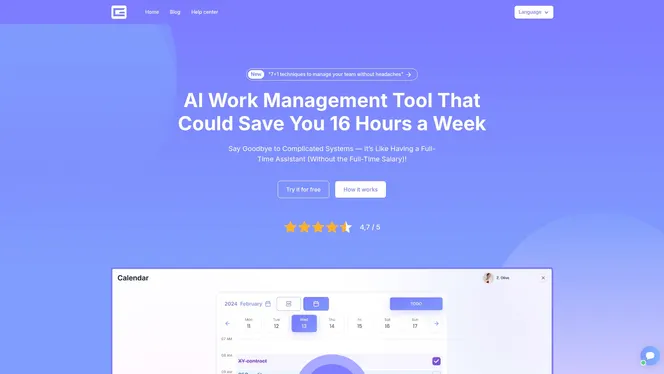
Gammatica gives business leaders and project managers the tools to implement non-invasive, insight-driven time tracking within a broader project management ecosystem. From Kanban boards and task management to automated workflows and team collaboration, everything is connected. Whether you are leading a startup as a founder or managing a high-velocity sales team, Gammatica helps you track what matters, surface the right insights, and keep your team moving forward without the overhead.
Frequently asked questions
How does time tracking improve team productivity?
Time tracking helps teams identify where hours are being lost to low-value activities, enabling smarter prioritization. High-performing teams report a 30% productivity improvement and 25% fewer project overruns after adopting tracking software.
What is the difference between Agile and Waterfall time tracking?
Agile uses sprint-based, iterative tracking to support continuous improvement, while Waterfall relies on milestone-based checkpoints to maintain schedule predictability across defined project phases.
How can leaders introduce time tracking without damaging trust?
Be transparent about what data is collected, who sees it, and how it will be used. Focusing on planning and feedback rather than surveillance produces 37% higher compliance and preserves team morale.
Are automated time tracking tools better than manual methods?
Automated tools reduce errors and administrative overhead significantly. Since 87% of high-performing teams use software-based tracking, the evidence strongly favors automation, provided it is rolled out with clear communication about privacy.