Managing projects often feels chaotic when time disappears during endless meetings, tasks fall through the cracks, and documents are scattered everywhere. These roadblocks not only frustrate your team but also delay real progress. You want practical solutions that actually work in the fast-paced world of project deadlines and shifting priorities.
This list reveals proven ways to cut through the confusion and put your projects back on track. From eliminating time wasters to harnessing the power of automation and resource planning, each point offers actionable strategies you can use right away. Get ready to uncover practical steps that will help your team stay focused, use resources wisely, and deliver results you can measure.
Table of Contents
- 2. Identify and Eliminate Time Wasters
- 3. Optimize Resource Allocation and Planning
- 4. Enhance Workflow Through Automation
- 5. Improve Team Performance With Insights
- 6. Streamline Billing and Reporting Processes
content here
2. Identify and Eliminate Time Wasters
Time disappears fast in project management. Between meetings, unclear tasks, and scattered documents, your team’s productivity takes a hit. The good news? You can identify and eliminate these drains before they derail your projects.
Most teams face recurring problems that waste hours every week. Seven biggest time wasters in project management include endless meetings that lack clear agendas, responsibilities that remain fuzzy, and document chaos where information lives in multiple places.
When people don’t know who owns a task, work stalls. When meetings run long without purpose, momentum breaks. When files are scattered across email, cloud storage, and shared drives, finding information becomes a treasure hunt.
Recognize these common time wasters:
- Meetings without clear objectives or agendas
- Unclear task ownership and responsibilities
- Documents scattered across multiple platforms
- Constant context switching between tools
- Redundant status update requests
- Poorly defined project scope and goals
- Ineffective communication channels
The fastest way to improve productivity is to eliminate what doesn’t add value, not to do existing work faster.
Start by tracking where your team actually spends time. Have them log activities for one week without changing behavior. You’ll spot patterns quickly. Maybe you find that three daily standups exist when one would suffice. Perhaps your team wastes 30 minutes daily searching for documents.
Once you identify the culprits, act decisively. Consolidate meetings. Assign clear owners to every task. Create a single source of truth for documents. Set communication standards so people know where to ask questions and share updates.
Your goal isn’t to eliminate all meetings or communication. Your goal is to eliminate activities that don’t move projects forward. That’s where real time savings happen.
Pro tip: Audit your team’s calendar and communication tools for one week, measure where time actually goes, then eliminate or consolidate the three biggest offenders first for immediate impact.
3. Optimize Resource Allocation and Planning
Your best developers are stretched thin. Your budget disappears faster than planned. Your timeline slips because nobody knows who’s available when. Sound familiar? These are symptoms of poor resource allocation.
Optimizing how you distribute people, budget, and tools directly impacts project success. When resources align with project needs, teams move faster and deliver better results. When allocation is haphazard, projects stall and costs balloon.
Resource allocation means strategically identifying what you need, deciding who gets what, and prioritizing based on project goals. It’s not just about assigning people to tasks. It’s about matching the right skills to the right work at the right time.
Key elements of effective resource allocation include:
- Clear visibility into who has capacity and availability
- Strategic skill matching for specialized work
- Budget distribution aligned with project phases
- Cross-functional collaboration on priorities
- Regular reassessment as projects evolve
- Technology tools that track allocation in real-time
Best practices in resource allocation emphasize strategic identification and distribution of human talent and technology supported by proper management tools. The goal is to maximize efficiency without burning out your team or exceeding budget.
When you know exactly where your resources are and where they’re going, you stop wasting money on inefficiency.
Start by auditing your current state. What skills does your team actually have? Who has capacity right now? What tools or budget do you need? Document everything. This becomes your baseline for planning.
Next, map project requirements against available resources. Does your project need a senior architect for three months or a junior developer for six? Be honest about gaps. Sometimes you need external contractors or tools you don’t currently have.
Then implement a system for tracking allocation. Without visibility, you’ll make decisions blind. A resource management tool shows who’s assigned to what, identifies bottlenecks, and highlights opportunities for rebalancing.
Review allocation monthly as projects shift. Resource needs change. People move between projects. Your allocation plan must evolve with reality, not stay locked in a spreadsheet from month one.
Pro tip: Create a simple resource capacity matrix showing each team member’s skills, availability, and current projects, then review it weekly to catch overallocation before it becomes a crisis.
4. Enhance Workflow Through Automation
Your team spends hours on repetitive tasks that add no real value. Status updates get typed manually. Invoices are processed by hand. Reports get compiled from multiple sources. This is where your time actually disappears.
Automation transforms how work flows through your organization. When you automate routine tasks, your team focuses on what matters. Decisions happen faster. Errors drop. And yes, you reclaim those precious hours.
Automation isn’t about replacing people. It’s about freeing them from tedious work so they can think strategically. A developer shouldn’t spend time updating spreadsheets. A project manager shouldn’t manually compile status reports from five different tools.
Tasks ripe for automation include:
- Status report generation from project data
- Meeting scheduling and calendar coordination
- Document routing and approval workflows
- Invoice and expense processing
- Recurring email notifications and reminders
- Data entry from one system to another
- Task creation from incoming requests
Automation tools demonstrate significant productivity improvements by handling routine tasks efficiently, freeing teams to focus on higher-value work. The key is choosing the right automation for your workflow, not automating everything.
Automation is not about doing more work faster. It’s about eliminating work that shouldn’t exist in the first place.
Start small. Pick one process that frustrates your team most. Maybe it’s status updates that take two hours weekly. Maybe it’s manual time logging. Document exactly how the process works today, including every step.
Then identify which steps can be automated. Can your project management tool automatically generate reports? Can scheduling software integrate with email to eliminate back-and-forth? Can templates pre-populate common information?
Implement the automation incrementally. Don’t try to rebuild your entire workflow at once. One successful automation builds momentum and team confidence.
Measure the impact. Track time saved, errors eliminated, and quality improvements. When your team sees concrete results from the first automation, they’ll be eager to identify the next opportunity.
Remember that automation requires upfront setup time. You might spend five hours configuring a workflow to save two hours weekly. That’s a good trade if the automation runs for months.
Pro tip: Start by automating the one task your team does most frequently that requires zero creative thinking, then measure time saved to justify expanding automation to other processes.
5. Improve Team Performance with Insights
You feel like your team is working hard, but you can’t quite tell if they’re actually making progress. Projects slip. Bottlenecks appear without warning. Individual contributors seem frustrated but you’re not sure why. This is what flying blind feels like.
Data-driven insights transform how you lead. When you measure what your team actually does, you stop guessing and start knowing. You spot problems early. You celebrate wins accurately. You make decisions based on facts, not feelings.
Performance insights come from tracking real metrics. How long do tasks actually take? Where do delays happen most? Who has capacity and who’s overloaded? Which team members excel at different types of work? This information lives in your project data if you know how to look.
Key performance metrics to track:
- Task completion rates and cycle times
- Project delivery accuracy against estimates
- Individual productivity patterns and trends
- Bottleneck identification and resolution speed
- Team collaboration quality and communication flow
- Skill utilization and development progress
Data-driven metrics and systematic performance evaluations help practitioners improve team effectiveness and project success. Real numbers tell you what’s working and what needs adjustment.
Numbers don’t lie. Your team’s data reveals truths that opinions never could.
Start by choosing two or three metrics that matter most to your business. Maybe it’s on-time delivery. Maybe it’s cycle time for your sprint. Maybe it’s how quickly bugs get fixed. Pick metrics your team can influence directly.
Track these metrics consistently for at least one month. You need a baseline before you can see improvement. Then share the data with your team. Show them the numbers. Ask what they notice.
Research emphasizes how transformational leadership and digital tools improve motivation and collaboration in project teams. When leaders use data transparently, teams understand priorities and adjust behavior accordingly.
Use insights to coach, not criticize. If data shows one developer consistently takes longer than others, that’s worth a conversation. Maybe they’re blocked by someone else. Maybe they’re learning something new. Maybe they’re taking on low-priority work. Data opens the conversation, not closes it.
Celebrate improvements. When cycle time drops by 20% because your team eliminated a bottleneck, acknowledge that explicitly. Connect their actions to measurable results.
Pro tip: Pick one metric your team can improve this week, share the baseline number, then review together daily to build momentum and prove that insights drive real change.
6. Streamline Billing and Reporting Processes
Billing and reporting consume far more time than they should. Your team logs hours. Someone compiles them into a report. Finance creates an invoice manually. The client queries charges. You scramble to explain what happened. Sound familiar?
Streamlined billing and reporting directly impact your cash flow and client relationships. When invoices are accurate and timely, clients pay faster. When reporting is clear, clients trust you more. When processes are automated, your team reclaims hours every week.
Most project teams still handle billing like they did a decade ago. Manual time entry gets copied into spreadsheets. Spreadsheets become invoices. Invoices go out days late. Clients question charges because they can’t see what they’re paying for. This inefficiency costs you money and reputation.
Common billing problems that waste time:
- Manual data entry from timesheets to invoices
- Unclear billing rates across projects and team members
- Delayed invoice delivery to clients
- Inaccurate time tracking leading to billing disputes
- Difficulty reconciling actual hours against estimates
- No visibility into project profitability
- Time spent on invoice corrections and adjustments
Automation of invoicing and streamlined billing processes reduce errors, save time, improve cash flow, and enhance efficiency. Technology eliminates manual steps and creates audit trails that protect both you and your clients.
When billing is automated, your cash flow improves and your clients argue less.
Start by defining your billing rules clearly. Who pays what rate? When do invoices go out? What expenses are billable? Document these rules in one place. Ambiguity creates problems.
Next, implement a system that tracks time and expenses automatically. Your team logs hours in your project management tool, not separate timesheets. The system pulls this data and can generate invoices directly. Efficient billing impacts cash flow and profitability by connecting time tracking to financial outcomes.
Set a consistent billing cycle. Maybe invoices go out every two weeks or monthly. Consistency helps clients plan their budgets and you plan yours.
Make invoices client-friendly. Show exactly what they’re paying for. Line items should be clear. Include time summaries by project or deliverable. When clients understand what they’re paying for, they pay faster.
Review profitability metrics monthly. Is the project making money or losing it? Are certain team members less profitable? Use this data to adjust pricing or project staffing.
Pro tip: Choose one project to streamline billing on first, measure the time saved and accuracy improvement, then use that success to roll out automation across all projects.
Below is a comprehensive table summarizing the main points and strategies for effective project management improvement discussed throughout the article.
| Focus Area | Description | Pro Tips |
|---|---|---|
| Identifying and Eliminating Time Wasters | Analyze scheduling behaviors, meeting effectiveness, and task ownership to eliminate inefficiencies. | Audit calendars and activities to locate three major productivity barriers, then address them promptly. |
| Optimizing Resource Allocation | Match team skills and tools with project requirements to ensure balanced workloads and achieve deliverables effectively. | Build a resource capacity matrix to monitor workload distribution and perform regular reviews to maintain balanced allocations. |
| Enhancing Workflow Through Automation | Integrate tools to streamline repetitive and manual tasks, saving time and improving accuracy for more impactful activities. | Select one frequent task for automation, implement a solution incrementally, and measure the time and mistake reductions for assessment. |
| Improving Team Performance with Insights | Use performance metrics and data tracking tools to monitor team output, resource utilization, and project progression. | Focus on metrics that align with strategic goals, review them regularly, and use the insights to guide positive changes and recognize team achievements. |
| Streamlining Billing and Reporting Processes | Refine financial and reporting workflows to improve accuracy, enhance visibility, and accelerate output for better cash flow and client relationships. | Establish a consistent billing routine and automate time tracking to invoices transition, resulting in more reliable financial documentation and client satisfaction. |
Unlock True Project Efficiency with AI-Driven Time Tracking
The article highlights how critical it is for project managers to identify and eliminate time wasters, optimize resource allocation, and harness workflow automation to drive project success. If you are struggling with opaque task ownership, endless manual reporting, or scattered documentation, these challenges drain your team’s productivity and stall progress. Gammatica.com understands these exact pain points and offers a comprehensive solution tailored to your needs.
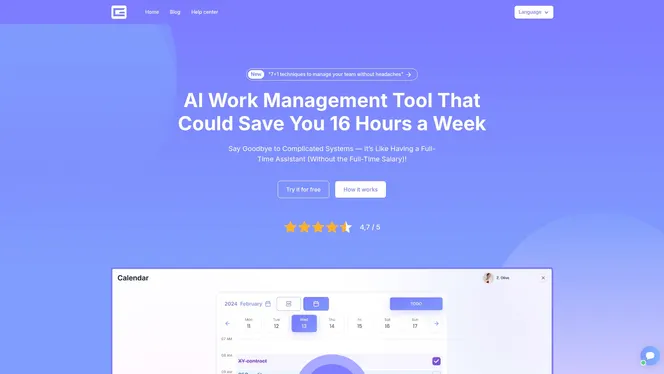
Experience how an AI-powered platform can streamline task management, automate time tracking, and enhance team collaboration all in one place. Gammatica.com helps reduce administrative burdens by freeing up to 16 hours weekly with smart automation and seamless integrations. Start managing projects smarter today by visiting Gammatica.com and explore features like task management, AI suggestions, and integrated calendar coordination to regain control over your time and resources. Don’t wait for inefficiencies to cost you more – transform your workflow and boost your team’s performance now.
Frequently Asked Questions
What are the primary advantages of time tracking for project managers?
Time tracking helps project managers monitor progress, allocate resources efficiently, and ensure projects stay on schedule. Start implementing a time tracking system to gain better insights and control over your projects.
How does time tracking improve team productivity?
Time tracking reveals how much time is spent on various tasks, allowing project managers to identify time wasters and optimize workflows. Begin by analyzing your team’s logged hours to spot opportunities for increased efficiency.
Can time tracking lead to better project budgeting?
Yes, time tracking provides accurate data on hours worked, making it easier to estimate project costs and compare them with budgets. Set a goal to review your project’s time logs bi-weekly to refine your budgeting process.
How can time tracking enhance accountability among team members?
Time tracking assigns responsibility for specific tasks, ensuring that team members are aware of their contributions. Introduce regular check-ins to discuss logged hours and establish ownership of project deliverables.
What steps should I take to implement a time tracking system?
Start by selecting a time tracking tool that fits your team’s needs, then encourage team members to log their hours consistently. Aim to establish a routine around time tracking within the first month for maximum adoption.
How does time tracking assist in identifying project bottlenecks?
Time tracking highlights delays in task completion, allowing project managers to pinpoint bottlenecks and address them promptly. Review your team’s time logs weekly to proactively tackle any emerging issues before they escalate.