More than 80 percent of American software projects encounter technical debt that slows delivery and inflates costs. For project managers in mid-sized tech companies, tech debt can feel like an unavoidable obstacle, impacting productivity and team morale across Canadian, European, and Asian teams alike. This guide reveals how AI-driven solutions can help you identify, clarify, and address technical debt, turning maintenance headaches into opportunities for efficient growth.
Table of Contents
- Core Definition And Common Misconceptions
- Types Of Tech Debt In Software Projects
- How Tech Debt Builds Up Over Time
- Real-World Impact On Workflow And Costs
- Risks, Productivity Losses, And Team Morale
- Practical Strategies To Minimize Tech Debt
Core Definition And Common Misconceptions
Technical debt represents the strategic compromises made during software development that create future implementation challenges. Originating from Ward Cunningham’s 1992 metaphor, this concept goes far beyond simple coding shortcuts. At its core, technical debt represents the implied cost of additional work required when development teams choose expedient solutions over optimal architectural approaches.
Contrary to popular belief, technical debt is not inherently negative. While unmanaged debt can severely hamper project maintainability, some technical debt can be a deliberate, strategic decision when consciously implemented and tracked. Research from technical management studies indicates that technical debt encompasses more than just code issues - it includes design and architectural compromises that can impact long-term project success.
Common misconceptions about technical debt frequently undermine effective management strategies. Project managers often mistakenly equate technical debt solely with buggy code or poor implementation, overlooking its systemic implications. In reality, technical debt represents a complex ecosystem of design choices that can accelerate initial delivery while potentially creating future challenges. Understanding these nuanced trade-offs is crucial for making informed development decisions.
Pro tip: Develop a quarterly technical debt review process that systematically assesses and prioritizes debt repayment alongside feature development to maintain long-term system health and performance.
Types Of Tech Debt In Software Projects
Technical debt is not a monolithic concept, but a complex ecosystem of different debt types that impact software development. Comprehensive research has identified up to 18 distinct categories of technical debt, each presenting unique challenges and requiring specialized management strategies. Understanding these variations is critical for project managers seeking to mitigate potential risks.
The primary categories of technical debt typically include:
- Code Debt: Shortcuts and quick fixes in programming that create future maintenance challenges
- Design Debt: Architectural compromises that limit system scalability and flexibility
- Test Debt: Insufficient or outdated testing infrastructure that increases system vulnerability
- Build Debt: Problems in compilation, deployment, and build automation processes
- Infrastructure Debt: Challenges related to hardware, network, and system configuration limitations
Beyond these technical dimensions, modern research also recognizes less tangible forms of technical debt. Social debt emerges from communication gaps, knowledge silos, and team dynamics that impede smooth software development. These interpersonal factors can create hidden bottlenecks that are often more challenging to address than purely technical issues.
Here’s a summary showing how different types of technical debt affect software projects:
| Debt Type | Typical Symptoms | Long-Term Business Risk |
|---|---|---|
| Code Debt | Frequent bugs, slow changes | Increased maintenance cost |
| Design Debt | Inflexible architecture | Difficult scaling, lost agility |
| Test Debt | Poor test coverage, outages | Higher system failure rates |
| Build Debt | Complicated deployments | Delays, failed releases |
| Infrastructure Debt | Outdated hardware, config issues | Unplanned downtime |
| Social Debt | Siloed knowledge, miscommunication | High turnover, lost productivity |
Pro tip: Create a standardized technical debt tracking system that categorizes different debt types, assigns priority levels, and schedules regular review and remediation efforts.
How Tech Debt Builds Up Over Time
Technical debt is not a sudden occurrence but a gradual process that accumulates through multiple development iterations. Empirical studies tracking software projects reveal how debt incrementally grows over time, with initial shortcuts and compromises compounding into significant systemic challenges. The progression typically follows a predictable pattern where small, seemingly inconsequential decisions create increasingly complex maintenance requirements.
The accumulation of technical debt can be attributed to several key factors:
- Continuous feature additions without proper system refactoring
- Intense pressure for rapid product releases
- Evolving project requirements that outpace existing architectural design
- Lack of comprehensive long-term planning
- Communication gaps between development teams
Research analyzing software development patterns demonstrates that technical debt can spread almost contagiously within project ecosystems. What begins as minor implementation shortcuts can quickly transform into significant systemic challenges, dramatically increasing maintenance costs and reducing overall development velocity. This propagation is particularly pronounced when organizations fail to establish robust debt management strategies.

Pro tip: Implement a quarterly technical debt assessment process that quantifies accumulated debt, prioritizes remediation efforts, and allocates specific resources for systematic debt reduction.
Real-World Impact On Workflow And Costs
Technical debt transforms from an abstract concept into a tangible business challenge that dramatically impacts organizational productivity and financial performance. Empirical research tracking software development workflows reveals the profound economic consequences of unmanaged technical debt, demonstrating how seemingly minor implementation shortcuts can escalate into significant operational bottlenecks.
The real-world impact manifests through multiple critical dimensions:
- Productivity Reduction: Teams spend more time maintaining existing code than developing new features
- Increased Development Costs: Higher maintenance expenses and slower feature implementation
- Project Timeline Extensions: Longer development cycles due to complex, debt-laden codebases
- Reduced Innovation Capacity: Resources diverted from strategic initiatives to fixing accumulated technical problems
Comprehensive studies of enterprise software projects highlight that unchecked technical debt can erode competitive advantage by creating brittle software architectures. The cumulative effect goes beyond mere technical challenges, directly impacting business agility, customer satisfaction, and ultimately, the organization’s ability to respond quickly to market changes. Complex, debt-laden systems become increasingly difficult to modify, test, and deploy, creating a cascading negative effect on overall business performance.
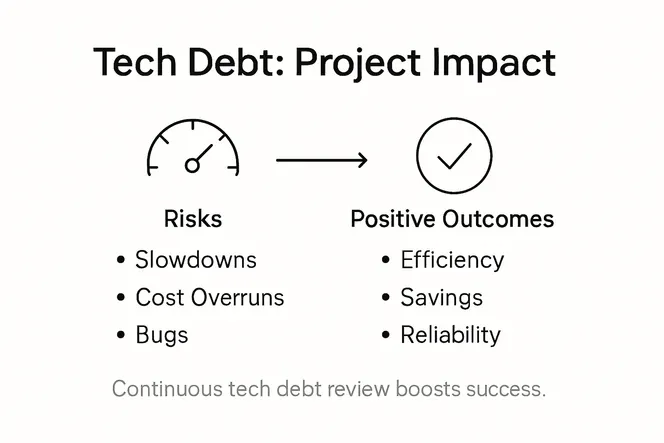
Pro tip: Establish a monthly technical debt review meeting where development teams quantify current debt levels, assign monetary values to potential risks, and create actionable remediation strategies.
Risks, Productivity Losses, And Team Morale
Technical debt is far more than a technical problem. Empirical studies reveal its profound psychological impact on software development teams, demonstrating how unmanaged debt directly correlates with decreased team motivation, increased burnout, and potentially catastrophic talent retention challenges.
The multifaceted risks of technical debt manifest through several critical dimensions:
- Psychological Strain: Continuous firefighting erodes developer confidence
- Motivation Decay: Repetitive maintenance work suppresses creative problem-solving
- Career Stagnation: Talented developers feel trapped in legacy system maintenance
- Innovation Blockage: Reduced capacity for meaningful technological advancement
Comprehensive research on enterprise software environments indicates that unaddressed technical debt creates a cascading negative effect on team dynamics. When developers spend excessive time wrestling with poorly designed systems, their professional satisfaction plummets. This systematic demotivation leads to increased turnover risks, with experienced talent actively seeking opportunities in more technologically progressive organizations. The hidden cost extends beyond immediate productivity losses, potentially undermining an organization’s long-term ability to attract and retain top-tier technical talent.
Pro tip: Implement a quarterly recognition program that rewards developers for proactively addressing and reducing technical debt, transforming debt management from a burden into a valued professional skill.
The table below compares proactive versus reactive technical debt management:
| Approach | Main Focus | Impact on Team Morale | Business Outcome |
|---|---|---|---|
| Proactive | Regular reviews, improvement | Higher motivation, less burnout | Faster innovation, lower risk |
| Reactive | Fix issues when critical | Frustration, higher turnover | Rising costs, lost agility |
Practical Strategies To Minimize Tech Debt
Technical debt reduction requires a systematic, multifaceted approach that goes beyond quick fixes. Comprehensive literature reviews highlight strategic methodologies for minimizing debt accumulation, emphasizing the importance of proactive management and organizational commitment.
Key strategies for effective technical debt minimization include:
- Incremental Refactoring: Consistently improve code quality in small, manageable iterations
- Automated Quality Checks: Implement static code analysis and continuous integration tools
- Clear Coding Standards: Establish and enforce comprehensive development guidelines
- Regular Architecture Reviews: Conduct periodic assessments of system design and potential improvement areas
- Developer Training: Invest in ongoing education about debt implications and best practices
Successful debt management demands a holistic approach that integrates technical solutions with organizational culture. This means creating an environment that values code quality, encourages continuous learning, and recognizes the long-term benefits of maintaining a clean, efficient codebase. Prioritization becomes critical - teams must develop a nuanced approach to identifying which debt areas require immediate attention and which can be strategically addressed over time. The goal is not to eliminate all debt instantly, but to create a sustainable process of continuous improvement that balances short-term delivery needs with long-term system health.
Pro tip: Create a dedicated technical debt tracking system that assigns monetary values to potential risks, enabling more objective prioritization and resource allocation.
Take Control of Technical Debt and Boost Your Project Success
Technical debt can silently choke your team’s productivity and derail your project timelines. The challenges of managing code debt, design compromises, and social debt require more than just awareness — they demand proactive, organized solutions that empower your team to act strategically and avoid costly delays. If you want to regain control over your workflows and ensure your software development stays agile and efficient, smart project management is the key.

Discover how Gammatica.com helps you reduce the hidden burden of technical debt with AI-driven task management, automation, and seamless team collaboration. Our platform helps you integrate checklists, automate repetitive tasks, and maintain clear communication across your teams to prevent debt from accumulating unnoticed. Start transforming your development process today and free up valuable time with an all-in-one tool designed to streamline workflows and protect your project’s future. Visit Gammatica.com now and harness the power of efficient project and team management to reduce technical debt before it affects your success.
Frequently Asked Questions
What is technical debt?
Technical debt refers to the strategic compromises made during software development that lead to future implementation challenges. It involves choosing expedient solutions over optimal architectural approaches, creating a cost of additional work down the line.
How does technical debt impact a software project’s success?
Technical debt can lead to reduced productivity, increased development costs, longer project timelines, and limited innovation capacity. If unmanaged, it can severely hamper project maintainability and overall business agility.
What are different types of technical debt?
There are several types of technical debt, including code debt (quick programming fixes), design debt (architectural compromises), test debt (insufficient testing), build debt (deployment issues), infrastructure debt (hardware limitations), and social debt (communication gaps within teams).
What strategies can be used to minimize technical debt?
Effective strategies for minimizing technical debt include incremental refactoring, automated quality checks, establishing clear coding standards, conducting regular architecture reviews, and ongoing developer training. Creating a culture that values code quality is essential for sustainable debt management.