TL;DR:
- Many projects fail because leaders confuse strategy with tactics, leading to misaligned efforts.
- Hybrid project management approaches adapt best to mid-sized organizations’ complex needs.
- Regularly updating strategies and optimizing workflows significantly boost project success and team engagement.
Half of all projects never deliver their intended value. That’s not a minor inefficiency — it’s a signal that something deeper is broken. Most mid-sized organizations don’t fail because their people lack skill or effort. They fail because leaders confuse strategy with tactics, or worse, treat them as interchangeable. When your team is executing the wrong actions against an unclear vision, only 50% of projects succeed in delivering value. This guide gives you research-backed frameworks to fix that gap, align your team, and turn planning into real results.
Key Takeaways
| Point | Details |
|---|---|
| Strategy vs. tactics clarity | Effective leaders align specific tactics with bigger-picture strategic goals to maximize results. |
| Hybrid methodologies win | Combining methodologies like Agile and Waterfall boosts flexibility and project success in mid-sized firms. |
| Team size and engagement matter | Optimize team structures around engagement levels for peak productivity, usually 10–19 members. |
| Continuous process optimization | Regularly update processes and reinvest efficiency gains for sustained performance, not just cost cutting. |
Understanding tactics vs. strategy in management
Before you can fix the gap, you need to name it clearly. Strategy and tactics are not the same thing, and treating them as synonyms is one of the most common and costly mistakes in management.
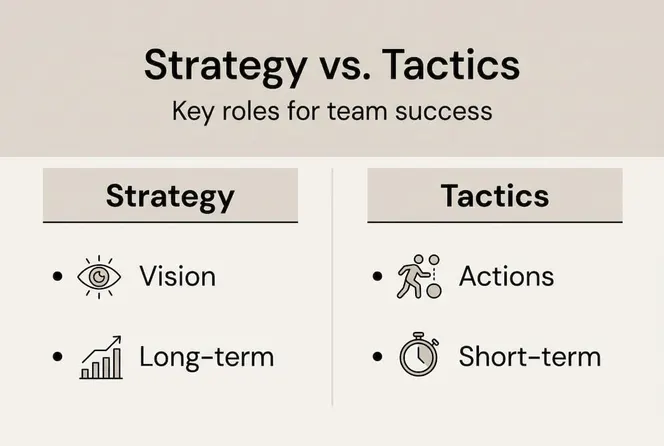
Strategy is your long-term vision. It defines where you’re going, why it matters, and what success looks like in 12 to 36 months. Think of it as the destination on the map.
Tactics are the specific, actionable steps you take to get there. They’re shorter in scope, measurable, and should always trace back to a strategic objective. Think of them as the individual turns you take on the route.
Here’s where most teams go wrong: they pick tactics first and build strategy around them. That’s backwards. When tactics aren’t anchored to a clear goal, teams stay busy without moving forward.
Some of the most common pitfalls include:
- Launching initiatives without connecting them to measurable business goals
- Switching tactics mid-project when results don’t appear fast enough
- Confusing operational tasks with strategic priorities
- Skipping the planning phase because the team feels pressure to “just start”
One proven solution is the M.O.R.E. framework, which stands for Mindset, Outcomes, Relationships, and Execution. Research shows that M.O.R.E. framework adoption triples project success rates by bridging the gap between planning and execution. It forces teams to define outcomes before assigning tasks, which keeps everyone aligned.
Understanding methodology adoption in 2026 also reveals that organizations increasingly pair strategic frameworks with structured execution methods to reduce misalignment.
“A tactic without a strategy is just noise. A strategy without tactics is just a wish.”
Pro Tip: Before approving any new initiative, ask your team to write one sentence connecting the tactic to a specific strategic objective. If they can’t, the tactic isn’t ready.
Choosing the right project management methodology
With a clear understanding of strategy versus tactics, the next challenge is picking the right project management approach. The method you choose shapes how your team plans, communicates, and delivers.
Here’s a quick comparison of the most widely used methodologies:
| Methodology | Best for | Key strength | Limitation |
|---|---|---|---|
| Waterfall | Regulated, stable projects | Clear structure and milestones | Inflexible to change |
| Agile/Scrum | Fast-moving, iterative work | Speed and adaptability | Needs strong team discipline |
| Kanban | Ongoing workflows | Visual task management | Limited for complex planning |
| Lean | Efficiency-focused teams | Waste reduction | Requires cultural buy-in |
| Hybrid | Complex, multi-phase projects | Flexibility with structure | Needs skilled management |
Common methodologies like Waterfall, Agile/Scrum, Kanban, Lean, and hybrids each serve different contexts, with hybrids becoming increasingly popular for their flexibility. For mid-sized companies managing multiple project types at once, a hybrid approach often wins.
Why? Because Agile projects succeed at up to 64% compared to Waterfall’s 49%, and hybrids outperform both in complex environments. That’s a meaningful difference when your business is scaling.
Here’s a quick guide for when to use each method:
- Waterfall: Use when requirements are fixed, compliance is critical, or the project has a defined end point
- Agile/Scrum: Use when priorities shift frequently and rapid iteration adds value
- Kanban: Use for support teams, marketing pipelines, or any continuous-flow work
- Lean: Use when your primary goal is eliminating waste and streamlining delivery
- Hybrid: Use when you need structure for planning but flexibility during execution
The real insight here is that no single method works for every team or project. The hybrid approach benefits mid-sized firms especially well because they can pivot quickly without sacrificing the structure that keeps stakeholders informed. The key is to adapt the methodology to your team’s actual working style and the project’s specific demands.
Optimizing team structure and engagement
Once the methodology is set, the next pivotal step is assembling and optimizing the right team. Structure matters, but engagement matters more.

Many leaders assume that adding more people to a struggling project will speed things up. It rarely does. Research tells a more nuanced story.
| Team size | Engagement level | Productivity outcome |
|---|---|---|
| 1 to 9 members | High | Strong, but limited capacity |
| 10 to 19 members | Highest | Best overall performance |
| 20 to 34 members | Moderate | Needs strong coordination |
| 35+ members | Lower | Requires exceptional management |
Highly engaged teams of 10 to 19 members are most effective, combining strong engagement with real output capacity. But the data also shows that large teams can succeed when management is exceptional.
Here’s a step-by-step approach to evaluating and adjusting your team structure:
- Audit current team size against active project complexity and workload
- Identify engagement gaps using pulse surveys or one-on-one check-ins
- Reassign roles based on strengths, not just availability
- Set clear ownership so every task has one accountable person
- Review regularly at sprint or project milestones, not just annually
One thing leaders often overlook is that team size is a variable, not a fixed number. As projects evolve, so should your team composition. Bringing in a specialist for one phase and scaling back after is a legitimate and smart tactic.
Pro Tip: Use a real-time dashboard to monitor engagement and productivity metrics by team. If output drops in a specific group, you’ll catch it early rather than discovering it at the final review.
Process optimization: Driving productivity and efficiency
One overlooked aspect of strategy execution is workflow optimization. This is where tactical improvements drive exponential returns, yet most organizations only address it when something breaks.
The instinct is to cut resources or add tools. But the smarter move is to redesign the process first, then decide what to automate or eliminate.
Here are the highest-impact optimization tactics you can apply right now:
- Map your end-to-end workflow before making any changes. You can’t fix what you haven’t fully seen.
- Identify repetitive tasks that consume time without adding judgment or creativity, then automate them
- Synchronize cross-functional teams by creating shared visibility into timelines and dependencies
- Eliminate approval bottlenecks by delegating sign-off authority to team leads for routine decisions
- Measure before and after any process change to confirm the improvement is real
The evidence here is compelling. Process redesign led to 15% less workload and a 25 percentage point increase in employee engagement. That’s not a minor gain. That’s a transformation in how work feels and functions.
On the cost side, clean-sheet redesign with AI and automation yields more than 20% in increased savings on general and administrative costs. For a mid-sized company, that kind of efficiency gain can fund new hires, product development, or market expansion.
Pro Tip: When you free up time through process improvements, resist the urge to immediately fill it with more tasks. Reinvest those efficiency gains into skill development and innovation. That’s where the long-term competitive advantage is built.
A fresh perspective: Why strategy often fails and how to fix it
Here’s something most management guides won’t tell you: the biggest reason strategies fail isn’t poor tactics. It’s that leaders stop updating their strategy when reality changes.
You build a solid plan in January. By March, market conditions shift, a key hire leaves, or a competitor moves. But the strategy document stays the same. Teams keep executing against outdated objectives because no one has the authority or habit of calling a strategy reset.
The fix isn’t complicated. It requires two things: feedback loops and honest benchmarks. Best-practice benchmarks show that high-performing organizations achieve 80% or more of their goals, keep 60% of projects on schedule, and maintain fewer than 10% failure rates. If your numbers look different, your strategy needs a review, not just your tactics.
Conventional wisdom favors rigid planning and detailed roadmaps. But the organizations that consistently outperform build in structured retrospectives, real-time tracking, and the willingness to adapt. Agile learning beats perfect planning every time. The goal isn’t to get the strategy right on day one. It’s to get better at updating it faster than your competitors do.
Looking for actionable tactics and strategy tools?
If you’re ready to move from strategy to action, the right tools make all the difference.
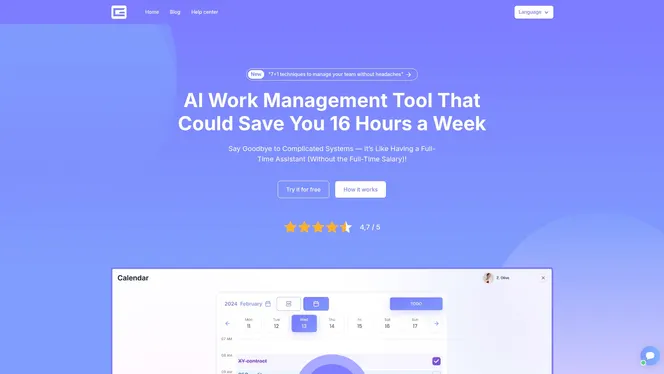
Gammatica is an AI-driven project and team management platform built for business leaders who want results, not just reports. From Kanban boards and automated workflows to CRM and team collaboration, Gammatica gives your team one place to align strategy with daily execution. Users report freeing up to 16 hours per week by reducing administrative overhead. Explore tools for sales success or browse the full suite of business management solutions to see how Gammatica can help your team execute smarter starting today.
Frequently asked questions
What is the main difference between tactics and strategy?
Strategy sets the overall vision and long-term goals, while tactics are the specific, short-term actions taken to achieve those goals. One defines the destination; the other maps the route.
Which project management methodology is best for mid-sized companies?
Hybrid methodologies offer both structure and flexibility, and hybrids dominate 74% of organizations managing complex projects, making them the top choice for most mid-sized firms.
How big should my team be for optimal engagement and productivity?
Optimal team size for managers sits between 10 and 19 members for the best combination of engagement and output, though management quality matters just as much as headcount.
What are the top tactics for immediate process optimization?
Start by automating routine tasks and mapping your full workflow before cutting resources, then synchronize teams around shared timelines to eliminate bottlenecks fast.