TL;DR:
- Effective SWOT reports are specific, data-backed, and connected to actionable strategies.
- Starting externally and prioritizing insights with frameworks like TOWS enhances strategic impact.
- Maintaining a living, prioritized approach prevents SWOT analysis from becoming a ineffective checklist.
Most strategic planning sessions start with good intentions and end with a whiteboard full of bullet points that nobody acts on. Sound familiar? 80% of strategic plans produce ineffective SWOTs because teams default to list-making and let internal bias shape the results. The problem is not the SWOT framework itself. The problem is how most teams apply it. When you see specific, real-world SWOT report examples side by side, something clicks. You stop writing vague statements and start building analyses that actually guide decisions. This article walks you through what makes a SWOT report powerful, shows you five practical examples from real organizations, and gives you the tools to turn findings into strategy.
Key Takeaways
| Point | Details |
|---|---|
| Always use specific data | Unique, evidence-backed factors make for actionable SWOT reports. |
| Turn analysis into action | Use the TOWS matrix to translate SWOT findings into strategic moves. |
| Prioritize and revisit | Rank strategies by impact and revisit your SWOT quarterly for best results. |
| Avoid list bias | Start externally and test whether a competitor could claim your strengths or weaknesses. |
Understand the anatomy of a high-impact SWOT report
Now that you know why most SWOT reports don’t work, let’s define what makes a truly effective one.
A SWOT analysis organizes four factors into a simple 2x2 matrix. Strengths and Weaknesses are internal factors you control. Opportunities and Threats come from the external environment. Simple enough, right? But the quality of your output depends entirely on what you put into each quadrant.

Best practice calls for limiting each quadrant to 3 to 5 data-driven, comparative points. Not ten. Not two. Three to five, each one specific enough that a competitor could not claim the exact same thing. If your strength reads “great customer service,” that’s not a strength. That’s a wish. A strong entry looks more like “94% customer retention rate over 24 months, outperforming the industry average of 78%.”
Here’s what separates high-impact SWOT reports from the rest:
- Specificity over generality. Every factor should be measurable or at least verifiable.
- Comparative framing. Reference benchmarks, competitors, or market data.
- Action orientation. Each point should hint at a decision or next step.
- External start. Starting with external factors (Opportunities and Threats first) reduces the internal echo chamber effect and grounds your analysis in market reality.
- Data over assumptions. Use real numbers, customer feedback, and research instead of gut feelings.
Common pitfalls to avoid include writing generic factors that apply to any business, listing too many points until the analysis loses focus, and skipping the prioritization step entirely. Many teams also forget to challenge their own assumptions, which leads to a SWOT that feels good but misses real risks.
Pro Tip: Before finalizing any SWOT factor, run the “rival test.” Ask yourself: could a direct competitor honestly write the same thing? If yes, rewrite it until it’s uniquely yours.
The goal is a living document that connects directly to your strategic priorities, not a one-time exercise that gets filed away after the meeting.
Five practical SWOT report examples from real organizations
With a strong framework in mind, let’s see what this looks like in the real world.
Looking at real-world SWOT examples across industries reveals how versatile and powerful this tool can be when done right. Here are five that stand out.
1. SoftCo SaaS SoftCo’s SWOT leads with a compelling strength: 80% of revenue is recurring, which signals strong customer loyalty and predictable cash flow. Their weakness is heavy reliance on a single integration partner. Their opportunity is expanding into the mid-market segment. Their primary threat is a well-funded competitor entering the space. Every point is specific and actionable.
2. BistroCo restaurant BistroCo identified a unique opportunity in third-party delivery partnerships at a time when competitors were still skeptical. Their strength was a loyal local following. Their weakness was thin profit margins. Their threat was rising food costs. This example shows how even a small business can run a sharp SWOT.
3. Upward Airlines Upward layered their SWOT with a Balanced Scorecard approach, connecting each factor to financial, customer, process, and learning perspectives. This made the analysis far more actionable because every SWOT point mapped to a measurable business objective.
4. HBR-style brand equity focus This example placed brand equity front and center as the core strength, while flagging AI-driven content disruption as an emerging threat. It’s a good reminder that threats don’t always come from direct competitors.
5. Tesla snapshot
“Tesla’s brand strength is undeniable, but production scalability remains a recurring weakness that directly feeds its biggest threat: faster-moving competitors.”
This snapshot shows how a single weakness can amplify an external threat, making prioritization critical.
Pro Tip: Use industry-specific examples as templates. Adapt the structure and factor types to your context, but keep the specificity and data-backing intact.
How to compare and prioritize SWOT reports for your team
Examining distinct SWOT reports is useful, but how do you decide which format or focus is best for your team?
Not every SWOT structure fits every organization. Here’s a quick comparison of the five examples above across three key dimensions:
| Organization | Clarity | Actionability | Applicability |
|---|---|---|---|
| SoftCo SaaS | High | High | SaaS and tech teams |
| BistroCo restaurant | High | Medium | Small business owners |
| Upward Airlines | Medium | Very high | Large, structured teams |
| HBR brand equity | Medium | Medium | Marketing and media |
| Tesla snapshot | High | Medium | Product-focused companies |
So how do you choose the right approach for your team? Follow these steps:
- Define your purpose first. Are you planning a product launch, evaluating a new market, or reviewing annual strategy? The purpose shapes the format.
- Match complexity to team size. A Balanced Scorecard-linked SWOT like Upward Airlines works well for large teams with defined KPIs. A leaner format suits smaller, faster-moving teams.
- Apply the five criteria. Evaluate each factor for relevance, specificity, data support, actionability, and bias. If a competitor could claim it, it’s too generic.
- Pair with PESTLE for external depth. PESTLE (Political, Economic, Social, Technological, Legal, Environmental) analysis adds rigor to your Opportunities and Threats quadrants.
- Assign ownership. Every SWOT factor should have a person responsible for monitoring or acting on it.
The biggest mistake teams make is treating the SWOT as a group exercise that ends when the meeting does. The comparison table above is a useful starting point, but your real job is adapting the best elements from each example to fit your specific context.
From SWOT to TOWS: Turning findings into strategy
Once your team has gathered SWOT insights, the next challenge is putting them into action.
This is where the TOWS matrix comes in. TOWS takes your completed SWOT and crosses internal and external factors to generate four types of strategies:
| TOWS strategy | What it does | Example |
|---|---|---|
| SO (Strengths + Opportunities) | Use strengths to capture opportunities | SoftCo uses recurring revenue base to fund mid-market expansion |
| WO (Weaknesses + Opportunities) | Overcome weaknesses through opportunities | BistroCo partners with delivery platforms to offset thin margins |
| ST (Strengths + Threats) | Use strengths to reduce threats | Tesla leverages brand loyalty to retain customers despite new rivals |
| WT (Weaknesses + Threats) | Minimize weaknesses to avoid threats | Upward Airlines addresses process gaps before a competitor exploits them |
Once you’ve filled in your TOWS table, you’ll have a set of candidate strategies. But not all of them deserve equal attention. That’s where prioritization frameworks become essential.
Here’s a simple process to follow:
- List all TOWS strategies generated from your analysis.
- Score each strategy using the ICE method: Impact (how much value does it create?), Confidence (how sure are you it will work?), and Ease (how simple is it to execute?).
- Rank by total ICE score and focus your team’s energy on the top three to five strategies.
- Assign deadlines and owners so strategies don’t stay theoretical.
Prioritizing with an ICE or impact/effort matrix turns a static SWOT into a living action plan. Without this step, even the best SWOT analysis sits on a shelf.
Pro Tip: Run a TOWS session immediately after completing your SWOT, while context is fresh. Waiting a week means losing the nuance behind each factor.
Why most SWOT reports fail—and what actually works
Now, let’s tackle why so many organizations still get limited results from SWOT, and what can be done better.
Here’s an uncomfortable truth: 80% of SWOTs are just lists with little strategic impact, largely because of subjectivity and a lack of prioritization. We’ve seen this pattern repeatedly. Teams gather in a room, brainstorm freely, and produce a document that feels productive but drives no real decisions.
The root cause is almost always the same. Teams start internally, listing what they think they’re good at before looking at the market. This creates a self-congratulatory Strengths quadrant and an undercooked Threats section.
What actually works? Start externally. Look at your market, your competitors, and your customers before you look inward. Use data, not opinions. And apply a prioritization framework like ICE before you leave the room. The “rival test” is also non-negotiable. If your competitor could post your SWOT on their website and it would still make sense, you haven’t done the work.
The teams that get real value from SWOT treat it as a living strategic tool, not a one-time checkbox. That mindset shift changes everything.
Supercharge your strategy with smarter tools
Ready to turn insights into action? Here’s the next step.
Building a sharp SWOT and TOWS process is far easier when your team has the right infrastructure behind it. Keeping all your strategic findings organized, assigning action items, and tracking progress requires more than a shared document.
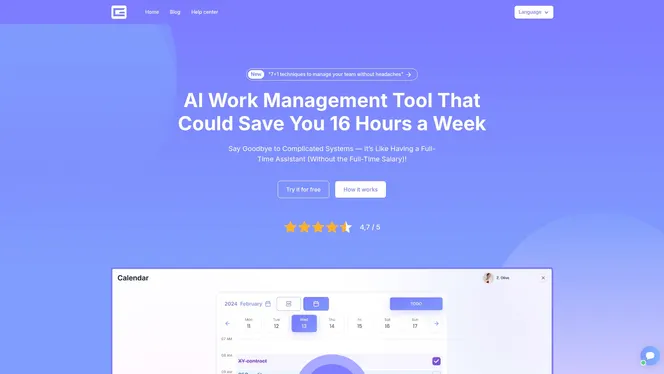
Gammatica’s sales platform gives your team a centralized space to manage strategic initiatives, assign ownership, and track outcomes in real time. With AI-driven task management, Kanban boards, and collaboration tools built in, you can move from analysis to execution without losing momentum. Explore strategic planning tools that help your team stay aligned, accountable, and focused on what matters most. Your next SWOT session deserves better than a whiteboard.
Frequently asked questions
What is a good example of a SWOT report?
A strong SWOT report includes 3 to 5 specific, data-backed factors in each quadrant and connects directly to prioritized strategies your team can act on.
How do you use SWOT findings to make business decisions?
Use the TOWS matrix to convert your SWOT factors into SO, WO, ST, and WT strategies, then rank them by impact and feasibility before assigning owners.
Why do most SWOT analyses fail to drive action?
Most fail because they produce vague, unprioritized lists shaped by internal bias, with no follow-through process to turn findings into decisions.
What’s the difference between SWOT and TOWS?
SWOT identifies your key internal and external factors; TOWS crosses those factors to generate targeted strategies for growth, defense, and improvement.