Nearly 56 percent of American technical teams report significant time savings after adopting artificial intelligence for everyday management tasks. For team leaders and project managers under pressure to optimize resources, AI brings smarter collaboration, data-driven decision making, and real-time automation to the table. This article breaks down how modern AI-powered tools redefine team productivity and workflow, giving actionable insights to help you stay ahead in a fast-moving industry.
Table of Contents
- Defining The Role Of AI In Team Management
- Types Of AI Applications For SaaS Teams
- How AI Enhances Collaboration And Workflow
- Key Benefits: Time Savings And Efficiency Gains
- Risks, Challenges, And Common Pitfalls
- Comparing Traditional And AI-Powered Management
Defining the Role of AI in Team Management
Artificial Intelligence is fundamentally transforming how teams collaborate, coordinate, and make critical business decisions. Research exploring human-AI team integration reveals that AI is no longer just a technological tool, but an emerging collaborative partner capable of redefining traditional team dynamics.
The evolution of AI in team management goes beyond simple task automation. Empirical studies demonstrate that AI can now play multiple functional roles within team structures, effectively acting as a cognitive collaborator. These roles include data analysis, predictive modeling, decision support, and adaptive workflow optimization. Modern AI systems are designed to understand team context, anticipate potential challenges, and provide intelligent recommendations that enhance overall team performance.
Effective AI team integration requires strategic implementation across several key dimensions. Teams must focus on:
- Trust Development: Creating transparent AI interactions
- Skill Augmentation: Identifying where AI complements human capabilities
- Continuous Learning: Implementing adaptive AI systems
- Ethical Considerations: Maintaining human oversight and accountability
AI’s role is not about replacing human team members but amplifying their collective potential. By intelligently distributing cognitive load, managing complex information streams, and providing real-time insights, AI enables teams to operate with unprecedented efficiency and strategic precision.
Pro tip: Start small with AI team integration by identifying one specific workflow where predictive analytics or task automation can demonstrably improve team productivity.
Types of AI Applications for SaaS Teams
AI applications in SaaS platforms are revolutionizing team productivity by offering sophisticated tools that transform traditional workflow management. Comprehensive research on AI-powered SaaS tools reveals multiple strategic categories where artificial intelligence is making substantial impacts across organizational functions.
Recent field research demonstrates that AI applications in SaaS environments can be categorized into several core functional domains:
- Customer Support Automation: AI chatbots and intelligent response systems
- Predictive Analytics: Advanced data modeling and trend forecasting
- Workflow Optimization: Intelligent task routing and process automation
- Personalization Engines: Customized user experience generation
- Performance Monitoring: Real-time team productivity tracking
Each AI application serves a distinct strategic purpose, enabling teams to streamline complex processes, reduce manual interventions, and make data-driven decisions with unprecedented speed and accuracy. Modern SaaS platforms leverage these AI capabilities to create adaptive, intelligent systems that learn from organizational behaviors and continuously improve operational efficiency.
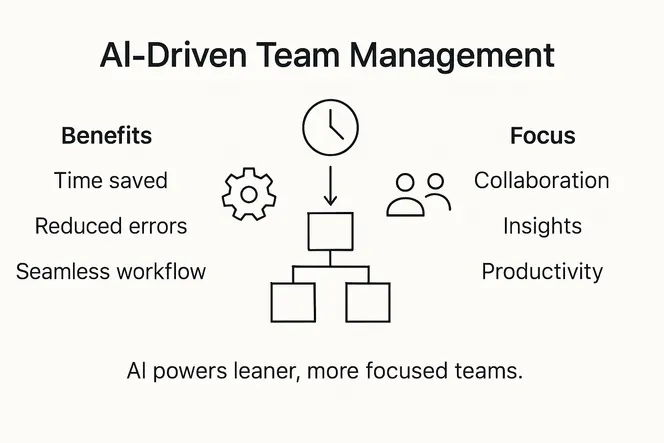
The most transformative AI applications go beyond simple automation, creating intelligent ecosystems that understand contextual nuances, predict potential challenges, and proactively suggest optimization strategies. By integrating machine learning algorithms with existing workflows, these tools can analyze historical performance data, identify bottlenecks, and recommend precise interventions that enhance overall team productivity.
Here’s a quick overview of how key AI functions drive business value in SaaS teams:
| AI Function | Primary Outcome | Strategic Business Impact |
|---|---|---|
| Predictive Analytics | Accurate trend forecasting | Faster strategic decisions |
| Workflow Optimization | Streamlined task assignment | Lower operational costs |
| Personalization Engine | Customized user experiences | Increased client satisfaction |
| Performance Monitoring | Real-time productivity insights | Improved team accountability |
| Support Automation | Faster customer query resolution | Higher support team efficiency |
Pro tip: Conduct a comprehensive audit of your current workflows to identify specific areas where AI-driven automation can deliver the most immediate and measurable performance improvements.
How AI Enhances Collaboration and Workflow
Groundbreaking research from Harvard demonstrates that artificial intelligence is fundamentally transforming team collaboration dynamics. AI is no longer a passive tool, but an active collaborative partner capable of dynamically enhancing team communication, problem-solving, and workflow efficiency.
Comprehensive scientific investigations reveal that AI significantly impacts collaboration through several critical mechanisms:
- Communication Augmentation: Enabling faster, more precise information exchange
- Cognitive Load Reduction: Automating repetitive administrative tasks
- Predictive Coordination: Anticipating team needs and potential bottlenecks
- Knowledge Sharing: Facilitating seamless expertise transfer
- Performance Optimization: Providing real-time insights and recommendations
The true power of AI in collaboration lies in its ability to understand complex team interactions. Advanced AI systems can analyze communication patterns, identify potential misunderstandings, and suggest optimal communication strategies. By processing historical team performance data, these intelligent systems can predict collaboration challenges before they emerge, allowing teams to proactively address potential friction points.
Modern AI collaboration tools go beyond simple task management. They create intelligent ecosystems that learn from team behaviors, adapt to unique organizational cultures, and provide personalized recommendations that enhance overall team performance. These systems can integrate multiple communication channels, synthesize information from diverse sources, and present actionable insights that help teams make more informed decisions faster.
Pro tip: Implement AI collaboration tools incrementally, starting with one specific workflow, and systematically measure productivity improvements to validate and refine your approach.
Key Benefits: Time Savings and Efficiency Gains
Research from leading business publications reveals a profound transformation in workplace productivity through artificial intelligence. Generative AI tools are dramatically reducing task completion times, with some technical and administrative workflows experiencing up to 56% time savings, fundamentally reshaping how teams allocate their cognitive resources.
The efficiency gains from AI implementation can be categorized across multiple critical dimensions:
- Rapid Task Completion: Accelerating routine administrative work
- Automated Information Processing: Synthesizing complex data instantly
- Intelligent Resource Allocation: Redirecting human talent toward strategic initiatives
- Predictive Workflow Optimization: Identifying potential bottlenecks before they emerge
- Precision Decision Making: Reducing time spent on analysis and research
AI’s transformative potential extends beyond mere time savings. These intelligent systems create cascading efficiency improvements by understanding contextual nuances, learning from historical performance data, and providing real-time recommendations that streamline complex organizational processes. Teams leveraging AI can simultaneously reduce operational overhead and elevate the quality of their strategic outputs.

By intelligently automating repetitive tasks, AI enables professionals to focus on high-value creative and strategic work. The technology acts as a force multiplier, allowing teams to accomplish more sophisticated objectives with fewer resources and dramatically reduced time investments. This shift represents a fundamental reimagining of workplace productivity, where human creativity is amplified rather than replaced by technological capabilities.
Pro tip: Conduct a comprehensive time audit of your current workflows to identify specific repetitive tasks most suitable for AI-driven automation and prioritize their implementation strategically.
Risks, Challenges, and Common Pitfalls
Comprehensive risk analysis from leading technology experts reveals that AI implementation is not without significant organizational challenges. While artificial intelligence offers tremendous potential, teams must navigate complex technical, ethical, and operational risks that could undermine its transformative capabilities.
Academic research systematically maps the critical challenges of human-AI collaboration, highlighting several key risk domains:
- Algorithmic Bias: Potential for discriminatory or skewed decision making
- Data Privacy Vulnerabilities: Risks of unauthorized information access
- Cybersecurity Exposure: Potential system manipulation and breach points
- Trust and Accountability Gaps: Unclear responsibility frameworks
- Job Displacement Concerns: Workforce adaptation and skill transition challenges
The most sophisticated risks emerge not from technological limitations, but from complex human-machine interaction dynamics. AI systems can inadvertently perpetuate existing organizational biases, create unexpected communication barriers, and generate decisions that seem logically sound but lack nuanced human understanding. Teams must develop robust governance frameworks that maintain human oversight while leveraging AI’s computational strengths.
Successful AI integration requires a proactive approach to risk management. Organizations must invest in continuous monitoring, transparent algorithmic processes, and adaptive training programs that help human teams understand, interpret, and critically evaluate AI-generated insights. This means developing new organizational competencies focused on AI literacy, ethical assessment, and collaborative intelligence.
The following table summarizes major risks of AI in team management, with real-world implications and proactive mitigation strategies:
| Risk Domain | Real-World Implication | Proactive Mitigation Strategy |
|---|---|---|
| Algorithmic Bias | Skewed recruitment or promotions | Regular model audits for fairness |
| Data Privacy | Unintentional exposure of data | Enforce strict access controls |
| Cybersecurity Threats | System vulnerability to hacking | Use multi-layered security protocols |
| Accountability Gaps | Unclear responsibility for decisions | Define clear human oversight procedures |
| Job Displacement | Skills mismatch among team members | Offer ongoing AI literacy and reskilling |
Pro tip: Establish a dedicated AI ethics review board within your organization to systematically assess potential risks, develop mitigation strategies, and ensure responsible AI implementation.
Comparing Traditional and AI-Powered Management
Comprehensive academic research reveals a fundamental transformation in management paradigms, highlighting the profound differences between traditional human-driven and AI-powered team leadership approaches. The shift represents more than technological advancement—it signifies a revolutionary reimagining of organizational coordination and strategic decision making.
Traditional management approaches are characterized by linear, hierarchical structures, while AI-powered management introduces dynamic, adaptive frameworks. Key comparative dimensions include:
-
Decision Making: - Traditional: Slow, based on individual experience
- AI-Powered: Rapid, data-driven, predictive
-
Communication:
- Traditional: Sequential, top-down
- AI-Powered: Multilayered, real-time, contextual
-
Resource Allocation:
- Traditional: Static, predetermined
- AI-Powered: Dynamic, optimized in real-time
-
Performance Tracking:
- Traditional: Periodic reviews
- AI-Powered: Continuous, granular monitoring
AI-powered management transcends mere technological replacement by creating intelligent ecosystems that learn, adapt, and anticipate organizational needs. These systems don’t just process information—they interpret complex interactions, predict potential challenges, and suggest proactive strategies that human managers might overlook.
The most significant transformation occurs in cognitive flexibility. While traditional management relies on historical precedent and individual expertise, AI-powered approaches generate insights by simultaneously analyzing vast datasets, recognizing subtle patterns, and providing nuanced recommendations that evolve with organizational dynamics.
Pro tip: Begin your AI management integration by mapping existing workflows and identifying specific processes where predictive analytics can immediately demonstrate tangible performance improvements.
Unlock Your Team’s Potential with AI-Driven Management
The article highlights the challenge of integrating AI into team management to boost productivity while reducing administrative burdens. If you struggle with coordinating workflows, automating repetitive tasks, or achieving real-time collaboration insights, these pain points directly affect team efficiency and decision-making. Concepts like workflow optimization, cognitive load reduction, and AI-driven task automation are critical to overcoming these hurdles and driving measurable business impact.
Gammatica.com is designed precisely to tackle these issues. Our SaaS-based platform leverages AI to streamline project and team management with features like task management, CRM integration, automation, and calendar coordination. By using AI suggestions and pre-made templates, Gammatica helps your team save valuable time—up to 16 hours per week—allowing you to focus on strategic priorities instead of administrative overhead. With tools such as Kanban boards, checklist creation, and seamless collaboration through Zoom or Google Meet integration, our platform transforms how teams communicate and operate.
Start transforming your team management today with Gammatica.com.
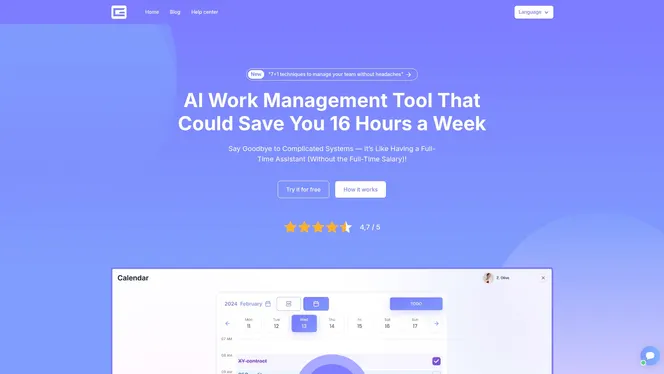
Discover how AI-powered project management can eliminate workflow bottlenecks and enhance collaboration. Visit Gammatica.com now to experience an intuitive, automated, and scalable solution designed for business leaders who want to lead smarter and faster.
Frequently Asked Questions
How does AI enhance team collaboration?
AI enhances team collaboration by automating repetitive tasks, improving communication, predicting team needs, and providing real-time insights that streamline workflows and facilitate better decision-making.
What are some common AI applications in team management?
Common AI applications in team management include customer support automation, predictive analytics, workflow optimization, personalization engines, and performance monitoring.
What are the risks associated with implementing AI in teams?
The main risks of implementing AI in teams include algorithmic bias, data privacy vulnerabilities, cybersecurity threats, accountability gaps, and potential job displacement concerns.
How can organizations effectively integrate AI into their workflows?
Organizations can effectively integrate AI by starting small with specific workflows, developing trust in AI systems, focusing on skill augmentation, and implementing continuous learning and ethical considerations in AI deployment.