Project delays and unforeseen setbacks can derail even the most carefully planned technology initiatives. For project managers steering global teams across Europe, Asia, or North America, the need for precise risk tracking is constant. A well-maintained risk log offers more than documentation—it provides a structured system for identifying, prioritizing, and addressing potential threats. By adopting AI-driven automation tools, project managers can transform traditional risk management into a transparent, agile process that empowers teams to face uncertainty with confidence.
Table of Contents
- Defining Risk Log And Its Core Purpose
- Key Types Of Risks Captured In Projects
- How To Structure And Maintain A Risk Log
- Leveraging Ai Tools For Automated Risk Tracking
- Common Mistakes And Best Practices For Managers
Defining Risk Log and Its Core Purpose
In project management, a risk log represents a strategic tool that enables teams to systematically track, analyze, and respond to potential challenges that could impact project success. Proactively identifying potential risks allows project managers to develop targeted mitigation strategies before minor uncertainties escalate into significant obstacles.
The primary function of a risk log goes beyond simple documentation. It serves as a dynamic repository that captures critical details about each potential risk, including its probability, potential impact, proposed response strategies, and current status. Systematic risk evaluation ensures that project teams can allocate resources efficiently, prioritizing threats that pose the most substantial risks to project timelines, budgets, and overall objectives.
Key components of an effective risk log typically include:
- Risk description
- Risk probability
- Potential impact severity
- Risk owner
- Current mitigation strategies
- Risk status (active, resolved, monitoring)
- Estimated resolution timeline
Technological project managers in multinational technology firms recognize that a well-maintained risk log transforms risk management from a reactive process to a proactive strategic approach. By creating a transparent and comprehensive tracking mechanism, teams can anticipate challenges, reduce unexpected disruptions, and maintain project momentum.
Pro tip: Leverage AI-driven project management tools to automatically flag and categorize emerging risks based on historical project data and real-time performance metrics.
Key Types of Risks Captured in Projects
Project risks are multifaceted challenges that can emerge from various sources, potentially disrupting project timelines, budgets, and overall objectives. Understanding risk complexity reveals that effective risk management requires a comprehensive approach that identifies both potential threats and opportunities across different organizational domains.
Typically, project risks can be categorized into several critical dimensions:
- Strategic Risks
- Misalignment with organizational goals
- Changes in market conditions
- Competitive landscape shifts
- Long-term business strategy uncertainties
- Operational Risks
- Resource allocation challenges
- Process inefficiencies
- Technology implementation failures
- Human performance limitations
- Financial Risks
- Budget overruns
- Unexpected cost increases
- Funding withdrawal
- Currency exchange fluctuations
- Investment performance variability
- Technical Risks
- Software development complexities
- System integration challenges
- Technology obsolescence
- Performance bottlenecks
- Cybersecurity vulnerabilities
- External Risks
- Regulatory changes
- Geopolitical uncertainties
- Economic disruptions
- Environmental constraints
- Supply chain interruptions
Multinational technology firms must recognize that risk management is not about elimination but strategic navigation. Each risk category requires tailored assessment, monitoring, and mitigation strategies that consider both potential negative impacts and potential opportunities for innovation and improvement.
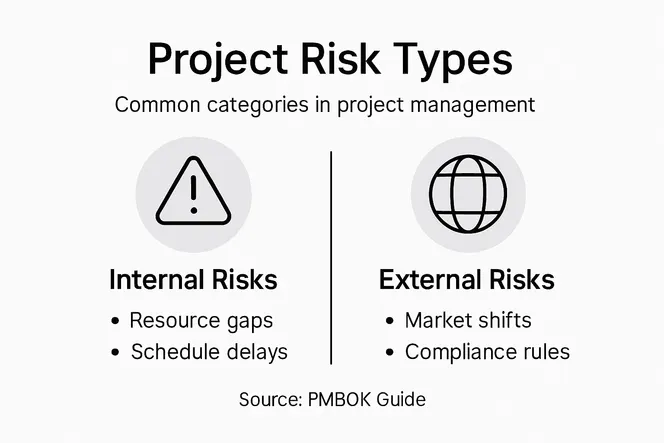
Here’s a comparison of typical risk categories and their business impact in technology projects:
| Risk Category | Example Business Impact | Typical Management Approach |
|---|---|---|
| Strategic | Loss of market share | Leadership review, strategic pivot |
| Operational | Production delays | Process optimization, staff training |
| Financial | Profit margin erosion | Budget tracking, financial hedging |
| Technical | Reduced system reliability | Technical audits, upgrade planning |
| External | Supply chain disruption | Stakeholder coordination, contingency planning |
Pro tip: Implement a dynamic risk scoring matrix that assigns weighted values to different risk types, enabling more nuanced and data-driven risk prioritization strategies.
How to Structure and Maintain a Risk Log
Creating an effective risk log requires a strategic and systematic approach that transforms risk management from a reactive task to a proactive organizational capability. Comprehensive risk documentation demands careful attention to detail and a structured framework that captures the nuanced aspects of potential project challenges.
A well-designed risk log should include the following essential columns and components:
- Risk Identifier
- Unique reference number
- Descriptive risk title
- Date of initial identification
- Risk Description
- Detailed narrative explaining the potential risk
- Specific context and potential trigger points
- Potential cascading effects
- Risk Assessment
- Probability of occurrence (1-5 scale)
- Potential impact severity (1-5 scale)
- Overall risk rating (probability × impact)
- Risk Ownership
- Designated risk owner
- Responsible department
- Contact information
- Accountability metrics
- Mitigation Strategies
- Preventive actions
- Contingency plans
- Required resources
- Estimated mitigation cost
- Tracking and Monitoring
- Current risk status
- Date of last review
- Progress updates
- Closing or escalation criteria
Technological project managers should approach the risk log as a dynamic, living document that requires consistent updates and strategic refinement. Regular review meetings, typically conducted weekly or bi-weekly, help ensure that risk assessments remain current and that mitigation strategies evolve with changing project dynamics.

Pro tip: Leverage AI-powered project management tools to automatically flag high-priority risks, track status changes, and generate predictive risk assessment reports in real-time.
Leveraging AI Tools for Automated Risk Tracking
Artificial intelligence represents a transformative approach to risk management, enabling project teams to move beyond traditional reactive strategies. Automated risk identification empowers organizations to anticipate, assess, and mitigate potential challenges with unprecedented speed and precision.
Key capabilities of AI-driven risk tracking tools include:
- Predictive Risk Analysis
- Real-time data scanning
- Historical pattern recognition
- Probabilistic risk scoring
- Early warning signal generation
- Intelligent Risk Classification
- Automatic risk categorization
- Contextual risk assessment
- Priority level assignment
- Cross-project risk correlation
- Continuous Monitoring
- 24/7 risk surveillance
- Dynamic risk threshold adjustments
- Automated reporting mechanisms
- Instant stakeholder notifications
- Advanced Machine Learning
- Complex scenario modeling
- Self-improving risk algorithms
- Adaptive learning capabilities
- Precision risk forecasting
- Integration Capabilities
- Seamless system connections
- Multi-platform data aggregation
- Standardized risk language translation
- Compliance tracking and validation
Responsible AI risk assessment demands robust frameworks that balance technological innovation with ethical considerations. Technological project managers must implement AI tools that not only enhance operational efficiency but also maintain transparency, data security, and organizational integrity.
Below is a summary of how AI-powered risk tools enhance traditional risk management practices:
| Capability | AI-Powered Tools | Manual Methods |
|---|---|---|
| Risk Identification | Real-time, automated | Periodic, human-driven |
| Risk Classification | Data-based, adaptive | Static, predefined |
| Monitoring | Continuous, 24/7 | Scheduled reviews |
| Reporting | Instant, predictive | Retrospective, manual |
Pro tip: Configure AI risk tracking tools with customized alert thresholds and implement regular human oversight to validate machine-generated insights and maintain a balanced risk management approach.
Common Mistakes and Best Practices for Managers
Project risk management requires a nuanced approach that balances strategic thinking with practical execution. Understanding common risk management pitfalls helps technological project managers develop more robust and effective risk mitigation strategies.
Common Mistakes Project Managers Must Avoid:
- Misunderstanding Risk Fundamentals
- Confusing risk causes with potential impacts
- Oversimplifying complex risk scenarios
- Treating all risks as equally significant
- Failing to distinguish between internal and external risks
- Poor Documentation Practices
- Relying exclusively on generic risk checklists
- Inconsistent risk logging
- Neglecting regular risk assessment updates
- Insufficient detail in risk descriptions
- Communication Breakdowns
- Limited stakeholder risk communication
- Siloed risk tracking across departments
- Inadequate escalation protocols
- Lack of transparent risk reporting
- Reactive Instead of Proactive Management
- Waiting for risks to materialize
- Insufficient contingency planning
- Overlooking potential risk interconnections
- Minimal investment in preventative measures
Best Practices for Effective Risk Management:
- Develop comprehensive risk identification processes
- Assign clear ownership for each identified risk
- Implement regular risk assessment cycles
- Create multi-layered mitigation strategies
- Encourage a culture of transparent risk communication
- Utilize advanced technological tools for continuous monitoring
Successful project managers recognize that risk management is an ongoing, dynamic process requiring consistent attention, strategic thinking, and adaptive approaches. Technological innovation and human expertise must work in tandem to create robust risk management frameworks.
Pro tip: Conduct monthly cross-functional risk review meetings and implement a standardized risk scoring system to ensure consistent and comprehensive risk tracking across all project teams.
Streamline Your Risk Log Management with AI-Driven Project Solutions
Managing a detailed risk log involves tracking probability, impact, ownership, and mitigation strategies all while ensuring timely updates and clear communication. The article highlights how crucial it is to transform reactive risk handling into proactive risk oversight. If you find yourself overwhelmed by inconsistent risk documentation, communication breakdowns, or reactive management, it is time to explore smarter tools designed to simplify and supercharge your workflow.
Gammatica.com offers an AI-powered project and team management platform tailored to automate and organize complex project tasks including risk tracking, ensuring nothing slips through the cracks. Featuring intuitive checklist creation, task prioritization, and real-time collaboration, Gammatica helps you assign clear ownership, monitor risks continuously, and maintain transparent team communication effortlessly — exactly what your risk log process demands.
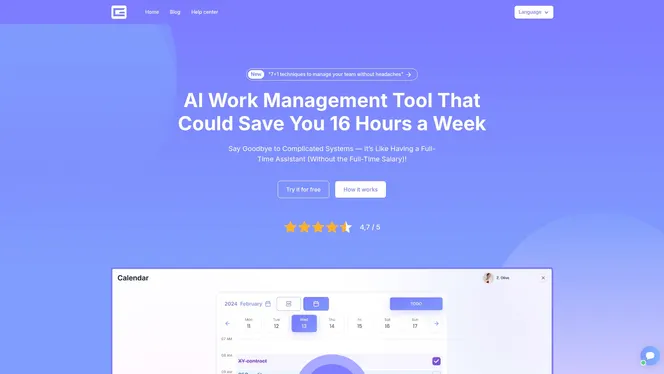
Take control of your project risk management today by visiting Gammatica.com. Unlock powerful automation features and integrations that can save you up to 16 hours every week while enhancing oversight on critical risks. See how task management and team collaboration tools combine to keep your projects secure and on track. Start streamlining your risk logs before unmanaged risks slow down your success.
Frequently Asked Questions
What is a risk log in project management?
A risk log is a strategic tool used in project management to systematically track, analyze, and respond to potential challenges that could impact project success. It captures details about each risk, including its probability, potential impact, mitigation strategies, and current status.
Why is it essential to maintain a risk log?
Maintaining a risk log is essential as it transforms risk management from a reactive process to a proactive one. A well-maintained log helps project managers identify challenges early, develop mitigation strategies, allocate resources efficiently, and ensure project momentum remains intact.
What key components should be included in a risk log?
Key components of an effective risk log typically include a risk description, risk probability, potential impact severity, risk owner, current mitigation strategies, risk status, and estimated resolution timeline.
How can AI tools enhance risk tracking in project management?
AI tools enhance risk tracking by providing predictive risk analysis, intelligent risk classification, continuous monitoring, and advanced machine learning capabilities. They enable real-time data analysis and automate risk identification, allowing teams to respond to potential challenges swiftly.