More than half of american project managers struggle to keep project risks organized and manageable. Without a structured approach, potential problems can easily slip through the cracks, leading to missed deadlines and costly surprises. Using a Risk Breakdown Structure gives teams a clear way to categorize and address different types of project risks, helping everyone understand where the real challenges lie and how to tackle them with confidence.
Table of Contents
- Defining Risk Breakdown Structure In Projects
- Hierarchy And Levels In Risk Breakdown Structure
- Steps To Create An Effective RBS
- Integrating RBS Into Project Management Workflows
- Common Mistakes When Using Risk Breakdown Structures
Defining Risk Breakdown Structure in Projects
A Risk Breakdown Structure (RBS) is a strategic hierarchical framework designed to systematically categorize and analyze potential risks within project management. According to Project Management Institute, the RBS provides project leaders with a comprehensive visualization of risk sources, allowing for more proactive and targeted risk management strategies.
The primary purpose of an RBS is to transform complex, often nebulous risk landscapes into organized, comprehensible categories. By breaking down risks from broad, overarching themes into specific, actionable subcategories, project managers can develop more nuanced and precise risk mitigation approaches. As GeeksforGeeks explains, this hierarchical representation enables teams to identify potential challenges more effectively throughout the project lifecycle.
Key components of a robust Risk Breakdown Structure typically include:
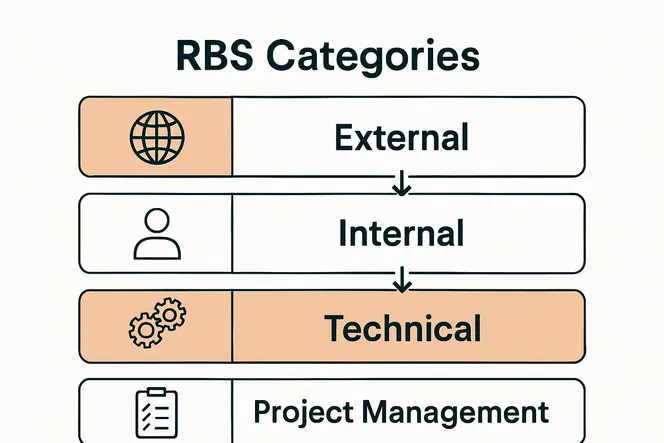
- External Risk Categories: Factors outside direct project control
- Internal Risk Categories: Challenges stemming from project team, resources, or processes
- Technical Risk Categories: Potential technology or infrastructure-related uncertainties
- Project Management Risk Categories: Risks associated with planning, scheduling, and execution
By implementing a well-designed RBS, organizations can transform risk management from a reactive process to a strategic, anticipatory approach. This systematic method not only helps in early risk identification but also facilitates more informed decision making, resource allocation, and contingency planning across various project domains.
Hierarchy and Levels in Risk Breakdown Structure
The hierarchical structure of a Risk Breakdown Structure (RBS) is a sophisticated approach to organizing and understanding project risks. According to GeeksforGeeks, an RBS typically consists of multiple distinct levels that progressively drill down into more granular risk details, starting from the broadest project view to the most specific risk scenarios.
The standard RBS hierarchy is organized into strategic levels that provide increasing clarity and precision. Project Management Institute outlines a typical RBS structure that begins with a comprehensive project overview and systematically breaks down into more detailed risk categories. This multi-level approach enables project managers to perform comprehensive risk assessments with remarkable depth and nuance.
A standard RBS typically includes these hierarchical levels:
- Level 0: Overall project scope
- Level 1: Major risk categories (external, internal, technical)
- Level 2: Specific risk types within each category
- Level 3: Detailed risk descriptions and potential impacts
- Level 4: Specific risk indicators and potential mitigation strategies
By implementing this structured, multi-level approach, organizations can transform risk management from a reactive process into a proactive, strategic discipline. The hierarchical nature of the RBS allows teams to not just identify risks, but to understand their interconnections, potential cascading effects, and develop targeted mitigation strategies that address risks at their most fundamental levels.
Steps to Create an Effective RBS
Developing an effective Risk Breakdown Structure (RBS) requires a systematic and strategic approach. According to Project Management Institute, creating a comprehensive RBS begins with carefully identifying broad risk categories that are most relevant to the specific project context, then methodically decomposing these categories into increasingly specific risk elements.
The process of constructing an RBS involves several critical stages that demand careful consideration and collaborative input. GeeksforGeeks emphasizes the importance of defining the project scope as the foundational first step, which provides the necessary context for subsequent risk identification and categorization. This approach ensures that the RBS remains aligned with the project’s unique characteristics and potential vulnerability points.

Key steps for creating a comprehensive RBS include:
- Define Project Scope: Establish clear boundaries and objectives of the project
- Conduct Stakeholder Workshops: Engage team members and stakeholders to gather diverse risk perspectives
- Identify Major Risk Categories: Develop broad risk domains specific to the project type
- Decompose Categories: Break down each major category into specific, actionable risk elements
- Validate and Refine: Review the RBS with subject matter experts and continuously update based on feedback
Successful RBS development is an iterative process that requires ongoing refinement and organizational learning. By creating a structured, comprehensive framework for risk identification, project teams can transform potential uncertainties into manageable, strategic opportunities for proactive risk mitigation and enhanced project resilience.
Integrating RBS Into Project Management Workflows
The integration of Risk Breakdown Structure (RBS) into project management workflows represents a transformative approach to strategic risk management. According to Project Management Institute, incorporating RBS effectively transforms risk management from a reactive process to a proactive, systematic strategy that enhances overall project success and organizational resilience.
Successful RBS integration requires a holistic approach that embeds risk analysis throughout the project lifecycle. Project Management Institute emphasizes the importance of systematically identifying, assessing, and mitigating risks at every project stage, ensuring that potential challenges are anticipated and managed strategically before they can significantly impact project outcomes.
Key strategies for seamless RBS workflow integration include:
- Continuous Risk Assessment: Regular review and update of risk categories throughout the project
- Collaborative Risk Mapping: Engaging cross-functional teams in risk identification and mitigation
- Quantitative Risk Analysis: Implementing numerical scoring and prioritization mechanisms
- Automated Tracking: Utilizing project management tools to monitor and track risk indicators
- Adaptive Response Planning: Developing flexible mitigation strategies that can evolve with changing project dynamics
By embedding the Risk Breakdown Structure into standard project management processes, organizations can create a more resilient, proactive approach to risk management. This integrated methodology transforms potential obstacles into strategic opportunities, enabling teams to navigate complex project landscapes with greater confidence and precision.
Common Mistakes When Using Risk Breakdown Structures
Navigating the complexities of Risk Breakdown Structures (RBS) requires careful attention to potential pitfalls that can undermine risk management effectiveness. According to Project Management Institute, organizations frequently stumble by failing to tailor their RBS to the specific nuances of their project, creating generic structures that miss critical risk indicators and potential vulnerabilities.
The most significant errors in RBS implementation often stem from fundamental misunderstandings about its purpose and application. Project Management Institute highlights that project teams frequently create overly complex risk structures that become more of an administrative burden than a strategic tool, ultimately defeating the RBS’s primary objective of simplifying and streamlining risk management.
Common mistakes project teams should vigilantly avoid include:
- Lack of Customization: Applying a one-size-fits-all RBS approach instead of tailoring to project specifics
- Static Documentation: Treating the RBS as a fixed document rather than a dynamic, evolving framework
- Incomplete Risk Categorization: Overlooking entire risk domains or underestimating potential impact areas
- Overcomplexity: Creating excessively detailed or convoluted risk structures that obscure critical insights
- Insufficient Stakeholder Involvement: Developing RBS without comprehensive input from cross-functional teams
Successful risk management demands a flexible, adaptive approach that recognizes the RBS as a living document. By understanding and proactively addressing these common mistakes, project leaders can transform their Risk Breakdown Structure from a theoretical exercise into a powerful strategic tool that genuinely enhances project resilience and success.
Streamline Your Risk Management with AI-Powered Project Solutions
Managing risks effectively is crucial to any project’s success. This guide on Risk Breakdown Structure highlights challenges like organizing complex risks, ensuring continuous assessment, and avoiding common pitfalls such as overcomplexity or static documentation. If you find yourself struggling to keep risk categories clear, maintain stakeholder collaboration, and respond quickly to changing project dynamics, you are not alone. Leveraging tools that simplify these processes can transform your risk management from reactive to proactive.

Discover how Gammatica.com empowers business leaders to conquer these challenges through AI-driven automation and intuitive project management workflows. Our platform supports collaborative task management, seamless communication, and adaptive checklists that evolve with your project risks. By reducing administrative burdens, you save valuable time and gain the clarity needed for focused risk mitigation. Start optimizing your risk strategies today and take control with efficient team collaboration and task flow. Visit Gammatica.com now to see how easy it is to build resilient projects that anticipate and manage risks before they escalate.
Frequently Asked Questions
What is a Risk Breakdown Structure (RBS)?
A Risk Breakdown Structure (RBS) is a hierarchical framework used in project management to categorize and analyze potential risks, transforming complex risk landscapes into organized categories for better risk management.
What are the key components of a Risk Breakdown Structure?
Key components of an RBS typically include external risk categories, internal risk categories, technical risk categories, and project management risk categories, helping organizations identify various sources of risk.
How can I effectively create a Risk Breakdown Structure?
To create an effective RBS, define the project scope, conduct stakeholder workshops for diverse risk perspectives, identify major risk categories, decompose these categories into specific elements, and validate the structure with subject matter experts for refinement.
What common mistakes should I avoid when using a Risk Breakdown Structure?
Common mistakes include applying a one-size-fits-all approach, treating the RBS as a static document, overlooking important risk categories, creating overly complex structures, and not involving stakeholders in the process.