Project managers today face a critical challenge: administrative tasks consume up to 40% of their time, leaving little room for strategic leadership. But AI-driven tools are changing this reality dramatically. AI-driven tools reduce administrative tasks by up to 30%, saving project managers 16 hours weekly. This article explores how AI is transforming the project manager role, freeing time for high-value work while enhancing decision-making. You’ll discover practical frameworks, real-world applications, and actionable strategies to integrate AI into your workflows successfully.
Table of Contents
- Understanding The Core Responsibilities Of Project Managers
- Integrating AI In Project Management: Enhancing Efficiency And Decision-Making
- Common Misconceptions About The Project Manager Role And AI
- Frameworks For Comparing Traditional And AI-Augmented Project Management
- Real-World Applications: Case Studies Of AI-Driven Workflow Automation
- Overcoming Challenges: Best Practices For Adopting AI In Project Management
- Empowering Project Managers: Skill Development For AI-Driven Management
- Summary: Transforming The Project Manager Role With AI For Enhanced Productivity
- Explore AI-Powered Project Management Solutions With Gammatica
Key Takeaways
| Point | Details |
|---|---|
| AI saves 16 hours weekly | Reducing admin tasks by 30% frees project managers for strategic work. |
| AI augments, not replaces | Tools enhance human judgment rather than eliminating PM roles. |
| AI-augmented PMs outperform | Speed and quality improve 35-40% over traditional methods. |
| Skills matter for adoption | Data literacy and change management determine success. |
| Change management is critical | 50% of AI projects fail without proper stakeholder engagement. |
Understanding the Core Responsibilities of Project Managers
Project managers allocate up to 40% of time to administrative tasks, limiting strategic focus and team leadership. This heavy administrative burden creates a bottleneck that prevents PMs from delivering their highest value work. The modern project manager juggles multiple core responsibilities simultaneously.
Traditional PM duties span several critical areas:
- Task coordination and timeline management across teams
- Resource allocation and budget oversight
- Stakeholder communication and expectation management
- Risk identification and mitigation planning
- Quality assurance and deliverable tracking
The administrative overhead restricts time available for strategic thinking and team development. PMs find themselves trapped in status updates, meeting scheduling, and data entry rather than coaching teams or solving complex problems. This workload imbalance creates frustration and burnout while limiting organizational impact.
Understanding these baseline challenges frames why AI-driven efficiency matters. When administrative tasks consume nearly half your workday, even modest automation delivers substantial time savings. The question becomes how to reclaim those hours for leadership activities that truly move projects forward.
Integrating AI in Project Management: Enhancing Efficiency and Decision-Making
AI-driven project management tools reduce administrative time by up to 30%, creating space for strategic priorities. This technology automates routine workflows like status reporting, task assignment, and schedule optimization. The result? Project managers shift focus from data entry to decision-making.
Predictive analytics represent a game changer for risk management. AI enhances risk assessment and decision-making quality through predictive analytics, identifying potential bottlenecks before they impact timelines. Machine learning algorithms analyze historical project data to forecast delays, resource conflicts, and budget overruns with remarkable accuracy.
Critical AI capabilities transform daily PM work:
- Automated workflow routing and task assignment based on team capacity
- Real-time collaboration insights highlighting communication gaps
- Intelligent scheduling that optimizes meeting times across time zones
- Data-driven resource allocation recommendations
- Predictive analytics for proactive risk mitigation
AI tools augment human judgment rather than replacing it. You still make final decisions, but with better data and more time to consider strategic implications. The technology handles repetitive analysis while you focus on creative problem-solving and team leadership.
Pro Tip: Start AI adoption with tools automating repetitive tasks to quickly regain valuable time for strategic priorities. Choose one high-volume administrative process first, master it, then expand to other areas.
Explore more about AI automation benefits in project management to understand implementation strategies.
Common Misconceptions About the Project Manager Role and AI
Many project managers fear AI will eliminate their roles entirely. This misconception stems from misunderstanding how AI actually functions in management contexts. Misconceptions include AI replacing project managers and requiring only technical skills; in reality, AI augments human judgment and demands both technical and soft skills.
The reality proves far different from the fear. AI handles data processing and pattern recognition exceptionally well. But leadership, stakeholder negotiation, and creative problem-solving remain distinctly human domains. Your emotional intelligence and relationship-building skills become more valuable, not less, as AI handles routine tasks.
Key myths about AI in project management:
- AI will replace project managers completely (False: AI augments, not replaces)
- Only technical experts can use AI tools (False: Modern interfaces require minimal coding)
- AI decisions override human judgment (False: You remain the final decision-maker)
- Soft skills become irrelevant with AI (False: Leadership matters more than ever)
- AI adoption requires massive investment (False: Many tools offer scalable pricing)
Understanding these misconceptions helps you adopt AI confidently. The technology empowers you to focus on what humans do best while automating what machines handle efficiently. Your role evolves rather than disappears, becoming more strategic and impactful.
Clearing fear and confusion around AI adoption enables teams to embrace these tools enthusiastically. When everyone understands AI as a productivity multiplier rather than a job threat, adoption accelerates and benefits compound.
Frameworks for Comparing Traditional and AI-Augmented Project Management
Traditional project management carries significant overhead. Manual status tracking, spreadsheet updates, and repetitive reporting consume hours daily. Decision-making relies heavily on intuition and limited historical data, often leading to reactive rather than proactive management.
AI-augmented approaches flip this model. AI-augmented management outperforms traditional methods by 35-40% in speed and quality. Automation handles routine tasks while predictive analytics enable proactive decision-making. Teams collaborate more effectively with real-time insights and intelligent recommendations.
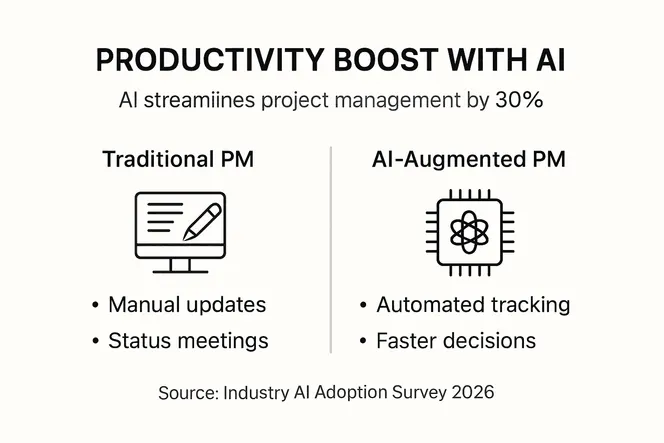
| Aspect | Traditional PM | AI-Augmented PM |
|---|---|---|
| Admin Time | 40% of workday | 10-15% of workday |
| Decision Speed | Reactive, delayed | Proactive, real-time |
| Risk Detection | Manual review | Predictive analytics |
| Collaboration | Email, meetings | Integrated platforms |
| Resource Optimization | Experience-based | Data-driven recommendations |
Selecting the right AI tools requires evaluating several critical factors:
- Ease of use and intuitive interface design
- Integration capability with existing systems
- Automation depth for repetitive workflows
- Predictive analytics quality and accuracy
- Scalability to support team growth
- Training resources and vendor support
Skill development becomes essential for maximizing AI benefits. Data literacy helps you interpret analytics and spot patterns. Change management expertise ensures smooth team adoption. Continuous learning keeps pace with rapidly evolving AI capabilities.
Pro Tip: Evaluate AI tools’ integration capability first to ensure smooth workflow adoption. Incompatible systems create data silos that undermine efficiency gains.
Real-World Applications: Case Studies of AI-Driven Workflow Automation
Real organizations are achieving measurable results with AI-powered project management. AI automation has increased workflow efficiency by 20-25%, reduced task bottlenecks by 35%, and improved team collaboration by 25%. These numbers reflect actual deployments across diverse industries.

A marketing agency implemented AI-driven Kanban boards to optimize campaign workflows. The system automatically prioritized tasks based on deadlines, dependencies, and team capacity. Task bottlenecks dropped 35% within three months as the AI identified and resolved workflow congestion points before they caused delays.
A software development company adopted AI-enhanced communication platforms. The technology analyzed team interactions to surface collaboration gaps and recommend connection points. Team collaboration improved 25% as developers received timely insights about blocked tasks and resource availability.
| Industry | AI Tool Type | Efficiency Gain | Primary Benefit |
|---|---|---|---|
| Marketing | Kanban automation | 35% bottleneck reduction | Faster campaign delivery |
| Software Dev | Collaboration platform | 25% collaboration boost | Better code quality |
| Construction | Predictive scheduling | 20% timeline improvement | Reduced project delays |
| Healthcare | Resource optimization | 22% capacity increase | More patient throughput |
Key success factors across these cases:
- Leadership commitment to AI adoption
- Comprehensive team training programs
- Phased implementation starting with high-impact areas
- Regular monitoring and adjustment based on metrics
- Continuous feedback loops for improvement
These examples illustrate concrete ROI from AI adoption. The technology delivers measurable improvements in speed, quality, and team satisfaction. Success requires thoughtful implementation rather than merely purchasing tools.
Discover more AI-driven project management case studies showcasing diverse industry applications.
Overcoming Challenges: Best Practices for Adopting AI in Project Management
AI adoption faces significant hurdles. Fifty percent of AI tool projects fail due to change management issues rather than technical problems. Resistance stems from fear of job loss, unfamiliarity with new workflows, and lack of clear value demonstration.
Stakeholder buy-in proves critical for success. Executive sponsors must champion AI initiatives publicly and allocate resources consistently. Team members need to understand how AI benefits them personally, not just the organization. Transparent communication about AI’s role reduces anxiety and builds enthusiasm.
Proven best practices for successful AI integration:
- Start with a pilot program in one team or project
- Measure baseline metrics before implementation
- Provide comprehensive training before tool rollout
- Assign AI champions within teams for peer support
- Monitor adoption metrics and address barriers quickly
- Celebrate early wins to build momentum
- Gather continuous feedback and iterate
Comprehensive training addresses both technical and mindset shifts. Team members need hands-on practice with new tools in safe environments. Training should cover not just how to use AI features, but when and why to apply them effectively.
Continuous skill development sustains AI benefits over time. Technology evolves rapidly, requiring ongoing learning to maximize value. Organizations that invest in regular training sessions and knowledge sharing maintain competitive advantages.
Pro Tip: Develop a structured change management plan that includes frequent trainings and stakeholder engagement for smooth AI integration. Schedule monthly check-ins during the first six months to address concerns and refine processes.
Empowering Project Managers: Skill Development for AI-Driven Management
Project managers need new capabilities to lead AI-empowered teams effectively. Technical proficiency matters, but soft skills remain equally critical. The most successful AI-adopting PMs balance both domains skillfully.
Essential technical skills for AI-driven management:
- Data literacy to interpret analytics and spot meaningful patterns
- AI tool proficiency across platforms your organization uses
- Understanding of machine learning basics and limitations
- Integration knowledge to connect systems seamlessly
- Metrics tracking to measure AI impact quantitatively
Soft skills become more valuable, not less, in AI-augmented environments. Leadership guides teams through technology transitions and maintains morale. Communication translates AI insights into actionable strategies for diverse stakeholders. Emotional intelligence helps navigate resistance and build adoption enthusiasm.
Change management expertise determines AI success rates. You must design transition plans that address fear, provide support, and demonstrate value incrementally. This requires empathy, patience, and strategic thinking beyond what traditional PM training covers.
Ongoing learning proves vital due to fast AI evolution. New capabilities emerge quarterly, creating opportunities for competitive advantage. PMs who commit to continuous education stay ahead of industry trends and deliver greater value.
Preparing for the evolving landscape means embracing learning as a core competency. Dedicate time weekly to exploring new AI tools, reading case studies, and experimenting with features. Join communities where PMs share AI adoption experiences and solutions.
Learn about AI skills and tools for project managers to build comprehensive capabilities.
Summary: Transforming the Project Manager Role with AI for Enhanced Productivity
AI tools fundamentally reshape how project managers work in 2026. By reducing administrative burden by 30%, these technologies free up to 16 hours weekly for strategic leadership. This time shift enables PMs to focus on coaching teams, building stakeholder relationships, and driving innovation.
Key transformation insights:
- AI complements PM roles rather than replacing them
- Successful adoption depends on both technical and soft skills
- Change management determines AI integration success
- Data-driven decision-making improves project outcomes
- Continuous learning sustains competitive advantages
The evidence proves clear: AI-augmented project managers outperform traditional approaches by 35-40% in speed and quality. But technology alone doesn’t guarantee success. Thoughtful implementation, comprehensive training, and ongoing skill development maximize benefits.
Project managers who embrace AI confidently position themselves for scalable productivity gains. The technology handles repetitive tasks while you focus on uniquely human capabilities. Your strategic thinking, emotional intelligence, and leadership become more valuable as AI eliminates administrative friction.
Start your AI journey by identifying one high-volume administrative task to automate. Measure results, refine your approach, and expand gradually. The future of project management combines human judgment with machine efficiency, creating unprecedented opportunities for impact.
Explore AI-Powered Project Management Solutions with Gammatica
Ready to transform your project management approach? Gammatica offers AI-driven solutions designed specifically for project managers seeking efficiency gains. Our platform combines task automation, predictive analytics, and intelligent collaboration tools to help you reclaim up to 16 hours weekly.
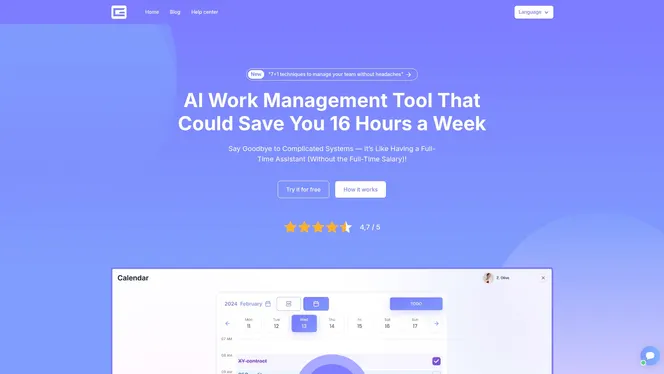
Discover how to boost team productivity with smart AI tools that integrate seamlessly into your existing workflows. Learn strategies to optimize project management workflow and achieve measurable results faster. Compare solutions with our guide to top marketing project management software to find the perfect fit for your team.
Gammatica provides expert insights, practical guides, and proven frameworks supporting effective AI adoption. Start your AI project management journey today with resources built for real-world application.
Frequently Asked Questions
What tasks can AI automate for project managers?
AI automates status reporting, task assignment, meeting scheduling, and timeline optimization. It handles data entry, generates progress reports, identifies resource conflicts, and flags potential risks before they impact delivery. This frees project managers to focus on strategic decision-making and team leadership.
How to overcome resistance to AI adoption in teams?
Address resistance through transparent communication about AI benefits for individual team members. Provide comprehensive training in safe environments where mistakes don’t impact real projects. Assign AI champions within teams for peer support, celebrate early wins publicly, and gather continuous feedback to address concerns quickly.
Do project managers need programming skills to use AI tools?
No, modern AI project management platforms feature intuitive interfaces requiring no coding knowledge. You need data literacy to interpret analytics and understanding of how AI recommendations work. Technical depth helps but isn’t required for effective use of most tools available in 2026.
What are early signs of successful AI tool adoption?
Successful adoption shows through reduced time spent on administrative tasks, faster decision-making, improved team collaboration metrics, and higher project delivery rates. Team members voluntarily use AI features without prompting, and stakeholders notice improved communication quality and project predictability.
How to maintain human oversight when using AI insights?
Treat AI recommendations as data-driven suggestions requiring your judgment. Always validate AI outputs against real-world context and team dynamics. Establish review processes where humans approve key decisions, and maintain direct communication channels with team members to catch issues AI might miss.