Most teams work hard. Very few work smart enough to break through the invisible ceiling that keeps output flat despite genuine effort. The gap isn’t motivation or talent. It’s the absence of targeted workflow improvements and process innovation that many organizations miss. This article gives you seven research-backed productivity hacks built specifically for mid-sized companies where the stakes are real, the teams are complex, and generic advice just doesn’t cut it. Each strategy is practical, sequenced, and designed to compound over time.
Key Takeaways
| Point | Details |
|---|---|
| Prioritize elimination and automation | Streamline workflows using the four-lever framework to remove bottlenecks and boost returns fast. |
| Optimize team size and engagement | The right mix of team size and engagement directly impacts productivity and output quality. |
| Leverage hybrid collaboration | Hybrid teams need formal plans and check-ins to realize engagement gains and avoid burnout. |
| Structure time, not just tasks | Intelligent scheduling, meeting discipline, and time frameworks like Pomodoro unlock hidden efficiency. |
Identify productivity pain points with smart criteria
Before you adopt any new strategy, you need to know exactly where your team is bleeding time. Guessing wastes resources. A structured assessment of your workflow, communication patterns, and time management habits gives you a clear target.
Here’s what to look for when diagnosing your team’s bottlenecks:
- Workflow gaps: Tasks that require too many handoffs or approvals before moving forward
- Communication overload: Meetings or messages that interrupt deep work without adding decision value
- Time misalignment: Deadlines that don’t reflect actual task complexity or team capacity
- Engagement drop-off: Team members who are present but not contributing at full capacity
- Process redundancy: Steps that exist out of habit, not necessity
Team size matters here too. A five-person team has different friction points than a fifty-person one. Large firms outperform mid-sized businesses in output per hour, which signals that mid-sized companies often leave significant efficiency gains on the table due to sub-optimal processes. That gap is your opportunity.
Pro Tip: Run a one-week time audit across your team before choosing any productivity hack. Ask everyone to log their top three time-wasters. The patterns will surprise you.

Elimination and automation: The four-lever workflow framework
Once you’ve mapped your pain points, the next step is rethinking how work actually gets done. The four-lever workflow innovation framework gives you a structured path to do exactly that.
Here are the four levers in order:
- Eliminate: Remove tasks that don’t contribute to outcomes. Apply the 80/20 rule. Find the 20% of activities driving 80% of results and cut the rest ruthlessly.
- Synchronize: Align team schedules, handoffs, and communication windows so work flows without unnecessary waiting.
- Streamline: Simplify the steps that remain. Reduce complexity in approval chains, reporting, and documentation.
- Automate: Only after the first three levers are applied, automate what’s left. Automation on a broken process just produces broken results faster.
The ROI on this approach is significant. Firms that apply this framework see a 248% ROI over three years. That’s not a marginal improvement. That’s a structural shift in how your business operates.
“Don’t automate a mess. Redesign first, then automate what’s clean.”
The biggest mistake teams make is jumping straight to automation tools before fixing the underlying process. Involve the people doing the work before you build any automation. They know where the real friction lives.
Master team dynamics: Optimal size, engagement, and hybrid models
Process improvements only go so far. The structure and engagement of your team shapes how much any productivity hack can actually deliver.
Team size is more nuanced than most managers realize. Optimal team size sits at a median of 5 to 6, but highly engaged teams can sustain productivity at larger sizes. Engagement is the multiplier. Teams with high engagement show 14% higher productivity than their disengaged counterparts.
Here’s a quick reference for team structure decisions:
| Team size | Best for | Risk to watch |
|---|---|---|
| 3 to 5 | Fast-moving projects, startups | Burnout from overload |
| 6 to 10 | Cross-functional delivery teams | Communication gaps |
| 11 to 20 | Larger initiatives with sub-teams | Disengagement at edges |
| 20 plus | Enterprise programs | Coordination overhead |
Hybrid teams add another layer of complexity. Hybrid teams with structured collaboration plans are 66% more engaged and 29% less likely to experience burnout compared to those without a plan. The plan doesn’t need to be elaborate. It needs to be consistent.
Key elements of an effective hybrid collaboration plan:
- Set fixed days or windows for synchronous team interaction
- Use async tools for updates that don’t require real-time response
- Build in regular one-on-ones to catch disengagement early
- Create shared visibility into project status so no one is guessing
- Invest in collaborative hybrid team building activities that work across locations
For remote employee engagement, video-based training and team rituals consistently outperform text-only communication in building trust and shared culture.
Pro Tip: Schedule a 15-minute weekly check-in between managers and direct reports. It sounds small, but consistent check-ins are one of the highest-leverage actions for building trust and catching problems before they compound.
Win back time: Timeboxing, Pomodoro, and meeting discipline
Structuring your team’s time is just as important as structuring your team itself. Without intentional time management, Parkinson’s Law takes over. Work expands to fill the time available, which means unstructured schedules quietly destroy productivity even on motivated teams.
Here’s how to counter it with three proven time control methods:
- Timeboxing: Assign a fixed block of time to a task and stop when the block ends. This forces prioritization and prevents perfectionism from eating your schedule. Use it for recurring tasks like reporting, email, and planning.
- Pomodoro technique: Work in 25-minute focused sprints followed by 5-minute breaks. After four sprints, take a longer break. This works especially well for knowledge workers who need sustained concentration.
- Meeting discipline: Every meeting needs a clear agenda, a defined decision or output, and a hard end time. End every meeting with explicit action steps, owners, and deadlines. No exceptions.
One underrated trap is what’s called task celebration. Teams finish a milestone and mentally check out before the next phase begins. Momentum dies. The fix is to define real milestones tied to business outcomes, not just task completion. Finishing a report is not a milestone. Delivering an insight that changes a decision is.
“Time is the only resource you can’t recover. Protect it with the same rigor you apply to budget.”
Pro Tip: End every meeting by asking, “What is the one thing each person will do before we meet again?” This single habit eliminates vague follow-ups and keeps accountability visible.
Comparison: Which productivity hacks fit your team?
Not every hack works equally well in every context. Here’s a side-by-side view of the major strategies and where each one delivers the most impact.
| Productivity hack | Best for | Quick win | Effort to implement |
|---|---|---|---|
| Four-lever framework | Teams with complex, multi-step workflows | Eliminate one redundant approval step | Medium to high |
| Timeboxing | Managers and knowledge workers | Apply to email and reporting first | Low |
| Pomodoro technique | Individual contributors with deep work | Start with one 25-minute block daily | Low |
| Hybrid collaboration plan | Distributed or remote teams | Set one fixed sync window per week | Medium |
| Team size optimization | Growing teams adding headcount | Audit current spans of control | Medium |
| Engagement check-ins | Teams showing signs of disengagement | Add weekly one-on-ones | Low |
| Automation (post-redesign) | Repetitive, rules-based processes | Automate one recurring report | High |
SMEs can outperform larger firms by focusing on human capital and adaptability, two areas where mid-sized companies have a natural edge. The key is choosing the right lever for your current stage.
A few situations to guide your selection:
- You’re growing fast: Prioritize team size optimization and hybrid collaboration plans before processes break under scale
- You’re stuck in meetings: Start with meeting discipline and timeboxing immediately
- Your team feels burned out: Focus on engagement check-ins and workload elimination first
- You want long-term ROI: Invest in the four-lever framework as your structural foundation
One practical rule: try one new hack per quarter. Stacking too many changes at once creates confusion and makes it impossible to measure what’s actually working.
Amplify your results with productivity platforms
Putting these strategies into practice is easier when your tools are built to support them. The right platform removes the friction between good intentions and consistent execution.
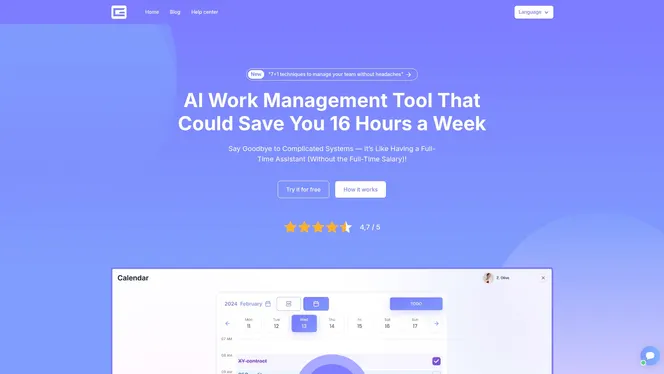
Gammatica is an AI-driven project and team management platform designed for exactly this kind of work. It combines task management, automation, Kanban boards, CRM, and calendar coordination in one place, so your team spends less time managing work and more time doing it. Users report freeing up to 16 hours per week by using Gammatica’s AI suggestions and pre-made templates. Whether you’re a founder optimizing operations with productivity tools for founders or a sales leader scaling output with sales productivity tools, Gammatica gives you the infrastructure to make these hacks stick at scale.
Frequently asked questions
What is the most effective productivity hack for mid-sized companies?
A structured workflow framework built around elimination, synchronization, streamlining, and automation delivers the highest long-term ROI. Applied consistently, it yields 248% ROI over three years, making it the highest-impact starting point for most mid-sized teams.
How big should my project teams be for optimal productivity?
A median team size of 5 to 6 tends to work best for most managers, but teams with high engagement levels can sustain strong productivity even at larger sizes.
Do hybrid teams require special productivity strategies?
Yes. Hybrid teams with structured plans show 66% higher engagement and 29% less burnout, so predictable check-ins, async tools, and clear collaboration norms are essential, not optional.
Is it better to automate everything or redesign processes first?
Always redesign before you automate. Automating a flawed process just scales the problem. Get your team’s input on what to fix, streamline it, then apply automation to what remains.