Over half of multinational HR teams report wasted hours each week chasing manual document errors, yet modern automation tools now empower even the most complex American compliance processes. Fast, accurate management of letters of employment is not just an administrative win. It also protects legal interests and boosts HR credibility across borders. This overview reveals how the right digital solutions can save time, reduce errors, and support seamless global workforce documentation.
Table of Contents
- Letter Of Employment Form Essentials
- Main Types And Their Unique Features
- Key Contents And Creation Process
- Legal And Compliance Requirements Worldwide
- Automation Benefits For Global Hr Teams
- Common Errors And How To Avoid Them
Letter of employment form essentials
A letter of employment serves as a critical legal document that establishes the foundational relationship between an employer and employee. These forms are essential for documenting key professional details, employment terms, and protecting both organizational and individual rights. When preparing these documents, HR professionals must ensure comprehensive and accurate information collection.
Standard employment forms typically collect extensive personal and professional data. According to the U.S. Department of Labor employment guidelines, these documents require precise employee identification information. The core components usually include:
- Personal contact details
- Social security number
- Employment eligibility verification
- Tax withholding information
- Emergency contact data
- Professional background verification
- Position-specific role descriptions
Legal compliance remains paramount when designing employment documentation. Organizations must balance collecting necessary information while respecting privacy regulations. Standard application protocols recommend creating forms that comprehensively capture professional qualifications without introducing potential discriminatory elements.
Successful letter of employment forms function as more than administrative paperwork. They represent a formal agreement establishing mutual expectations, compensation terms, and organizational responsibilities. By crafting clear, precise documents, companies can mitigate potential misunderstandings and create transparent professional relationships from the outset.
Pro tip: Develop a standardized employment form template with built-in validation checks to minimize errors and ensure consistent information gathering across all new hires.
Main types and their unique features
Employment letters encompass a diverse range of document types, each serving distinct professional purposes. Various employment letter categories exist to address specific organizational and employee communication needs. Understanding these variations helps HR professionals craft precise, targeted documentation.
The primary employment letter types include:
- Offer Letter: Formal job proposal detailing position, compensation, and initial employment terms
- Employment Verification Letter: Official document confirming an individual’s current or past employment status
- Recommendation Letter: Detailed endorsement highlighting employee professional capabilities
- Termination Letter: Formal notification of employment contract conclusion
- Promotion Letter: Official communication regarding role advancement and new responsibilities
Employment record documentation varies internationally, with different regions requiring unique informational components. For instance, Dutch employment letters mandate comprehensive details including precise job responsibilities, salary information, and employment duration. American documentation tends to be more concise but equally legally binding.
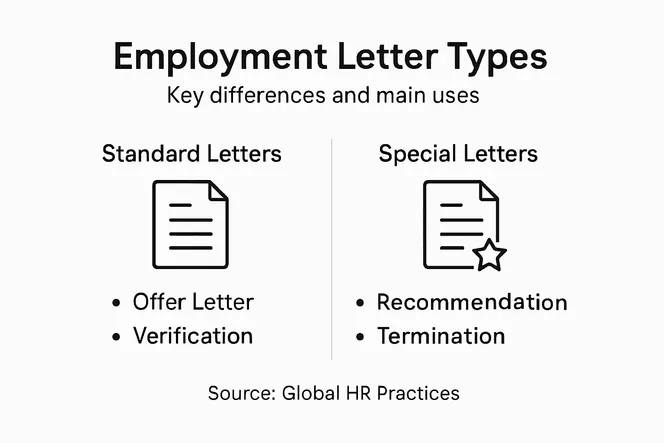
Each letter type carries specific legal and professional implications. Recommendation letters provide professional endorsements, verification letters serve administrative purposes, while offer letters establish initial employment contracts. The nuanced differences require careful drafting to ensure accuracy, legal compliance, and clear communication between employers and employees.
Here’s a summary comparing the main employment letter types and their core purposes:
| Letter Type | Primary Purpose | Typical Recipients |
|---|---|---|
| Offer Letter | Outline initial job terms | Prospective employee |
| Employment Verification | Confirm employment history/status | External agencies, lenders |
| Recommendation Letter | Endorse professional capabilities | Potential employers |
| Termination Letter | Formally end employment relationship | Employee |
| Promotion Letter | Communicate advancement, new duties | Promoted employee |
Pro tip: Develop a standardized template library for different employment letter types to ensure consistency and reduce administrative processing time.
Key contents and creation process
Crafting a comprehensive letter of employment requires meticulous attention to detail and strategic information compilation. Employment letter documentation demands precise inclusion of critical professional details that establish clear expectations between employer and employee.
The essential contents of an employment letter typically include:
- Employee’s full legal name
- Complete job title and department
- Employment status (full-time, part-time, contract)
- Official start date
- Agreed annual salary and compensation structure
- Specific job responsibilities
- Reporting hierarchy
- Company contact information
- Terms of employment
Formal letter creation guidelines recommend following a structured business letter format. This involves creating a professional document that includes:
- Company letterhead
- Date of letter issuance
- Recipient’s complete contact information
- Formal salutation
- Detailed employment information
- Closing paragraph
- Authorized signature
The creation process requires collaborative input from multiple organizational departments. Human Resources must verify employment details, while department managers confirm job responsibilities and compensation packages. Legal teams typically review the final document to ensure compliance with organizational policies and regional employment regulations.

Pro tip: Develop a standardized digital template with mandatory fields and automatic validation checks to streamline the employment letter creation process and minimize potential errors.
Legal and compliance requirements worldwide
Navigating the complex landscape of international employment regulations requires comprehensive understanding and strategic approach. Global employment law standards present intricate challenges for multinational organizations seeking consistent workforce documentation and legal compliance.
Key international legal requirements typically encompass:
- Mandatory written employment contracts
- Language-specific contract requirements
- Non-discrimination policy adherence
- Minimum wage regulations
- Working hour limitations
- Social benefit provisions
- Employee protection standards
- Termination process guidelines
- Health and safety regulations
International employment guidelines are primarily governed by frameworks established by the International Labour Organization (ILO). These standards create foundational principles that help organizations maintain ethical and legally sound employment practices across diverse geographic regions. Different countries interpret and implement these guidelines with unique nuanced approaches, requiring careful navigation and localized expertise.
Multinational companies must develop robust compliance strategies that account for regional variations. This involves creating flexible employment documentation that can be adapted to specific jurisdictional requirements while maintaining core organizational principles. Legal teams must collaborate closely with human resources departments to ensure comprehensive understanding of local employment regulations, potential risks, and necessary documentation standards.
To help ensure global employment compliance, compare how documentation requirements vary by region:
| Region | Contract Language | Mandatory Written Terms | Unique Local Requirements |
|---|---|---|---|
| United States | English, usually | Brief but binding | At-will disclaimers common |
| Netherlands | Dutch | Detailed, comprehensive | Explicit salary and duration data |
| United Kingdom | English | Written statement legally required | Pay reference in GBP |
| Asia-Pacific | Varies (often local) | Country-specific, highly variable | May require dual languages |
Pro tip: Implement a centralized compliance tracking system that automatically updates employment letter templates based on changing international labor regulations.
Automation benefits for global HR teams
Automation technologies have revolutionized the way global HR teams manage complex employment documentation and administrative processes. Digital transformation in human resources enables organizations to streamline repetitive tasks, reduce manual errors, and create more efficient workforce management strategies.
Key automation benefits for global HR teams include:
- Instant template generation across multiple language requirements
- Automatic compliance checks for regional employment regulations
- Real-time tracking of document status and version control
- Centralized storage and secure document management
- Rapid customization of employment letters
- Integrated workflow approvals
- Reduction of administrative processing time
- Enhanced data accuracy and consistency
- Seamless multi-jurisdiction document adaptation
Advanced automation platforms can significantly reduce the time and resources traditionally spent on manual employment letter creation. These intelligent systems leverage artificial intelligence and machine learning algorithms to understand complex legal requirements, automatically populate standardized templates, and ensure comprehensive documentation that meets diverse international standards.
Global organizations benefit from automation by creating more agile, responsive HR processes that can quickly adapt to changing regulatory landscapes. By implementing sophisticated digital tools, HR professionals can shift their focus from administrative tasks to strategic workforce planning, employee engagement, and organizational development.
Pro tip: Select automation platforms with robust API integrations that allow seamless communication between HR systems, legal databases, and organizational management tools.
Common errors and how to avoid them
Employment letter preparation demands meticulous attention to detail and precision. Common documentation mistakes can significantly undermine the professional credibility of an organization’s hiring process and potentially create legal complications.
Frequent errors HR professionals must vigilantly avoid include:
- Inaccurate employee personal information
- Incorrect job title specification
- Missing employment date ranges
- Imprecise compensation details
- Generic, non-personalized language
- Poor document formatting
- Spelling and grammatical mistakes
- Inconsistent organizational terminology
- Failure to address specific recipient requirements
Professional letter preparation guidelines emphasize the critical importance of comprehensive document review. Implementing a systematic verification process can dramatically reduce potential errors. This involves multiple layers of review, including automated compliance checks, manual proofreading by different team members, and standardized template utilization.
Organizations should develop robust internal protocols that mandate comprehensive document validation. This includes cross-referencing employee information with human resources databases, ensuring legal compliance through automated screening tools, and maintaining strict documentation standards across all employment communication channels. Systematic approaches transform potential error-prone processes into streamlined, reliable documentation workflows.
Pro tip: Create a mandatory two-stage review checklist with specific validation points that must be electronically confirmed before an employment letter can be finalized.
Simplify Your Global Employment Documentation with Gammatica
Managing international employment letters involves juggling complex legal requirements, diverse workforce needs, and strict compliance demands. The article highlights challenges such as ensuring accurate employee details, adapting documents for different regions, and avoiding costly errors that can impact your organization’s credibility and legal standing. If you want to eliminate manual mistakes and streamline the creation of offer letters, verification documents, and more, automation is the key.
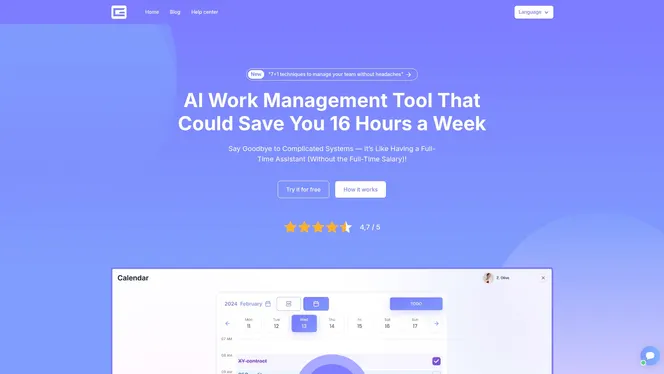
Unlock the power of AI-driven automation with Gammatica.com. Our platform helps HR teams effortlessly generate precise, compliant employment letters worldwide by using smart templates, built-in compliance checks, and seamless collaboration tools. Free up valuable time and reduce administrative burdens today. Start maximizing your HR productivity by visiting Gammatica.com now and experience how automation transforms global workforce management.
Frequently Asked Questions
What is a letter of employment?
A letter of employment is a formal document that outlines the relationship between an employer and employee, including essential details like job title, compensation, and other terms of employment.
How do I create a letter of employment?
To create a letter of employment, include key information such as the employee’s full name, job title and department, employment status, start date, salary, specific job responsibilities, and company contact details, following a structured business letter format.
What are the different types of employment letters?
Common types of employment letters include offer letters, employment verification letters, recommendation letters, termination letters, and promotion letters, each serving distinct purposes in the hiring and employment process.
How can automation improve the letter of employment process?
Automation can streamline the creation of employment letters by enabling instant template generation, automatic compliance checks for regional regulations, real-time tracking, and centralized document management, which reduces manual errors and processing time.