Every project manager knows the struggle of juggling shifting requirements and tight deadlines in the fast-paced world of Hungarian tech teams. Balancing long-term planning with the need for quick responses gets even tougher as teams grow and projects become more complex. By embracing iterative project management, you can unlock flexible workflows, rapid feedback cycles, and ongoing improvements—all powered by AI-driven tools that boost collaboration and save time.
Table of Contents
- Iterated Definition And Core Concepts
- Types Of Iterative Project Management Approaches
- How Iterative Cycles Drive Project Success
- Common Misconceptions And Challenges
- Practical Use Cases And Real-World Benefits
- Risks, Limitations, And How To Avoid Pitfalls
Iterated Definition and Core Concepts
Iterated project management represents a dynamic approach that transforms traditional linear project workflows into flexible, adaptive processes. Unlike rigid methodologies, this strategy embraces continuous improvement and incremental development, allowing teams to respond quickly to changing requirements and emerging challenges.
At its core, iterative project management is characterized by cyclical feedback and adaptive practices. The fundamental principles include:
- Breaking complex projects into smaller, manageable cycles
- Continuously evaluating and refining project outcomes
- Incorporating stakeholder feedback at regular intervals
- Maintaining high flexibility in project execution
- Prioritizing learning and continuous improvement
The primary distinction between iterative and traditional project management lies in their approach to planning and execution. While traditional methods follow a strict, sequential path, iterative methodologies create multiple development cycles that allow for ongoing refinement. This approach enables project teams to:
- Detect and address potential issues earlier
- Adjust strategies based on real-time insights
- Reduce overall project risk
- Improve team collaboration and communication
Iterative frameworks are particularly effective in complex, uncertain environments where requirements might evolve rapidly. By embracing a more organic, responsive methodology, project managers can create more resilient and adaptable project strategies.
Iterative project management transforms rigid processes into dynamic, responsive workflows that prioritize continuous learning and adaptation.
Pro tip: Implement short, focused iteration cycles of 2-4 weeks to maintain project momentum and quickly integrate stakeholder feedback.
Types of Iterative Project Management Approaches
Iterative project management encompasses several dynamic methodologies that provide teams with flexible frameworks for handling complex project challenges. Hybrid approaches combining traditional and adaptive methods have emerged as particularly powerful strategies for modern project environments.
The primary types of iterative project management approaches include:
- Agile Methodology: A highly adaptable approach emphasizing incremental development and continuous stakeholder collaboration
- Scrum Framework: Focuses on sprint-based work cycles with daily stand-up meetings and clear role definitions
- Kanban Method: Visualizes workflow processes and limits work in progress to enhance team efficiency
- Extreme Programming (XP): Prioritizes technical excellence and rapid response to changing customer requirements
Traditional methodologies like Waterfall contrast sharply with these iterative approaches. While Waterfall follows a linear, sequential path, project management research reveals increasing adoption of hybrid models that combine the strengths of both predictive and adaptive techniques.

Each iterative approach offers unique advantages tailored to specific project contexts. Agile, for instance, works exceptionally well in software development and creative industries, whereas Scrum provides structured yet flexible frameworks for teams needing clear milestones and frequent reassessment.
Here’s a comparison of major iterative project management methodologies and their best-fit use cases:
| Methodology | Key Focus | Typical Use Case |
|---|---|---|
| Agile | Adaptive development | Software and creative projects |
| Scrum | Sprint-based delivery | Teams needing clear milestones |
| Kanban | Visual workflow | Continuous operational work |
| Extreme Programming | Technical excellence | Rapid software iterations |
Successful project management is not about choosing a single methodology, but selecting the right approach that matches your project’s unique requirements and team dynamics.
Pro tip: Assess your project’s complexity, team capabilities, and stakeholder expectations before selecting an iterative management approach to maximize success.
How Iterative Cycles Drive Project Success
Iterative project cycles are powerful mechanisms that transform project management from rigid, predictable processes into dynamic, responsive strategies. Continuous adaptation becomes the core driver of project success, enabling teams to navigate complex and evolving project landscapes with unprecedented agility.
The key mechanisms through which iterative cycles drive project success include:
- Rapid feedback integration: Quickly incorporating stakeholder insights and market changes
- Risk mitigation: Identifying and addressing potential issues early in project development
- Continuous learning: Systematically capturing and applying insights from each project phase
- Incremental value delivery: Providing tangible results throughout the project lifecycle
- Stakeholder alignment: Maintaining consistent communication and expectation management
Each iteration represents a strategic opportunity for teams to reassess, recalibrate, and optimize their approach. By breaking complex projects into manageable cycles, project managers can:
- Reduce overall project uncertainty
- Enhance team flexibility and responsiveness
- Improve resource allocation efficiency
- Maintain higher levels of team motivation and engagement
Performance optimization becomes significantly more achievable when teams embrace iterative methodologies. The ability to pivot quickly, learn from previous cycles, and incrementally improve project strategies creates a robust framework for sustained success.
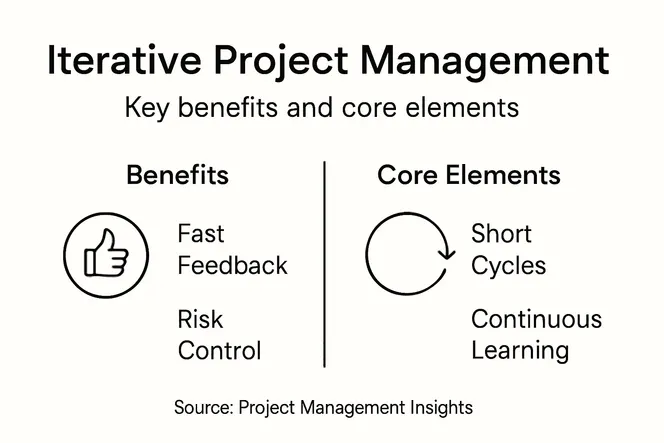
This table summarizes how iterative cycles enhance project performance:
| Benefit | How Achieved | Outcome for Teams |
|---|---|---|
| Faster adaptation | Quick feedback integration | Increased responsiveness |
| Reduced project risk | Early issue identification | Fewer late-project surprises |
| Continual improvement | Learning after each cycle | Skill and process growth |
| Stakeholder engagement | Ongoing communication | Higher satisfaction rates |
Iterative cycles transform project management from a linear process into a dynamic, adaptive journey of continuous improvement and strategic refinement.
Pro tip: Document lessons learned during each iteration cycle and create a knowledge repository to accelerate future project performance and team learning.
Common Misconceptions and Challenges
Iterative project management is often misunderstood, with many organizations struggling to implement these approaches effectively. Persistent misconceptions about project management methodologies continue to hinder successful adoption across various industries.
The most common misconceptions about iterative project management include:
- Universal Applicability Myth: Believing iterative methods work identically across all project types
- Predictability Fallacy: Assuming iterative approaches lack structure or planning rigor
- Resource Intensity Misconception: Thinking iterative methods require more time and effort
- Scope Control Misunderstanding: Believing iterative approaches lead to uncontrolled scope creep
- Technology Dependency: Assuming iterative methods are only suitable for software development
Organizations frequently encounter significant challenges when implementing iterative project management approaches:
- Resistance to cultural change
- Lack of proper training and understanding
- Inadequate tools and infrastructure
- Misalignment between traditional and adaptive methodologies
- Difficulty in performance measurement
Organizational transformation requires a nuanced approach to overcoming these challenges. Successfully implementing iterative methods demands more than simply adopting new techniques - it requires a fundamental shift in thinking, communication, and project execution strategies.
Successful iterative project management is not about following a rigid framework, but about creating a flexible, adaptive approach tailored to specific organizational needs.
Pro tip: Start with small, controlled pilot projects to demonstrate iterative method effectiveness and gradually build organizational buy-in and understanding.
Practical Use Cases and Real-World Benefits
Iterative project management has transformed organizational approaches across multiple industries, demonstrating remarkable versatility and impact. AI-powered project management techniques are revolutionizing how teams develop, execute, and optimize complex projects.
Practical use cases span diverse sectors, showcasing the adaptability of iterative methodologies:
- Software Development: Rapid prototyping and continuous feature refinement
- Manufacturing: Dynamic production planning and real-time quality control
- Healthcare: Adaptive treatment protocol development
- Marketing: Agile campaign design and performance optimization
- Construction: Flexible resource allocation and risk management
The real-world benefits of iterative project management are substantial and measurable:
- Accelerated project delivery timelines
- Enhanced stakeholder collaboration
- Improved risk prediction and mitigation
- More efficient resource utilization
- Higher quality final deliverables
Technological integration has further amplified the effectiveness of iterative approaches. By leveraging AI and advanced analytics, organizations can now create more precise, responsive project management strategies that adapt in real-time to changing conditions and emerging challenges.
Iterative project management is not just a methodology, but a strategic approach that transforms how organizations conceive, develop, and deliver complex projects.
Pro tip: Implement a robust feedback mechanism that captures insights from each project iteration to continuously refine your project management approach.
Risks, Limitations, and How to Avoid Pitfalls
Iterative project management, while powerful, is not without significant challenges that can potentially derail project success. Comprehensive risk assessment strategies are critical for navigating the complex landscape of iterative methodologies.
Key risks and limitations in iterative project management include:
- Scope Creep: Continuous changes leading to undefined project boundaries
- Team Burnout: Frequent cycles causing mental and emotional exhaustion
- Resource Unpredictability: Difficulty in accurate resource allocation
- Communication Overhead: Increased meetings and coordination requirements
- Performance Measurement Complexity: Challenging to track traditional metrics
To mitigate these potential pitfalls, project managers should implement strategic approaches:
- Establish clear, measurable iteration objectives
- Define strict boundary conditions for scope modifications
- Create robust communication protocols
- Implement regular team wellness check-ins
- Develop flexible but consistent performance tracking mechanisms
Organizational adaptability becomes crucial in successfully managing iterative project risks. This requires creating a culture that embraces change while maintaining disciplined operational standards, balancing flexibility with strategic control.
Effective risk management in iterative projects is not about eliminating uncertainty, but about creating adaptive systems that can respond intelligently to emerging challenges.
Pro tip: Develop a standardized risk assessment template specific to your iterative project methodology to consistently evaluate and mitigate potential challenges.
Enhance Your Iterative Project Management with AI-Driven Efficiency
The article highlights key challenges in implementing iterative project management such as maintaining flexibility across cycles, managing scope creep, and optimizing continuous feedback integration. If you are seeking to unlock efficiency through structured yet adaptable workflows and reduce administrative burdens that often slow down iteration momentum, Gammatica.com presents the perfect solution. With AI suggestions, customizable templates, and powerful automation, you can streamline task management, foster team collaboration, and execute iterative cycles with precision.
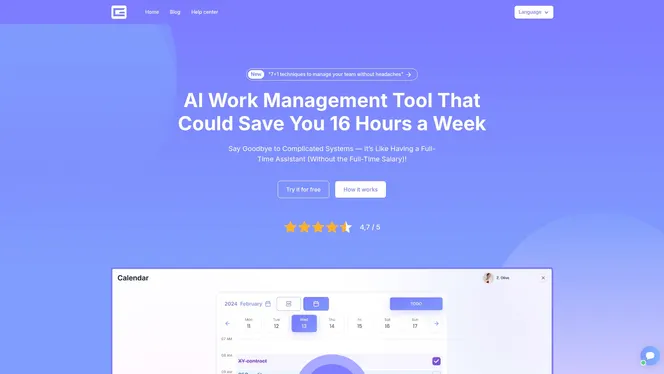
Experience how features like Kanban boards, checklist creation, and integrated calendar coordination support rapid feedback and incremental delivery. Don’t let resource unpredictability or communication overhead derail your projects. Take control with Gammatica’s AI-driven project management platform and transform your project cycles into dynamic engines of continuous improvement. Start freeing up to 16 hours per week today and bring clarity and adaptability to your team’s workflow by visiting Gammatica.com.
Frequently Asked Questions
What is iterative project management?
Iterative project management is a dynamic approach that transforms traditional linear workflows into flexible, adaptive processes. It focuses on continuous improvement and incremental development, allowing teams to respond swiftly to changing requirements and challenges.
What are the benefits of using iterative project management?
The benefits of iterative project management include faster adaptation to changes, early detection and resolution of issues, improved collaboration and communication among team members, and higher overall project success rates through continual learning and refinement.
How do different iterative methodologies compare?
Different iterative methodologies, such as Agile, Scrum, Kanban, and Extreme Programming, each focus on varying aspects of project management. Agile emphasizes adaptability, Scrum focuses on sprint-based delivery, Kanban visualizes workflows, and Extreme Programming prioritizes technical excellence. Choosing the right approach should depend on the project’s specific context and team dynamics.
What are common challenges faced in iterative project management?
Common challenges in iterative project management include resistance to cultural change, lack of proper training, inadequate tools, misalignment between traditional and adaptive methodologies, and difficulties in measuring performance. Addressing these challenges requires a mindful approach to organizational transformation and team engagement.