Most american project managers who adopt nurturing strategies see up to 35 percent higher team engagement than those who stick with traditional methods. In the fast-paced world of Hungarian tech startups, where every advantage matters, learning how to combine AI-driven practices with proven nurturing techniques can transform the team experience. Get ready to uncover practical ways to empower your people, drive innovation, and build a stronger sense of collaboration that pushes projects forward.
Table of Contents
- Defining Nurturing In Project Management
- Types Of Nurturing: Mentoring, Coaching, Support
- Characteristics Of Effective Nurturing Approaches
- Practical Examples: Team Nurturing Scenarios
- Risks And Challenges In Nurturing Team Members
Defining Nurturing in Project Management
Nurturing in project management represents a strategic approach to supporting, developing, and empowering team members throughout their professional journey. It goes beyond traditional management techniques by focusing on creating an environment that enables individuals to thrive, grow, and contribute meaningfully to project objectives. Project management in research involves using tools and techniques to plan, implement, and deliver projects effectively, with nurturing serving as a critical element in facilitating team success.
At its core, team nurturing encompasses several key dimensions: emotional support, professional development, communication, and creating a psychologically safe workspace. Unlike traditional management models that prioritize strict control and hierarchy, nurturing approaches recognize that human potential emerges through genuine care, strategic guidance, and personalized support. Academic research projects demonstrate how balancing structure and flexibility can integrate human factors and collaborative needs, highlighting the nuanced nature of effective team nurturing.
Successful project managers who excel at nurturing understand that each team member represents a unique combination of skills, motivations, and potential. They invest time in understanding individual strengths, providing targeted feedback, creating growth opportunities, and establishing clear communication channels. This approach transforms traditional project management from a purely transactional process into a dynamic, human-centered experience that promotes innovation, engagement, and sustained high performance.
Pro tip: Schedule monthly one-on-one development conversations with team members to understand their professional goals and create personalized growth pathways that align with project objectives.
Types of Nurturing: Mentoring, Coaching, Support
Project management nurturing strategies encompass three primary approaches: mentoring, coaching, and support, each serving unique purposes in team development and engagement. Comparative research in project management highlights these approaches as interrelated yet distinctly impactful methods for enhancing team performance, addressing different aspects of professional growth and organizational effectiveness.
Mentoring represents a long-term, relationship-based approach where experienced professionals guide less experienced team members through knowledge transfer and career development. This approach goes beyond immediate task performance, focusing on holistic professional growth, strategic thinking, and navigating organizational complexities. In digital transformation contexts, mentoring provides critical experiential learning and career development opportunities, helping individuals understand broader professional landscapes and potential career trajectories.
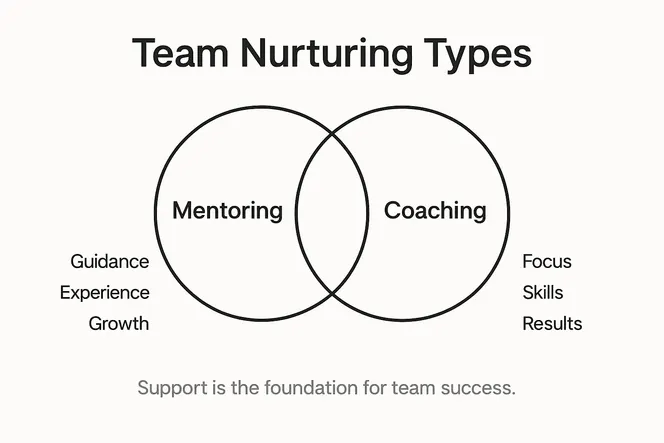
Coaching, by contrast, is a more targeted intervention concentrating on specific skill enhancement and performance improvement. Unlike mentoring’s broad developmental perspective, coaching involves structured feedback, goal-setting, and systematic skill refinement. Project managers utilizing coaching techniques help team members identify performance gaps, develop actionable strategies, and provide immediate, constructive guidance to overcome professional challenges. This approach is particularly effective for addressing short-term performance objectives and supporting individual growth within specific project contexts.
Support emerges as the foundational layer of nurturing, encompassing emotional, informational, and resource-based assistance. This approach creates a psychologically safe environment where team members feel valued, heard, and equipped to tackle project challenges. Support involves providing necessary resources, maintaining open communication channels, and demonstrating organizational commitment to individual and collective well-being.
Here’s a side-by-side comparison of key nurturing approaches in project management:
| Approach | Focus Area | Typical Outcome | Best Used For |
|---|---|---|---|
| Mentoring | Long-term career guidance | Strategic growth | Succession planning, onboarding |
| Coaching | Specific skill improvement | Performance boost | Addressing skill gaps, project delivery |
| Support | Emotional & resource support | Well-being & motivation | Team morale, stress management |
Pro tip: Create a personalized nurturing matrix that maps each team member’s current skills, career aspirations, and preferred development approach to design targeted mentoring, coaching, and support interventions.
Characteristics of Effective Nurturing Approaches
Building trust among team members emerges as a fundamental characteristic of effective nurturing approaches, transforming project management from a transactional process to a relationship-driven experience. Effective nurturing transcends traditional management techniques by prioritizing human connection, emotional intelligence, and strategic support. This approach recognizes that team performance is intrinsically linked to psychological safety, mutual understanding, and genuine interpersonal engagement.
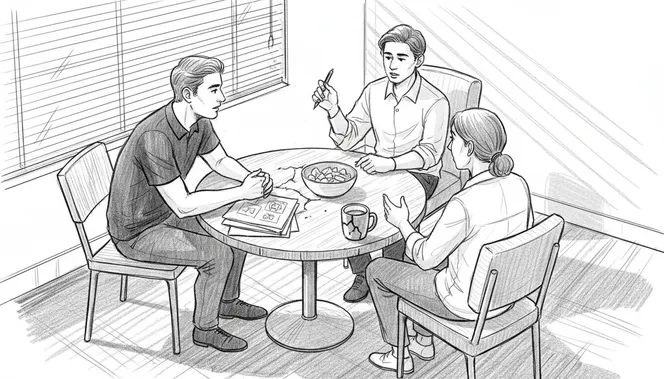
Communication Transparency represents a critical characteristic of nurturing approaches. This involves creating channels for open, honest dialogue where team members feel empowered to share challenges, ideas, and feedback without fear of retribution. Successful nurturing integrates support mechanisms that promote autonomy and encourage collaboration, enabling teams to navigate complex project landscapes with confidence and creativity. Transparent communication builds trust, reduces misunderstandings, and creates a collaborative environment where innovation can flourish.
Flexibility stands as another essential characteristic of effective nurturing strategies. Unlike rigid management frameworks, nurturing approaches adapt to individual team member needs, project complexities, and changing organizational dynamics. This adaptability involves tailoring support mechanisms, recognizing diverse learning styles, and creating personalized development pathways. By embracing flexibility, project managers can create resilient teams capable of responding dynamically to unexpected challenges and opportunities.
Psychological safety emerges as a foundational element of nurturing approaches. This involves creating an environment where team members feel valued, heard, and supported, regardless of their role or experience level. Psychological safety encourages risk-taking, promotes learning from failures, and cultivates a growth mindset that views challenges as opportunities for development and improvement.
Pro tip: Develop a monthly “vulnerability and learning” session where team members can openly discuss challenges, share lessons learned, and receive constructive support without judgment.
Practical Examples: Team Nurturing Scenarios
Structured mentoring programs provide powerful opportunities for team nurturing, transforming professional development through intentional knowledge transfer and relationship building. Consider a scenario where a senior software engineer is paired with a junior developer, creating a comprehensive learning experience that goes beyond traditional hierarchical interactions. This mentorship involves regular code reviews, architectural discussions, and career guidance sessions that help the junior team member develop technical skills and organizational understanding.
Virtual Team Engagement represents another critical nurturing scenario, especially in distributed work environments. Building trust through transparent communication and social connections becomes essential for maintaining team cohesion, regardless of physical distance. This might involve implementing weekly video check-ins, creating digital collaboration spaces where team members can share personal updates, or organizing online team-building activities that help recreate the spontaneous interactions lost in remote work settings. The goal is to humanize digital interactions and create meaningful connections.
Performance coaching scenarios offer another practical nurturing approach, focusing on targeted skill development and professional growth. Imagine a project manager conducting quarterly capability workshops where team members identify personal development goals, receive constructive feedback, and create personalized improvement plans. These sessions might involve skills assessments, role-playing exercises, and collaborative problem-solving techniques that help individuals recognize their strengths and address potential performance gaps.
Emotional support scenarios are equally crucial in team nurturing. This could involve creating safe spaces for team members to discuss work-related challenges, implementing confidential support channels, or designing stress management workshops that provide practical coping strategies. By acknowledging the human aspects of professional work, organizations demonstrate genuine commitment to their team members’ holistic well-being.
Pro tip: Create a “growth portfolio” for each team member that tracks personal development goals, mentorship interactions, and professional milestones to provide continuous, personalized nurturing support.
Risks and Challenges in Nurturing Team Members
Project management nurturing faces complex challenges in balancing organizational goals with individual development needs, creating a nuanced landscape of potential risks and potential pitfalls. The primary challenge emerges from the delicate equilibrium between providing structured guidance and maintaining team member autonomy. Too much control can stifle creativity and innovation, while too little support can lead to disengagement and performance inconsistencies.
Overstructuring represents a significant risk in team nurturing approaches. When managers implement overly rigid development frameworks, they inadvertently create environments that discourage independent thinking and personal initiative. This challenge requires a sophisticated approach that provides clear guidelines while simultaneously creating space for individual creativity and problem-solving. Virtual teams particularly struggle with maintaining motivation and engagement without face-to-face interactions, making adaptive nurturing strategies crucial for sustained team performance.
Communication barriers emerge as another critical challenge in team nurturing. Different communication styles, cultural backgrounds, and personal preferences can create misunderstandings that undermine trust and collaboration. These barriers become particularly pronounced in diverse and distributed teams, where nuanced interpersonal dynamics are more difficult to navigate. Project managers must develop sophisticated communication strategies that accommodate individual differences while maintaining clear, consistent messaging across the team.
Potential burnout represents a significant risk in intensive nurturing environments. When team members feel constant pressure to develop, improve, and meet high expectations, they may experience emotional exhaustion and reduced motivation. Successful nurturing requires recognizing individual capacity limits, implementing meaningful recovery strategies, and creating supportive environments that prioritize sustainable performance over short-term productivity gains.
The following table summarizes common risks in team nurturing and possible prevention strategies:
| Risk Type | Impact on Team | Prevention Strategy |
|---|---|---|
| Overstructuring | Limits creativity | Balance guidelines and autonomy |
| Communication barriers | Disrupts collaboration | Foster clear, open dialogue |
| Burnout | Reduces engagement | Monitor workload, support recovery |
Pro tip: Implement a quarterly “emotional temperature check” with individual team members to proactively identify potential burnout risks and adjust support strategies accordingly.
Empower Your Team with AI-Driven Nurturing Solutions
The article “Examples of Nurturing That Boost Team Engagement” highlights key challenges like maintaining open communication, providing personalized support, and fostering emotional safety to achieve high-performing, motivated teams. You understand the importance of mentoring, coaching, and ongoing support but may struggle with managing these human-centered efforts while keeping projects on track. This is where streamlined project and team management can make all the difference.
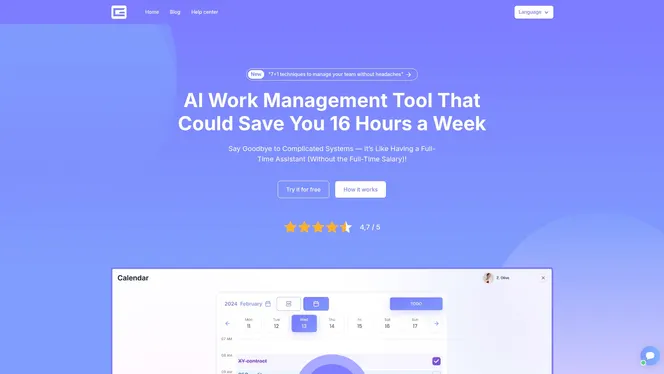
Discover how Gammatica.com combines task management, automation, and collaboration tools to reduce administrative burdens and free up your time to nurture your team effectively. With features like AI suggestions, integrated calendars, and permission controls, you can easily tailor coaching interventions, track development plans, and foster transparent communication that drives engagement. Take control of your project workflows today and create a thriving environment where your team can grow confidently and innovate continuously. Visit Gammatica.com now to start transforming your nurturing strategies with smart, scalable solutions.
Frequently Asked Questions
What are effective nurturing approaches in project management?
Effective nurturing approaches in project management include mentoring, coaching, and support. Mentoring focuses on long-term career guidance, coaching targets specific skill improvements, and support encompasses emotional and resource-based assistance to create a safe and productive work environment.
How can team nurturing boost engagement and performance?
Team nurturing boosts engagement and performance by fostering emotional support, enhancing communication, and creating a psychologically safe workspace. This human-centered approach encourages collaboration, innovation, and individual growth, which transforms team dynamics positively.
What role does psychological safety play in nurturing team members?
Psychological safety is crucial in nurturing team members as it enables individuals to feel valued, heard, and supported. This environment encourages team members to take risks, share ideas, and learn from failures without fear of negative consequences, ultimately enhancing team cohesion and productivity.
How can I implement a nurturing strategy in my project team?
To implement a nurturing strategy in your project team, schedule regular one-on-one development conversations to understand team members’ goals, create a nurturing matrix to map skills and aspirations, and foster open communication channels. Incorporating mentorship and coaching sessions tailored to individual needs can also enhance the nurturing environment.