Managers waste a quarter of their time on administrative tasks that AI could handle in seconds. Recent research shows AI tools can reallocate up to 25% of managerial capacity from repetitive scheduling and coordination to strategic leadership. This shift transforms how mid-sized companies optimize employee workloads, boost engagement, and drive measurable productivity gains through intelligent automation and predictive planning.
Table of Contents
- Understanding Employee Workload Management
- How AI Enhances Workload Management
- Benefits of AI-Driven Workload Management
- Common Misconceptions About AI in Workload Management
- Ethical Considerations in AI Workload Management
- Choosing and Implementing AI Workload Management Tools
- Case Studies: AI Impact on Employee Workload Management
- Future Trends and Preparing Your Team for AI Workload Management
- Discover AI Workload Management Solutions with Gammatica
- Frequently Asked Questions
Key Takeaways
| Point | Details |
|---|---|
| AI optimizes workload distribution | Algorithms assign tasks dynamically based on capacity, skills, and real-time priorities. |
| Automation frees manager time | Up to 25% of administrative time shifts to strategic activities through intelligent task automation. |
| Engagement and productivity rise | Balanced workloads reduce burnout and increase output when AI handles repetitive coordination. |
| Ethical design requires oversight | Transparency and human governance prevent algorithmic bias and protect employee autonomy. |
| Implementation needs planning | Success depends on integration capabilities, user training, and iterative feedback loops. |
Understanding Employee Workload Management
Employee workload management involves distributing tasks, projects, and responsibilities across your team to match capacity with business demands. Effective management ensures no one drowns in deadlines while others sit idle.
Mid-sized companies face unique challenges. Growth strains existing processes, and manual coordination falls apart as teams expand. Common problems include:
- Uneven task distribution leaving high performers overloaded while others underutilize capacity
- Limited visibility into who has bandwidth for urgent projects or customer requests
- Reactive firefighting instead of proactive planning when workload spikes hit unexpectedly
- Burnout risk climbing when managers lack tools to spot overwork patterns early
Imbalanced workloads destroy morale and performance. Overworked employees disengage, productivity drops, and turnover accelerates. Traditional spreadsheets and status meetings cannot track shifting priorities or adjust assignments in real time.
Manual methods rely on managers remembering every commitment and guessing availability. This reactive approach wastes time on coordination emails and creates bottlenecks. You need systems that surface workload data automatically and suggest optimal allocations before problems emerge.
How AI Enhances Workload Management
AI transforms workload management from guesswork into data-driven optimization. Machine learning algorithms analyze task requirements, employee skills, current capacity, and deadline urgency to suggest optimal assignments instantly.
Intelligent systems continuously monitor project progress and team availability. When priorities shift or someone falls behind, AI recalibrates recommendations to rebalance workloads automatically. This dynamic allocation prevents overload and ensures critical work gets resources fast.
Automation handles repetitive coordination tasks that consume manager attention:
- Scheduling meetings across time zones and calendar conflicts
- Sending progress reminders and collecting status updates
- Flagging capacity constraints before they cause delays
- Generating workload reports and utilization dashboards
Predictive analytics forecast future demand based on historical patterns and pipeline data. You can plan hiring, training, and resource allocation weeks ahead instead of scrambling when workload spikes hit. AI spots trends invisible to manual review, like seasonal fluctuations or team skill gaps.
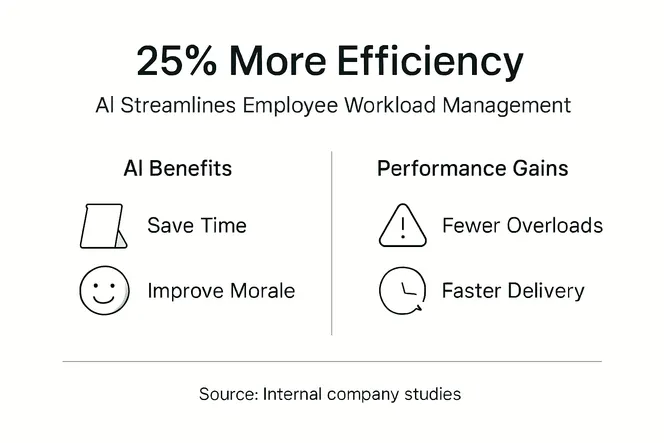
Managers reclaim up to 25% of their time previously spent on administrative coordination. This capacity shifts to coaching, strategy, and relationship building that drive real business value.
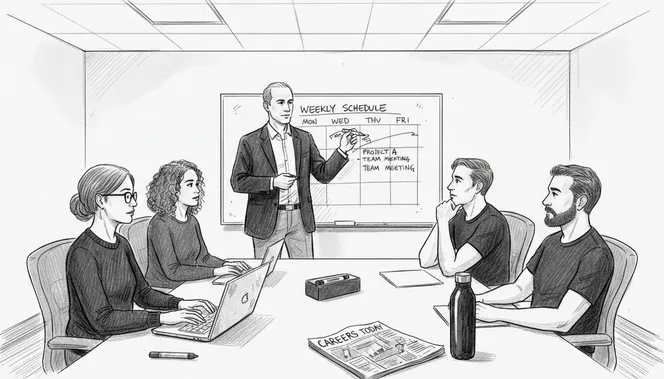
Pro Tip: AI augments your judgment rather than replacing it. The system recommends optimal assignments, but you make final decisions based on context AI cannot see, like employee development goals or team dynamics.
Understanding the role AI plays in modern business operations helps you identify high-impact automation opportunities beyond workload management.
Benefits of AI-Driven Workload Management
Employee engagement improves significantly when AI reduces perceived workload by automating repetitive tasks. Workers feel less stressed when systems handle coordination and managers can focus on removing obstacles.
Balanced workloads boost productivity measurably. Teams accomplish more when assignments match capacity and skills. AI ensures urgent projects get attention without overwhelming individuals or leaving others idle.
| Metric | Improvement | Business Impact |
|---|---|---|
| Manager time savings | 25% capacity shift | Strategic leadership instead of admin work |
| Task completion rate | 18-22% faster | Shorter project cycles and faster delivery |
| Employee turnover | 15-30% reduction | Lower hiring costs and preserved institutional knowledge |
| Revenue per employee | 12-20% increase | Better resource utilization drives profitability |
Companies using AI workload tools report concrete gains. Scheduling conflicts drop dramatically when algorithms coordinate assignments automatically. Overload incidents decrease as systems flag capacity constraints before burnout risk escalates.
Managers gain strategic capacity previously consumed by coordination. This shift improves decision quality and organizational agility. You can respond faster to market changes when administrative burden no longer bottlenecks leadership attention.
“AI doesn’t just optimize tasks. It frees human potential by removing the busywork that prevents strategic thinking and meaningful collaboration.”
Pro Tip: Track engagement scores alongside productivity metrics. The biggest AI wins come from simultaneous improvements in both employee satisfaction and output quality.
Explore how AI-powered workforce analytics integrate with inventory and operational systems for enterprise-wide efficiency gains.
Common Misconceptions About AI in Workload Management
Many leaders fear AI will eliminate jobs and reduce headcount. Reality contradicts this worry. 87% of executives believe AI will augment workers rather than replace them, enhancing capabilities instead of eliminating roles.
AI handles repetitive coordination so people can focus on work requiring judgment, creativity, and relationships. Your team size does not shrink. Instead, everyone operates at higher value activities that machines cannot replicate.
Another myth claims AI ignores employee well-being by treating people like resources to optimize. Ethical AI design does the opposite. Transparent systems that respect autonomy help managers spot burnout risk early and rebalance workloads proactively.
Some expect instant transformation after deployment. AI tools require thoughtful integration and change management:
- Training teams to trust and use new systems effectively
- Adjusting workflows to incorporate AI recommendations smoothly
- Iterating based on feedback to improve accuracy and adoption
- Maintaining human oversight to catch edge cases and exceptions
AI provides recommendations, not mandates. Managers always retain final authority over assignments and priorities. The technology surfaces insights and suggests actions, but human judgment determines implementation.
Instant fixes are fantasies. Successful AI adoption takes planning, training, and patience as systems learn your unique patterns and teams adjust to new workflows.
Ethical Considerations in AI Workload Management
Algorithmic bias poses real risks if AI systems train on flawed data or optimize for narrow metrics. Biased algorithms might systematically overload certain employees or overlook skill development opportunities for underrepresented groups.
Ethical AI requires transparency and oversight to prevent negative impacts on employee well-being. Workers deserve to understand how systems make recommendations that affect their workload and career progression.
Human managers must maintain control and ethical governance over AI-driven decisions. Technology provides data and suggestions, but people make final calls considering context machines cannot grasp.
Best practices for ethical AI workload management:
- Establish clear policies defining appropriate AI use and human decision authority
- Audit algorithms regularly for bias in task assignments and workload distribution
- Involve employees in design and feedback processes to build trust and surface concerns
- Maintain transparency about what data AI systems collect and how recommendations generate
- Preserve employee autonomy by framing AI outputs as suggestions rather than mandates
- Monitor impact on engagement and well-being alongside productivity metrics
- Provide channels for workers to challenge or appeal AI-influenced decisions
Transparency builds trust. When employees understand how systems work and see their input shapes improvements, adoption accelerates and resistance fades.
Ethical AI treats people as collaborators rather than resources to extract maximum productivity from. This human-centered approach delivers better business outcomes because engaged employees outperform disengaged ones regardless of optimization algorithms.
Choosing and Implementing AI Workload Management Tools
Evaluate platforms based on integration capabilities with your existing project management and collaboration systems. Seamless data flow prevents manual entry and ensures AI recommendations reflect current reality.
Key selection criteria:
- Native integrations with tools your team already uses daily
- Intuitive interface requiring minimal training for widespread adoption
- Scalability to grow with your company without performance degradation
- Transparent algorithms you can audit for bias and accuracy
- Customization options matching your unique workflows and policies
Usability determines adoption rates. Complex systems gather dust while simple interfaces get used consistently. Prioritize platforms your team can start using productively within days.
| Feature | Basic Tools | Advanced Platforms | Enterprise Solutions |
|---|---|---|---|
| Task assignment automation | Manual triggers | Smart recommendations | Fully autonomous with oversight |
| Capacity visibility | Static reports | Real-time dashboards | Predictive analytics |
| Integration depth | API connections | Native sync | Deep workflow embedding |
| Pricing model | Per user flat | Tiered by features | Custom enterprise |
Implementation success depends on change management. Train managers first so they can coach teams through adoption. Start with pilot projects to prove value before company-wide rollout.
Pro Tip: Gather feedback weekly during initial deployment. Quick iterations based on user input dramatically improve adoption rates and system accuracy.
Monitor both quantitative metrics like task completion rates and qualitative feedback about user experience. Adjust workflows and settings based on what you learn to optimize results continuously.
Case Studies: AI Impact on Employee Workload Management
A 200-employee marketing agency implemented AI workload tools and reduced project overruns by 34% within six months. The system flagged capacity constraints before deadlines slipped, allowing proactive resource reallocation.
Their creative teams reported 28% higher engagement scores as AI automated status update collection and meeting scheduling. Designers and writers spent more time on creative work instead of coordination emails.
A manufacturing company with 150 office staff used predictive analytics to anticipate seasonal demand spikes. Planning accuracy improved 41%, and they reduced temporary hiring costs by optimizing existing team allocation during peak periods.
| Company Profile | Implementation Focus | Results Achieved |
|---|---|---|
| Marketing agency (200 employees) | Creative team workload balance | 34% fewer overruns, 28% engagement increase |
| Manufacturing (150 office staff) | Seasonal demand planning | 41% better forecast accuracy, lower temp costs |
| SaaS startup (80 employees) | Engineering sprint optimization | 23% faster delivery, 19% reduced burnout incidents |
A fast-growing SaaS startup optimized engineering sprint planning with AI. They achieved 23% faster feature delivery while reducing burnout incidents 19% by preventing overload patterns the system detected early.
Common success factors across implementations:
- Executive sponsorship ensuring resources and attention during rollout
- Phased deployment starting with willing teams before company-wide mandate
- Continuous training and support as teams learned new workflows
- Transparent communication about how AI recommendations generated
- Regular feedback loops adjusting algorithms and processes based on experience
These companies did not achieve results overnight. Measurable improvements emerged after three to six months as systems learned patterns and teams adapted workflows.
Future Trends and Preparing Your Team for AI Workload Management
Emerging AI capabilities will provide deeper personalization based on individual work styles and preferences. Systems will learn which task types each person excels at and suggest assignments matching strengths automatically.
Predictive analytics will become more sophisticated, forecasting not just workload volume but skill requirements and training needs months ahead. You will spot capability gaps before they constrain growth.
Preparing your team for AI adoption:
- Build AI literacy through training on how systems work and limitations they have
- Foster culture of experimentation where teams test tools and share learnings
- Develop change management skills in managers to guide adoption smoothly
- Establish feedback mechanisms ensuring employee voice shapes AI implementation
- Maintain agility to adjust as technology evolves and new capabilities emerge
- Balance automation with human judgment to preserve critical thinking skills
AI literacy helps teams use tools effectively and spot when recommendations need human override. Understanding basic machine learning concepts reduces fear and builds appropriate trust.
Technological change accelerates constantly. Companies that build learning cultures and maintain flexibility will adapt faster than rigid organizations clinging to current processes.
Sustainable AI integration keeps humans at the center. Technology should amplify employee capabilities rather than constraining autonomy or reducing work to algorithmic inputs. This human-centered approach delivers superior long-term outcomes.
Discover AI Workload Management Solutions with Gammatica
Managing team workloads efficiently requires tools that adapt to your unique workflows. Gammatica offers AI-driven project management designed specifically for mid-sized businesses seeking to optimize task allocation and boost productivity without administrative burden.
Our platform automates repetitive coordination, provides real-time capacity visibility, and integrates seamlessly with the collaboration tools your team already uses. You can explore how top marketing project management software compares across key features relevant to workload optimization.
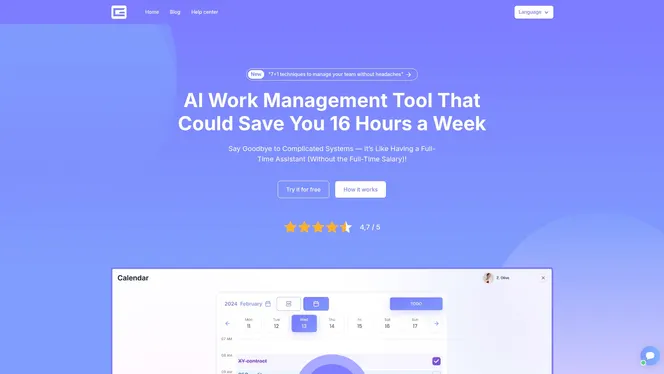
Founders and business leaders use Gammatica to reclaim time previously lost to scheduling conflicts and status update meetings. Our customers report freeing up to 16 hours weekly through intelligent automation and pre-built templates that eliminate setup friction. Discover how to boost team productivity with smart AI tools that adapt to your evolving business needs.
Frequently Asked Questions
What is AI-driven workload management?
AI-driven workload management uses machine learning algorithms to analyze task requirements, employee capacity, and skills to recommend optimal assignments automatically. Systems monitor progress in real time and suggest rebalancing when priorities shift or workload imbalances emerge.
How does AI improve employee engagement?
AI reduces engagement-killing busywork by automating repetitive coordination tasks like scheduling and status collection. Employees focus on meaningful work requiring creativity and judgment while systems handle administrative burden, leading to higher satisfaction and lower burnout.
Are AI workload tools suitable for mid-sized companies?
Mid-sized companies gain disproportionate benefits from AI workload tools because manual coordination breaks down as teams grow beyond 50 people. These platforms scale efficiently without enterprise-level complexity or cost, making them ideal for organizations between startup and large corporation stages.
What ethical concerns exist with AI in workload management?
Key concerns include algorithmic bias in task assignments, loss of employee autonomy if systems operate without oversight, and privacy issues around activity monitoring. Ethical implementation requires transparency, human governance, regular bias audits, and employee involvement in system design.
How do I start implementing AI workload tools?
Begin with pilot projects in willing teams to prove value before company-wide rollout. Prioritize platforms integrating seamlessly with existing tools your team uses daily. Invest in training for both managers and employees, gather feedback continuously, and iterate based on what you learn during initial months.
Can AI workload systems integrate with our current project management tools?
Modern AI workload platforms offer native integrations with popular project management, CRM, and collaboration tools through APIs and built-in connectors. This ensures data flows automatically without manual entry, keeping AI recommendations accurate and reducing implementation friction for your teams.