TL;DR:
- Modern productivity metrics focus on outcomes, quality, and behavior rather than hours logged.
- Combining 3-5 targeted metrics provides a balanced view of team performance and progress.
- Simplifying measurement and involving employees in defining metrics improves trust and effectiveness.
Tracking hours feels productive. But hours logged tell you almost nothing about whether your team is actually moving the needle. The real question isn’t how long people work — it’s what they accomplish. Metrics must balance quantity, quality, and context to give you a true picture of performance. Leaders who rely on outdated measurement methods often find themselves managing activity rather than outcomes. In this article, you’ll learn which modern productivity metrics actually matter, how to implement them without creating distrust, and the common mistakes that can quietly derail even the best-intentioned measurement programs.
Key Takeaways
| Point | Details |
|---|---|
| Move beyond legacy metrics | Relying on hours and presence misses the real drivers of productivity. |
| Select dynamic, outcome-based KPIs | Use modern metrics like focus time and goal attainment to measure what matters. |
| Balance measurement and trust | Effective metrics are clear, employee-supported, and avoid micromanagement. |
| Support high-performers’ well-being | Track and support top employees to prevent burnout and maintain value. |
| Leverage AI and health investment | Use AI for repetitive tasks and promote health to boost engagement and results. |
Why traditional productivity metrics fall short
For decades, businesses measured productivity the same way: count the hours, count the widgets, check if people showed up. Simple, right? The problem is that modern work is rarely simple. Knowledge workers, project-based teams, and cross-functional collaborators don’t produce neat, countable outputs every day.
Legacy metrics typically include:
- Hours logged per day or week
- Units produced or tasks completed in a fixed time window
- Check-in frequency or attendance records
- Email volume or meeting attendance as a proxy for engagement
These measures made sense in a factory environment. They don’t translate well to a world where a single insight from one employee can generate more value than a hundred routine tasks from another.
The deeper danger is what researchers call the activity trap: rewarding visible effort rather than real contribution. When your team knows they’re being measured on hours, they optimize for hours. They sit at their desks longer. They send more emails. They attend more meetings. But actual output? It can actually drop.
“Legacy metrics derail transformation. Organizations need to shift toward dynamic KPIs that reflect project-based execution and real value delivery.”
This shift matters enormously. Dynamic KPIs outperform static metrics because they adapt to the nature of the work, the team’s goals, and the stage of a project. A customer success team in month one of a product launch needs different KPIs than the same team six months into steady-state operations.
The presence trap is equally risky. Measuring who’s online earliest or latest creates a culture of performance rather than performance itself. People learn to look busy rather than be effective. That’s a costly lesson to unlearn.
The good news: once you recognize these limitations, you can move toward metrics that actually predict and improve outcomes. That starts with knowing which modern metrics to use.
Modern productivity metrics that matter
With a clear understanding of legacy pitfalls, what metrics will truly help you drive performance? The most effective ones combine behavioral signals, outcome data, and quality indicators to give you a three-dimensional view of your team.
Here’s a quick-reference overview of the metrics that matter most:
| Metric | What it measures | Best used for |
|---|---|---|
| Output per hour | Volume of work completed per time unit | Operations, manufacturing, support |
| Revenue per employee | Financial contribution per team member | Sales, growth-stage teams |
| Task completion rate | % of assigned tasks finished on time | Project-based roles |
| Goals completed vs. assigned | Progress toward strategic targets | All roles |
| Focus time | Uninterrupted deep work hours per day | Knowledge workers |
| Cycle time | Time from task start to completion | Engineering, product, ops |
| Engagement and absenteeism | Attendance trends and survey scores | All teams |
| DORA metrics | Deployment frequency, lead time, failure rate | Software engineering |
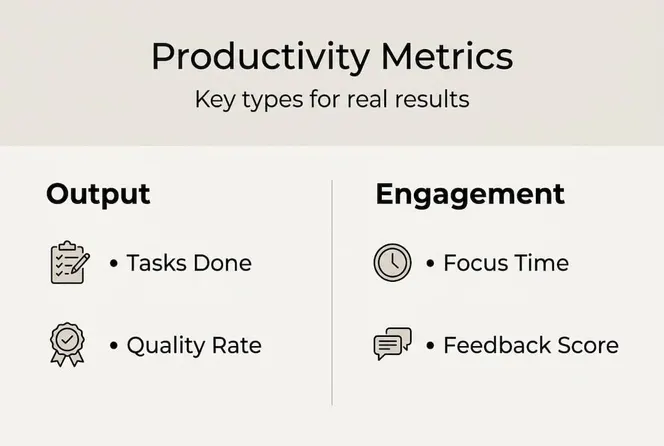
These modern productivity metrics cover a wide range of roles and industries. The key is choosing the right combination for your context.
A few standouts worth highlighting:
- Focus time is a behavioral metric that tracks how much uninterrupted, high-concentration work your team gets. Research consistently shows that deep work produces disproportionately high value. If your team averages only 90 minutes of focus time per day, that’s a signal worth acting on.
- DORA metrics (Deployment Frequency, Lead Time for Changes, Change Failure Rate, and Time to Restore) are specifically designed for software engineering teams and give you a precise read on both speed and quality.
- Revenue per employee is a simple but powerful indicator of organizational efficiency, especially useful when comparing team performance over time or benchmarking against industry peers.
Pro Tip: Don’t rely on a single metric. Combine at least three to five metrics from different categories (output, behavior, and quality) to get an accurate, balanced picture of productivity. A high task completion rate with low engagement scores, for example, may signal burnout rather than high performance.
How to measure and track productivity effectively
Now that you know which metrics to use, here’s how to practically implement and sustain them in your organization. The rollout matters as much as the metrics themselves.
- Define your goals first. Before selecting any metric, clarify what you’re trying to improve. Faster delivery? Higher quality? Better engagement? Your goals should drive your metric choices, not the other way around.
- Select three to five metrics per team. More isn’t better. Overloading your team with a dozen KPIs creates confusion and dilutes focus. Choose metrics that directly reflect your priorities.
- Establish baselines. You can’t track progress without a starting point. Spend two to four weeks collecting baseline data before drawing any conclusions.
- Communicate the why. This is critical. If employees don’t understand why you’re tracking specific metrics, they’ll assume the worst. Be transparent about what you’re measuring and how it connects to team success.
- Review regularly and adjust. Metrics should evolve with your team’s work. Schedule monthly or quarterly reviews to assess whether your chosen metrics still reflect what matters.
When it comes to balancing quantity, quality, and context, avoid the temptation to reduce everything to a single number. A developer who closes 30 tickets per sprint but introduces three critical bugs is not more productive than one who closes 20 tickets cleanly. Context always matters.
Focus time tracking, cycle time analysis, and goal attainment reviews work best when they’re tied to regular one-on-one conversations. Data without dialogue is just noise.
Pro Tip: Communicate the purpose and benefits of your measurement program to your staff early, ideally before you start collecting data. Teams that understand and co-create their metrics report higher buy-in and more accurate self-reporting.
Pitfalls and best practices: Getting productivity metrics right
Even the best metrics can backfire if common pitfalls aren’t avoided. Here are proven ways to get it right.
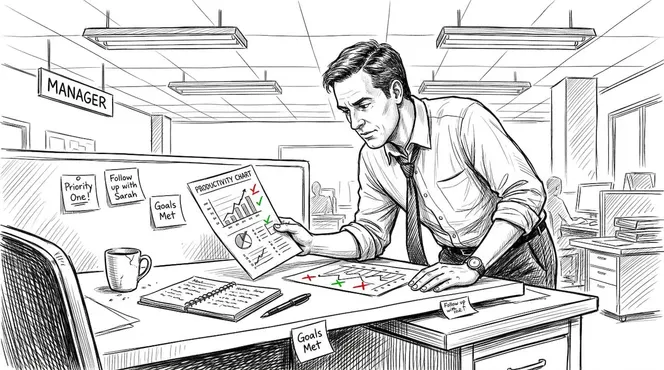
One of the biggest risks is metric overload. When managers track too many data points, teams spend more time reporting than working. The irony is real: your measurement program becomes a productivity drain.
Another serious risk is burnout among your top performers. Overburdening engaged employees is a hidden organizational hazard. High performers often take on more work precisely because they’re capable and willing, but this creates a cycle where your best people carry the heaviest loads and face the highest burnout risk.
Signs to watch for in high performers:
- Declining task quality despite high volume
- Increased absenteeism or sick days
- Reduced participation in team discussions
- Shorter response times replaced by delayed replies
AI tools can help here. AI automates repetitive tasks like scheduling, reporting, and administrative work, freeing your team for higher-value contributions. But AI requires human oversight for complex, judgment-based work. Don’t automate your way out of accountability.
Investing in employee health is also a measurable productivity strategy. Employee health investments yield $1,100 to $3,500 per person in value through reduced attrition, lower absenteeism, and improved engagement. That’s a pretty good return on investment.
| Traditional pitfall | Best practice alternative |
|---|---|
| Tracking hours as productivity | Measure output and outcomes |
| Monitoring all activity | Focus on behavioral and quality metrics |
| Ignoring top performer load | Actively monitor high-performer workloads |
| One-size-fits-all KPIs | Customize metrics by role and team stage |
| Metric overload | Limit to three to five focused KPIs per team |
“The goal of measurement is not surveillance. It’s insight. The best metric programs make employees feel seen for their contributions, not watched for their hours.”
A fresh perspective on productivity metrics: What most leaders overlook
Here’s something that most data-driven leaders don’t want to hear: more metrics don’t mean more clarity. In fact, the organizations we see struggling most with productivity aren’t the ones measuring too little. They’re the ones measuring too much, with too little purpose.
Simplicity is a competitive advantage. A team that tracks three well-chosen metrics and reviews them consistently will outperform a team drowning in a 20-KPI dashboard every time. Focus creates alignment. Complexity creates politics.
There’s also a trust dimension that leaders often underestimate. When employees help define the metrics used to evaluate them, the data gets better. People report honestly. They flag problems earlier. They stop gaming the system because the system reflects their reality.
And well-being isn’t just an HR checkbox. It’s a productivity multiplier. Teams that feel supported, rested, and valued produce better work, stay longer, and collaborate more effectively. The McKinsey data backs this up, but so does common sense. You can’t squeeze sustained performance from a burned-out team, no matter how sophisticated your KPI framework is.
The leaders who get this right treat metrics as a conversation starter, not a verdict.
Ready to boost your team’s productivity?
Putting these strategies into practice is much easier when you have the right tools behind you. Gammatica is built exactly for this kind of work.
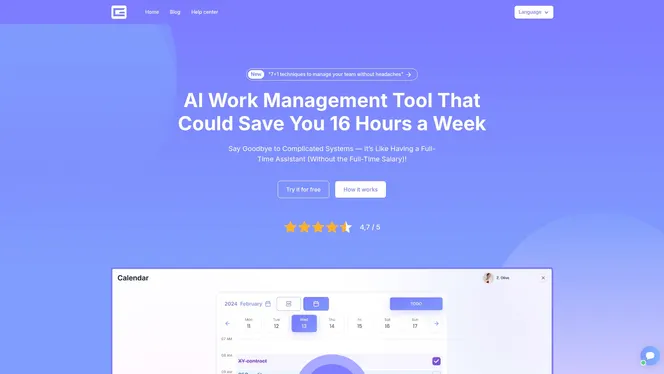
With Gammatica’s project management platform, you can track task completion, manage team workflows with Kanban boards, automate repetitive admin tasks, and monitor goal progress in one place. The platform’s AI-driven features help you focus on outcome-based metrics rather than activity tracking, saving your team up to 16 hours per week. If you’re ready to move beyond spreadsheets and gut feelings, explore Gammatica’s Sales platform to see how modern teams are measuring and improving productivity every day.
Frequently asked questions
What are the most important employee productivity metrics?
The most important metrics include output per hour, revenue per employee, task completion rate, engagement levels, and focus time. Together, these give you a balanced view of both volume and quality of work.
How can I track productivity without micromanaging my team?
Use outcome-based and behavioral metrics rather than activity tracking, and involve employees in selecting and understanding the metrics from the start. This builds trust and produces more accurate data.
How does investing in employee health improve productivity metrics?
Healthy employees show lower absenteeism and stronger engagement, and health investments yield $1,100 to $3,500 per person in measurable productivity and financial value.
What risk comes from over-monitoring engaged employees?
Highly engaged, high-performing employees can burn out under heavy workloads, so monitor high-performers for signs of overwork and actively support their well-being before it becomes a retention problem.