Most American marketing teams face the same urgent challenge—keeping up with relentless change while delivering campaigns that actually resonate. With over 60 percent of marketers reporting difficulty adapting to shifting consumer trends, fast and flexible strategies have never been more critical. Agile marketing offers a framework designed to help teams navigate uncertainty, prioritize real customer feedback, and achieve faster results in a constantly evolving market environment.
Table of Contents
- Agile Marketing Principles And Core Concepts
- Major Agile Frameworks Used In Marketing
- Key Benefits And Common Challenges
- Implementing Agile Marketing In Teams
- Pitfalls To Avoid And Best Practices
Agile Marketing Principles and Core Concepts
Agile marketing represents a strategic approach that transforms traditional marketing methodologies by prioritizing flexibility, rapid iteration, and data-driven decision-making. Unlike conventional marketing strategies that rely on lengthy, predetermined campaigns, agile marketing embraces continuous experimentation and adaptive planning.
At its core, agile marketing focuses on data-driven decision-making and cross-functional collaboration, enabling teams to respond quickly to market changes and customer insights. The methodology borrows principles from software development’s agile framework, translating them into marketing contexts through several key practices:
- Iterative Planning: Breaking large marketing initiatives into smaller, manageable sprints
- Continuous Experimentation: Regularly testing and measuring campaign performance
- Customer-Centric Approach: Prioritizing real-time customer feedback and behavioral data
- Collaborative Workflows: Encouraging transparent communication across different marketing functions
Successful implementation of agile marketing requires a cultural shift within organizations. Teams must move beyond rigid hierarchies and embrace a more dynamic, responsive approach to marketing strategy. This means developing the ability to pivot quickly, prioritize learning over perfection, and create systems that allow for rapid iteration and continuous improvement. By adopting these principles, marketing teams can develop more effective, efficient strategies that are closely aligned with evolving customer needs and market dynamics.
Major Agile Frameworks Used in Marketing
Marketing teams have developed several robust agile frameworks that enable more responsive and adaptive strategic planning, each with unique characteristics designed to optimize team performance and project outcomes. These frameworks provide structured yet flexible approaches to managing marketing initiatives, allowing teams to respond quickly to changing market conditions and customer insights.
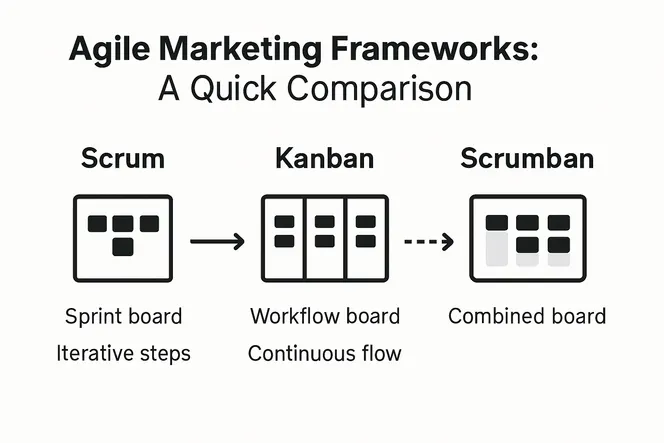
Three primary agile frameworks dominate the marketing landscape:
- Scrum: A collaborative framework emphasizing sprint-based work cycles, daily stand-up meetings, and iterative progress tracking
- Kanban: A visual management approach focusing on workflow optimization and limiting work in progress
- Scrumban: A hybrid methodology combining Scrum’s structured sprints with Kanban’s continuous flow principles
The Six Disciplines of Agile Marketing provides deeper insights into practical implementation strategies, highlighting how these frameworks can transform traditional marketing approaches. Each framework offers unique benefits, enabling marketing teams to break free from rigid, linear planning models and embrace more dynamic, responsive strategies.
Successful framework adoption requires more than just understanding methodology. Marketing teams must cultivate a culture of continuous learning, transparency, and rapid experimentation. This means creating environments where team members feel empowered to test new ideas, share insights quickly, and pivot strategies based on real-time data and customer feedback. By selecting and implementing the right agile framework, organizations can dramatically improve their marketing team’s efficiency, creativity, and strategic responsiveness.
Key Benefits and Common Challenges
Agile marketing offers transformative benefits while presenting significant implementation challenges, creating a complex landscape for organizations seeking to modernize their marketing approaches. The methodology promises unprecedented flexibility and responsiveness, but requires careful navigation of organizational and operational barriers.
Key benefits of agile marketing include:
- Rapid Adaptation: Quick response to market changes and customer insights
- Data Driven Decisions: Continuous performance measurement and optimization
- Enhanced Collaboration: Breaking down departmental silos and improving team communication
- Increased Efficiency: Streamlined workflows and reduced administrative overhead
- Continuous Learning: Regular retrospectives that drive ongoing improvement
The iterative development process enables more effective campaign strategies through continuous feedback loops, allowing marketing teams to pivot quickly and minimize resource waste. However, successful implementation demands significant cultural transformation and leadership commitment.

Common challenges organizations encounter include resistance to change, difficulty in shifting from traditional linear planning, and the need for robust technological infrastructure to support rapid iteration. Teams must develop new skills, embrace transparency, and create psychological safety that encourages experimentation. By acknowledging these challenges proactively and investing in comprehensive training and change management, organizations can successfully transition to an agile marketing approach that drives competitive advantage and innovation.
Implementing Agile Marketing in Teams
Successful agile marketing implementation requires a strategic approach to transforming team dynamics and organizational processes. The transition demands more than simply adopting new tools or techniques—it necessitates a comprehensive cultural shift that empowers teams to work more collaboratively, adaptively, and transparently.
Key steps for implementing agile marketing include:
- Build Cross-Functional Teams
- Create diverse teams with complementary skills
- Ensure clear roles and responsibilities
- Promote open communication channels
- Establish Iterative Workflows
- Define sprint cycles (typically 2-4 weeks)
- Create clear project backlogs
- Implement regular stand-up meetings
- Use visual management tools like Kanban boards
- Develop Data-Driven Performance Metrics
- Identify key performance indicators (KPIs)
- Create transparent tracking mechanisms
- Encourage continuous feedback and improvement
Leadership plays a critical role in driving agile marketing adoption. Executives must actively support the transformation by modeling collaborative behaviors, investing in team training, and creating an environment that rewards experimentation and learning. This means dismantling traditional hierarchical structures and embracing a more fluid, adaptive approach to marketing strategy and execution. By fostering a culture of transparency, continuous learning, and rapid iteration, organizations can unlock the full potential of agile marketing methodologies.
Pitfalls to Avoid and Best Practices
Navigating the complex landscape of agile marketing requires a nuanced understanding of potential challenges and strategic implementation approaches. Organizations must develop a sophisticated approach that balances flexibility with structured execution.
Common pitfalls to avoid include:
-
Overcomplicated Processes
- Avoid creating unnecessarily complex workflow systems
- Maintain simplicity and clarity in project management
- Eliminate redundant administrative tasks
-
Rigid Adherence to Initial Plans
- Prevent micromanagement of team activities
- Embrace adaptive planning
- Allow for genuine experimentation and iteration
-
Inadequate Team Communication
- Establish clear, transparent communication channels
- Encourage open feedback and continuous dialogue
- Break down departmental silos
Successful agile marketing demands a culture of continuous learning and strategic flexibility, where teams are empowered to pivot quickly and make data-driven decisions. Best practices involve creating psychological safety, where team members feel comfortable proposing innovative solutions and learning from potential failures.
Ultimately, implementing agile marketing is not about following a rigid methodology, but cultivating an adaptive mindset. Organizations must invest in ongoing training, provide robust technological support, and create reward systems that recognize innovation, collaboration, and continuous improvement. By maintaining a balance between structured processes and creative freedom, marketing teams can transform their approach and achieve unprecedented levels of efficiency and strategic responsiveness.
Unlock Agile Marketing Success with Smarter Team Management
The article highlights the challenge of implementing Agile marketing principles like iterative planning, cross-functional collaboration, and rapid adaptation. If your team struggles with rigid workflows or slow decision-making, Gammatica.com is designed to solve exactly these pain points. With features like Kanban boards, checklist creation, and AI-powered automation, you can accelerate your sprints and ensure continuous learning without the administrative overload.
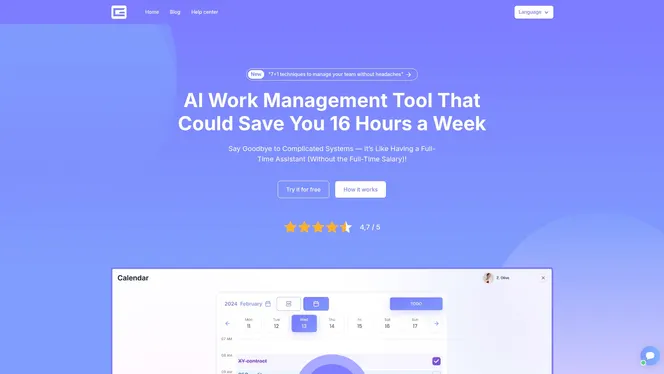
Discover how our AI-driven project and team management platform empowers marketing teams to reduce time spent on repetitive tasks and improve transparency. Experience how tools for task management, CRM, and online meetings integrate seamlessly to drive faster, data-driven decisions. Don’t wait to transform your marketing approach and boost team efficiency now by visiting Gammatica.com. Take the first step toward agile success today.
Frequently Asked Questions
What is agile marketing?
Agile marketing is a strategic approach that prioritizes flexibility, rapid iteration, and data-driven decision-making, enabling teams to adapt quickly to changes in the market and customer insights.
How can agile marketing improve team efficiency?
By breaking large initiatives into smaller sprints, encouraging regular experimentation, and fostering cross-functional collaboration, agile marketing helps teams streamline workflows and enhance overall productivity.
What are the primary frameworks used in agile marketing?
The three main agile frameworks in marketing are Scrum, Kanban, and Scrumban, each offering unique structures to optimize team performance and adapt to changing conditions.
What challenges might teams face when implementing agile marketing?
Common challenges include resistance to change, difficulty in shifting from traditional methods, the need for robust technological support, and ensuring effective team communication.