Most american project managers report that over 60 percent of their teams struggle with outdated CRM tools that add extra administrative work instead of saving time. Facing rapid innovation and constant pressure to do more with less, finding a smarter solution matters now more than ever. This guide dives into how modern CRM platforms powered by artificial intelligence can transform day-to-day operations, helping you discover practical strategies to cut complexity and regain control over your workflows.
Table of Contents
- Defining 2026 CRM And AI-Driven Evolution
- Key CRM Types And Use Case Variations
- Essential Features For Modern Teams
- AI Automation And Workflow Optimization
- Comparing CRM Solutions: Gammatica Vs. Others
- Common Challenges And How To Avoid Them
Defining 2026 CRM and AI-Driven Evolution
Customer Relationship Management (CRM) has undergone a radical transformation in 2026, evolving far beyond traditional database systems into intelligent, adaptive platforms powered by artificial intelligence. Modern CRM systems are now connected ecosystems that seamlessly integrate data, automation, and predictive intelligence to revolutionize how businesses interact with customers.
Today’s AI-driven CRM platforms represent a fundamental shift from passive record-keeping to active strategic partnership. These advanced systems leverage generative intelligence to analyze customer signals, predict behavioral patterns, and recommend proactive engagement strategies. By embedding machine learning algorithms, CRM tools now offer unprecedented insights that transform raw data into actionable business intelligence, enabling teams to craft hyper-personalized customer experiences with remarkable precision.
The core capabilities of 2026 CRM solutions center on three primary domains: intelligent automation, cross-functional integration, and real-time adaptability. Teams can now leverage AI to automate repetitive tasks, predict customer needs before they arise, and create dynamic workflows that respond instantly to changing market conditions. Whether managing sales pipelines, tracking customer interactions, or generating predictive analytics, these platforms serve as comprehensive digital workspaces that streamline complex business processes.
Pro tip: When evaluating CRM platforms, prioritize systems with robust AI capabilities that can demonstrate measurable workflow efficiency and provide transparent insights into their predictive modeling processes.
Key CRM Types and Use Case Variations
In 2026, Customer Relationship Management (CRM) systems have diversified into sophisticated solutions addressing unique organizational needs. CRM platforms typically categorize into three primary types: Operational, Analytical, and Collaborative CRM, each designed to solve specific business challenges with precision and intelligence.
Operational CRM focuses on streamlining customer-facing processes through automation. These systems excel at managing sales pipelines, marketing campaigns, and service interactions by reducing manual tasks and creating seamless workflow experiences. Sales teams leverage these tools to track leads, automate follow-ups, and optimize engagement strategies with minimal human intervention. Marketing departments use operational CRM to segment audiences, personalize communication, and measure campaign effectiveness in real time.
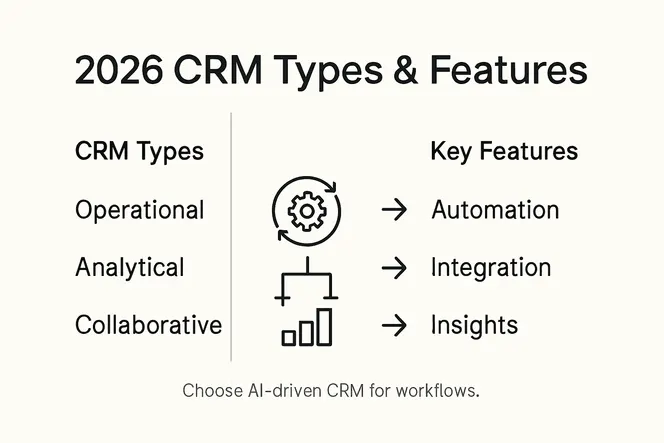
Analytical and Collaborative CRM platforms represent the next evolution of customer relationship management. Analytical CRM transforms raw data into strategic insights, enabling businesses to understand complex customer behaviors, predict future trends, and make data-driven decisions. Collaborative CRM breaks down traditional departmental silos, creating integrated communication channels that allow sales, marketing, customer service, and external partners to share information and coordinate efforts more effectively.
Pro tip: Before selecting a CRM system, conduct a comprehensive audit of your team’s specific workflow requirements to ensure the chosen platform aligns precisely with your operational and strategic objectives.
Here’s a summary comparing the three primary types of CRM systems in 2026:
| CRM Type | Main Focus | Example Use Case | Ideal For |
|---|---|---|---|
| Operational | Process automation | Automating sales follow-ups | Sales and marketing teams |
| Analytical | Strategic data insights | Predicting customer trends | Data-driven organizations |
| Collaborative | Integrated communication | Cross-department projects | Distributed teams |
Essential Features for Modern Teams
Modern CRM systems now offer comprehensive features designed to transform how teams collaborate, communicate, and drive business outcomes. These advanced platforms have evolved far beyond traditional contact management, integrating intelligent technologies that support complex organizational workflows and provide unprecedented insights into customer interactions and team performance.
Key features center on three primary domains: intelligent automation, collaborative intelligence, and adaptive infrastructure. Automatic data enrichment capabilities now allow teams to maintain real-time, accurate customer profiles without manual intervention. Sales automation tools streamline lead nurturing processes, enabling automatic follow-ups, intelligent scoring, and personalized communication strategies that adapt dynamically to customer behaviors. Advanced analytics dashboards provide granular pipeline visibility, allowing managers to track performance metrics, predict potential bottlenecks, and make data-driven strategic decisions.

Cloud-based CRM platforms have revolutionized team connectivity by creating shared digital workspaces that transcend traditional organizational boundaries. These systems support role-specific integrations, mobile accessibility, and robust communication channels that enable seamless collaboration across distributed teams. By leveraging iPaaS (Integration Platform as a Service) technologies, modern CRM solutions can effortlessly sync with ERP systems, retail platforms, and other critical business applications, creating a unified ecosystem that enhances operational efficiency and decision-making capabilities.
Pro tip: Prioritize CRM platforms that offer comprehensive integration capabilities and provide transparent, role-based permission controls to maximize team productivity and data security.
AI Automation and Workflow Optimization
AI Workflow Automation represents a groundbreaking evolution in how organizations manage complex operational processes. These intelligent systems move beyond traditional automation by introducing autonomous agents capable of analyzing context, predicting outcomes, and dynamically managing entire workflow ecosystems with minimal human intervention.
The core capabilities of AI-driven workflow optimization center on three transformative dimensions: contextual intelligence, predictive routing, and adaptive optimization. Intelligent AI agents can now seamlessly connect multiple enterprise systems including CRM, ERP, ticketing platforms, and custom applications, creating an integrated operational network that responds dynamically to changing business conditions. These systems analyze historical performance data, current operational metrics, and emerging patterns to continuously refine workflow efficiency, automatically prioritizing tasks, reallocating resources, and identifying potential bottlenecks before they impact productivity.
Modern AI automation platforms go beyond simple task delegation, functioning as sophisticated digital orchestration engines that understand complex organizational interdependencies. By leveraging machine learning algorithms, these systems can develop nuanced decision-making protocols that adapt in real time, learning from each interaction and progressively improving operational strategies. Sales teams, customer service departments, and management can now rely on AI-powered workflows that not only execute tasks but also provide predictive insights, recommend strategic interventions, and optimize resource allocation with unprecedented precision.
Pro tip: Implement AI workflow automation in stages, starting with well-defined, repetitive processes and gradually expanding to more complex operational workflows to ensure smooth organizational adoption and maximize technological benefits.
Comparing CRM Solutions: Gammatica vs. Others
CRM software comparisons in 2026 reveal a complex landscape of competing platforms where traditional market leaders face significant challenges from agile, AI-driven alternatives. While enterprise giants like Salesforce have long dominated the market, emerging solutions such as Gammatica are redefining expectations by offering more flexible, intelligent, and cost-effective approaches to customer relationship management.
The competitive differentiators for modern CRM platforms center on three critical dimensions: AI capability, workflow efficiency, and integration flexibility. Gammatica distinguishes itself by prioritizing lightweight, adaptive systems that can seamlessly connect multiple enterprise applications while providing advanced automation capabilities. Unlike traditional CRM solutions that require extensive customization, Gammatica offers out-of-the-box intelligent workflows that can quickly adapt to unique organizational needs, reducing implementation time and operational friction.
Comparing Gammatica with other market solutions reveals nuanced strengths across different operational contexts. Enterprise-grade platforms like Salesforce excel in complex, large-scale deployments with extensive customization options, while mid-market solutions like HubSpot offer integrated marketing tools. Gammatica positions itself as a balanced alternative, delivering robust AI-driven automation, user-friendly interfaces, and scalable architecture that appeals to growing businesses seeking sophisticated yet accessible CRM technologies. Its approach emphasizes reducing administrative overhead, providing intuitive user experiences, and leveraging intelligent automation to drive operational productivity.
Pro tip: Conduct a comprehensive workflow audit before selecting a CRM platform, mapping your specific operational requirements to ensure the chosen solution provides the most precise alignment with your team’s unique business processes.
Below is a comparison of top CRM platforms in 2026 and their distinctive advantages:
| Platform | AI Capability | Workflow Efficiency | Integration Flexibility |
|---|---|---|---|
| Salesforce | Advanced predictive | Highly customizable | Broad app ecosystem |
| HubSpot | Solid automation | Integrated marketing | Simple third-party links |
| Gammatica | Generative automation | Intuitive, rapid setup | Seamless cross-platform |
Common Challenges and How to Avoid Them
CRM implementation challenges represent significant obstacles for organizations seeking to optimize their customer relationship management strategies. These complexities often emerge from systemic issues that extend far beyond technological limitations, encompassing human factors, organizational culture, and strategic alignment that can dramatically impact successful platform adoption and utilization.
The most prevalent challenges cluster around three critical domains: user adoption, data quality, and workflow integration. Many organizations struggle with complex, unintuitive CRM interfaces that create friction in daily operations, leading to decreased user engagement and minimal platform utilization. Successful strategies involve selecting CRM solutions with intuitive design, implementing comprehensive training programs, and creating a culture of continuous learning that emphasizes the platform’s direct benefits to individual team members. Automated data entry capabilities and intelligent workflow suggestions can significantly reduce manual administrative burdens, making the CRM feel like a productivity tool rather than an additional administrative task.
Addressing CRM implementation challenges requires a holistic approach that balances technological capabilities with human-centered design principles. This means involving end-users early in the selection process, conducting thorough needs assessments, and creating customized onboarding experiences that demonstrate immediate value. Organizations must prioritize platforms that offer flexible configuration, seamless integrations with existing tools, and robust support mechanisms that enable teams to adapt the CRM to their specific operational requirements. By focusing on user experience, providing ongoing training, and selecting adaptable platforms, businesses can transform potential implementation challenges into opportunities for enhanced collaboration and operational efficiency.
Pro tip: Conduct a comprehensive team survey before CRM implementation to identify specific workflow pain points and ensure the selected platform directly addresses your organization’s unique operational challenges.
Unlock AI-Driven Team Productivity with Gammatica
The article highlights critical challenges in CRM adoption such as reducing administrative burdens, improving workflow integration, and leveraging AI to boost team efficiency. These pain points mirror common obstacles many organizations face when transitioning to intelligent automation and adaptive platforms. Gammatica.com directly addresses these by offering an AI-powered project and team management solution that streamlines workflows through automation, task management, and seamless integrations like Make.com for effortless syncing across applications. Its intuitive interface and real-time collaboration tools reduce friction and empower teams to save up to 16 hours weekly on administrative tasks.
With features like Kanban boards, customer journey tracking, and intelligent AI suggestions, Gammatica transforms complex CRM and task management processes into simple, actionable workflows. If you are eager to move beyond traditional CRM frustrations and embrace the future of AI-enhanced productivity, explore how Gammatica’s automation and collaborative capabilities can elevate your organization. Discover Gammatica’s all-in-one platform and see firsthand how smarter team management unlocks business growth.
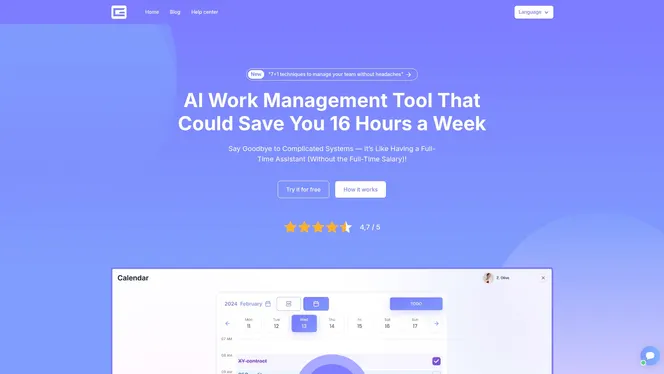
Ready to optimize your operations and empower your teams with cutting-edge AI-driven workflows Visit Gammatica.com now for a comprehensive demo and experience the future of CRM and project management today.
Frequently Asked Questions
What are the main types of CRM systems in 2026?
In 2026, the main types of CRM systems are Operational, Analytical, and Collaborative CRM. Operational CRM focuses on streamlining customer-facing processes, Analytical CRM transforms raw data into strategic insights, and Collaborative CRM enhances communication across departments.
How does AI improve CRM functionality in 2026?
AI enhances CRM functionality by automating repetitive tasks, predicting customer needs, and providing actionable insights. These systems use machine learning algorithms to analyze customer signals and recommend proactive engagement strategies, creating hyper-personalized experiences.
What key features should I look for in a modern CRM system?
Key features to consider in a modern CRM include intelligent automation for task management, collaborative tools for team communication, and adaptive infrastructure that integrates seamlessly with other enterprise applications for enhanced workflow efficiency.
How can organizations avoid common CRM implementation challenges?
To avoid CRM implementation challenges, organizations should select user-friendly platforms, provide comprehensive training, and involve end-users in the selection process. Focusing on flexible integrations and ongoing support can also help teams adapt the CRM to their specific needs.