TL;DR:
- Effective project productivity depends on aligning WIP limits, AI integration, and clear communication to stabilize workflows and prevent burnout.
- Balanced use of these strategies fosters transparency, enhances decision-making, and maintains team morale while adapting to evolving technological tools.
Business leaders and managers are under real pressure to get more from their teams without burning them out. The right project productivity strategies don’t just cut wasted time — they create a rhythm where work flows, communication clicks, and everyone knows what matters most. But with AI tools entering the picture fast, choosing the right approach has become more complex. This article walks you through a clear, evidence-based framework: from evaluating what makes a strategy worth adopting, to implementing WIP limits, integrating AI wisely, and building an environment where your team can actually do their best work.
Key Takeaways
| Point | Details |
|---|---|
| Set WIP limits | Capping active work improves focus, reveals bottlenecks, and stabilizes delivery flow. |
| Leverage AI wisely | Choose AI tools that complement your team’s method and maintain human oversight for best results. |
| Prioritize communication | Clear, accessible, and supportive communication reduces rework and aligns teams. |
| Adopt hybrid governance | Balance AI efficiency with human judgment by embedding fairness and accountability. |
| Measure and adjust | Use flow metrics and feedback to continuously improve productivity strategies. |
Criteria for effective project productivity strategies
Not every productivity strategy deserves your team’s attention. The challenge is separating what sounds good from what actually works when projects get complicated and deadlines get tight.
When evaluating any project productivity strategy, here are the core criteria to apply:
- Communication clarity. PMI emphasizes clear communication and workspace optimization as essential productivity enablers. If a strategy doesn’t improve how information flows through your team, it’s cosmetic.
- Flow stabilization. Good strategies reduce chaos, not just individual task counts. Look for methods that prevent bottlenecks and keep delivery predictable across sprints or project phases.
- Workload protection. Teams lose performance when they’re overloaded. Effective strategies include natural constraints, like work-in-progress (WIP) limits, that prevent any individual or function from becoming a bottleneck.
- AI integration maturity. Not all AI features are equal. Evaluate whether a tool offers basic content generation, predictive analysis, or full workflow automation, and decide how much autonomy fits your team’s needs.
- Hybrid governance. The best strategies combine AI assistance with human oversight. You want efficiency gains without handing over judgment calls to an algorithm.
- Methodology fit. A strategy built for Agile sprints may not suit a Waterfall program or a hybrid Kanban setup. Match the approach to how your team actually works, not to how vendors say you should work.
One thing most strategy assessments miss: the cost of poor adoption. A sophisticated system that your team resists is worse than a simpler one they embrace. Ease of uptake is a legitimate criterion, not a consolation prize.
Implementing work-in-progress (WIP) limits to improve flow
WIP limits are one of the most underused yet immediately impactful project productivity strategies available to managers today. The concept is simple: cap the number of tasks actively in progress at any given time, so your team finishes things instead of juggling everything.
Here’s how to implement them effectively:
- Establish your baseline. Before setting any limits, measure your current cycle time (how long it takes to complete a task from start to finish) and throughput (how many tasks you complete per week). Set WIP limits at 80 to 90% of baseline throughput using cycle time data to avoid both overload and idle time.
- Start conservatively. Set initial WIP limits slightly lower than you think necessary. It will feel uncomfortable at first because the bottlenecks become visible immediately. That visibility is the point.
- Track the right metrics. Don’t just watch whether tasks are completed. Cycle time and throughput stability, not seat utilization, tell you whether your WIP limits are working. Also monitor aging work (tasks stuck longer than expected) and blocked time.
- Prioritize finishing over starting. This is the cultural shift that trips up most teams. When the board is full, the rule is simple: help finish existing work before pulling in new tasks.
- Create an expedite lane. Urgent work always appears. Designate a separate lane with its own strict WIP limit (usually one item at a time) so urgent tasks don’t collapse the rest of your workflow.
- Adjust gradually. Once your team stabilizes at one limit, you can experiment with small adjustments. Never change WIP limits during a sprint or high-pressure delivery period.
| Metric | What it tells you | Target signal |
|---|---|---|
| Median cycle time | Average task completion speed | Decreasing or stable |
| 85th-percentile cycle time | Worst-case delivery predictability | Within 2x of median |
| Aging work items | Tasks stuck in the system | Under 10% of active WIP |
| Blocked time percentage | Team obstacles | Below 15% of cycle time |
| Throughput per week | Work completion rate | Stable or increasing |
Pro Tip: If your team argues that WIP limits slow them down, flip the question: how many tasks are currently “almost done” and sitting at 90% complete? That unfinished work represents real cost. WIP limits cure it.
Leveraging AI capabilities to boost project management productivity
AI is reshaping project management, but most teams are adopting it without a clear framework. The result? A collection of features that feel impressive in a demo but create noise in practice.
Most AI project management tools offer content generation and prediction, with very few reaching true agentic AI autonomy, where the system can take actions independently. Understanding this spectrum helps you choose tools that match where your team actually is.
Here’s how to think about AI capability tiers:
- Tier 1 (Assistive). Content generation, meeting summaries, task suggestions. Low risk, fast value. Start here.
- Tier 2 (Predictive). Risk forecasting, deadline prediction, resource conflict alerts. Requires clean historical data to be useful.
- Tier 3 (Automated). AI-triggered workflow actions, auto-assignments, dynamic reprioritization. Needs strong governance before adoption.
- Tier 4 (Agentic). Fully autonomous project decisions. Rare in 2026 and generally not advisable without significant oversight infrastructure.
AI offers real benefits in forecasting and automation, but it also presents socio-technical risks that require hybrid governance. Bias in training data, opaque decision logic, and erosion of team judgment are all real concerns for managers who adopt AI uncritically.
| AI tier | Example use case | Key governance need |
|---|---|---|
| Assistive | Auto-generated project summaries | Low — human reviews output |
| Predictive | Deadline risk alerts | Medium — validate against context |
| Automated | Auto-reassign tasks on delay | High — requires audit trail |
| Agentic | Full autonomous project management | Very high — not recommended yet |
A graduated autonomy approach works best. Start with AI recommendations that humans approve. Once you trust the patterns and your team understands the logic, expand into automation with oversight. Never skip the oversight step.
Pro Tip: Embed FATML principles (Fairness, Accountability, Transparency, and Measurability) into your AI tool evaluation checklist. Ask every vendor: “Can your system explain why it made a recommendation?” If they can’t answer clearly, that’s a red flag.
Optimizing communication and work environment to amplify productivity
You can have perfect WIP limits and excellent AI tools, and still fall short if your team’s communication environment is creating friction. This is where many leaders underinvest.

Cognitive science is clear on this: people absorb information differently. Providing the same update in multiple formats, written summary, visual diagram, and short verbal briefing, reduces misunderstanding without adding significant effort.
Here are the practices that make the biggest difference:
- Break information into smaller, clearer pieces. Long status reports with buried action items create rework. Short, direct updates with a clear owner and deadline create accountability.
- Actively invite questions. Teams with diverse learning styles benefit enormously when managers create a norm of asking “what needs clarification?” before moving on. It’s a small habit with outsized impact.
- Protect deep work time. Meetings scheduled throughout the day fragment concentration. Block two to three hours of uninterrupted time per person per day and watch output quality improve.
- Use visual task tracking. Clear, accessible communication reduces distractions and aligns teams. Color-coded Kanban boards, digital checklists, and progress dashboards give everyone a shared view of reality without requiring a status meeting.
- Build in reflection time. Weekly retrospectives and brief personal planning sessions prevent the kind of accumulated fatigue that quietly kills productivity. Treat recovery time as a business requirement, not a luxury.
- Advocate for environmental preferences openly. Some team members focus better with quiet blocks; others need collaborative bursts. Knowing and accommodating these differences is a practical competitive advantage.
One underappreciated factor: when team members feel comfortable naming what they need to work well, managers gain real intelligence about how to organize work. Psychological safety and boosting team performance are not separate goals. They’re the same goal.
Comparing project productivity strategies: WIP limits, AI tools, and communication methods
To help you decide where to start and how to combine these approaches, here’s a side-by-side comparison of the three main strategies covered.
| Strategy | Primary benefit | Key challenge | Best fit |
|---|---|---|---|
| WIP limits | Flow stabilization, workload visibility | Requires cultural shift from busyness to throughput | Teams with frequent bottlenecks or overload |
| AI tools | Forecasting, automation, reduced admin time | Needs governance, clean data, and gradual adoption | Teams with repetitive workflows and strong data habits |
| Communication and environment | Reduced rework, inclusive collaboration | Behavior change takes time; leaders must model it | All teams, especially distributed or diverse ones |
The most effective project productivity strategies are rarely single-method solutions. WIP limits create the structure. AI tools provide the intelligence. Better communication builds the culture that makes both sustainable. Prioritizing project tasks within this three-part system gives managers a much clearer framework than chasing individual tools or techniques in isolation.
Reimagining productivity: why balanced AI-human collaboration is the future
Here’s the uncomfortable truth most productivity articles skip: the biggest threat to your project performance in 2026 isn’t a lack of tools. It’s the temptation to let those tools do the thinking for you.
Over-reliance on opaque AI outputs can quietly erode judgment and trust within teams. When no one knows why the system flagged a task as high risk, or why it suggested reassigning a deliverable, people stop engaging critically with project decisions. That disengagement is the real productivity killer.
The same logic applies to WIP limits. WIP limits optimize output flow, not individual utilization, and that requires a genuine culture shift. If your organization still measures people by how busy they look, no WIP policy will stick. The systems you adopt are only as effective as the values behind them.
What actually distinguishes high-performing project teams isn’t a specific tool or methodology. It’s the balance between structure and judgment, between AI assistance and human expertise, between maximizing workflow efficiency through systems and investing in the people who run them. Leaders who upskill their teams, build transparency into their AI use, and measure success by meaningful throughput rather than frantic activity will outperform those chasing the newest feature set every time.
This balanced approach also protects morale. Teams that feel trusted, informed, and capable are more resilient when things go wrong, because they understand the system they’re working in and feel ownership over it.
Streamline your team’s productivity with Gammatica’s AI-driven platform
If this article gave you a clearer picture of what effective project productivity looks like, the next step is putting those strategies into practice with the right platform behind you.
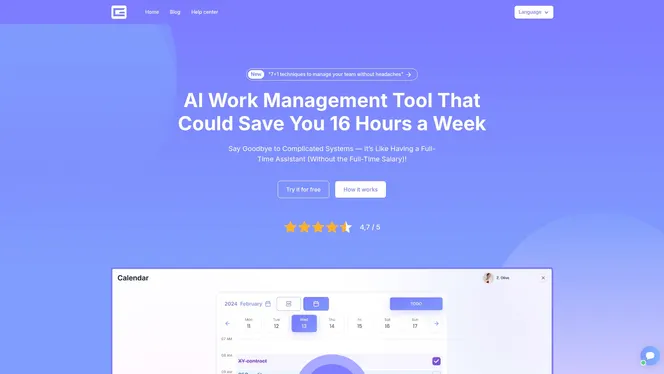
Gammatica for founders is built for exactly this: giving business leaders and managers the tools to implement WIP-based workflow management, AI-powered project insights, and clear team communication, all in one place. Gammatica’s Kanban boards make workload visible, its AI suggestions support better decision-making without replacing your judgment, and its integrated notes and status updates keep everyone aligned. Designed for hybrid governance, it puts transparency and accountability at the center of how your team works. If you’re ready to free up to 16 hours a week and build a team that delivers predictably, Gammatica is worth a serious look.
Frequently asked questions
What are work-in-progress (WIP) limits and why are they important?
WIP limits cap active tasks to reduce multitasking, expose bottlenecks, and create delivery stability across your team. They work by forcing completion before new work begins, which improves both speed and quality over time.
How can AI improve project productivity without replacing human judgment?
AI enhances project management through predictions, automations, and task generation, but hybrid governance preserves human oversight by keeping humans accountable for final decisions and exception handling. Start with assistive AI features and expand autonomy only once you trust the system’s logic.
What communication practices boost project team productivity?
Clear, accessible communication delivered in multiple formats, with space for questions and visual task tracking, cuts misunderstandings and reduces costly rework. Short, direct updates with named owners are far more effective than lengthy status documents.
What should I consider when choosing an AI project management tool?
Match AI capability tiers to your team’s methodology and governance readiness, and prioritize platforms that offer audit trails and explainable recommendations. Avoid tools that can’t clearly show you why they’re making a suggestion.
How do I balance productivity improvements with team workload and morale?
Set realistic WIP limits to prevent overload, invest in communication clarity, and treat WIP as a flow tool rather than a performance metric. Pair these with regular team reflection time and AI adoption that focuses on augmenting your team, not replacing their judgment.