Many HR leaders assume automation only handles simple, repetitive tasks like data entry or scheduling. In reality, modern HR task automation spans a broad spectrum from payroll processing to complex recruitment workflows using technologies like Robotic Process Automation and Artificial Intelligence. This guide reveals how medium to large enterprises can leverage these tools to dramatically reduce administrative burdens, save thousands of hours annually, and redirect human talent toward strategic initiatives that drive business growth and employee engagement.
Key Takeaways
| Point | Details |
|---|---|
| Hybrid automation benefits | Combining RPA and AI across HR tasks reduces manual touchpoints and improves outcomes such as candidate quality through data driven matching. |
| Pilot projects with governance | Start with high volume rule based processes and establish governance centers to guide scalable automation adoption. |
| Substantial time savings | Real world implementations show thousands of hours saved annually and meaningful cost reductions across payroll, compliance, and recruiting processes. |
| Higher ROI from integration | Enterprises that integrate both technologies report three times higher ROI than those using either in isolation. |
Understanding task automation technologies in HR
HR task automation relies on two primary technologies that serve distinct but complementary purposes. Robotic Process Automation excels at executing rule-based repetitive tasks like payroll calculations, benefits enrollment, and compliance reporting. RPA bots follow predefined rules to interact with multiple systems, mimicking human actions without requiring deep integration. AI technologies, including machine learning and natural language processing, handle unstructured data and complex decision support in areas like candidate screening, sentiment analysis of employee feedback, and predictive workforce planning.

The real power emerges when enterprises combine both approaches. Consider recruitment: RPA can automatically post job listings across platforms, collect applications, and populate candidate databases. AI then screens resumes for qualifications, ranks candidates based on fit, and even conducts initial chatbot interviews. This hybrid workflow reduces manual touchpoints by 80% while improving candidate quality through data-driven matching algorithms. Similar synergies exist in onboarding, where RPA handles document collection and system provisioning while AI personalizes training paths based on role requirements and learning styles.
Different HR functions benefit from specific automation approaches:
- Payroll processing: RPA validates timesheets, calculates deductions, generates payment files, and produces reports with 99.9% accuracy
- Compliance reporting: Automated data aggregation from multiple systems ensures audit readiness and regulatory adherence
- Employee onboarding: RPA provisions accounts and access while AI customizes orientation content based on department and experience level
- Recruitment workflows: AI screens candidates and predicts success probability; RPA schedules interviews and sends communications
- Benefits administration: Chatbots powered by natural language processing answer employee queries 24/7, reducing HR ticket volume by 60%
Pro Tip: Begin your automation journey with high-volume, rule-based processes that require minimal judgment calls. Master RPA implementation before layering in AI capabilities for complex decision support.
“The distinction between RPA and AI in HR automation isn’t about replacement but specialization. RPA provides the operational backbone for transactional efficiency, while AI adds the cognitive layer for strategic insights. Enterprises that integrate both technologies report 3x higher ROI than those using either in isolation.” — HR Technology Implementation Research, 2025
Measuring the impact: efficiency and savings from HR automation
Real-world implementations demonstrate substantial quantifiable benefits across diverse enterprise contexts. A recruitment automation case study in a technology company achieved 70% reduction in time-to-hire by automating candidate sourcing, initial screening, and interview scheduling. Brazilian sugar producer Usina Coruripe saved 16,000 person-hours annually by automating payroll validation and compliance checks. Spanish infrastructure firm Acciona eliminated €100,000 in costs from a single optimized HR process, while Finnish pension provider Palkeet recovered 93,000 person-hours through comprehensive HR service automation.
| Organization | Primary Focus | Time Saved | Cost Impact | Automation Rate |
|---|---|---|---|---|
| IT Company | Recruitment | 70% faster hiring | Reduced agency fees 45% | 65% of screening automated |
| Usina Coruripe | Payroll validation | 16K hours/year | $280K annual savings | 75% of admin tasks |
| Acciona | Process optimization | 8K hours/year | €100K single process | 58% of workflows |
| Palkeet | Service delivery | 93K hours total | 40% cost reduction | 72% of requests automated |
| BP3 Client | Manual effort | 30% reduction | $450K savings | 45% of processes |
These efficiency gains translate directly into return on investment through multiple channels. First, FTE reallocation allows HR teams to shift from transactional work to strategic initiatives like talent development and culture building. Second, error reduction in payroll and compliance minimizes costly corrections and regulatory penalties. Third, faster cycle times in recruitment and onboarding improve candidate experience and reduce productivity gaps from vacant positions.
Key outcome categories include:
- Speed improvements: 50-70% faster processing for routine requests, approvals, and transactions
- Accuracy gains: 95-99% error elimination in data entry, calculations, and report generation
- Cost avoidance: 30-45% reduction in manual effort translates to $200K-$500K annual savings per 1,000 employees
- Scalability: Automated systems handle volume spikes without proportional staff increases during peak periods
The financial case strengthens when measuring indirect benefits. Employee satisfaction scores increase 25-35% when HR responds faster to requests. Manager productivity improves when administrative burdens decrease. Compliance risk mitigation provides insurance value difficult to quantify but critical for enterprise stability. These compounding effects make automation ROI calculations conservative when focusing solely on direct labor savings.
Best practices for implementing task automation in medium to large enterprises
Successful enterprise automation follows a structured approach that balances ambition with pragmatism. Digital HR transformation cases demonstrate that starting with focused pilots lasting 30-90 days allows organizations to validate technology choices, refine workflows, and build internal capability before scaling. These pilots should target high-volume processes with clear success metrics and manageable complexity to generate quick wins that build organizational confidence.
Establishing a Center of Excellence provides the governance structure necessary for sustainable automation programs. The CoE develops standards for tool selection, integration patterns, security protocols, and change management practices. It also serves as a knowledge hub, training HR practitioners on automation capabilities and maintaining a repository of reusable components. Organizations with formal CoEs achieve 40% higher automation adoption rates and 60% faster time-to-value on subsequent projects compared to decentralized approaches.
Prioritization frameworks help identify which workflows to automate first:
- Volume assessment: Calculate transaction frequency and time per occurrence to quantify potential savings
- Complexity evaluation: Map process steps, decision points, and system touchpoints to gauge automation feasibility
- Integration requirements: Identify data sources and target systems to understand technical dependencies
- Business impact: Weigh strategic value beyond efficiency, including compliance risk, employee experience, and competitive advantage
- Resource availability: Ensure sufficient budget, technical skills, and stakeholder commitment for successful implementation
Hybrid automation models combining RPA, AI, and human oversight deliver superior results in enterprise contexts. Fully automated workflows work well for standardized transactions, but many HR processes require judgment, empathy, or exception handling. Designing human-in-the-loop workflows ensures automation handles routine cases while escalating complex situations to HR professionals. This approach maintains service quality while capturing 70-80% of efficiency gains from full automation.
Measuring effectiveness requires tracking specific KPIs aligned with automation objectives. Mean time to resolution quantifies how quickly automated systems handle requests compared to manual processing. Automation rate indicates what percentage of transactions complete without human intervention. ROI calculations should include FTE savings, error reduction value, and avoided costs from improved compliance. User satisfaction scores from both employees and HR staff provide qualitative feedback on automation impact.
Pro Tip: Involve HR practitioners early in automation design through workshops and prototype testing. Their domain expertise identifies edge cases and workflow nuances that technical teams might miss, resulting in more robust solutions and smoother adoption.
Common HR processes best suited for task automation and comparison of approaches
Certain HR functions offer particularly strong automation opportunities due to their structured nature and high transaction volumes. Payroll processing involves repetitive calculations, data validation, and report generation that RPA handles efficiently, reducing processing time by 60-75% while eliminating calculation errors. Recruitment workflows benefit from AI-powered resume screening, candidate matching, and interview scheduling that compress hiring cycles by 50-70%. Employee onboarding combines RPA for system provisioning and document collection with AI for personalized training recommendations.
Compliance reporting represents another high-value target. Automated systems continuously monitor HR data against regulatory requirements, flagging discrepancies in real time rather than during quarterly audits. This proactive approach reduces compliance risk while freeing HR teams from manual data aggregation. Benefits administration automation through chatbots and self-service portals handles 70-80% of routine employee inquiries, allowing HR staff to focus on complex cases requiring personalized guidance.
| Approach | Best For | Advantages | Limitations | Implementation Complexity |
|---|---|---|---|---|
| RPA Only | Payroll, data entry, report generation | Fast deployment, no AI training needed, predictable outcomes | Cannot handle unstructured data or complex decisions | Low to Medium |
| AI Only | Candidate screening, sentiment analysis, predictive analytics | Handles complexity and ambiguity, learns from patterns | Requires training data, less transparent decision logic | Medium to High |
| Hybrid RPA+AI | End-to-end recruitment, onboarding, service delivery | Combines efficiency with intelligence, scales across process types | Higher initial investment, requires integration planning | High |
| Human-in-Loop | Performance reviews, disciplinary actions, strategic planning | Maintains judgment and empathy, ensures ethical oversight | Lower efficiency gains, requires workflow design | Medium |
Practical considerations for selecting the right automation approach:
- Data structure: Highly structured data in standardized formats favors RPA; unstructured text and images require AI capabilities
- Decision complexity: Binary yes/no logic suits RPA; nuanced judgment requiring context analysis needs AI or human review
- Regulatory sensitivity: Processes with legal implications benefit from human oversight even when technically automatable
- Volume patterns: Steady high-volume transactions justify automation investment; sporadic low-volume tasks may not
- Change frequency: Stable processes with infrequent rule changes are easier to automate than those requiring constant updates
Enterprise success depends on matching automation technology to process characteristics rather than applying one-size-fits-all solutions. A pharmaceutical company might use pure RPA for benefits enrollment but require hybrid AI and human review for performance evaluations. A retail organization could fully automate shift scheduling while maintaining human oversight for disciplinary procedures. This tailored approach maximizes efficiency gains while preserving service quality and ethical standards.
Pro Tip: Customize automation strategies by department and workflow rather than implementing uniform solutions across HR. Finance-related processes often suit pure RPA, while employee relations functions benefit from AI-augmented human decision making.
Explore how Gammatica can transform your HR automation
Implementing the automation strategies outlined above requires platforms that combine intelligent workflow design with seamless integration capabilities. Gammatica VEX provides AI-powered automation specifically designed for enterprise HR operations, enabling you to build, test, and scale automated workflows without extensive technical expertise. The platform’s pre-built templates for common HR processes accelerate your pilot programs, while its flexible architecture supports the hybrid automation models that deliver maximum ROI.
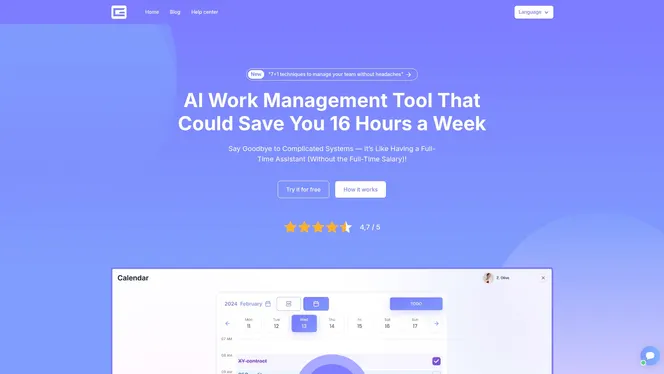
For recruitment and sales-focused HR teams, Gammatica Sales streamlines candidate pipeline management and stakeholder coordination. The integrated calendar, task automation, and collaboration features reduce administrative friction that slows hiring cycles. By connecting your automation initiatives with comprehensive team management capabilities, you create the operational foundation for sustained efficiency gains that compound over time.
FAQ
What HR tasks can be automated most effectively?
Payroll processing, compliance reporting, employee onboarding, recruitment screening, and benefits administration offer the highest automation ROI due to their high volume and structured workflows. Tasks involving repetitive data entry, calculations, and system-to-system transfers are particularly well-suited for RPA, while candidate evaluation and employee inquiry handling benefit from AI capabilities. The key is matching automation technology to task characteristics rather than automating everything possible.
How do I measure the success of HR task automation projects?
Track mean time to resolution, automation rate (percentage of transactions completed without human intervention), error reduction, FTE hours saved, and user satisfaction scores from both employees and HR staff. Compare these metrics against baseline measurements from manual processes and benchmark against peer organizations in your industry. ROI calculations should include direct labor savings, avoided costs from improved compliance, and productivity gains from faster cycle times. Quarterly reviews ensure automation delivers sustained value.
What are common challenges when implementing HR automation and how to overcome them?
Staff resistance stemming from job security concerns can be addressed through transparent communication emphasizing role evolution rather than elimination, plus training programs that upskill HR professionals for strategic work. Integration with legacy systems requires careful technical planning, API development, and phased rollouts that validate connections before full deployment. Ethical considerations around AI decision-making demand clear governance frameworks, regular bias audits, and human oversight for sensitive processes. Starting with low-risk pilots builds confidence while allowing you to refine approaches before tackling complex workflows.
Should we build custom automation or use commercial platforms?
Commercial platforms like Gammatica offer faster time-to-value, lower total cost of ownership, and continuous feature updates that custom solutions cannot match for most organizations. Build custom automation only when your HR processes are highly unique and provide competitive differentiation, or when security requirements prohibit cloud-based solutions. Hybrid approaches using commercial platforms for core functionality plus custom integrations for specialized needs often deliver the best balance of speed, cost, and capability.
How long does HR automation implementation typically take?
Pilot projects targeting single workflows typically complete in 30-90 days from kickoff to production deployment. Comprehensive automation programs spanning multiple HR functions require 6-12 months for initial rollout, followed by continuous improvement cycles. Timeline drivers include process complexity, number of system integrations, data quality issues requiring cleanup, and change management needs. Organizations with established Centers of Excellence and reusable automation components achieve 40-50% faster implementation on subsequent projects.