You’ve probably heard that AI in real estate is reserved for tech giants with massive budgets and data science teams. That’s a myth that costs professionals thousands of hours annually. The reality is that AI tools have become accessible and practical for property managers and investors of all sizes in 2026. This guide cuts through the hype to show you exactly how AI enhances efficiency in property management and investment decisions, what tools actually deliver results, and how to implement them without a computer science degree.
Key takeaways
| Point | Details |
|---|---|
| AI accessibility | Modern AI tools require no technical expertise and integrate seamlessly with existing real estate workflows. |
| Efficiency gains | Predictive analytics and automation reduce routine tasks by up to 60% while improving decision accuracy. |
| Practical applications | AI excels at tenant screening, maintenance scheduling, market analysis, and investment forecasting. |
| Implementation strategy | Start with pilot projects, ensure data quality, and scale based on measurable ROI. |
| Human-AI balance | Combine AI insights with professional judgment to avoid over-reliance and maintain client relationships. |
Demystifying AI in real estate: What it really means
Artificial intelligence in real estate isn’t about robots replacing agents or algorithms making all decisions. It’s about using machine learning and predictive analytics to process information faster and more accurately than humanly possible. Machine learning algorithms identify patterns in historical data to forecast future trends, while predictive analytics applies statistical techniques to estimate property values, rental demand, and investment returns.
The technology analyzes thousands of data points simultaneously, from neighborhood demographics to economic indicators to seasonal market fluctuations. What would take an analyst weeks to compile and interpret, AI processes in minutes. This speed doesn’t replace expertise but amplifies it, giving you more time for client relationships and strategic thinking.
Three misconceptions hold professionals back from adopting AI:
- AI requires deep technical knowledge to operate effectively
- Only large firms can afford meaningful AI implementation
- AI outputs are unreliable or create legal liability risks
None of these hold true in 2026. AI is more accessible than commonly perceived and can be leveraged effectively without deep technical expertise. Modern platforms feature intuitive interfaces designed for business users, not programmers. Subscription models start under $100 monthly for small operations. As for reliability, AI tools now come with transparency features that show you exactly how they reached conclusions, making outputs auditable and defensible.
The real benefit lies in faster, data-backed decisions. Instead of relying solely on gut instinct or limited comparable sales, you can analyze comprehensive market data to identify undervalued properties, predict maintenance needs before they become emergencies, and optimize pricing strategies based on real-time demand signals. For real estate AI resources and implementation guidance, platforms now offer extensive support libraries and onboarding assistance.

Core AI applications transforming property management and investment
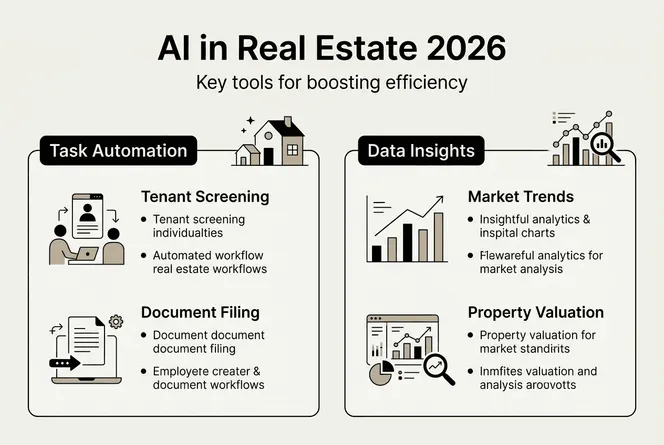
Real estate professionals are deploying AI across five critical areas that deliver measurable efficiency gains and competitive advantages:
- Predictive analytics for investment decisions that evaluate property appreciation potential by analyzing historical trends, development plans, and economic forecasts
- Automated tenant screening systems that verify income, credit, and rental history in minutes while reducing bias and ensuring compliance
- AI-powered chatbots handling initial inquiries, scheduling viewings, and answering common questions 24/7 without staff intervention
- Maintenance scheduling automation that predicts equipment failures before they occur and optimizes repair timing to minimize costs
- Market analysis tools that track comparable sales, rental rates, and neighborhood dynamics to inform pricing strategies
Predictive analytics and automation significantly cut time spent on routine tasks while improving accuracy in property valuation and investment decisions. The efficiency gains are substantial and measurable across different applications.
| Application | Time Saved | Accuracy Improvement | Primary Benefit | | — | — | — | | Tenant Screening | 75% | 40% fewer defaults | Faster placements, better tenants | | Property Valuation | 60% | 25% closer to sale price | More competitive offers | | Maintenance Prediction | 50% | 35% fewer emergencies | Lower repair costs | | Market Analysis | 80% | 30% better timing | Optimized buy/sell decisions | | Lead Qualification | 70% | 45% higher conversion | Focus on serious buyers |
These aren’t theoretical improvements. Property managers using AI tenant screening report filling vacancies 12 days faster on average, while investors leveraging predictive analytics identify opportunities competitors miss. The automation handles repetitive analysis, freeing you to focus on negotiation, relationship building, and strategic portfolio decisions.
Pro Tip: Match AI tools to your biggest time drains first. If tenant turnover costs you the most hours, prioritize screening and placement automation. If investment analysis consumes your time, start with predictive analytics platforms. Targeted implementation delivers faster ROI than trying to automate everything simultaneously.
For comprehensive AI automation tools overview and feature comparisons, evaluate platforms based on your specific workflow bottlenecks rather than feature lists. The best tool is the one that solves your actual problem, not the one with the most capabilities.
Choosing and integrating the right AI tools for your real estate business
Selecting AI technology requires evaluating five critical factors that determine success or failure:
- Goal alignment: Does the tool solve a specific problem you’ve quantified, or are you adopting AI for its own sake?
- Data readiness: Do you have clean, organized historical data for the AI to learn from, or will you need to build that foundation first?
- Total cost of ownership: Beyond subscription fees, factor in training time, integration costs, and ongoing data management requirements.
- User experience: Will your team actually use this daily, or is the interface so complex it will gather digital dust?
- System integration: Does it connect seamlessly with your existing CRM, accounting software, and communication platforms?
Successful AI integration depends on clear goals, reliable data, and ongoing training. Without these foundations, even the most sophisticated AI platform will underdeliver.
| Platform Type | Best For | Key Features | Integration Complexity | Typical Cost Range |
|---|---|---|---|---|
| Property Management AI | Landlords, managers | Tenant screening, maintenance alerts, rent optimization | Low | $50-$200/month |
| Investment Analytics | Investors, flippers | Market forecasting, deal analysis, ROI modeling | Medium | $100-$500/month |
| CRM with AI | Agents, brokers | Lead scoring, follow-up automation, pipeline management | Low | $30-$150/month |
| Comprehensive Platforms | Full-service firms | All-in-one workflow, team collaboration, AI suggestions | High | $200-$1000/month |
Implementing AI successfully follows a proven sequence. Start by documenting your current workflow and identifying the three tasks that consume the most time without requiring human judgment. These are your automation candidates. Next, run a 30 to 60 day pilot with one tool addressing your top time drain. Measure specific metrics like hours saved, error reduction, or faster cycle times.
During the pilot, involve the team members who will use the tool daily. Their feedback on usability and actual workflow impact matters more than feature specifications. If the pilot demonstrates clear ROI, expand gradually to additional use cases. If results disappoint, diagnose whether the issue is tool selection, data quality, insufficient training, or unrealistic expectations before abandoning AI altogether.
Pro Tip: Negotiate pilot periods before committing to annual contracts. Reputable AI vendors confident in their value will offer 30 to 90 day trials with full feature access. This lets you validate ROI with your actual data and workflows before significant investment. For platforms combining AI with project management and automation, explore options like Gammatica VEX automation platform that offer flexible implementation paths.
Maximizing AI benefits: best practices and future outlook
Getting value from AI requires ongoing attention to four operational practices:
- Continuous data quality monitoring: AI outputs are only as good as the data you feed them, so establish weekly audits of input accuracy and completeness.
- Regular staff training updates: As AI tools evolve and add features, schedule quarterly training sessions so your team leverages new capabilities.
- Systematic output validation: Never accept AI recommendations blindly; implement review processes where experienced professionals verify conclusions before acting.
- Strategic human-AI collaboration: Use AI to handle data processing and pattern recognition while reserving relationship management and complex negotiations for human expertise.
The real estate AI landscape is evolving rapidly in 2026. Natural language processing now analyzes lease agreements and contracts to flag unusual clauses or unfavorable terms automatically. Enhanced predictive models incorporate satellite imagery, social media sentiment, and real-time economic data to forecast neighborhood trajectories with unprecedented accuracy. Computer vision assesses property condition from photos, estimating repair costs and identifying maintenance issues invisible to casual inspection.
“Real estate firms leveraging AI analytics report 34% higher returns on investment portfolios compared to traditional analysis methods, with the gap widening as AI models accumulate more market cycle data.” Industry analysis, 2026
These capabilities create competitive separation between early adopters and holdouts. Investors using AI property assessment tools identify value-add opportunities faster and negotiate from stronger positions. Property managers with predictive maintenance systems reduce operating costs while improving tenant satisfaction through fewer disruptions.
The key is balancing automation with human judgment. AI excels at processing information and identifying patterns but lacks context about client relationships, local market nuances, and strategic business priorities. The most successful professionals use AI to eliminate grunt work and surface insights, then apply experience and intuition to make final decisions.
Staying updated on AI trends and continuously refining AI strategies helps real estate professionals maintain competitive advantages as the technology and market evolve. Subscribe to industry AI newsletters, participate in user communities for your chosen platforms, and allocate time quarterly to evaluate new tools entering the market. What seems cutting edge today becomes table stakes tomorrow, so ongoing learning separates leaders from followers.
For advanced capabilities in sales enablement and deal management, platforms like Gammatica sales enablement demonstrate how AI can transform client acquisition and relationship management beyond property analysis alone.
Unlock your real estate potential with Gammatica AI solutions
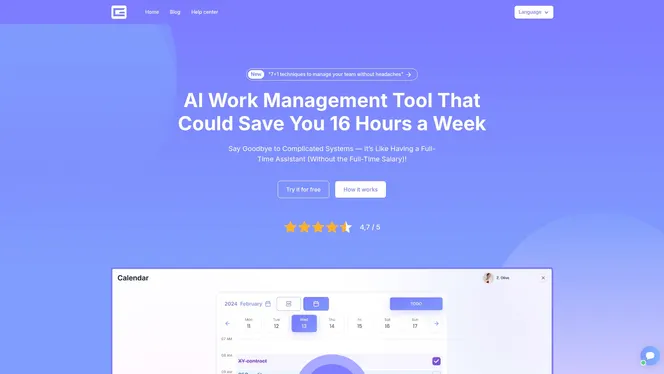
Now that you understand how AI transforms real estate efficiency, the question becomes implementation. Gammatica’s AI-powered platform eliminates the complexity of adoption while delivering the automation and insights that separate top performers from the rest. Our solutions streamline sales processes, automate repetitive workflows, and provide AI-driven suggestions that help you close deals faster.
Key benefits real estate professionals experience with Gammatica:
- Increase deal closing rates by up to 30% through AI-powered lead scoring and automated follow-up sequences
- Reduce manual administrative tasks by 16 hours weekly with intelligent workflow automation and template systems
- Customize AI workflows to match your specific property management or investment processes without coding
- Integrate seamlessly with existing tools through connections to platforms like Make.com, Zoom, and Google Meet
Pro Tip: Start with Gammatica Sales platform to transform your client acquisition process, then expand to Gammatica VEX automation tools as you identify additional workflow optimization opportunities. This staged approach delivers quick wins while building toward comprehensive AI integration across your entire operation.
What is real estate AI and how does it help?
What is real estate AI and how does it help?
Real estate AI refers to artificial intelligence systems that analyze property data, automate routine tasks, and provide predictive insights for investment and management decisions. These tools process massive datasets to identify patterns humans would miss, forecast market trends, and optimize operations. AI helps by dramatically reducing time spent on repetitive analysis while improving decision accuracy through data-backed recommendations.
Which AI tools are best for property management?
The most effective property management AI tools focus on tenant screening, maintenance scheduling, and communication automation. Platforms that verify applicant credentials automatically, predict equipment failures before they occur, and handle routine inquiries through chatbots deliver the highest ROI. Look for solutions that integrate easily with your existing property management software and require minimal technical expertise to operate daily.
How can investors benefit from AI in real estate?
Investors leverage AI for predictive analytics that identify undervalued properties with high appreciation potential before competitors discover them. AI systems analyze historical sales data, demographic trends, development plans, and economic indicators to forecast neighborhood trajectories and optimal buy/sell timing. This automated market analysis replaces weeks of manual research with minutes of AI processing, allowing investors to evaluate more opportunities and make faster, more confident decisions.
Is AI expensive and complicated to implement?
Modern AI solutions for real estate start under $100 monthly for small operations and feature user-friendly interfaces designed for business professionals, not programmers. Most platforms offer free trials or pilot periods so you can validate ROI before committing to annual contracts. Implementation complexity varies, but many tools integrate with existing systems through simple plugins and provide onboarding support to get you operational within days, not months.