Many project managers struggle with capacity planning, often confusing velocity with performance metrics or failing to account for real team constraints. This confusion leads to missed deadlines, overworked teams, and projects that consistently underdeliver. A properly designed capacity model transforms this chaos into predictable outcomes by accurately forecasting team workload and resource availability. This guide clarifies what capacity models are, demonstrates their proven impact on project success, and provides actionable steps to build scalable models that enhance productivity in growing mid-sized companies.
Key Takeaways
| Point | Details |
|---|---|
| Capacity model basics | A capacity model estimates team available work by combining historical performance data with realistic availability adjustments to guide planning. |
| Velocity and focus factor | In Agile environments velocity and focus factor help predict how much work teams can complete in a sprint. |
| Forecasting improves predictability | Capacity models enable accurate forecasting so stakeholders receive reliable delivery estimates. |
| Burnout reduction through planning | Proactive capacity planning balances workload and reduces overcommitment and team burnout. |
| Measurable gains from planning | Benchmarks show 25 percent timeline improvement and 18 percent cost reduction after adopting capacity planning. |
What is a capacity model and why it matters
A capacity model estimates your team’s available work capacity by combining historical performance data with realistic availability adjustments. In Agile environments, this means using velocity and focus factor for sprint planning to predict how much work your team can genuinely complete. Velocity measures the average story points your team finishes per sprint, while focus factor accounts for planned absences, holidays, meetings, and administrative overhead that reduce actual coding or project time.

Think of capacity modeling as your project management GPS. Without it, you’re driving blind, guessing at delivery dates and hoping resources magically align. With it, you navigate confidently toward realistic milestones.
Here’s why capacity models matter for mid-sized companies:
- Prevents chronic overcommitment that destroys team morale and product quality
- Enables accurate forecasting so stakeholders receive reliable delivery estimates
- Balances workload distribution across team members to avoid burnout hotspots
- Improves resource allocation by revealing actual capacity versus assumed capacity
- Supports data-driven decisions about hiring, project scope, and timeline negotiations
The math behind capacity planning isn’t complicated. Calculate your team’s total available hours per sprint, multiply by your historical focus factor (typically 0.6 to 0.8 for most teams), and you have realistic capacity. Compare this against your average velocity to understand how many story points or tasks you can commit to. This simple framework prevents the common trap of filling every calendar hour with planned work, which ignores the reality of interruptions, meetings, and cognitive overhead.
Pro Tip: Track your focus factor across multiple sprints to identify patterns. If it’s consistently below 0.65, investigate what’s consuming your team’s time beyond core project work.
How capacity models improve project outcomes: evidence and benchmarks
The business case for capacity modeling rests on solid empirical evidence. A detailed PMO case study showed 25% timeline improvement and 18% cost reduction when organizations implemented structured capacity planning processes. These aren’t marginal gains. They represent the difference between projects that drag on for months beyond schedule and those that deliver predictably.
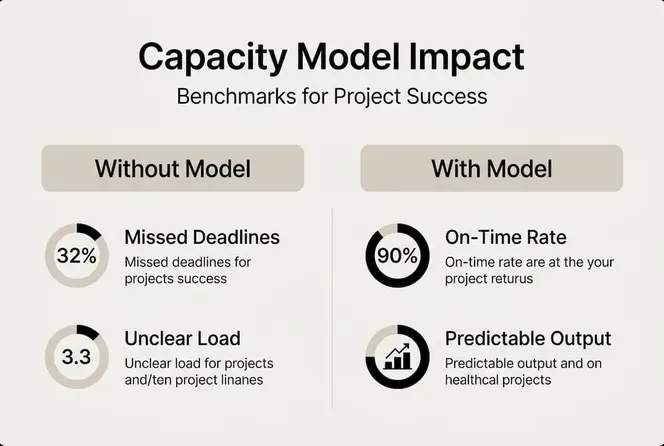
Professional services firms using capacity models report a 12% increase in billable utilization without extending work hours. This improvement comes from better matching skills to projects, reducing idle time between assignments, and eliminating the chaos of reactive scheduling that leaves some team members overwhelmed while others wait for clear direction.
| Metric | Without Capacity Model | With Capacity Model | Improvement |
|---|---|---|---|
| Project timeline | Baseline | 25% faster | 25% reduction |
| Project costs | Baseline | 18% lower | 18% savings |
| Team utilization | 68% average | 80% average | 12% increase |
| Sprint predictability | 54% hit targets | 87% hit targets | 33% improvement |
These benchmarks provide realistic targets for your own capacity planning initiatives. Don’t expect overnight transformation, but a properly implemented model should show measurable improvements within three to four sprints as your team calibrates their estimates and planning accuracy.
The productivity gains compound over time. Teams that consistently hit sprint commitments build confidence in their planning process. Stakeholders learn to trust delivery estimates. This trust reduces the political pressure to overpromise, creating a virtuous cycle where realistic planning becomes the norm rather than the exception.
Key factors driving these improvements include:
- Visibility into actual capacity versus theoretical maximum hours
- Early identification of resource constraints before they derail projects
- Balanced workload distribution that prevents burnout and turnover
- Data-driven conversations about scope and timelines with stakeholders
- Reduced context switching through better project sequencing
Pro Tip: Benchmark your current sprint predictability rate (percentage of committed work actually completed) before implementing capacity models. This baseline lets you quantify improvement and justify continued investment in planning processes.
Common pitfalls and nuanced views on capacity modeling
Many teams sabotage their capacity planning by using velocity as a performance KPI, which creates perverse incentives to inflate estimates rather than improve accuracy. When managers pressure teams to increase velocity quarter over quarter, developers respond rationally by making story point estimates less conservative. The numbers go up, but actual output remains flat or even declines as technical debt accumulates from rushed work.
Velocity and capacity metrics serve planning purposes exclusively. They help teams understand their sustainable pace and commit to realistic sprint goals. The moment you turn these planning tools into performance evaluations, you destroy their utility. Team members game the system, estimates lose meaning, and you’re back to guessing at capacity.
Another subtle mistake involves treating capacity models as static calculations rather than dynamic forecasts. Real projects encounter unexpected complexity, team members take unplanned leave, and business priorities shift mid-sprint. Rigid adherence to an initial capacity calculation ignores these realities. Effective capacity planning includes regular recalibration based on actual sprint outcomes and emerging constraints.
Simulation tools reveal hidden bottlenecks that simple capacity calculations miss. You might have adequate total team hours available, but if your single database expert is overcommitted, that specialist becomes your constraint regardless of overall capacity. Advanced capacity modeling accounts for skill-specific bottlenecks, not just aggregate hours.
Common capacity modeling mistakes to avoid:
- Treating capacity as a performance target rather than a planning constraint
- Ignoring skill-specific bottlenecks that limit throughput despite available hours
- Failing to account for context switching costs when team members juggle multiple projects
- Using overly optimistic focus factors that assume perfect productivity
- Neglecting to update models as team composition or project complexity changes
- Planning at 100% capacity without buffers for unexpected issues
Reactive capacity planning creates a doom loop. Projects start without clear resource allocation, teams scramble to cover gaps, burnout increases, and talented people leave. Replacement hiring consumes management bandwidth and temporarily reduces team velocity as new members onboard. Proactive capacity models with built-in buffers prevent this cycle by maintaining sustainable workloads that support long-term retention and consistent output.
Pro Tip: Run quarterly capacity planning sessions where the entire team reviews historical data, discusses upcoming projects, and collectively adjusts planning assumptions. This transparency builds buy-in and surfaces concerns before they become crises.
Scaling capacity models for growing teams and hybrid workforces
Scaling capacity planning from a single team to multiple squads or departments requires forecasting capacity 3-6 months ahead rather than just the next sprint. This extended timeline lets you identify hiring needs, plan major initiatives, and coordinate dependencies between teams before resource conflicts emerge.
Hybrid capacity strategies combine historical velocity data with real-time adjustments for current conditions. Your baseline capacity comes from the past six months of sprint performance, but you adjust for known factors like upcoming holidays, planned training sessions, or temporary reassignments to urgent priorities. This balanced approach provides stability without ignoring reality.
| Approach | Reactive Planning | Proactive Capacity Model |
|---|---|---|
| Planning horizon | Next sprint only | 3-6 months ahead |
| Resource allocation | Ad hoc assignments | Strategic skill matching |
| Buffer time | None or minimal | 15-20% for unknowns |
| Team burnout risk | High | Low |
| Hiring decisions | Crisis-driven | Data-driven forecasting |
| Stakeholder confidence | Low (frequent misses) | High (reliable delivery) |
Building scalable capacity models for growing teams:
- Establish baseline velocity by averaging the past 5-8 sprints for each team
- Calculate focus factor by dividing actual completed work by total available hours
- Identify skill-specific constraints that limit throughput regardless of total capacity
- Forecast upcoming projects and map required skills to available team capacity
- Build in 15-20% buffer time for unexpected complexity and urgent requests
- Review and adjust quarterly based on actual outcomes versus forecasts
- Share capacity dashboards with stakeholders to set realistic expectations
Hybrid and remote teams introduce additional complexity because communication overhead increases and availability becomes less predictable. Time zone differences, asynchronous collaboration, and home environment distractions all impact effective capacity. Proactive capacity models with buffers accommodate these factors by planning at 70-75% of theoretical maximum capacity rather than 85-90% for co-located teams.
The payoff for this investment in planning infrastructure is substantial. Teams that forecast capacity months ahead make better hiring decisions, commit to realistic roadmaps, and maintain sustainable pace during growth phases. Stakeholders receive reliable delivery estimates that account for actual constraints rather than wishful thinking.
Scaling capacity planning also requires tool support. Spreadsheets work for small teams but become unwieldy when tracking capacity across multiple squads with different skill profiles. Dedicated capacity planning tools or project management platforms with built-in resource forecasting provide the visibility needed to coordinate complex initiatives.
Pro Tip: When scaling to multiple teams, standardize how you measure velocity and capacity across squads. Inconsistent metrics make it impossible to aggregate capacity or compare team performance fairly.
Enhance your project management with Gammatica
Implementing the capacity planning strategies in this guide requires visibility into team workload, project progress, and resource allocation across your organization. Gammatica for founders provides the real-time dashboards and AI-driven insights that turn capacity planning from a spreadsheet exercise into an integrated management practice.
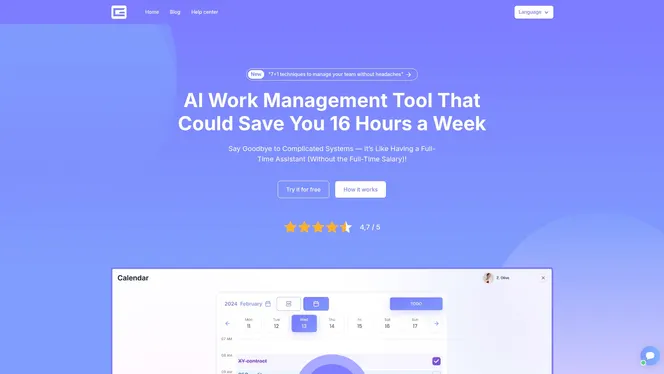
Mid-sized companies using Gammatica gain immediate visibility into which team members are overcommitted, where bottlenecks are forming, and how upcoming projects will impact capacity. The platform’s automation reduces the administrative burden of tracking hours and updating forecasts, freeing managers to focus on strategic decisions rather than data entry. For sales teams, Gammatica sales solutions connect pipeline forecasting with delivery capacity, ensuring you can actually fulfill the deals you close without overwhelming your teams.
FAQ
What is a capacity model in project management?
A capacity model estimates your team’s available work hours by combining historical velocity data with realistic adjustments for meetings, holidays, and administrative tasks. It helps managers forecast delivery timelines and allocate resources effectively across projects. The model prevents overcommitment by showing actual capacity versus theoretical maximum hours.
How do velocity and focus factor work in sprint planning?
Velocity measures the average story points your team completes per sprint, typically calculated by averaging 3-5 recent sprints. Focus factor adjusts this baseline for planned absences and non-project time like meetings. Together, they predict how much work your team can realistically commit to in upcoming sprints.
What are common mistakes in capacity modeling?
The biggest mistake is using velocity as a performance metric, which causes estimate inflation and destroys planning accuracy. Reactive planning that ignores buffer time leads to chronic overcommitment and team burnout. Failing to account for skill-specific bottlenecks means your capacity model shows available hours that can’t actually be used productively.
How can capacity models scale with hybrid or remote teams?
Forecast capacity 3-6 months ahead and include 15-20% buffer time to accommodate remote work variability and communication overhead. Use hybrid methods that combine historical sprint data with real-time adjustments for current conditions. Proactive capacity planning with buffers maintains productivity while reducing burnout risk in distributed teams.