TL;DR:
- AI market research tools automate data collection and consumer analysis more quickly and cheaply than traditional methods. The best tools feature AI-moderated interviews, real-time insights, and verified data grounding using RAG technology. They can suit various team sizes and budgets, delivering valuable insights that directly inform decision-making.
An AI market research tool is software that uses artificial intelligence to automate data collection, consumer analysis, and insight generation at speeds and costs traditional methods cannot match. Platforms like User Intuition, DoppelIQ Atlas, and Manus represent the leading edge of this shift, each targeting a different phase of the research process. The global AI market is projected to grow from $601.93 billion in 2026 to $3,638.08 billion by 2033. That growth signals one thing clearly: AI is no longer a research experiment. It is the research infrastructure.
1. What features distinguish the best AI market research tools?
The best AI market research tools share four defining capabilities: AI-moderated interviews, population-grounded simulations, continuous insight delivery, and reliable data synthesis. Tools that offer only one of these features are useful for specific tasks but fall short for full-cycle artificial intelligence market analysis.

Retrieval-Augmented Generation (RAG) is the technical backbone that separates quality tools from generic ones. RAG reduces hallucination risks by grounding AI responses in verified, structured datasets rather than relying on a language model’s internal memory. General large language models often fabricate data points when pushed into specialized research workflows. RAG-based tools do not.
The other key distinction is continuous versus one-off insights. Most traditional research delivers a report. The best AI tools embed insight refresh directly into your marketing workflow, so you catch market shifts as they happen rather than weeks later.
Practical criteria to evaluate before you commit to any tool:
- Turnaround time: Can it return findings within 24 hours?
- Cost per study: Is pricing per study, per interview, or subscription-based?
- Research phase fit: Does it specialize in qualitative discovery, quantitative simulation, or synthesis?
- Data grounding: Does it use RAG or verified external sources via Model Context Protocol (MCP)?
- Ease of integration: Does it connect to your existing CRM or project management stack?
Pro Tip: Never evaluate an AI research tool on a generic demo dataset. Run it on a real question from your current pipeline. The gap between demo performance and live performance reveals everything.
2. How do top AI market research tools compare in capabilities and pricing?
The market for AI-driven consumer insights has matured enough that you can now match a tool to a specific research job rather than settling for a general-purpose solution. Here is how the leading platforms stack up.
| Tool | Primary Strength | Pricing | Turnaround | Best For |
|---|---|---|---|---|
| User Intuition | AI-moderated voice interviews | $150 per study or $25/interview | 24 hours | Qualitative discovery, motivation mapping |
| DoppelIQ Atlas | Consumer twin simulations | $99/month | Near real-time | Campaign testing, messaging validation |
| Manus | Autonomous research agent | Varies by plan | Hours to days | Literature mapping, multi-source synthesis |
| Elicit | Research synthesis | Free tier available | Minutes | Academic and secondary research |
| Revuze | AI sentiment and review analysis | Not publicly listed | Continuous | Product feedback, brand monitoring |
User Intuition charges $150 per study for 30-minute AI-moderated interviews that return category-level evidence within 24 hours. That price point makes primary qualitative research accessible to teams that previously could not afford it.
DoppelIQ Atlas runs simulations across 100,000+ consumer twins at approximately 90% lower cost than traditional surveys, which typically exceed $5,000. That cost reduction means you can run experiments weekly instead of quarterly.
Elicit and Research Rabbit serve the literature mapping and synthesis phase well. Forcing either of them into primary consumer research produces weak results. Different AI tools specialize in distinct research stages, and mixing them up wastes both time and budget.
3. What practical use cases show AI market research in action?
AI-moderated interviews are the clearest proof point for qualitative research. User Intuition uses a technique called laddering, which probes 5–7 levels deep into consumer motivations. Surface sentiment tells you a customer is unhappy. Laddering tells you why they switched to a competitor and what would bring them back.
Population-grounded simulations from DoppelIQ Atlas serve a different purpose. You feed in a campaign concept or a pricing change, and the platform runs it against a synthetic population that reflects real demographic and occupational distributions. Synthetic personas work for brainstorming, but population-grounded consumer twins are required for decision-grade results.
The most underused application is continuous market monitoring. Here is what that looks like in practice:
- Early trend detection: AI tools scan social signals, reviews, and search behavior to flag emerging consumer needs before competitors act on them.
- Unmet needs mapping: Sentiment analysis across product categories reveals gaps that qualitative interviews can then probe in depth.
- Competitive shift alerts: AI monitors competitor messaging and positioning changes in near real-time, giving your team time to respond.
- Segmentation refinement: Predictive modeling updates audience segments as new behavioral data arrives, keeping your targeting current.
The shift to AI-as-a-Service means teams without dedicated data science departments can now run all four of these workflows. That is the real competitive advantage.
4. Which AI market research tools fit different budgets and team sizes?
Choosing the right market research automation software depends on your team size, research maturity, and what phase of the research cycle you need to support most. There is no single best tool. There is only the best tool for your specific situation.
For small teams and lean budgets, User Intuition at $150 per study is the strongest entry point for primary research. Elicit covers secondary synthesis for free. Together, they give a two-person marketing team a full qualitative and synthesis workflow without a large monthly commitment.
For mid-size marketing teams running regular campaign tests, DoppelIQ Atlas at $99/month delivers the highest volume of decision-grade insights per dollar. Running 100,000-person simulations monthly at that price replaces what would have been a quarterly $5,000+ survey budget.
For enterprise teams with complex, multi-market research needs, Manus and Revuze add depth. Manus handles autonomous multi-source research tasks. Revuze provides continuous AI sentiment analysis across product reviews and brand mentions, feeding a live picture of market perception into your workflow.
Pro Tip: Start with one tool that covers your most urgent research gap. Teams that adopt three platforms simultaneously rarely use any of them well. Prove ROI on one, then expand.
The fit-for-purpose principle applies here directly. A tool that excels at literature mapping will frustrate a team trying to run consumer simulations. Match the tool to the job, not to the feature list.
One integration consideration worth flagging: the best AI tools for research deliver the most value when their outputs feed directly into your project management and CRM systems. When insights sit in a separate platform, they get read once and forgotten. When they connect to your workflow, they drive decisions.
What I have learned about picking AI research tools the hard way
The most common mistake I see marketing teams make is treating AI market research tools as interchangeable. They pick the platform with the best demo, run one study, get mediocre results, and conclude that AI research does not work. The real problem is almost always a mismatch between the tool and the research question.
I have watched teams use general-purpose LLMs for consumer motivation research and get outputs that sound plausible but are completely fabricated. RAG-grounded tools exist precisely because this problem is real and costly. If your tool cannot tell you where its data comes from, treat its outputs as brainstorming material, not evidence.
The other thing I would push back on is the idea that AI replaces the analyst. It does not. True market research value comes from combining AI outputs with human strategic interpretation. AI surfaces the patterns. You decide what they mean for your specific market, your specific customer, and your specific moment in time. That judgment cannot be automated.
My honest recommendation: pick one tool, run it on a real business question, and measure whether the output changed a decision. If it did, you have found your starting point. If it did not, the tool is wrong for your workflow, not for AI research in general.
— Viktor
Gammatica’s AI platform for market research and competitive analysis
Marketing teams that collect great insights still lose time when those insights do not connect to execution. Gammatica is built to close that gap.
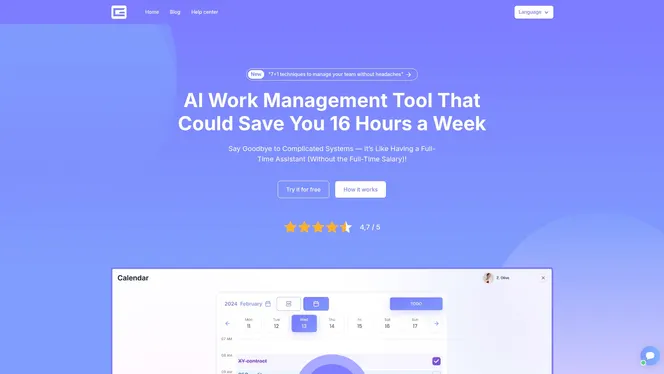
Gammatica’s AI-driven platform connects your research outputs to task management, CRM, and team workflows in one place. You can turn a consumer insight into an assigned campaign task, a tracked customer journey, or a checklist for your next product launch without switching tools. Gammatica claims users free up to 16 hours weekly by reducing the administrative work between insight and action. If you want to see how it fits your team’s research-to-execution workflow, book a demo call and see it in action with your own use case.
FAQ
What is an AI market research tool?
An AI market research tool uses artificial intelligence to automate data collection, consumer analysis, and insight generation. It replaces or accelerates manual research tasks like surveys, interviews, and sentiment analysis.
How much do AI market research tools cost?
Pricing varies widely. User Intuition charges $150 per study or $25 per interview. DoppelIQ Atlas runs at $99/month for large-scale consumer simulations. Some tools like Elicit offer free tiers for secondary research synthesis.
Are AI-generated market research insights reliable?
Reliability depends on the tool’s data grounding. Tools using Retrieval-Augmented Generation (RAG) produce more accurate outputs by drawing from verified datasets. General-purpose LLMs without RAG grounding carry a higher risk of inaccurate or fabricated results.
What is the fastest AI tool for market research?
User Intuition returns category-level evidence within 24 hours from 30-minute AI-moderated interviews. DoppelIQ Atlas delivers simulation results in near real-time for campaign and messaging tests.
Can small teams use AI market research tools effectively?
Yes. User Intuition at $150 per study and Elicit’s free synthesis tier give small teams a full qualitative and secondary research workflow at a fraction of traditional research costs.