TL;DR:
- Project management methodologies include predictive, adaptive, and hybrid types, each suited for different project conditions. Choosing the correct approach improves alignment and reduces risks, with frameworks like PMBOK and Agile guiding this choice. Hybrid methods combine elements to handle projects with both stable and uncertain components effectively.
Project management methodologies are structured approaches that define how a team plans, executes, and delivers work. The three core types of project management are predictive, adaptive, and hybrid, each built for a different set of project conditions. Choosing the wrong one does not just slow a project down. It creates misalignment between how a team works and what the project actually needs. The PMBOK Guide and the Agile Manifesto represent the two most influential frameworks shaping these choices today. This guide breaks down each methodology clearly so you can match the right approach to your next project.
1. What are the major types of project management methodologies?

The five critical factors that guide methodology choice are requirement stability, change frequency, timeline constraints, workload predictability, and regulatory environment. Understanding these factors before picking a method saves teams from costly mid-project pivots.
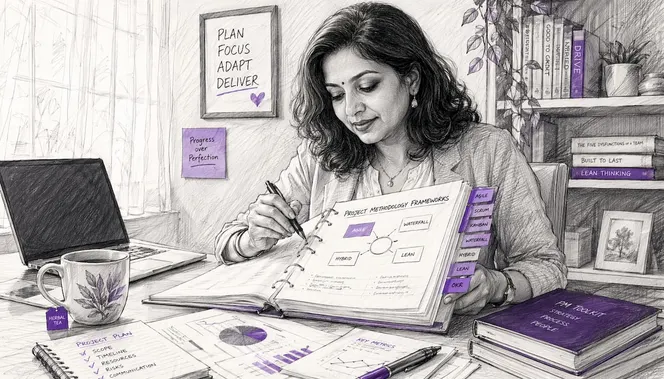
Predictive methodologies (also called plan-driven or Waterfall) define all requirements upfront and follow sequential phases. Work flows in one direction: from planning to design to build to test to delivery. There is no going back to a previous phase once it closes. This approach works well in construction, manufacturing, and regulated industries where the final product is fully defined before work begins.
Adaptive methodologies include Agile, Scrum, and Kanban. They treat requirements as evolving and build in regular feedback loops. Teams deliver work in short cycles and adjust based on what they learn. The Agile Manifesto, published in 2001, formalized this philosophy and it now underpins most software development practices worldwide.
Hybrid methodologies blend predictive and adaptive elements. A team might use Waterfall to manage contracts and compliance while running Agile sprints for the development work. Hybrid is not a compromise. It is a deliberate design choice for projects with both stable and unstable components.
Governance frameworks like PRINCE2 sit in a separate category. They define roles, accountability, and decision authority rather than how work gets done day to day. Confusing a governance framework with an execution methodology is one of the most common selection errors project teams make.
2. How do the types of project management compare in key features?
Choosing between project management frameworks comes down to a handful of practical criteria. The table below maps each major methodology type against the conditions where it performs best.
| Feature | Predictive (Waterfall) | Adaptive (Agile/Scrum) | Kanban | Hybrid |
|---|---|---|---|---|
| Requirement stability | High | Low to medium | Low | Mixed |
| Change tolerance | Low | High | High | Medium |
| Delivery cadence | Single final delivery | Incremental sprints | Continuous flow | Both |
| Best for | Construction, compliance | Software, product dev | IT ops, support | Complex mixed projects |
| Regulatory fit | Excellent | Moderate | Low | Good |
| Team structure | Hierarchical | Cross-functional | Self-organizing | Flexible |
Waterfall suits projects with fully defined, stable requirements and high regulatory oversight. Agile suits projects with evolving requirements and frequent feedback needs. That distinction is the starting point for any honest project management style comparison.
Scrum organizes work into fixed-length sprints with defined roles including a Scrum Master, a Product Owner, and a development team. Sprint reviews create a regular rhythm of delivery and feedback. This structure makes Scrum popular in software development and complex product work where priorities shift between cycles.
Kanban focuses on visual flow and continuous delivery using pull systems and work-in-progress limits. It does not use sprints or fixed iterations. Kanban fits IT operations, customer support, and creative teams that handle unpredictable, ongoing workloads rather than defined projects with a clear end date.
Pro Tip: Before committing to any methodology, map your project’s requirements on a scale from “fully defined” to “highly uncertain.” That single exercise will eliminate at least half the options immediately.
3. When to choose adaptive vs. predictive vs. hybrid project management?
Methodology choice is fundamentally about managing risk and learning. Predictive methods front-load planning to reduce uncertainty early. Adaptive methods accept uncertainty and reduce it through fast feedback loops. Neither is universally better.
Use predictive methods when:
- Requirements are fully documented and unlikely to change
- Regulatory or contractual obligations require formal sign-off at each phase
- The team has deep experience with the same type of project
- Stakeholders want a fixed scope, budget, and timeline from day one
Use adaptive methods when:
- Requirements are partially known or expected to evolve
- Stakeholders can participate in regular reviews and provide feedback
- The product benefits from early releases and real user input
- The team is comfortable with self-organization and ambiguity
Use hybrid methods when:
- The project contains both stable and unstable components
- Compliance demands formal documentation but delivery benefits from iteration
- Different workstreams within the same project have different risk profiles
“The best methodology matches the project’s unknowns and learning needs rather than following trends or preferences. Forcing a single pure method across incompatible conditions is where most projects go wrong.”
Hybrid approaches maintain formal control for stable parts and iterative approaches for evolving parts. This is not simply mixing methods at random. It requires deliberately assigning the right approach to each component of the project based on its specific risk profile.
4. What are common pitfalls when selecting project management types?
The most expensive mistake in methodology selection is ignoring organizational culture. Applying strict Agile in a command-and-control environment produces “fake agile.” Teams go through the motions of sprints and standups while decisions still flow top-down. The result is burnout, not agility.
Common pitfalls to watch for:
- Choosing by popularity. Agile is widely adopted, but that does not make it right for your project. Popularity is not a selection criterion.
- Confusing governance with execution. PRINCE2 and similar frameworks define accountability structures, not how work gets done. Treating them as execution methodologies leads to poor selection and frustrated teams.
- Skipping the context assessment. Teams that skip evaluating requirement stability, change frequency, and regulatory needs often default to whatever they used last time.
- Treating hybrid as a fallback. Hybrid is a deliberate design, not a way to avoid committing to a method. Without clear rules about which parts use which approach, hybrid becomes chaos.
- Underestimating stakeholder tolerance. Adaptive methods require stakeholders who can give timely feedback and accept evolving deliverables. If they cannot, the method will fail regardless of how well the team executes it.
Pro Tip: Run a two-week pilot of your chosen methodology on a small, low-risk workstream before rolling it out across the full project. You will surface cultural and structural mismatches before they become expensive.
Decision frameworks for methodology selection rely on key questions about requirements, changes, and governance needs. Using a structured checklist prevents teams from choosing methods based on familiarity or fashion rather than fit.
Viktor’s take on methodology selection
Most professionals treat methodology selection as a one-time decision made at project kickoff. That is the wrong mental model. The real question is not “which method do we use?” but “which method fits this project right now, and how will we know when to adjust?”
I have watched teams spend weeks debating Agile vs. Waterfall when the actual problem was that nobody had mapped out which parts of the project were stable and which were genuinely uncertain. Once you do that mapping, the methodology choice often becomes obvious. The debate disappears.
The other thing I have seen consistently is that most projects benefit from hybrid models tailored to their specific culture and compliance demands. Pure Waterfall and pure Agile are useful as teaching models. In practice, the best teams borrow from both and build something that fits their actual constraints.
Separating governance from delivery style is the single most clarifying move you can make. Once you stop treating PRINCE2 or PMI standards as execution methods and start treating them as accountability structures, the whole selection process gets simpler. Your governance framework answers “who decides what.” Your execution methodology answers “how does work get done.” Those are two different questions and they deserve two different answers.
— Viktor
Gammatica supports your project management approach
Whatever methodology your team chooses, visibility into how work actually flows is what keeps projects on track.
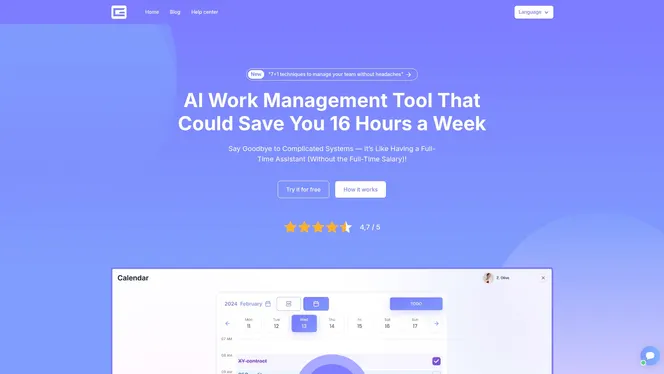
Gammatica is built for founders and project leads who need a clear picture of team activity without adding administrative overhead. The platform supports Kanban boards for visual workflow management, task tracking, checklists, and automation through integrations like Make.com. Whether your team runs sprints, continuous flow, or a hybrid of both, Gammatica adapts to the structure you already use. Gammatica users report freeing up to 16 hours weekly by reducing manual coordination. That is time your team can put back into actual project delivery. If you want to see how your team’s work aligns with your chosen methodology, Gammatica gives you that view from day one.
FAQ
What are the three main types of project management?
The three main types are predictive (Waterfall), adaptive (Agile, Scrum, Kanban), and hybrid. Each suits a different level of requirement stability and change tolerance.
What is the difference between Agile and Waterfall?
Waterfall follows sequential phases with no backward movement, while Agile delivers work in short iterative cycles with regular feedback. Waterfall fits stable, regulated projects; Agile fits projects with evolving requirements.
When should a team use a hybrid project management approach?
A hybrid approach works best when a project contains both stable and unstable components. Teams apply predictive methods to fixed, compliant parts and adaptive methods to areas where requirements are still evolving.
What is “fake agile” and why does it happen?
Fake agile occurs when teams adopt Agile ceremonies like standups and sprints but decisions still flow top-down through a command-and-control structure. It happens when organizational culture mismatches the method’s requirements for autonomy and fast feedback.
Is PRINCE2 a project management methodology?
PRINCE2 is a governance framework, not an execution methodology. It defines roles, accountability, and decision authority. Teams use it alongside an execution method like Agile or Waterfall, not instead of one.