
TL;DR:
- Effective team building strengthens trust, communication, and collaboration across various formats and settings. Regular activities, proper debriefs, and inclusive choices keep team members engaged and improve workplace morale. Using content creation and tracking tools enhances ongoing team development and productivity.
Team building ideas are structured activities designed to improve teamwork, trust, and communication within a group. The right activities do more than fill a Friday afternoon. 72% of employees say feeling supported at work matters more to them than a 30% pay raise. That single number reframes the entire conversation: team bonding exercises are not a perk. They are a retention and performance tool. This guide covers the formats, selection criteria, facilitation practices, and real examples that actually move the needle for managers, HR professionals, and team leaders.
What team building ideas work best for different settings?
The format of your activity must match your team’s physical setup. A scavenger hunt works beautifully for an in-person group of 10. It falls apart for a distributed team across three time zones. Matching the activity to the setting is the first decision you make, and it determines everything else.
In-person teams have the widest range of options. Classic formats include:
- Escape rooms and puzzle challenges: These put problem-solving and communication under pressure in a low-stakes environment.
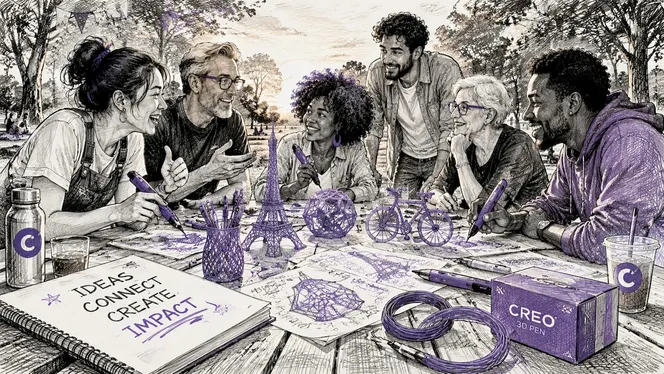
- Creative workshops: 3D Pen Art workshops take 1–2 hours to set up and facilitate, making them practical for half-day offsites. They develop lateral thinking, visual communication, and distributed leadership.
- Scavenger hunts: These work well for teams of 8–30 and require minimal budget.
- Cooking or craft classes: These create natural conversation and shared accomplishment.
Remote teams need digital-first formats. Platforms like Kahoot and Jackbox sustain engagement when teams lack physical presence. Virtual trivia nights, online escape rooms, and collaborative playlist-building sessions all translate well to video calls.
Hybrid teams face the hardest design challenge. The goal is to avoid a two-tier experience where remote participants feel like spectators. One effective approach: run the same activity simultaneously in a shared digital space, even when some members are in the same room.
Pro Tip: Before booking anything, ask your team one question: “Would you rather do something active, creative, or social?” The answers will tell you more than any personality assessment.
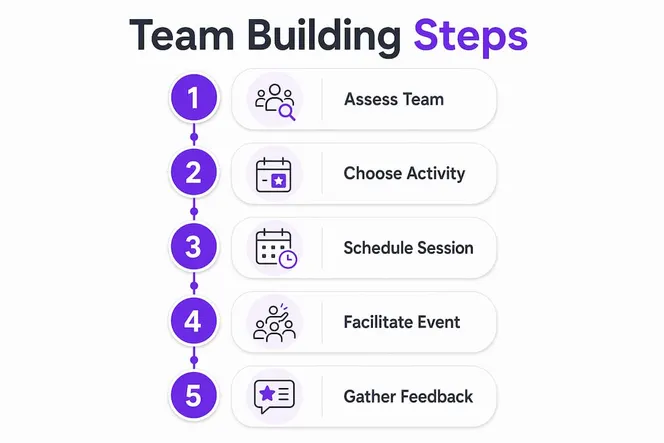
How do you choose team building ideas for diverse personalities?
Choosing the right activity is not about picking what you personally enjoy. It is about reading your team’s composition and goals, then selecting accordingly.
Offering choice and variety increases engagement across diverse personality types. Introverts and extroverts participate at different energy levels. A high-pressure improv exercise that energizes one person will shut down another. The solution is not to find one perfect activity. The solution is to offer a menu.
Align your activity selection with a specific team goal:
- Trust building: Low-stakes sharing exercises like Two Truths and a Lie, or structured vulnerability prompts.
- Communication: Activities that require clear instruction-giving, like blindfolded drawing or back-to-back building challenges.
- Innovation and problem-solving: Design thinking sprints or the Marshmallow Challenge, where teams build the tallest freestanding structure using spaghetti, tape, and a marshmallow.
- Morale and belonging: Community volunteering or wellness activities that connect the team to something larger than a project deadline.
The biggest mistake managers make is implementing one-size-fits-all events without consulting the team. Co-creating the activity list with your team gives people ownership. It also surfaces preferences you would never have guessed. A quick anonymous poll before planning takes five minutes and dramatically improves buy-in.
Avoid “forced fun” at all costs. Mandatory participation in high-energy or physically demanding activities alienates people with disabilities, social anxiety, or cultural differences. Make participation genuinely voluntary where possible, and always offer a low-key alternative.
Pro Tip: Run a short retrospective after each activity. Ask three questions: What did you enjoy? What felt awkward? What would you change? Use those answers to build your next session.
You can also draw on content collaboration best practices to frame design thinking and problem-solving sessions as both team bonding exercises and skill development opportunities. That dual framing makes it easier to get budget approval.
What roles do facilitation and debriefing play in team building?
Activities alone do not build teams. The conversation after the activity does. Without debriefing, employees experience the event as forced fun with no lasting workplace benefit. A skilled facilitator connects what happened during the activity to real challenges the team faces every day.
Here is a simple five-step debriefing framework you can use after any activity:
- Describe: What happened? Ask the group to narrate the experience without judgment.
- Interpret: Why did it happen? Surface patterns in how the team communicated or made decisions.
- Generalize: Where does this show up at work? Connect the activity dynamic to a real project or recurring friction point.
- Apply: What will we do differently? Identify one concrete behavior change the team agrees to try.
- Follow up: Check in two weeks later. Ask whether the behavior change stuck.
The difference between internal management and professional facilitation is significant. Managers often struggle to facilitate their own teams because they are part of the group dynamic. A professional facilitator holds neutral space and can surface tensions that a manager’s presence would suppress.
“The debrief is where the learning lives. The activity is just the door. If you skip the debrief, you’ve paid for a door and never walked through it.”
For remote teams, debriefing works well in a shared document where everyone types their reflections simultaneously before speaking. This prevents the loudest voices from dominating and gives introverts equal input. Instant link sharing tools make it easy to distribute reflection prompts and collect responses in real time during virtual sessions.
What are creative examples of team building ideas in practice?
The best activities combine engagement with skill development. Here are proven formats across different team types and goals.
| Activity | Format | Team size | Primary skill | Cost |
|---|---|---|---|---|
| 3D Pen Art workshop | In-person | 6–20 | Visual communication, cooperation | Medium |
| Two Truths and a Lie | Any | 4–25 | Rapport, psychological safety | Free |
| Marshmallow Challenge | In-person | 4–16 | Problem-solving, leadership | Low |
| Virtual trivia night | Remote | 5–50 | Social connection, culture | Low |
| Virtual coffee chats | Remote | 2–6 per pair | Relationship building | Free |
| Community volunteering | In-person | Any | Morale, belonging | Variable |
| Design thinking sprint | Any | 4–20 | Innovation, communication | Low |
3D Pen Art workshops are particularly effective for R&D and design teams. Participants build three-dimensional objects collaboratively, which requires negotiation, spatial reasoning, and real-time feedback. The output is tangible, which gives the team something to display and reference later.
Two Truths and a Lie works for teams of 4–25 and requires zero prep. Each person shares two true statements and one false one. The group guesses the lie. It sounds simple, but it reliably surfaces surprising personal facts that shift how colleagues see each other.
Virtual coffee chats and trivia nights address social isolation in remote teams. Pairing team members randomly for 20-minute video calls creates connections that would never form organically in a Slack channel. Trivia nights work at scale and give remote employees a shared cultural reference point.
Community volunteering adds a layer of meaning that purely social activities cannot replicate. Teams that build something together for an external cause report stronger cohesion than teams that only play together.
Pro Tip: Rotate activity ownership. Let a different team member plan and lead each session. It builds facilitation skills across the team and prevents any single person from becoming the “fun coordinator.”
What I’ve learned about team building after years of watching it fail
Most team building fails not because the activity was wrong, but because the leader treated it as a one-time event. You run a workshop in march, everyone has a good time, and then nothing changes. The team goes back to the same communication patterns, the same silos, the same friction. Three months later, morale is exactly where it was.
The leaders I’ve seen get this right treat team building as an ongoing investment, not a quarterly checkbox. They run short, low-effort activities monthly. They debrief consistently. They track whether the team’s collaboration actually improves over time. That last part is where most managers fall short. They measure attendance, not outcomes.
The other thing I’d push back on: the assumption that professionally relevant activities are less fun than games. In my experience, the opposite is true. When you give a team a real problem to solve together, even a simulated one, the engagement is deeper than any icebreaker. Adults want to feel competent. Activities that tap into professional skills make people feel good about themselves and their colleagues.
The uncomfortable truth is that bad team building actively damages morale. A poorly chosen activity signals that leadership does not know or care about the team’s actual preferences. That signal is loud. If you are going to invest the time, invest it properly.
— Viktor
How Gammatica helps you build a stronger team every day
Running great team activities is one part of the equation. Knowing whether your team’s collaboration is actually improving is the other.
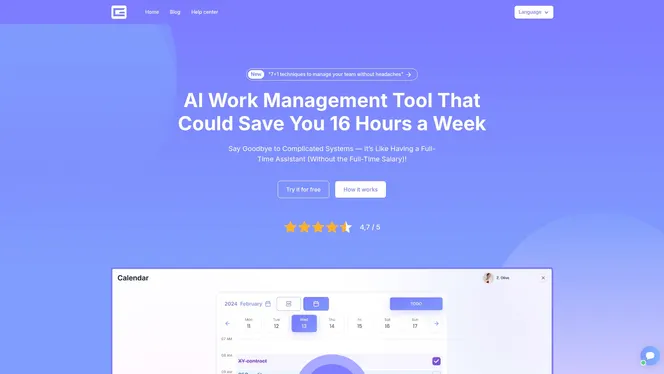
Gammatica for Founders gives team leaders real-time visibility into how their teams work together. You can track task progress, monitor communication patterns, and spot collaboration gaps before they become morale problems. The platform’s AI-driven insights help you connect the dots between your team building efforts and actual productivity outcomes. If you want to see how it works for your specific team setup, a Gammatica demo call walks you through the full feature set in under 30 minutes.
FAQ
What are team building ideas?
Team building ideas are structured activities designed to improve trust, communication, and collaboration within a group. They range from free icebreakers like Two Truths and a Lie to facilitated workshops like 3D Pen Art sessions.
How often should teams do team building activities?
Short, low-effort activities work best when run monthly rather than as a single annual event. Consistent, smaller sessions build stronger habits than one large retreat.
Do virtual team building activities actually work?
Yes. Digital platforms like Kahoot and Jackbox sustain engagement for remote teams when activities are designed specifically for online formats. Virtual coffee chats and trivia nights are proven formats for building remote rapport.
Why do team building activities fail?
Activities fail most often because leaders skip the debrief. Without connecting the experience to real work challenges, employees see the event as wasted time rather than a development opportunity.
How do you make team building inclusive for introverts?
Offering a variety of activity types and making participation voluntary removes the pressure that shuts introverts down. Written reflection formats and small-group activities give quieter team members equal space to contribute.