
TL;DR:
- An AI sales agent automates core sales functions like lead qualification and follow-up around the clock. It responds in under 60 seconds, providing a significant competitive advantage with speed and consistency. Proper configuration and training are crucial to ensure effective performance and maintain buyer trust.
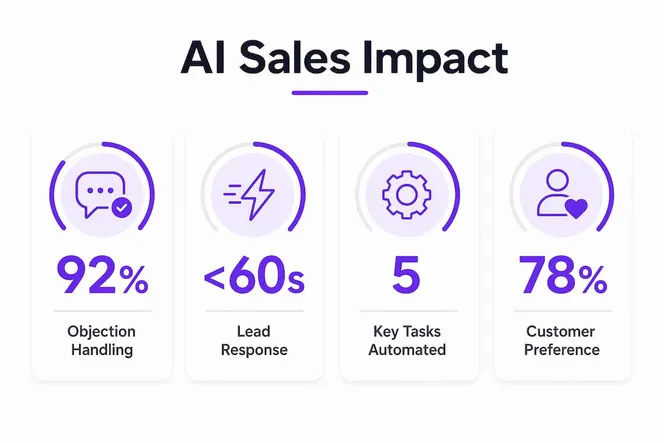
An AI sales agent is an intelligent software program that autonomously handles core sales functions, including lead qualification, meeting scheduling, and follow-up automation, around the clock without human intervention. The term “AI sales agent” is widely used, though the recognized industry term is conversational AI sales assistant or autonomous sales development representative (SDR). Both refer to the same category of machine learning sales agent technology. The speed advantage alone is striking: 78% of customers buy from the first vendor to respond, yet the average business takes up to 42 hours to reply. An AI sales agent closes that gap by responding in under 60 seconds, every time. For sales professionals and business leaders, that is not a minor efficiency gain. It is a structural competitive advantage.
What does an AI sales agent actually do for your pipeline?
The core value of an AI sales agent is speed combined with consistency. Human reps are excellent at building relationships and closing deals. They are not built to respond to every inbound lead at 2:00 AM on a Sunday. An AI sales assistant fills that gap without fatigue, error, or delay.
The efficiency numbers are hard to ignore. Sales reps lose about 14 hours weekly to manual data entry and CRM updates. That is 35% of a standard working week spent on tasks that generate zero revenue. An automated sales representative handles those tasks automatically, freeing your human reps to focus on conversations that actually close.
Here is where the conversion math gets interesting:
- Lead response time drops from hours to seconds, directly increasing the probability of contact and qualification.
- Lead qualification runs 24/7, so no inbound inquiry goes cold overnight.
- Meeting booking happens inside the same conversation, with calendar sync and confirmation sent automatically.
- Follow-up sequences trigger based on prospect behavior, not a rep’s memory.
- CRM updates log every interaction in real time, keeping your pipeline data accurate.
Cognitive AI agents achieve a 92% success rate on first attempts across complex discovery and objection-handling scenarios. That benchmark, drawn from 172 conversations, shows that well-configured agents are not just fast. They are effective.
Pro Tip: Map your top five repetitive sales tasks before deploying any AI-driven sales tool. Agents perform best when given a clear, bounded scope rather than an open-ended mandate.
How do AI sales agents work under the hood?
The technology behind a modern virtual sales agent combines several capabilities that work together. Understanding them helps you configure and trust the system.
1. Conversational AI with reasoning
Modern agents use large language models trained on sales conversations. They do not just match keywords. They understand context, handle objections, and adjust tone based on the prospect’s responses. This is what separates a genuine AI sales assistant from a basic chatbot.
2. CRM and system integration
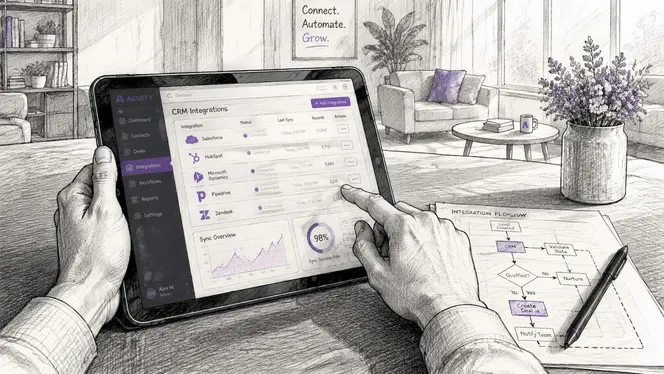
Integration with CRM platforms like HubSpot, Salesforce, and Pipedrive via APIs enables real-time data syncing and activity logging. Every call, chat, and email the agent handles gets recorded automatically. Your pipeline stays current without anyone touching a keyboard.
3. Multichannel operation
Some AI agents handle voice, chat, WhatsApp, email, and SMS from a single platform. That omnichannel reach means a prospect gets a consistent experience regardless of how they choose to engage. No channel falls through the cracks.
4. Customizable workflows and decision logic
Most enterprise-grade agents support visual logic canvases where you define routing rules, escalation triggers, and scripted decision trees. You can set the agent to qualify leads using your specific criteria, then hand off to a human rep at exactly the right moment.
5. Human-in-the-loop control
Managers can edit agent logic, routing, and escalation rules instantly without engineering support. This flexibility keeps the agent aligned with your current sales strategy, even as campaigns and offers change week to week.
Pro Tip: Build a “handoff trigger” into your agent from day one. Define the exact signals, such as a prospect mentioning budget, timeline, or a competitor, that should immediately route the conversation to a senior rep.
How do you implement an AI sales agent that actually works?
Deployment is where most teams stumble. The technology is not the hard part. The configuration is.
The success of an AI sales agent depends on its initial “grounding” process. Feed it verified objection responses, your actual pricing structure, and company-specific selling points. Agents trained on generic scripts deliver generic results, and buyers notice immediately.
Data hygiene and thorough agent training with company-specific scripts and pricing are the two most critical factors for success. A poorly configured agent does not just underperform. It actively damages buyer trust by sounding generic and uninformed.
Here are the practices that separate successful deployments from failed ones:
- Clean your CRM first. Agents pull from your existing data. Duplicate contacts, outdated records, and missing fields produce bad outputs.
- Write brand-specific scripts. Your agent should sound like your best rep, not a generic chatbot. Use your actual product language, common objections, and real customer questions.
- Set up a feedback loop. Disqualified leads are negative intelligence. Analyze why leads failed to qualify and use that data to refine the agent’s qualification logic continuously.
- Start narrow, then expand. Deploy the agent on one use case, such as inbound lead qualification, before adding outbound prospecting or proposal generation.
- Balance autonomous and assisted modes. The market distinguishes “side-by-side” agents that coach human reps in real time from fully autonomous SDRs. Enterprises that balance both approaches get the best return on investment.
Pro Tip: Run a 30-day pilot with a defined lead segment before full rollout. Track qualification rate, meeting book rate, and response time. Those three metrics tell you everything about agent performance.
Practical AI sales agent use cases and how Gammatica handles them
Real-world deployment looks different from the theory. The most effective AI-driven sales tools do not just automate tasks in isolation. They connect context across your entire workspace and suggest the right next action at the right moment.
Gammatica’s AI sales assistant is workspace-aware. It reads your full contact history, including every email, meeting note, proposal, and follow-up, and then recommends the best next step based on what has already happened. That is a meaningful difference from agents that operate without context.
| Use case | What the agent does | Business impact |
|---|---|---|
| Lead qualification | Asks discovery questions, scores leads, routes hot leads to reps | Faster pipeline entry, no cold leads |
| Proposal generation | Reads contact history, drafts a tailored proposal automatically | Hours saved per deal |
| Email creation | Writes personalized outreach based on prior interactions | Higher open and reply rates |
| Automatic follow-ups | Schedules and sends follow-ups based on prospect behavior | No deals lost to silence |
| Slideshow generation | Builds presentation decks from deal context and product data | Faster sales cycle close |
| Meeting scheduling | Books calls directly in the conversation with calendar sync | Zero scheduling back-and-forth |
Gammatica’s workspace-aware AI suggestions go beyond task automation. When a rep opens a contact record, the platform surfaces the next best action based on the full interaction history. That might be “generate a proposal,” “send a follow-up email,” or “schedule a check-in call.” The rep does not have to think about what comes next. The system already knows.
This approach directly improves pipeline velocity. Deals move faster when every rep always knows the right next step. AI-driven follow-up automation is one of the highest-leverage applications because follow-up is the task most likely to be delayed or forgotten under a heavy workload.
For business leaders, the reporting benefit is equally significant. Every AI-assisted action is logged, timestamped, and visible. You see exactly where deals stall, which reps are most active, and which lead sources convert best.
My honest take on where AI sales agents actually deliver
I have watched a lot of sales teams adopt AI tools with high expectations and mixed results. The pattern is consistent. Teams that treat an AI sales agent as a replacement for human judgment fail. Teams that treat it as a force multiplier succeed.
The agents that perform best are the ones given a clear, bounded job. Qualifying inbound leads, booking meetings, and sending follow-ups are tasks where speed and consistency matter more than nuance. Those are exactly the tasks where AI wins. Complex enterprise negotiations, relationship-building with key accounts, and creative problem-solving with a frustrated buyer still require a human.
The transparency point matters more than most leaders realize. Buyers are increasingly aware when they are talking to an AI. The teams that disclose this upfront and use the agent to handle the early, repetitive stages of the conversation actually build more trust, not less. The agent handles the grunt work. The human rep shows up for the conversation that matters.
My practical advice: do not skip the grounding process. I have seen teams deploy agents in a week and wonder why performance is poor. The agent is only as good as the knowledge you put into it. Spend the time upfront. Build in a feedback loop from disqualified leads. Review agent performance monthly and adjust the logic. The teams that do this see compounding returns. The teams that set it and forget it see compounding frustration.
The future of sales is not AI replacing reps. It is reps who use AI outperforming reps who do not. That gap is already visible, and it will widen.
— Viktor
How Gammatica puts AI sales automation to work for your team
Gammatica is built for sales professionals and business leaders who want AI that actually understands their pipeline, not just their inbox.
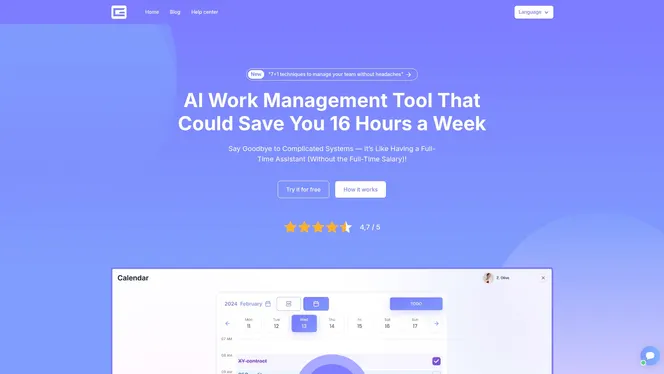
The platform’s workspace-aware AI reads every contact interaction and recommends the next best sales action automatically. Whether that is generating a proposal, drafting a follow-up email, or building a presentation deck, Gammatica surfaces the right move at the right time. It connects directly with your CRM, calendar, and communication tools, so your team spends less time managing tasks and more time closing deals. Gammatica claims users free up to 16 hours weekly through its automation features. You can see exactly how it works for your team by scheduling a live demo or exploring the AI automation capabilities in detail.
FAQ
What is an AI sales agent?
An AI sales agent is an autonomous software program that handles sales tasks like lead qualification, meeting booking, and follow-up automation without human intervention. It operates 24/7 and integrates with CRM systems to log every interaction automatically.
How fast does an AI sales agent respond to leads?
AI sales agents respond in under 60 seconds. The average business takes up to 42 hours to reply, and 78% of customers buy from the first vendor to respond, making speed a direct driver of conversion rates.
Can an AI sales agent handle objections?
Yes. Cognitive AI sales agents achieve a 92% success rate on first attempts in complex discovery and objection-handling scenarios, based on benchmarks across 172 conversations.
What tasks should I automate with an AI sales assistant?
The highest-value tasks to automate are inbound lead qualification, follow-up sequences, meeting scheduling, and CRM data entry. These are high-volume, repetitive tasks where AI lead generation tools deliver consistent results without rep fatigue.
How do I make sure my AI sales agent performs well?
Ground the agent thoroughly with your actual pricing, objection responses, and product specifics before launch. Clean your CRM data first, set up a feedback loop using disqualified lead data, and review agent performance monthly to refine its qualification logic.