TL;DR:
- Team building activities for 50 employees focus on shared challenges and formats that involve simultaneous participation. These activities improve collaboration, with game show-style events and outdoor challenges providing effective engagement. Proper planning, clear objectives, professional facilitation, and inclusive formats ensure success and meaningful team interactions.
Team building activities for 50 employees are structured experiences designed to improve collaboration and team dynamics through shared challenges and interactive formats. The industry term for this practice is “group experiential learning,” and it covers everything from outdoor obstacle courses to hybrid trivia events. 70% of organizations report measurable improvements in collaboration and productivity after structured workshops. That number tells you this is not a nice-to-have. At 50 people, the stakes are higher than with a small team. You need the right format, the right facilitation, and a clear objective before anyone steps into the room.
What are the most effective team building activities for 50 employees?
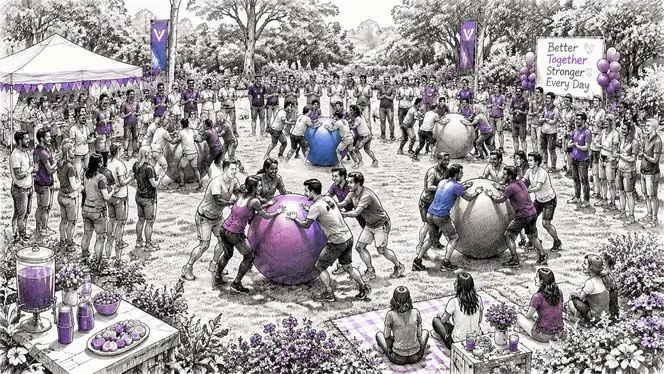
The format of the activity matters more than the activity itself at this scale. Formats that require simultaneous participation sustain energy and keep everyone engaged. Sequential turn-taking, where one person acts while 49 others watch, kills momentum fast.
Three formats consistently deliver results for groups of this size:
- Game show-style events. Think buzzer rounds, team trivia, and rapid-fire challenges. Every sub-team plays at the same time, so no one sits idle. Game show formats and rotating Olympic-style challenges run 45 minutes to 3 hours and cost $8–$40 per person for well-run sessions. That is a strong return for the engagement you get.
- Olympic-style rotating challenges. You divide 50 employees into sub-teams of 8–10. Each team rotates through stations, competing in timed tasks. This format works indoors or outdoors and scales without losing energy.
- Interactive workshops. Cooking classes, improv sessions, and escape room formats adapted for large groups all work well. These run 2–3 hours and create natural conversation between people who rarely interact day-to-day.
- Hybrid trivia and simultaneous digital challenges. If part of your team is remote, digital quiz platforms let everyone compete in real time. No one watches from the sidelines.
Pro Tip: Pick activities with rules simple enough to explain in under two minutes. If the facilitator needs 20 minutes to set up the game, you have already lost half the room.
The cost range for corporate team building ideas at this scale runs $8–$100 per person depending on complexity. A quiz night sits at the low end. An outdoor cooking competition with professional chefs sits at the high end. Budget accordingly, and match the format to your team’s culture, not just your budget.
How to plan and organize a successful team bonding event for 50 people
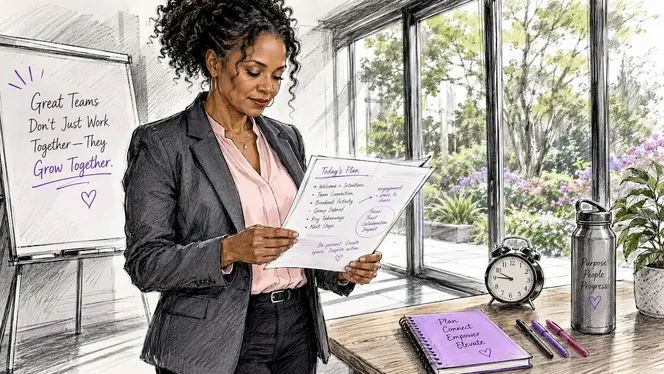
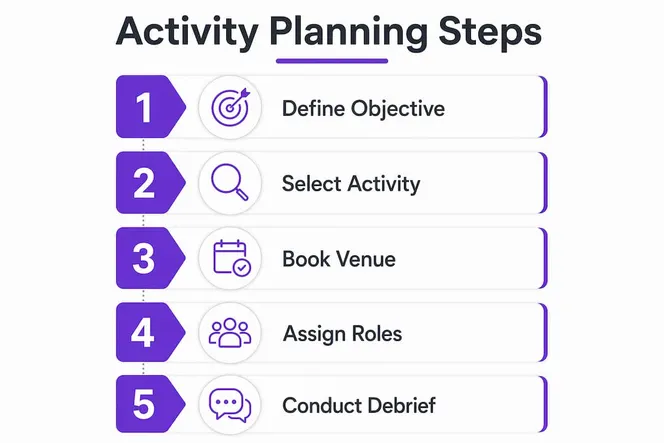
Planning a team bonding event for 50 people requires more lead time than most HR professionals expect. Here is a practical sequence that works:
- Set a clear objective first. Are you trying to break down silos between departments? Build trust after a reorg? Celebrate a milestone? The objective determines the format. A celebration calls for a fun group activity. A trust-building goal calls for a structured workshop with a debrief.
- Choose the venue early. A group of 50 needs a space that fits comfortably, has breakout areas for sub-teams, and handles catering logistics. Book the venue 6–8 weeks in advance. Popular venues fill up fast, especially on Fridays.
- Book your facilitator 4–6 weeks out. Professional facilitators are essential for groups of 50 or more. They manage pacing, handle the unexpected, and keep energy high across the full group. Volunteer facilitators from inside the company often struggle at this scale.
- Plan the schedule in 30-minute blocks. A 3-hour workshop for 50 people is the standard format. Build in a 15-minute buffer between activities. Groups of this size always take longer to transition than you plan for.
- Include a structured debrief. The ORCA debrief model (Observe, Reflect, Connect, Act) turns the experience into workplace improvement. Without a debrief, the lessons from the activity stay in the room.
Pro Tip: Send a one-page brief to all participants before the event. Explain the objective, the format, and what to wear or bring. Prepared participants engage faster and resist less.
Here is a quick reference for budgeting your event:
| Activity type | Cost per person | Typical duration |
|---|---|---|
| Interactive quiz or trivia | $8–$20 | 45–90 minutes |
| Workshop with facilitation | $40–$75 | 2–3 hours |
| Outdoor challenge or scavenger hunt | $20–$60 | 2–4 hours |
| Outdoor cooking or obstacle course | $60–$100 | 3–4 hours |
How do you keep all 50 employees actively participating?
Participation drops when people feel like spectators. Sequential turn-taking formats increase wait times and reduce energy across the group. The fix is designing for simultaneous action from the start.
Practical ways to keep everyone active:
- Break into sub-teams of 8–10. Smaller groups give everyone a visible role. No one can hide in a team of eight.
- Use timed rotations. Every 20–30 minutes, sub-teams switch stations or challenges. This prevents any single activity from dragging.
- Assign roles within sub-teams. Give each person a specific job: timekeeper, spokesperson, strategist. Defined roles prevent the two or three loudest people from dominating.
- Run hybrid events with parity. Remote and in-person participants need active roles simultaneously. Hybrid trivia works because everyone answers at the same time. Avoid formats where remote participants just watch a video feed of in-person activities.
- Use a professional facilitator to manage energy flow. Volunteer facilitators are often insufficient for 50+ participants. A professional reads the room and adjusts pacing in real time. Without that skill, disengagement can affect half the group within the first hour.
For teams that include remote workers, managing flexible team participation requires tools and formats that treat every participant as a first-class attendee, not an afterthought.
What outdoor team activities work best for 50 employees?
Outdoor activities for large teams deliver a specific benefit that indoor formats cannot fully replicate. Outdoor team building events produce a reported 30% increase in inter-office collaboration. Getting people out of the office environment removes hierarchy signals and creates space for genuine interaction.
The most effective outdoor formats for 50 employees:
| Activity | Energy level | Cost per person | Duration |
|---|---|---|---|
| Scavenger hunt (city or campus) | Medium | $20–$40 | 2–3 hours |
| Obstacle course | High | $40–$70 | 2–3 hours |
| Group kayaking or paddleboarding | Medium | $50–$80 | 2–4 hours |
| Outdoor cooking competition | Medium | $60–$100 | 3–4 hours |
| Olympic-style field games | High | $20–$50 | 2–4 hours |
Scavenger hunts work particularly well because they require problem-solving, navigation, and communication across the sub-team. They also scale easily. You can run a scavenger hunt for 50 people across a city block or a corporate campus without any special equipment.
Obstacle courses and Olympic-style field games generate the most visible energy, but they require physical ability. Always offer modified participation options so employees with mobility limitations can contribute in a meaningful role, such as team strategist or timekeeper.
Outdoor cooking competitions sit at the high end of the cost range, but they consistently earn the highest satisfaction scores. Food is a universal connector. When people cook together and then eat what they made, the shared experience sticks.
Logistics note: Book outdoor venues with a weather backup plan. A 50-person event with no indoor fallback is a serious risk, especially in spring or fall.
What I’ve learned from watching large group events succeed and fail
I have seen well-funded team building events fall completely flat, and I have seen low-budget quiz nights become the most talked-about event of the year. The difference is almost never the activity. It is the intentionality behind it.
The biggest mistake I see HR professionals make is choosing the activity before defining the objective. You book an escape room because it sounds fun, then realize on the day that your team of 50 cannot all participate at once, and half the group ends up waiting in a lobby for 45 minutes. That is not team building. That is organized frustration.
The second mistake is skipping the debrief. The ORCA model exists for a reason. Without a structured debrief, the insights from the activity evaporate by Monday morning. A 20-minute debrief at the end of a 3-hour event is not optional. It is where the real value gets locked in.
The third mistake is underestimating facilitation. I have watched volunteer facilitators lose a room of 50 people in under 30 minutes. Professional facilitators manage energy flow the way a conductor manages an orchestra. They know when to speed up, when to pause, and how to re-engage a distracted group. For events at this scale, professional event staffing is worth every dollar.
My honest advice: treat team building as a practice field, not a party. Strip away titles, mix departments deliberately, and pick formats where the quietest person in the room has as much influence as the loudest. That is when you see real team dynamics emerge.
— Viktor
How Gammatica helps HR teams plan and coordinate at scale
Organizing a team bonding event for 50 people involves a lot of moving parts: venue logistics, scheduling, task assignments, follow-up actions, and tracking who confirmed attendance. Most of that coordination happens across email threads and spreadsheets, which is where things fall through the cracks.
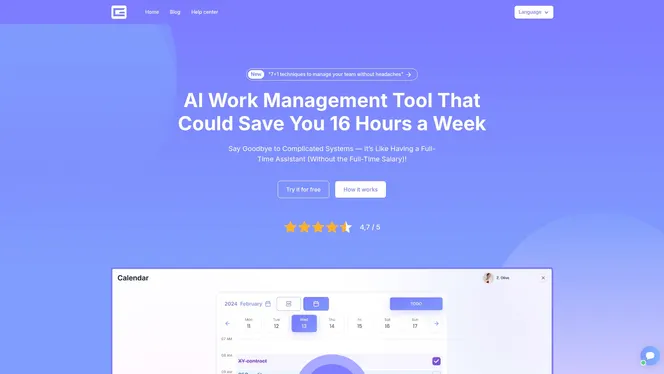
Gammatica gives HR professionals and team leaders a single place to manage all of it. The platform’s task management, calendar coordination, and checklist tools keep every step of your event planning visible and on track. Gammatica claims users free up to 16 hours weekly by replacing scattered workflows with organized, automated processes. If you are planning quarterly team workshops or annual retreats, that time adds up fast. You can see how Gammatica works for founders and team leaders or book a demo call to see the platform in action for your specific planning needs.
FAQ
What is the ideal format for team building with 50 employees?
Game show-style events, Olympic-style rotating challenges, and interactive workshops with sub-teams of 8–10 people work best. These formats require simultaneous participation, which keeps energy high across the full group.
How much does a team building event for 50 people cost?
Costs range from $8 to $100 per person depending on the activity and facilitation level. A facilitated workshop typically runs $40–$75 per person, while outdoor cooking or obstacle courses reach the higher end.
How far in advance should you book a team building event for 50 people?
Book your venue 6–8 weeks in advance and your facilitator 4–6 weeks out. Popular venues and professional facilitators fill up quickly, especially for Friday or end-of-quarter dates.
Do outdoor activities actually improve team collaboration?
Yes. Outdoor team building events produce a 30% increase in inter-office collaboration. Removing employees from the office environment reduces hierarchy signals and creates conditions for genuine connection.
How do you include remote employees in a team building event?
Use formats with simultaneous participation, such as hybrid trivia or digital challenge platforms. Remote and in-person participants need active roles at the same time to avoid a two-tier experience where remote employees feel like observers.