TL;DR:
- Project automation involves using technology to handle repeatable, rule-based processes without manual effort.
- Starting with simple, error-prone tasks that are frequent ensures quick wins and measurable improvements.
- Implement guardrails and continuous oversight to handle edge cases and maintain process integrity over time.
Most project teams don’t discover which tasks truly benefit from automation until a missed deadline, a duplicated report, or a billing error makes the gap painfully obvious. By that point, the damage is already done. “Project automation” sounds like a silver bullet, but the reality is far more focused and, honestly, far more useful than the buzzword suggests. This guide will clear up the most common misconceptions, give you a practical definition you can actually work with, and walk you through a step-by-step approach to implementing automation in a way that saves real time and protects process quality.
Key Takeaways
| Point | Details |
|---|---|
| Project automation defined | Automation means using technology to handle repeatable, rule-based project tasks efficiently. |
| Choose tasks wisely | Prioritize automating error-prone and routine steps for the fastest returns. |
| Start small, measure results | Pilot automation in manageable areas and track cycle time, errors, and resource use for proof. |
| Guardrails protect processes | Build review logic to catch edge cases, ensuring automation accelerates work without hidden risks. |
| Iterative improvement | Continual monitoring and adjustment are key to long-term automation success. |
What does project automation actually mean?
Let’s start with what project automation is not. It is not a single magical tool that you plug in and watch transform your entire operation overnight. It is not about replacing your team or outsourcing judgment. And it is definitely not something reserved for large enterprises with dedicated IT departments.
Project automation is the use of technology to execute repeatable, rule-based processes without requiring manual effort every single time. Think of it as building a reliable system that handles the predictable parts of your workflow so your people can focus on the parts that actually need human thinking.
Here are some real-world examples of where project automation shows up in everyday business operations:
- Task assignment based on a project phase trigger (e.g., when a design is approved, a developer task is automatically created)
- Status update notifications sent to stakeholders when a milestone is reached
- Invoice generation once a project hits a billing checkpoint
- Meeting scheduling based on team calendar availability
- Report aggregation pulling data from multiple tools into a single weekly summary
These are not exotic use cases. They happen in almost every mid-sized organization, usually manually, and usually consuming way more time than they should.
“A practical methodology is to start by identifying which steps are truly automatable (repeatable, rule-based, and error-prone), then implement end-to-end workflow automation incrementally (pilot first) and measure results.” — Wrike, IBM, monday.com Best Practices
The primary benefits of project automation are significant and measurable. Efficiency improves because tasks that used to take 30 minutes now take 30 seconds. Error rates drop because rule-based systems do not forget steps or misread instructions. Resource utilization gets better because your team stops burning high-skill hours on low-skill work.
One thing worth noting: automation does not eliminate process complexity. It channels that complexity into a structured, predictable path. When your team is freed from repetitive tasks, they bring more energy and focus to strategic decisions, creative problem-solving, and client relationships. That is where the real value accumulates over time.
The building blocks of project automation
Knowing automation exists is one thing. Knowing which tasks to automate first is where most teams get stuck. The good news is there is a clear and practical framework for identifying the right opportunities.
Three criteria define a task worth automating:
- Repeatable: The task happens on a regular basis, following the same pattern each time. If you do it more than five times a week, it belongs on the automation shortlist.
- Rule-based: The task follows a clear set of conditions and outcomes. “If X happens, then do Y.” No ambiguity, no subjective judgment required.
- Error-prone: The task has a history of mistakes when done manually, often because of its repetitive nature or because it relies on someone remembering to do it at exactly the right moment.
As business efficiency specialists point out, identifying these three qualities in your current workflows is the fastest way to build an automation roadmap that delivers early results. Managers are advised to automate repeatable routines, workflow-following tasks, and error-prone tasks as the first priority.
Here is a comparison of how the same project steps look in manual versus automated environments:
| Project step | Manual process | Automated process |
|---|---|---|
| Task assignment | Project manager manually assigns tasks after each phase | System triggers assignment when phase milestone is marked complete |
| Status updates | Team members email or message updates individually | Automated notification sent to stakeholders when status changes |
| Time tracking | Employees fill out weekly timesheets from memory | Time is logged automatically when tasks are opened and closed |
| Report creation | Manager compiles data from three tools every Friday | Weekly report generated and distributed automatically |
| Billing triggers | Finance team checks project status to know when to invoice | Invoice is generated when project milestone is marked complete |
The difference is stark. And the time savings add up fast. Even if automating a single step saves 20 minutes per day per person, a team of ten saves over 30 hours per week across the organization.

Pro Tip: Always start your automation pilot with the easiest-to-automate steps in your workflow. These are usually status notifications or task triggers because they are simple, low-risk, and deliver immediate visible results. Early wins build team confidence and organizational buy-in for bigger automation initiatives down the road.
When choosing your automation platform, look for tools that let you define trigger conditions visually, without writing code. The best platforms let business users (not just developers) build and modify automation rules. This keeps your team in control and reduces the bottleneck of waiting for IT support every time you need to adjust a workflow.
How to implement project automation in your organization
You have identified your candidates. Now it is time to roll out automation in a way that is measured, trackable, and scalable. Here is a proven roadmap.
-
Document your current process in detail. Before you automate anything, map out exactly how the task is done today. Who does it, when, how long it takes, and where errors typically occur. This baseline is critical because it gives you something to compare results against.
-
Select one process for your pilot. Pick something small and clearly defined. A good first pilot might be automating project status notifications or setting up automatic task creation when a project phase changes. Avoid starting with anything that touches financial data or external clients until you have built confidence in your setup.
-
Set your success metrics before you launch. IBM recommends starting small based on automation maturity and setting measurable goals, while monday.com emphasizes baseline measurements and ROI metrics such as cycle time and resource utilization, then expanding iteratively. Define what “success” looks like before you flip the switch, not after.
-
Run the pilot for two to four weeks. Give the automated process enough time to encounter real-world variation. Monitor it actively. Do not assume it is working perfectly just because it is running.
-
Measure results and document lessons learned. Compare your after-automation metrics to your baseline. Then refine the workflow based on what you learned before expanding to additional processes.
Here is an example of what those metrics might look like in practice:
| Metric | Before automation | After automation | Improvement |
|---|---|---|---|
| Task assignment time | 45 minutes per day | 5 minutes per day | 89% reduction |
| Status report errors | 8 per month | 1 per month | 87.5% reduction |
| Report generation time | 3 hours per week | 20 minutes per week | 89% reduction |
| Resource utilization | 61% of capacity | 78% of capacity | 28% increase |
| Cycle time per project | 22 days average | 17 days average | 23% reduction |

These numbers are illustrative, but they reflect realistic outcomes reported by teams that approach automation methodically rather than impulsively. The key is that you need the baseline data to make the comparison meaningful.
Pro Tip: After your first successful pilot, resist the urge to automate everything at once. Scale one process at a time, validate each step, and train your team incrementally. Automation that grows too fast becomes impossible to audit, and that is when processes start breaking in ways you cannot easily diagnose.
Managing edge cases and maintaining process integrity
Here is the part most automation guides skip, and it is the part that matters most when things go wrong. Edge cases are the scenarios your automation rules were not designed to handle. They are the exceptions, the unusual situations, the one-off requests that do not fit neatly into your defined conditions.
Why do edge cases matter so much? Because when your automation system encounters a scenario it was not built for, it does not stop and ask for help. It either does nothing or, worse, does the wrong thing silently. Silent errors are especially dangerous because they can propagate through your workflow before anyone notices.
Common risks in automated project management include:
- Duplicate task creation when a trigger fires more than once due to a system glitch
- Missed escalations because an exception condition was not included in the automation rules
- Incorrect status changes when a task is reassigned mid-process and the automation logic does not account for the new owner
- Billing errors when a milestone trigger fires on an incomplete deliverable
- Data integrity issues when automated reports pull from a cached or outdated data source
“Edge cases are where trust is won or lost; implement guardrails (manual review buckets, lock/unlock override logic, validation loops) so automation accelerates routine work without silently corrupting processes.” — Edge Case Control Paradox
The solution is not to avoid automation. It is to build guardrails into your system from day one. Guardrails include manual review buckets (where edge case items are routed to a human before proceeding), override logic (which allows a manager to pause or reverse an automated action), and validation workflows (which check that conditions are truly met before the automation fires).
As IT support specialists who work with business automation regularly note, the organizations that maintain the most trust in their automated systems are the ones that invest in exception handling from the beginning, not as an afterthought.
Pro Tip: Before going live with any automation, deliberately test it against your most unusual scenarios. Ask your team, “What is the weirdest thing that could happen with this process?” Run that scenario through your automation and see what happens. If the result is wrong or unclear, build a guardrail before you launch.
Automation integrity is not a set-it-and-forget-it concern. Schedule a monthly review of your automation logs to look for unexpected patterns, failed triggers, or suspiciously high error volumes. This habit alone will catch problems before they become incidents.
Why project automation isn’t a one-size-fits-all solution
Here is an opinion you will not hear from vendors trying to sell you automation software: the tool matters far less than the thinking behind it.
We have seen organizations invest in premium automation platforms and get almost nothing out of them because they never took the time to properly map their processes first. We have also seen small teams accomplish remarkable efficiency gains with simple, low-cost tools because they approached automation with discipline and intention.
The real risk with automation is not technical failure. It is organizational laziness. Teams assume that once a workflow is automated, it is handled. But processes change. Business conditions shift. A rule that made perfect sense six months ago might now produce incorrect outputs because a key assumption is no longer true.
Successful automation is iterative and collaborative. It requires your operations people, your project managers, and sometimes your frontline team members to stay involved in reviewing, refining, and improving workflows over time. The teams that treat automation as a living system tend to build something genuinely powerful. The ones that treat it as a one-time project often find themselves cleaning up avoidable messes a year later.
Customization and ongoing oversight are not optional extras. They are the foundation that determines whether your automation investment delivers lasting value or just creates a new category of problems.
Explore automation with Gammatica
Ready to move from theory to action? Gammatica is built for exactly this kind of transition.
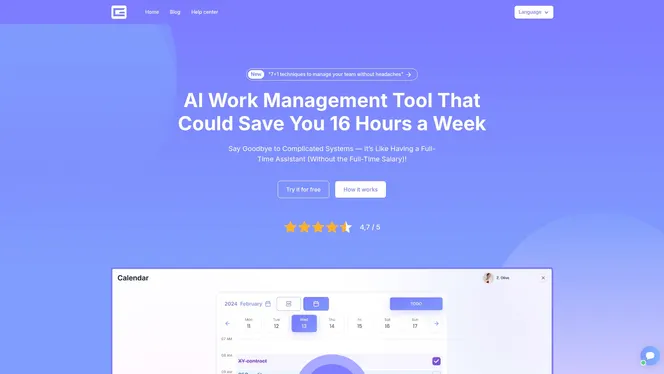
Whether you are a founder building processes from scratch or a sales team looking to eliminate repetitive follow-up work, Gammatica’s platform gives you the tools to automate, track, and refine your project workflows without needing a developer on standby. Explore how team productivity insights can shape your automation strategy, discover AI-driven project automation that adapts to your specific workflows, or check out sales automation tools designed to keep your pipeline moving. Gammatica helps you work smarter, not just faster.
Frequently asked questions
How do I decide which project tasks to automate first?
Start with repeatable, rule-based, and error-prone tasks as these bring the highest ROI and the most measurable early improvements, giving your team confidence to expand automation further.
What metrics should I use to measure the impact of automation?
Key metrics include cycle time, error rate, and resource utilization, all of which provide measurable baselines to compare your performance before and after automation is implemented.
How can I prevent automation mistakes from affecting important processes?
Implement guardrails like manual review buckets and validation loops to handle edge cases before they cause silent errors or process failures that are difficult to trace and correct.
Is automation only for IT-heavy projects, or can it help business teams too?
Automation helps any team with repeatable, rule-driven workflows and is not limited to IT projects. Marketing, HR, finance, and operations teams all benefit from well-designed automation.