Many project managers still rely on static calendars or offline tools, unaware that these outdated methods silently drain team productivity through miscommunication and scheduling conflicts. Teams can lose hours every week coordinating schedules by hand. Online planning calendars eliminate these inefficiencies by providing real-time synchronization, automated notifications, and seamless integration with your existing project management stack. This guide reveals how to select, implement, and optimize an online planning calendar that transforms your team’s coordination and reclaims valuable working hours.
Key takeaways
| Point | Details |
|---|---|
| Real-time collaboration | Online planning calendars synchronize instantly across all team members, eliminating outdated schedules and conflicting appointments. |
| Integration capabilities | The best tools connect seamlessly with email, messaging platforms, and project management software to centralize workflows. |
| Implementation strategy | Successful adoption requires clear usage policies, comprehensive training, and regular feedback loops to refine calendar practices. |
| Tool selection criteria | Prioritize platforms offering mobile access, customizable views, robust permissions, and features matching your team size and workflow. |
Why traditional calendars fall short for team planning
Traditional calendars create invisible productivity drains in mid-sized companies. When your team relies on offline tools or individual calendar apps without synchronization, every schedule change requires manual communication. This multiplies administrative work and creates gaps where critical updates never reach everyone.

Traditional calendars do not support real-time updates, leading to outdated schedules and confusion across departments. Your project manager updates a deadline, but three team members still work toward the old date because their calendars never refreshed. These misalignments cascade into missed deliverables and frustrated clients.
Manual calendar maintenance introduces human error at every step. Someone forgets to forward a meeting change, another person misreads an email thread, and suddenly your quarterly review happens without half the stakeholders. The administrative burden alone consumes hours weekly that could drive actual project progress.
Remote and hybrid teams face even steeper obstacles with traditional tools. When calendars live in different systems or physical planners, visibility vanishes. You cannot see who’s available, what resources are committed, or where scheduling conflicts hide. This opacity forces constant back-and-forth messages just to find a single meeting slot.
Key limitations include:
- No automated conflict detection across team members
- Manual entry duplicates effort and introduces transcription errors
- Zero integration with communication platforms or project boards
- Limited mobile access restricts updates to desktop environments
- Absence of permission controls exposes sensitive scheduling data
“The hidden cost of disconnected calendars isn’t just the time spent coordinating schedules. It’s the strategic opportunities missed because teams lack visibility into collective availability and resource allocation.”
These friction points compound as teams grow. What works for five people becomes unmanageable at twenty. Traditional calendars simply cannot scale with your operational complexity, forcing you to choose between productivity and growth.
Key features to look for in an online planning calendar
Selecting the right online planning calendar requires evaluating specific capabilities that directly impact team coordination. Not all tools deliver equal value, and choosing poorly means investing time in a platform that creates new frustrations instead of solving existing ones.
Real-time synchronization stands as the foundational requirement. When someone updates an event, every team member sees the change instantly across all devices. This eliminates the version control nightmare plaguing traditional calendars. Multi-user access with granular permissions lets you control who views, edits, or manages different calendar layers without exposing confidential scheduling information.

Cross-platform compatibility ensures your calendar works everywhere your team does. Desktop applications, mobile apps, and web interfaces should offer consistent functionality. A project manager checking availability from their phone needs the same data accuracy as someone planning from their office workstation. Inconsistent experiences between platforms undermine adoption and trust.
Integration with communication and project management platforms significantly enhances calendar effectiveness by centralizing workflows. Your calendar should connect with email systems, messaging apps like Slack or Teams, and project boards such as Asana or Trello. These integrations eliminate context switching and ensure scheduling information flows automatically to where teams already work.
Customizable views accommodate different planning horizons and preferences. Some team members need daily granularity while others plan monthly or quarterly. Color coding, category filters, and multiple calendar overlays help users focus on relevant information without drowning in visual noise. Notification settings must balance keeping people informed with avoiding alert fatigue.
Robust security features protect sensitive business information. Look for:
- Role-based access controls limiting who can view or modify calendars
- Encryption for data in transit and at rest
- Audit logs tracking changes and access patterns
- Compliance certifications relevant to your industry
- Single sign-on integration with your identity management system
Pro Tip: Test user adoption with small pilot teams before full rollout to troubleshoot issues early and identify unexpected workflow conflicts that only surface during real-world use.
Recurring event management with exception handling saves massive time for regular meetings. Your tool should handle complex patterns like “every second Tuesday except holidays” without manual calendar gymnastics. Bulk operations for updating multiple events simultaneously prevent repetitive clicking when schedules shift.
Resource booking capabilities extend calendar utility beyond time slots. Meeting rooms, equipment, shared vehicles, and other constrained assets need scheduling too. Integrated resource management prevents double-booking and gives visibility into utilization patterns that inform capacity planning.
Comparing popular online planning calendar options for mid-sized teams
The online calendar market offers numerous solutions, each with distinct strengths matching different organizational needs. Understanding these trade-offs helps you select a platform aligned with your team’s specific workflow patterns and integration requirements.
Different tools suit different team sizes, workflows, and integration needs, making careful evaluation essential before committing to a platform. What works brilliantly for a marketing agency might frustrate an engineering team with different collaboration patterns.
| Tool | Key Strengths | Pricing Tier | Mobile Experience | Best For |
|---|---|---|---|---|
| Google Calendar | Seamless Gmail integration, excellent sharing, robust API | Free to $12/user/month | Native iOS/Android apps | Teams already using Google Workspace |
| Microsoft Outlook | Deep Office 365 integration, powerful scheduling assistant | $6 to $22/user/month | Full-featured mobile apps | Organizations standardized on Microsoft ecosystem |
| Asana Calendar | Native project timeline view, task dependencies visible | Free to $24.99/user/month | Good mobile access | Project-focused teams needing task-calendar integration |
| Monday.com | Highly visual, customizable workflows, automation recipes | $8 to $16/user/month | Strong mobile functionality | Teams wanting visual project boards with calendar views |
| Gammatica | AI-driven scheduling, comprehensive project management, CRM integration | Custom pricing | Full mobile support | Mid-sized companies seeking all-in-one productivity platform |
Google Calendar excels for teams already invested in the Google ecosystem. Its sharing capabilities make cross-team coordination effortless, and the free tier provides surprising functionality. However, project management features remain basic, requiring third-party integrations for advanced workflow needs.
Microsoft Outlook Calendar delivers enterprise-grade scheduling with sophisticated features like automatic meeting room booking and scheduling assistant that finds optimal times across attendees. The learning curve steeper than simpler tools, but Office 365 integration creates powerful workflows for organizations already paying for Microsoft licenses.
Asana Calendar transforms task lists into timeline views, making dependencies and deadlines visible at a glance. This project-centric approach suits teams managing complex deliverables with multiple stakeholders. The calendar view complements rather than replaces traditional project boards, requiring mental model adjustment for users expecting pure scheduling tools.
Monday.com offers extreme customization through its visual workflow builder. You can create calendar views tailored precisely to your processes, though this flexibility demands upfront configuration time. Automation recipes reduce repetitive scheduling tasks, and the platform scales well as teams grow.
Gammatica distinguishes itself by combining calendar coordination with comprehensive project management, CRM, and AI-driven automation. The platform reduces administrative overhead by suggesting optimal scheduling based on team patterns and project priorities. For mid-sized companies wanting unified visibility across projects, customer relationships, and team availability, Gammatica eliminates tool sprawl while maintaining specialized functionality.
Pricing structures vary significantly. Free tiers work for small teams with basic needs, but advanced features like resource booking, detailed analytics, and priority support require paid plans. Calculate total cost including per-user fees, integration add-ons, and potential training expenses when comparing options.
Implementing your online planning calendar: best practices and common pitfalls
Successful calendar implementation requires more than selecting the right tool. How you introduce and maintain the system determines whether it becomes an indispensable productivity asset or another abandoned software investment gathering digital dust.
Start with a clear implementation plan that includes training and consistent usage policies to drive success across your organization. Begin by defining calendar ownership, update responsibilities, and escalation procedures for scheduling conflicts. Without these guardrails, your calendar devolves into chaos as different team members apply inconsistent practices.
Follow this launch sequence:
- Designate calendar administrators with authority to set standards and resolve disputes
- Migrate existing schedules systematically, validating data accuracy before going live
- Conduct hands-on training sessions covering core features and your specific usage policies
- Establish naming conventions for events, color coding schemes, and required information fields
- Create quick reference guides addressing common tasks and troubleshooting scenarios
- Schedule a soft launch period where the new calendar runs parallel to existing systems
- Gather feedback actively and adjust configurations based on real usage patterns
- Sunset old scheduling methods completely once the new system proves stable
Training determines adoption rates more than any feature set. Schedule interactive workshops where team members practice creating events, managing conflicts, and using integrations with tools they already know. Record sessions for asynchronous learning and onboarding new hires. Designate power users in each department who can provide peer support and champion best practices.
Monitor usage metrics to identify adoption gaps early. Which team members rarely update their calendars? Where do scheduling conflicts cluster? Usage analytics reveal whether people actually leverage the tool or continue working around it. Address resistance promptly through targeted coaching rather than letting workarounds become entrenched habits.
Common pitfalls sabotage even well-planned implementations. Overcomplicating the initial setup with every possible feature creates cognitive overload. Start with core scheduling functionality, then gradually introduce advanced capabilities as users gain confidence. Trying to replicate every nuance of your old system in the new tool often imports inefficiencies you should eliminate.
Lack of enforcement undermines calendar reliability. When some team members ignore the system, others lose trust and revert to manual coordination. Leadership must model consistent usage and hold people accountable for maintaining accurate availability. Make calendar accuracy a performance expectation, not an optional courtesy.
Pro Tip: Set recurring review meetings to adjust calendar settings based on evolving team needs and capture lessons learned as your usage patterns mature over the first six months.
Neglecting mobile experience frustrates field teams and remote workers. Test calendar functionality thoroughly on phones and tablets, ensuring critical features work smoothly on smaller screens. If your implementation prioritizes desktop users, mobile workers will create shadow systems that fragment your scheduling data.
Integration failures create data silos that defeat the calendar’s purpose. Verify that connections between your calendar and email, project management, and communication tools work reliably. Broken integrations force manual data entry that reintroduces the inefficiencies you sought to eliminate.
Enhance your team’s productivity with Gammatica
Online planning calendars become exponentially more powerful when integrated into a comprehensive productivity platform. Gammatica combines intelligent calendar coordination with project management, CRM, and workflow automation to give mid-sized teams unified visibility across all operational dimensions.
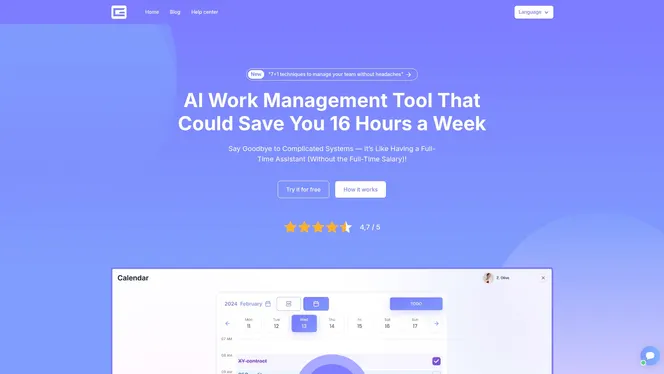
Our AI-driven scheduling suggests optimal meeting times based on team workload, project deadlines, and historical patterns, eliminating the endless email chains that waste hours weekly. Calendar coordination flows seamlessly with task management, customer journeys, and team collaboration features, ensuring everyone stays aligned without switching between disconnected tools.
Gammatica for founders delivers the operational command center growing companies need to scale efficiently. Gammatica sales teams leverage integrated calendaring with CRM to never miss follow-ups or double-book client meetings. Discover how Gammatica can reclaim hours every week for your team while improving coordination and reducing administrative friction.
FAQ
What is an online planning calendar and why is it important?
An online planning calendar is a cloud-based scheduling tool that enables real-time collaboration, automatic synchronization across devices, and integration with communication and project management platforms. Unlike traditional calendars, it updates instantly when anyone makes changes, ensuring all team members see current information. This eliminates scheduling conflicts, reduces administrative overhead, and improves visibility into team availability and resource allocation. For mid-sized companies coordinating multiple projects and stakeholders, online planning calendars transform chaotic manual scheduling into streamlined workflows.
How do I choose the best online calendar for my team?
Prioritize tools offering real-time synchronization, robust integration with your existing software stack, and mobile experiences matching desktop functionality. Evaluate whether the platform scales with your team size and supports your specific workflow patterns, whether project-focused, client-facing, or resource-intensive. Take advantage of free trials to test actual usage with representative team members before committing. Gather feedback on usability, feature gaps, and integration quality to ensure the tool fits your operational reality, not just marketing promises.
What are common mistakes to avoid when implementing an online planning calendar?
Insufficient training and unclear usage policies undermine adoption, causing team members to revert to old scheduling methods or apply inconsistent practices. Avoid overcomplicating initial setup with every advanced feature, which creates cognitive overload and resistance. Ensure leadership models consistent calendar usage and holds people accountable for maintaining accurate availability. Neglecting regular reviews means you miss opportunities to refine settings as team needs evolve. Finally, failing to verify integration reliability creates data silos that defeat the calendar’s core purpose of centralizing scheduling information.
Can online planning calendars integrate with project management tools?
Most modern online planning calendars offer robust integration capabilities with popular project management platforms like Asana, Trello, Monday.com, and comprehensive solutions like Gammatica. These integrations automatically sync project deadlines, milestone dates, and task assignments with calendar views, eliminating manual duplication. When someone updates a project timeline, the calendar reflects changes instantly, keeping scheduling and project data aligned. Look for platforms with native integrations or API access enabling custom connections to your specific tool stack for maximum workflow efficiency.
How do online calendars improve remote team coordination?
Online calendars provide universal visibility into team availability regardless of physical location, time zone, or device. Remote workers see the same real-time information as office-based colleagues, eliminating the communication delays that plague distributed teams. Automated notifications ensure everyone receives schedule updates without relying on email chains that get missed or buried. Integration with video conferencing tools like Zoom or Google Meet enables one-click meeting joins directly from calendar events. This seamless coordination reduces the friction remote teams face when trying to align schedules across different locations and working hours.