TL;DR:
- An effective elevator pitch includes a hook, problem, solution, proof, and call to action within 30 to 60 seconds.
- Personalization and storytelling techniques often outperform traditional scripted pitches in memorable impact.
- Practice, feedback, and flexibility are essential to refining delivery and increasing confidence.
You have less than 60 seconds to make someone want to know more about you. That window closes fast, and without a sharp, focused pitch, the moment is gone. Whether you’re working a conference room, a virtual networking call, or a chance hallway conversation, what you say in that first minute can either open a door or quietly close it. This article gives you real elevator pitch examples, a clear framework for building your own, and a way to match your pitch style to the right situation. No theory without practice here. Let’s get into the tools you can actually use.
Key Takeaways
| Point | Details |
|---|---|
| Essential pitch structure | Use a hook, pinpoint the problem, provide your solution, and end with a clear call to action. |
| Personalization works | Tailoring your pitch for the listener or industry increases impact and recall. |
| Low success rates | Studies show that under 3 percent of pitches succeed, so refining delivery is crucial. |
| Practice boosts confidence | Repeating your pitch and seeking feedback helps you sound more authentic and compelling. |
What makes an elevator pitch effective?
A great elevator pitch is not just a rehearsed speech. It’s a structured conversation starter that does five specific jobs in under a minute. When each part is working, your pitch feels natural, confident, and relevant, no matter the setting.
The one-minute pitch framework from Harvard Innovation Labs breaks it down clearly: a strong pitch includes a hook (5 to 10 seconds), a quantified problem, your unique solution, proof or traction, and a call to action, all within 30 to 60 seconds total.
Here’s what each component does for you:
- Hook: Grabs attention immediately. Use a surprising stat, a bold claim, or a relatable frustration.
- Problem: Names the pain your audience recognizes. Keep it specific, not vague.
- Solution: States what you do and why it’s different. One clear sentence is enough.
- Proof: Gives credibility fast. A number, a client win, or a measurable result works best.
- Call to action: Tells the listener what to do next. A meeting request, a card exchange, or a follow-up question.
Clarity matters more than cleverness. If someone walks away confused, your pitch failed even if it sounded impressive. Relevance matters too. The same pitch you use at a tech conference should sound different from the one you use at a B2B sales summit.
“The best pitches don’t just inform. They make the listener feel like they’ve been understood.”
Pro Tip: Build three versions of your pitch: a 15-second version for casual introductions, a 30-second version for networking events, and a 60-second version for formal sales or investor settings. Adapt based on context, not just time.
Classic elevator pitch examples for business networking
Knowing the structure is one thing. Seeing it in action is where the real learning happens. Below are three tested pitch scripts, each one annotated to show why it works.
-
Professional networking (30-second intro) “Hi, I’m Sarah. I lead sales operations at a mid-size logistics firm. We help regional distributors cut delivery errors by 40% using automated tracking. I’m here looking to connect with supply chain leaders who are dealing with last-mile headaches. Would love to trade notes if that sounds familiar.” Why it works: Specific role, concrete result, clear audience, and an open-ended invitation to continue.
-
Product or service pitch (sales introduction) “We build workflow software for marketing teams that are drowning in manual reporting. Our clients save an average of 8 hours per week per person and see a 30% faster campaign turnaround. If your team is spending more time building decks than running campaigns, we should talk.” Why it works: Quantified pain, measurable outcome, and a direct challenge that resonates emotionally.
-
Career transition or candidate pitch “I spent 10 years in financial audit and pivoted into operations consulting two years ago. I now help finance teams restructure their close process so month-end takes days, not weeks. I’m actively exploring roles at growth-stage companies where this kind of efficiency work matters.” Why it works: Shows a career story, delivers a clear value statement, and signals intentionality.
Studies on VC pitch effectiveness data show that pitch hit rates in venture capital settings fall below 3%, but pitching consistently builds entrepreneurial self-efficacy and confidence over time.
Pro Tip: After delivering your pitch, pause. Silence invites the other person to respond. Rushing to fill the gap signals nervousness and undercuts your credibility.
“Personalization is the difference between a pitch that lands and one that gets politely forgotten.”
Comparing pitch styles: Traditional, story-driven, and AI-ready
Not every pitch should follow the same format. The setting, the audience, and your goals all shape which style will resonate most. Here’s a clear look at the three dominant pitch styles in use today.

| Pitch style | Structure | Best for | Delivery tone |
|---|---|---|---|
| Traditional | Hook, Problem, Solution, Proof, CTA | Investor meetings, formal sales | Confident, direct |
| Story-driven | Narrative arc, emotional hook, resolution | Brand pitches, creative fields | Warm, conversational |
| AI-ready | Keyword-optimized, structured for digital/virtual contexts | LinkedIn outreach, AI-assisted networking | Concise, scannable |
Some experts argue the traditional approach is losing relevance. The pitfalls of traditional elevator pitches are well documented, with Forbes noting that formulaic scripts can actually cost you opportunities by sounding rehearsed and generic. The argument is that memorable brand stories outperform rigid formulas.
Here’s how to pick the right style for your situation:
- Traditional: Use when you need to be taken seriously fast, especially with investors or senior buyers.
- Story-driven: Use when you want to build a human connection, especially in creative, nonprofit, or relationship-led sales contexts.
- AI-ready: Use when your first point of contact is digital, whether through LinkedIn, an email introduction, or an AI-powered networking platform.
The stat worth noting: with VC pitch hit rates below 3%, the style of delivery matters less than relevance and personalization. Choose the style that fits your listener, not the one you’re most comfortable with.
Situational elevator pitch templates for different industries
One template does not fit all industries. The words, tone, and proof points that resonate with a nonprofit director look very different from what moves a SaaS buyer. Below are fill-in-the-blank templates mapped to five common settings.
| Industry | Template focus | Best use case |
|---|---|---|
| Tech/SaaS | Efficiency gains, integration, automation | Product demos, investor meetings |
| B2B sales | Cost savings, ROI, competitive edge | Cold calls, networking events |
| Creative/agency | Portfolio, outcomes, creative differentiation | Client pitches, awards events |
| Nonprofit/social impact | Mission clarity, community reach, funding needs | Donor conversations, grant meetings |
| Career seekers | Skill transfer, past outcomes, target role | Job fairs, recruiter introductions |
Tech/SaaS template: “We help [target audience] automate [specific task], reducing [pain metric] by [X%]. Our platform integrates with tools you already use and gets teams up and running in [timeframe].”
B2B sales template: “We work with [industry] companies that are losing [revenue/time/clients] because of [problem]. We solve that by [solution], and our clients typically see [measurable result] within [timeframe].”
Creative/agency template: “We’re a [specialty] agency focused on [outcome]. Our last campaign for [client type] delivered [specific result]. We’re looking for brands ready to [goal].”
Personalization is not optional anymore. Research cited in personalizing pitch templates confirms that a pitch signals your clarity and confidence, not just your script. Adapt language, proof points, and tone to fit each new audience.
Pro Tip: Keep a short list of swappable proof points, client wins, or results that apply to different sectors. Swap them in and out based on who you’re talking to without rebuilding your entire pitch every time.
How to refine and deliver your elevator pitch
Even the best-written pitch falls flat without practice and intentional refinement. Here’s a step-by-step process that works.
- Write your first draft. Don’t edit while you write. Get your ideas out using the five-part structure, then refine.
- Read it aloud. If you stumble on a phrase, simplify it. Your pitch should sound like you talking, not like a press release.
- Time yourself. Aim for 30 to 45 seconds. If you go over 60, cut the weakest element.
- Get feedback. Share your pitch with a colleague or mentor. Ask them one question: what do you remember most?
- Record yourself. Video is especially useful. Watch for eye contact, pace, and whether you sound confident or rushed.
- Iterate. Tweak based on feedback, then practice the updated version until it feels natural.
Research on impact of practice on pitch effectiveness shows that while no universal benchmarks exist for general elevator pitches, consistent practice improves both self-efficacy and actual delivery quality.
A quick checklist for pitch-ready delivery:
- Opening sentence grabs attention in under 10 seconds
- Problem is specific, not general
- Solution is clear and differentiated
- At least one proof point or result is included
- Call to action is simple and actionable
Pro Tip: Record yourself delivering the pitch in three different formats: standing in front of a mirror, on a video call, and as a voice memo. Each one reveals different habits and gaps. Fix them one at a time.
Why the best elevator pitches break the script
Here’s an uncomfortable truth: memorized pitches often backfire. When you’ve rehearsed every word to perfection, the delivery sounds exactly like that. Rehearsed. And people can feel it.
The most effective business leaders we’ve seen in action don’t recite a pitch. They tell a moment. A specific client problem they solved. A decision that changed their company’s direction. Something real, something that puts the listener inside the story rather than in front of a sales slide.
Forbes has argued that the traditional elevator pitch is essentially dead, with brand storytelling replacing the scripted formula as the more memorable and effective approach.
We agree, with one condition. You still need to know the structure cold before you break it. The rules exist because they work as a foundation. But the moment you’re comfortable with them, your job is to make your pitch feel like a conversation, not a performance. That’s when doors actually open.
Take your pitch further with Gammatica’s AI sales and founder tools
Crafting a sharp pitch is only the beginning. The real challenge is following up consistently, tracking conversations, and moving leads through your pipeline without letting anything fall through the cracks.
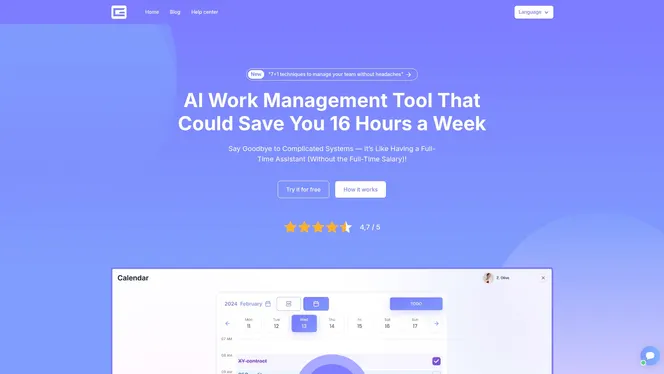
Gametica is built to help solutions for founders and sales teams do exactly that. With AI automation for pitch creation, you can create, test, and refine your pitch assets while automating the follow-up process that most teams neglect. Our AI sales platform connects your pitch to your full customer journey, from first contact to closed deal. If you’re ready to stop managing conversations manually and start scaling your results, Gammatica is where you begin.
Frequently asked questions
What are the key parts of an elevator pitch?
A strong elevator pitch has a hook, describes a problem, offers a solution, presents proof, and ends with a call to action. The full pitch structure runs 30 to 60 seconds total.
How long should my elevator pitch be?
Keep your pitch between 30 and 60 seconds for maximum effectiveness. According to the standard pitch timing, the hook alone should take no more than 5 to 10 seconds.
Are traditional elevator pitches still effective in 2026?
Classic pitches work, but personalized, story-driven approaches often stand out more today. Forbes notes that memorable brand stories are replacing scripted formulas in many business contexts.
Is there data showing how many elevator pitches succeed?
Studies show VC pitch success rates fall below 3%, especially in investor and formal sales settings, though practice consistently improves confidence and skill.
How can I practice to improve my elevator pitch?
Practice with feedback, record yourself, and adapt your pitch to different situations. Research shows practice builds self-efficacy even when universal success benchmarks don’t exist for general pitching contexts.