TL;DR:
- CPM identifies the longest task sequence that determines a project’s minimum completion time.
- Applying CPM involves listing activities, estimating durations, mapping dependencies, and calculating the critical path.
- Modern AI tools enhance CPM by providing real-time updates, dependency mapping, and proactive delay alerts.
Most project failures aren’t caused by unskilled teams or bad tools. They happen because nobody mapped out which tasks truly control the timeline. A delay in one overlooked dependency cascades into a missed deadline, costing time, money, and morale. The critical path method, or CPM, is the systematic approach that exposes exactly which tasks are non-negotiable for on-time delivery. It’s not new, but it’s widely misunderstood and underused. This guide breaks down what CPM is, how to apply it step by step, where it falls short, and how AI-driven platforms are making it more powerful than ever.
Key Takeaways
| Point | Details |
|---|---|
| CPM reveals project bottlenecks | Mapping the critical path highlights tasks that control your project’s timeline. |
| Watch near-critical paths | Paths with less than 10% float can shift to critical status if delays occur. |
| CPM lacks resource awareness | Resource limits are not factored in by CPM, requiring separate planning. |
| Accurate estimates are essential | Incorrect task durations can lead to flawed project schedules and delays. |
| AI tools enhance CPM effectiveness | Modern AI platforms automate CPM analysis and improve team collaboration. |
What is CPM? Defining the critical path method
Now that we’ve set the stage for why project delays aren’t just unlucky, let’s break down what CPM actually is.
CPM, or the critical path method, is a project management technique for sequencing activities and identifying the longest path of tasks through a project. That longest path is your critical path, the sequence of dependent tasks that determines the minimum time needed to complete the project. Any delay on the critical path delays the entire project. Full stop.
Developed in the late 1950s by DuPont and Remington Rand, CPM was designed for large industrial projects where dozens of interlocking tasks needed precise coordination. Today, it applies to software launches, construction timelines, marketing campaigns, and any initiative with multiple moving parts.
Here are the core concepts you need to know:
- Tasks (activities): The individual units of work that make up a project.
- Duration: How long each task takes, usually measured in days or hours.
- Dependencies: Relationships between tasks that determine which must finish before another can start.
- Paths: Sequences of connected tasks from project start to finish.
- Critical path: The longest path through all dependencies, representing the shortest possible project duration.
- Float (slack): The amount of time a task can be delayed without affecting the project end date.
The key insight CPM gives you is prioritization. Not every task is equal. Tasks on the critical path demand your immediate attention. Tasks with float can wait without catastrophic consequences. This is a fundamentally different mindset from treating every item on a task list with equal urgency.
CPM is also distinct from simple scheduling. A basic Gantt chart shows you what needs to happen and when. CPM shows you why certain tasks are more important than others and what happens if they slip. It turns your timeline into a decision-making tool, not just a calendar.

For project managers and business leaders, understanding CPM means you stop reacting to delays and start anticipating them. That shift alone can be the difference between delivering on time and explaining overruns to stakeholders.
How CPM works: Steps and process explained
With CPM’s definition established, let’s walk through how you actually implement it on real projects.
Applying CPM doesn’t require complex software, though tools certainly help. The core process follows a clear sequence:
- List all activities. Write out every task required to complete the project. Be specific. “Design phase” is too vague. “Create wireframes for homepage” is actionable.
- Estimate task durations. Assign a realistic time estimate to each task. Talk to the people doing the work, not just the managers above them.
- Identify dependencies. For each task, ask: what must be completed before this can start? Map these relationships carefully. Missing a dependency is one of the most common CPM mistakes.
- Draw the network diagram. Connect tasks using arrows showing the dependency flow. Each node is a task; each arrow is a dependency relationship. This visual map is the heart of CPM.
- Calculate the critical path. Add up task durations along every possible path from start to finish. The longest total duration is your critical path.
- Assign float values. For non-critical tasks, calculate how much delay is acceptable before they become critical themselves.
One of the trickiest parts is duration estimation. People tend to be optimistic, and inaccurate estimates can lead to incorrect critical paths, which means you’re managing the wrong priorities the entire time. Use historical data from similar projects when you can. Ask team members for their best and worst case scenarios, then average them with weight toward the realistic middle.
Pro Tip: Any task that depends on an external party, like a vendor approval, a client sign-off, or a regulatory review, should have a buffer built in. Add 20% to 30% to those specific durations, because you cannot control the other party’s timeline.
Once your network diagram is drawn, walk through it with your team before locking in the critical path. Fresh eyes often spot missing dependencies or unrealistic durations that you’ve become too close to see.

Nuances, limitations, and common edge cases
Understanding the standard CPM process is important, but recognizing its limitations is critical for real-world use.
CPM is a powerful framework, but it isn’t a perfect one. Here’s where things get complicated:
Multiple critical paths: Large projects often produce more than one critical path. When two paths tie for the longest duration, both must be managed with equal rigor. This doubles the monitoring burden and increases the risk of delays.
Near-critical paths: These are sequences where float is less than 10% of the total project duration. They’re easy to ignore because they’re not technically critical, yet a single delay can push them into critical territory. Smart project managers keep a close eye on near-critical paths throughout the project lifecycle.
| Path type | Float level | Risk level | Action required |
|---|---|---|---|
| Critical path | Zero float | Highest | Constant monitoring |
| Near-critical path | Less than 10% | High | Regular check-ins |
| Non-critical path | More than 10% | Lower | Periodic review |
Here’s the other big one: CPM ignores resources. The method assumes that as long as tasks are sequenced correctly, they’ll get done. But what if two critical path tasks require the same specialist on the same day? CPM won’t flag that conflict. You need a separate process called resource leveling to adjust schedules based on actual availability.
“CPM does not handle uncertainty well; PERT is preferable for uncertain durations.”
This is worth emphasizing. PERT, the Program Evaluation and Review Technique, uses three duration estimates: optimistic, pessimistic, and most likely. It’s better suited for research-heavy or novel projects where nobody truly knows how long tasks will take. CPM shines when durations are predictable; it struggles when they’re not.
Additional limitations to watch out for:
- External approvals can invalidate your critical path overnight.
- Scope changes mid-project require a full CPM recalculation.
- Team member turnover changes task durations immediately.
- CPM assumes a single project; it doesn’t account for team members split across multiple projects.
Knowing these limitations doesn’t mean you shouldn’t use CPM. It means you use it with eyes open, pairing it with resource planning and realistic risk buffers.
CPM in action: Practical project management examples
Armed with awareness of CPM’s strengths and weaknesses, let’s see its impact on modern project teams.
Consider a software product launch. The project has backend development, UI design, quality assurance testing, marketing copy, and final deployment. Backend development and UI design can run in parallel, but QA testing can’t start until both are finished. Marketing copy can be written independently, but final deployment waits for QA sign-off.
Here’s how a simplified CPM breakdown might look:
| Task | Duration | Depends on | Float |
|---|---|---|---|
| Backend development | 15 days | None | 0 |
| UI design | 10 days | None | 5 days |
| QA testing | 8 days | Backend, UI | 0 |
| Marketing copy | 5 days | None | 18 days |
| Final deployment | 3 days | QA testing | 0 |
The critical path here is: Backend development → QA testing → Final deployment = 26 days. UI design has 5 days of float, meaning it can slip without affecting the launch date. Marketing copy has 18 days of float. Knowing this, the project manager correctly allocates the senior developer’s time to backend tasks first and allows the design team more scheduling flexibility.
Now add an AI-driven platform to this picture. Modern tools can enhance CPM analysis through automated dependency mapping, real-time float recalculation, and alerts when tasks drift toward becoming critical. Instead of manually updating your network diagram after every scope change, the platform recalculates instantly and highlights new risks.
Pro Tip: Set automated alerts for any task whose float drops below your defined threshold. If QA testing slips by even two days in the example above, your entire launch date shifts. AI-powered monitoring catches that drift before it becomes a crisis.
CPM also improves team collaboration by making priorities visible to everyone. When team members can see which tasks are on the critical path, they self-prioritize more effectively without constant manager intervention.
A fresh perspective: Rethinking CPM for the future
Looking beyond examples and limitations, it’s crucial to reflect on how CPM should evolve as the workplace changes.
Here’s an uncomfortable truth most project management guides skip over: CPM was designed for a world where projects had fixed teams, stable scopes, and predictable task durations. That world barely exists anymore.
Today’s projects deal with remote teams across time zones, freelancers who split their attention across clients, and scope changes triggered by market shifts or client feedback. A static CPM diagram built on day one is often out of date by week two.
The lesson isn’t to abandon CPM. It’s to treat it as a living document, not a one-time calculation. The projects we’ve seen derailed most often weren’t undone by the critical path itself. They were undone by near-critical paths that nobody revisited after the initial planning session.
Combining CPM with AI-driven scheduling tools addresses exactly this gap. When the platform recalculates your critical path dynamically and surfaces near-critical risks in real time, you gain the responsiveness that static CPM diagrams never offered. Pair that with resource visibility and you have a genuinely robust project control system, not just a diagram on the wall.
How Gammatica can elevate your project management
If you’re ready to put CPM theory into practice using advanced tools, Gammatica offers practical solutions.
Gammatica’s AI-driven platform helps you move from CPM theory to operational reality, fast. Built for business leaders and project managers, it gives you visual tools to map task dependencies, track float in real time, and get alerts before near-critical paths become crises.
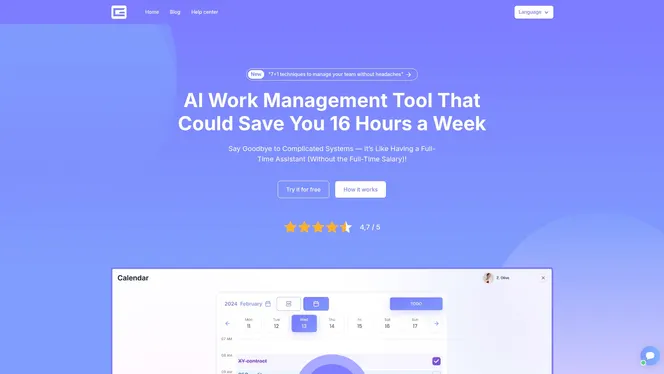
Whether you’re a founder managing a product launch or a sales leader coordinating complex deals, Gammatica automates the heavy lifting so your team focuses on execution, not spreadsheet updates. From Kanban boards to automated workflows and AI suggestions, it’s the platform that keeps your critical path visible and your project on track. Teams report freeing up hours every week by removing manual scheduling overhead.
Frequently asked questions
What does CPM stand for in project management?
CPM stands for critical path method, a sequencing technique used to identify essential tasks and the minimum timeline for completing complex projects.
How is CPM different from PERT?
CPM works best with fixed, predictable task durations, while PERT handles uncertainty by using optimistic, pessimistic, and most-likely estimates. When durations are uncertain, PERT is the better choice.
What are near-critical paths, and why should I monitor them?
Near-critical paths carry less than 10% float, meaning even small delays can push them into critical status. Near-critical paths need regular monitoring to prevent unexpected project overruns.
Does CPM account for resource limitations?
No. CPM does not naturally factor in resource constraints. Resource constraints must be managed through a separate process called resource leveling, applied alongside your CPM analysis.