TL;DR:
- AI suggestions excel in automating structured and repetitive project tasks, improving efficiency.
- Humans are essential for handling team conflicts, strategic pivots, and creative decisions.
- Successful AI integration relies on incremental implementation, clear boundaries, and ongoing team feedback.
AI suggestions for project management success in 2026
Many project managers try AI tools with real enthusiasm, then hit a wall. The dashboards look great, the demos are impressive, but meaningful workflow improvements never quite show up. The honest truth is that most teams aren’t confused about whether AI is useful. They’re confused about how to use it well. This article breaks down exactly what AI suggestions do in project management, which tools deliver the best results for small to mid-sized enterprises, and where human judgment still holds the edge. You’ll walk away with a clear, practical framework for making AI work in your real projects.
Key Takeaways
| Point | Details |
|---|---|
| AI automates repetitive tasks | AI suggestions help project managers save time by handling tasks like charters, summaries, and status updates. |
| Start with integrated tools | SMEs get the most benefit by deploying tools like Microsoft Planner Copilot or Atlassian Rovo for quick workflow wins. |
| Human oversight is essential | While AI streamlines workflow, managers must set privacy boundaries and bring nuance to complex decisions. |
| Practical step-by-step adoption | Teams should assess needs, onboard carefully, and monitor impact to ensure successful AI-driven project management. |
Understanding AI suggestions in project management
Let’s start with a clear definition. In project management software, AI suggestions are automated recommendations generated by machine learning models. These suggestions appear as you work. They might propose a task list after you describe a project goal, flag a deadline that conflicts with a team member’s calendar, or summarize a project’s current status based on recent activity. Think of them as a very attentive assistant who reads everything and offers relevant prompts at the right moment.
For small to mid-sized enterprises, AI suggestions show up in a few common ways:
- Task generation: You type a project goal, and the AI drafts a structured list of tasks with suggested owners and timelines.
- Workflow organization: The AI identifies bottlenecks in your Kanban board and recommends restructuring task flow to reduce wait times.
- Status summaries: Instead of compiling a weekly update manually, AI pulls together a coherent summary from task completions, comments, and calendar activity.
- Risk flagging: Some tools identify tasks that are overdue or understaffed and surface these as priority alerts.
- Meeting prep: AI can pull together agenda items, outstanding decisions, and relevant documents before a scheduled call.
These are genuinely useful functions. But it’s important to set the right expectations from the start.
“AI excels in structured and repetitive tasks like project charters and summaries, but it requires human oversight for judgment calls and privacy boundaries.”
That’s the core insight. AI is a powerful assistant for well-defined, repeatable work. When you ask it to generate a project charter template or summarize a status report, it performs brilliantly. When you need it to navigate a sensitive team conflict or make a creative strategic decision, it falls short every time. Knowing this distinction upfront will save you from frustrating missteps and help you deploy AI where it genuinely adds speed and quality to your workflow.
Privacy is another real concern. AI tools often need access to messages, documents, and task history to generate useful suggestions. That means you need clear policies about what data the AI can read, who can see AI-generated outputs, and how sensitive project information is handled. Many SME teams skip this step and run into trust or compliance issues later. Set the boundaries before you flip the switch.
Top AI-driven tools for project workflow optimization
Now that you understand what AI suggestions are, let’s look at which tools actually deliver for SME teams.
Two platforms stand out right now for practical, immediate impact: Microsoft Planner Copilot and Atlassian Rovo. Both integrate AI directly into the project management environment your team already uses, which matters more than you might think. The fewer apps people need to switch between, the more consistently they’ll use the AI features.
| Feature | Microsoft Planner Copilot | Atlassian Rovo |
|---|---|---|
| Task generation from goals | Yes | Yes |
| Workflow automation agents | Limited | Advanced |
| Goal tracking | Yes | Yes |
| Integration ecosystem | Microsoft 365 | Atlassian suite |
| Best for | Teams using Teams/Outlook | Teams using Jira/Confluence |
| SME suitability | High | High |
| Learning curve | Low to medium | Medium |
Microsoft Planner Copilot is a strong starting point if your team already lives inside Microsoft 365. You can ask Copilot to generate tasks and goals directly from a plain text description, which cuts the planning phase from hours to minutes. It also tracks goal progress and surfaces overdue tasks without any manual reporting.

Atlassian Rovo takes workflow automation further. Its agents can move tasks between stages, notify team members, and even create follow-up issues based on conditions you define. If your team works in a more complex product or software environment, Rovo’s depth is worth the slightly steeper learning curve.
Key features to look for when evaluating any AI project tool:
- Natural language input: Can you describe a project in plain English and get a structured task list back?
- Permission controls: Can you define who sees what, and what the AI can access?
- Integration with your existing stack: Does it connect to the calendar, messaging, and document tools your team already uses?
- Reporting and analytics: Does the AI give you actionable insights, not just raw data?
Pro Tip: Don’t choose a tool based on its most impressive demo feature. Choose it based on what your team will actually use every day. A simple tool used consistently beats a powerful one that nobody opens after week two.
Where AI excels—and where humans are still essential
Knowing which tasks to hand off to AI and which to keep in human hands is where most managers either win big or waste significant time. Let’s get specific.
AI suggestions genuinely improve project outcomes for structured and repetitive tasks, things with clear inputs and predictable outputs. Here’s where AI earns its place:
- Project charter creation: AI can generate a full project charter draft from a short brief, including objectives, scope, stakeholders, and key milestones. A human then refines it.
- Status report generation: Instead of pulling data from five places and writing a summary, AI does that work in seconds.
- Recurring task scheduling: Setting up weekly check-ins, monthly reviews, and sprint cycles can be fully automated.
- Resource load balancing: AI can flag when one team member has too many high-priority tasks and suggest reallocation.
- Document tagging and organization: AI categorizes files and links them to relevant tasks without human input.
Now here’s where you should keep humans firmly in control:
| Task | AI suitable? | Why human input matters |
|---|---|---|
| Resolving team conflicts | No | Requires empathy and context |
| Strategic pivots under pressure | No | Involves risk judgment and values |
| Creative brainstorming | Partial | AI can prompt but not truly ideate |
| Sensitive stakeholder communication | No | Tone and relationship nuance |
| Performance reviews | No | Personal context and fairness |
| Budget reallocation decisions | Partial | AI can model scenarios, not decide |
The pattern is clear. When tasks involve people dynamics, ethical judgment, or genuine creativity, AI is a supporting character, not the lead. A manager who tries to automate team conflict resolution using AI suggestions will quickly damage team trust. On the other hand, a manager who uses AI to handle the administrative layer frees up more time and mental energy for those human-centered challenges.

Here’s a practical way to approach this in your own projects. At the start of each sprint or project phase, go through your task list and mark each item as either “AI-assisted” or “human-led.” Make this visible to your team. It creates clarity, reduces confusion about who’s responsible, and builds healthy habits around how AI tools are actually used.
Practical steps to implement AI suggestions in your projects
Once you’ve mapped out where AI fits, it’s time to actually roll it out. Here’s a clear, step-by-step approach that works for SME teams without requiring an IT department or a dedicated change management team.
-
Assess your current workflow needs. Before choosing any tool, document where your team loses the most time. Is it in creating status reports? Building task lists from scratch? Scheduling recurring meetings? Your AI tool should directly address these specific pain points, not generic ones.
-
Choose a tool that fits your existing stack. We covered this in the tool comparison section, but it bears repeating. Adoption rates drop sharply when people need to log into a new platform just to use an AI feature. Integrated tools win.
-
Define privacy and permission boundaries before onboarding. This is critical. Setting clear permission boundaries before you deploy AI agents prevents sensitive data from being surfaced to the wrong people or used in unintended ways. Create a one-page policy that covers: what data the AI can access, who can see AI-generated outputs, and how to flag a concern.
-
Start with one workflow, not ten. Pilot the AI on a single, well-defined workflow first. Status reporting is often the easiest win. Once your team sees the time savings there, enthusiasm for expanding AI use grows naturally.
-
Track productivity improvements with a baseline. Before you start, record how long specific tasks take. After four weeks of using AI suggestions, compare. Most teams find time savings of 25% to 40% on the automated tasks. This gives you real data to justify the investment and guide next steps.
-
Collect team feedback monthly. AI suggestions aren’t always right. Your team will notice when the AI makes an odd recommendation or surfaces the wrong information. Create a simple way for people to flag these moments so you can adjust settings, permissions, or workflows accordingly.
Common pitfalls to avoid include over-relying on AI outputs without a human review step, skipping the onboarding phase and expecting immediate adoption, and choosing the most feature-rich tool rather than the most practical one.
Pro Tip: Run a 30-minute “AI orientation” session with your team before launch. Walk through what the AI will and won’t do, where to flag issues, and how the output will be reviewed. This one session dramatically reduces friction and skepticism.
What most guides miss about AI in project management
Most articles about AI in project management focus on features and tool comparisons. That’s useful, but it skips the harder truth most SME teams face: the biggest barrier to AI adoption isn’t the technology, it’s the setup complexity and the quiet temptation to over-rely on it once it’s working.
Here’s what we’ve observed. When AI suggestions work best in daily workflows, it’s because a manager made intentional choices about boundaries and kept human oversight consistent. Teams that hand off too much to AI too fast start to lose context. They approve AI-generated task lists without scrutiny, miss nuance in stakeholder communications, and gradually reduce the quality of their own judgment because they’ve stopped exercising it.
The most effective approach is incremental. Add one AI feature at a time, evaluate it honestly, and only expand when your team genuinely trusts the output. Tailoring AI boundaries isn’t a nice-to-have. It’s what separates teams that get real productivity gains from those that end up with a messy, underused platform six months later. The tool matters less than the discipline around how you use it.
Enhance your team’s productivity with Gammatica
If this guide has sparked ideas about how to bring AI suggestions into your day-to-day project work, Gammatica is worth a close look.
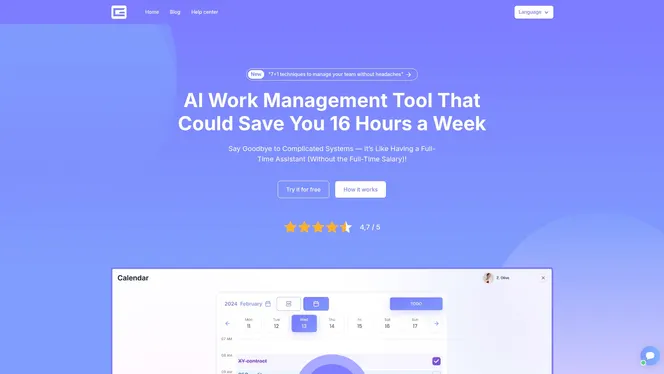
Gammatica is an AI-driven project and team management platform built for exactly the kind of work you manage. It combines task management, CRM, automation, calendar coordination, Kanban boards, and team collaboration tools in one place. The platform’s AI suggestions help reduce administrative burdens so your team can focus on what actually moves projects forward. Users report freeing up hours every week through automation and smart templates. Whether you’re a founder managing early teams or a team leader scaling operations, Gammatica’s platform gives you the structure and AI support to work smarter without adding complexity.
Frequently asked questions
How do AI suggestions boost project management productivity?
AI suggestions automate repetitive tasks and organize workflows, letting teams focus on more complex issues. As research shows, AI excels at structured tasks like status reports and project charters, which directly reduces manual overhead.
Are privacy concerns a barrier to using AI in project management?
Yes, privacy and permission settings are critical, especially when deploying AI agents across team workflows. Defining what data AI can access before rollout protects sensitive project information and maintains team trust, since clear permission boundaries are non-negotiable for responsible AI deployment.
What’s a quick way for SMEs to adopt AI suggestions without heavy setup?
SMEs should start with integrated tools like Microsoft Planner Copilot or Atlassian Rovo for immediate benefits. Both platforms allow teams to generate tasks and goals from plain language without complex configuration.
Can AI suggestions fully replace human project managers?
No, AI can’t replace human judgment or creativity; it works best for structured tasks and as an assistant. Tasks involving team dynamics, ethics, or strategic decisions still require human oversight and nuanced context that AI simply cannot replicate.