
TL;DR:
- AI deal management software uses machine learning and generative AI to analyze pipeline data, score deals, and recommend next steps automatically. It aims to improve deal outcomes by automating risk detection, activity tracking, and multi-channel communication. Effective implementation requires fixing data quality issues first and choosing CRM-native integrations for faster deployment.
AI deal management software is a platform that combines predictive machine learning scoring, real-time risk detection, and AI-generated next-step recommendations to move deals from prospecting through close faster and with less manual effort. The industry term for this category is “deal intelligence,” and it sits at the intersection of sales pipeline management AI and automated deal tracking software. Modern platforms use a three-layer AI architecture: predictive ML models that score opportunities, generative AI functions that draft briefs and action plans, and real-time competitive intelligence feeds. If your team is still relying on rep self-reporting to assess deal health, you are working with biased data. This guide shows you exactly what to look for, how to implement it, and where the technology is heading in 2026.
What is AI deal management software and how does it work?
AI deal management software is defined by its ability to score, monitor, and guide deals using machine learning models trained on historical pipeline data. The best platforms do not ask your reps to update fields manually. They capture activity automatically from email, calendar, and CRM records, then feed that data into scoring models.
Enterprise deal intelligence platforms use predictive ML models trained on over 6,500 deals, combined with generative AI and real-time competitive intelligence, to score and brief pipeline opportunities. That scale of training data means the model has seen enough deal patterns to recognize when a stalled negotiation looks like a lost cause versus a deal that just needs a different approach.
The three-layer architecture works like this:
- Predictive ML scoring ranks each opportunity by close probability based on historical deal signals.
- Generative AI functions produce deal briefs, summarize stakeholder history, and recommend next actions.
- Real-time competitive intelligence pulls in market signals to give reps contextual talking points during active negotiations.
This layered approach is what separates true AI negotiation platforms from basic CRM dashboards with colored status fields.
Pro Tip: Ask any vendor to show you what data their ML model was trained on. A model trained on fewer than 1,000 deals will produce unreliable scores for enterprise pipelines.
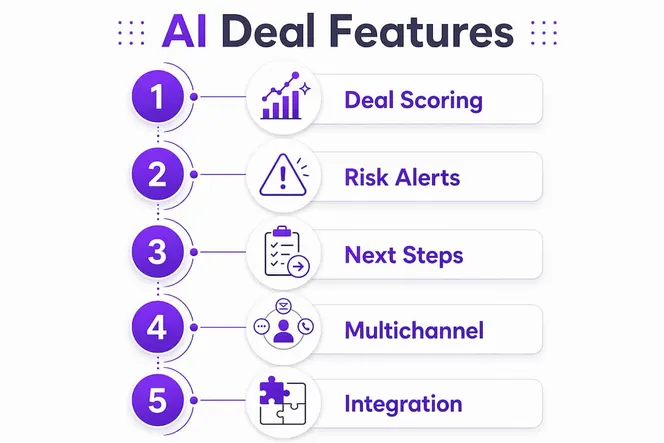
Key features that improve sales workflows and deal outcomes
The features that actually move the needle in deal management are not the flashiest ones. They are the ones that fix the data quality problem at the root.
Activity-grounded deal health scoring
Activity-based deal health scores are more reliable than self-reported data because they track true engagement signals like emails sent, meetings held, and response times. This is the foundation of accurate AI risk detection and forecasting. When a rep marks a deal as “on track” but no emails have been exchanged in three weeks, the AI flags the discrepancy automatically.

Automated risk detection and stalled deal alerts
The best automated deal tracking software monitors engagement gaps and sends alerts before a deal goes cold. These alerts are not generic reminders. They are triggered by specific patterns: a champion contact going silent, a contract review dragging past its expected window, or a competitor being mentioned in recent email threads.
AI-generated next steps and workflow automation
Here is where generative AI earns its place in the sales stack. Instead of leaving reps to guess what to do next, the platform generates a prioritized action plan based on deal stage, stakeholder activity, and historical patterns from similar won deals. Gammatica takes this further by offering AI best next step recommendations that know your full workspace context, including your contacts, open tasks, and calendar, so the suggestion is actually relevant to your situation.
Multi-channel communication with Gmail and Outlook integration
Gammatica’s Gmail and Outlook integration connects your AI email generator directly to your deal context. The AI drafts follow-ups, proposal summaries, and re-engagement messages using the full history of your workspace, not just a generic template. This is a meaningful difference from standalone email tools that have no visibility into your pipeline.
Pro Tip: Set up automatic activity capture from your email client before you configure any AI scoring. Garbage in, garbage out. The AI is only as good as the activity data it receives.
The numbered workflow for getting the most from these features:
- Connect your Gmail or Outlook account to enable automatic activity capture.
- Map your deal stages to match your actual sales process, not a default template.
- Set risk alert thresholds based on your average sales cycle length.
- Review AI-generated next steps each morning and assign them to the right team member.
- Use kanban tables to give your full team visibility into deal status without requiring manual status updates.
Implementation considerations and integration best practices
Deploying AI deal management software is not a weekend project. The setup decisions you make in week one determine the quality of your AI insights for months afterward.
CRM-native AI integrations keep deal data inside the CRM system, enabling auditability, compliance, and flexible reporting without external data stores. This matters because data that lives outside your CRM cannot be used in your standard dashboards, audit trails, or compliance reports. Salesforce Einstein, for example, offers embedded AI scoring directly within opportunity records, which means your reps never leave their existing workflow to access AI insights.
Contract lifecycle management automation, including AI-powered drafting, clause risk scoring, and compliance monitoring, typically requires a 4–6 week integration period for enterprise deployment. Plan for that timeline and do not expect production-ready AI scoring on day one.
Key implementation checkpoints to verify before go-live:
- Data hygiene audit: Confirm that historical deal records include close dates, activity logs, and outcome data. Missing fields break ML model accuracy.
- Activity capture configuration: Connect email and calendar sources before enabling AI scoring. Scores built on incomplete activity data mislead rather than guide.
- CRM field mapping: Align your AI platform’s deal stage definitions with your CRM’s existing pipeline stages to avoid double-entry.
- User permission setup: Define which team members can view AI scores, edit deal records, and approve AI-generated actions.
| Integration type | Setup time | Data location | Reporting access |
|---|---|---|---|
| CRM-native AI | 1–2 weeks | Inside CRM | Full native reports |
| Third-party AI layer | 3–5 weeks | External data store | Limited, API-dependent |
| Contract lifecycle AI | 4–6 weeks | Hybrid | Compliance-grade audit trail |
The table above shows why CRM-native integrations are the preferred starting point for most sales teams. They are faster to deploy and keep your data where your reporting already lives.
Future trends in AI deal management
The most significant shift happening right now is the move from passive dashboards to active AI agents. AI in deal management is evolving from risk-surfacing tools to active teammates that execute next-best-actions autonomously, reducing the administrative burden on reps.
Agentic AI systems do not just surface stalled deal signals. They trigger automated multi-channel re-engagement sequences, including email and LinkedIn outreach, with full audit trails and human approval checkpoints. That means a rep can approve a re-engagement sequence with one click rather than drafting and sending it manually.
Emerging capabilities worth watching in 2026:
- AI contract management tools that summarize clause risk and flag deviations from standard terms before legal review, cutting contract cycle times significantly.
- Agentic deal re-engagement that fires personalized follow-up sequences when a deal goes dark, based on the contact’s communication history and deal stage.
- AI-powered audit trails that log every AI-generated action for compliance and forecasting review.
Combining deal intelligence platforms with agentic action layers produces the most scalable revenue operations stack. The intelligence layer surfaces risk; the action layer executes the response. These two functions work best as complementary tools rather than a single monolithic platform.
AI-native contract management transforms legal workflows by enabling business teams to self-serve on contract requests and by reducing cycle times through AI summaries and risk alerts. This is particularly valuable for sales teams that lose momentum waiting on legal review during the final stages of a deal.
The productivity gains from AI adoption in professional environments are real and measurable, especially when AI tools are matched to specific workflow problems rather than deployed as generic solutions.
Why I think most teams adopt AI deal tools in the wrong order
Sales teams typically buy a deal intelligence platform first, then realize six months later that their AI scores are unreliable because their CRM data is a mess. The AI is not the problem. The data is.
The right order is: fix activity capture first, then layer in AI scoring, then add agentic automation. AI deal health scores fail without reliable CRM activity capture. Models built on rep-entered data are biased toward optimism because reps naturally report what they hope is true, not what the activity data shows.
I have also seen teams buy a single “all-in-one” platform expecting it to handle forecasting, activity capture, and automated outreach equally well. It rarely does. Choosing complementary AI tools for forecasting, activity capture, and agentic actions avoids feature overlap and produces better results than any single platform trying to do everything.
The teams that get the most from AI deal management are the ones that treat it as a data discipline first and a technology purchase second. Get your email and calendar activity flowing into your CRM. Map your deal stages accurately. Then let the AI do what it does best: spot patterns you would miss and tell you what to do next.
Kanban tables and contact-level AI recommendations, like the ones Gammatica provides, are the practical daily interface where this all comes together. When your team can see every deal’s status at a glance and get a specific next-step suggestion for each contact, the AI stops being a background analytics tool and starts being a genuine part of how work gets done.
— Viktor
How Gammatica fits into your deal management workflow
Sales teams need more than a dashboard. They need a workspace where deal intelligence connects directly to daily actions.
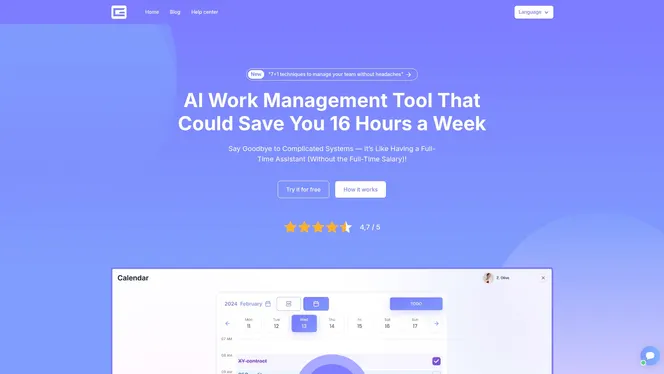
Gammatica brings kanban tables, contact management, and AI best next step recommendations into one platform, with Gmail and Outlook integration that gives the AI full context about your workspace. The AI email generator knows your open deals, your contacts’ history, and your current tasks, so every suggested email is relevant, not generic. For founders and sales leaders who want full visibility into what their team is doing and what should happen next, Gammatica for founders is built exactly for that use case. You get the deal intelligence, the collaboration layer, and the action tools in one place.
FAQ
What is AI deal management software?
AI deal management software is a platform that uses machine learning and generative AI to score deals, detect risks, and recommend next steps automatically. It replaces manual pipeline reviews with activity-grounded data and AI-generated guidance.
How does AI deal scoring work?
AI deal scoring uses predictive ML models trained on historical deal data to rank each opportunity by close probability. The most reliable scores are based on actual activity signals like emails and meetings, not rep self-reporting.
How long does it take to implement AI deal management tools?
Basic CRM-native AI integrations typically take 1–2 weeks to activate. Contract lifecycle management automation with compliance features requires a 4–6 week integration period for enterprise deployment.
What is the difference between deal intelligence and agentic AI?
Deal intelligence platforms surface risk signals and score opportunities. Agentic AI systems go further by executing automated re-engagement sequences and next-best-action workflows, with human approval checkpoints built in.
Can AI deal management software integrate with Gmail and Outlook?
Yes. Platforms like Gammatica integrate directly with Gmail and Outlook to capture activity automatically and generate context-aware emails using your full workspace history, including contacts, deals, and open tasks.